


Welcome to the Pro Wrestling Time Tunnel Daily Chronicle. The daily newsletter for an injection of events that happened on this day and relative time frames in Territory Pro Wrestling History
Happy Birthday to those who have passed on and to those great wrestlers still with us:
In Memoriam:
Joe Stecher 1893
Billy Wicks 1932
Stan Liskowski\Stan Neilson 1933
Jim Dalton 1943
Pete Sanchez 1943
Happy Birthday:
Jeanie Adams\Clark (67)
Flash Flanagan (52)
Tiger Uno\Extreme Tiger (45)
Chleasea Green (35)
Kerry Morton (25)
RIP Memorial: We stop & remember those who have passed on this day and gave themselves to the business for us, the fans. We salute you and thank you.
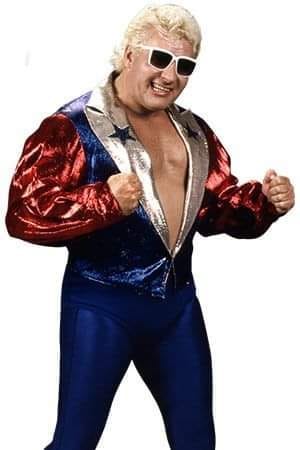
Johnny Valiant 4-4-2018 at the age of 71
Significant Debuts:
Yvon Robert 4-4-1932 at the age of 17
Mike DiBiase 4-4-1950 at the age of 26
The Life and Career of Johnny Valiant and the Valiant Brothers Tag Team
Thomas Sullivan, better known to wrestling fans worldwide as “Luscious” Johnny Valiant (or simply Johnny Valiant), was one of professional wrestling’s most colorful and enduring figures. Born on November 25, 1946, in Pittsburgh, Pennsylvania, Sullivan grew up in the city’s North Hills suburb, practically in the shadow of WWE Hall of Famer Bruno Sammartino. That proximity would shape his entire life. A lifelong wrestling fan who attended Fishburne Military Academy alongside a young Vince McMahon Jr., Sullivan knocked on Sammartino’s door as a teenager seeking advice on breaking into the business. Sammartino’s encouragement, combined with Sullivan’s own determination, launched a career that spanned five decades as a wrestler, manager, commentator, actor, and comedian.
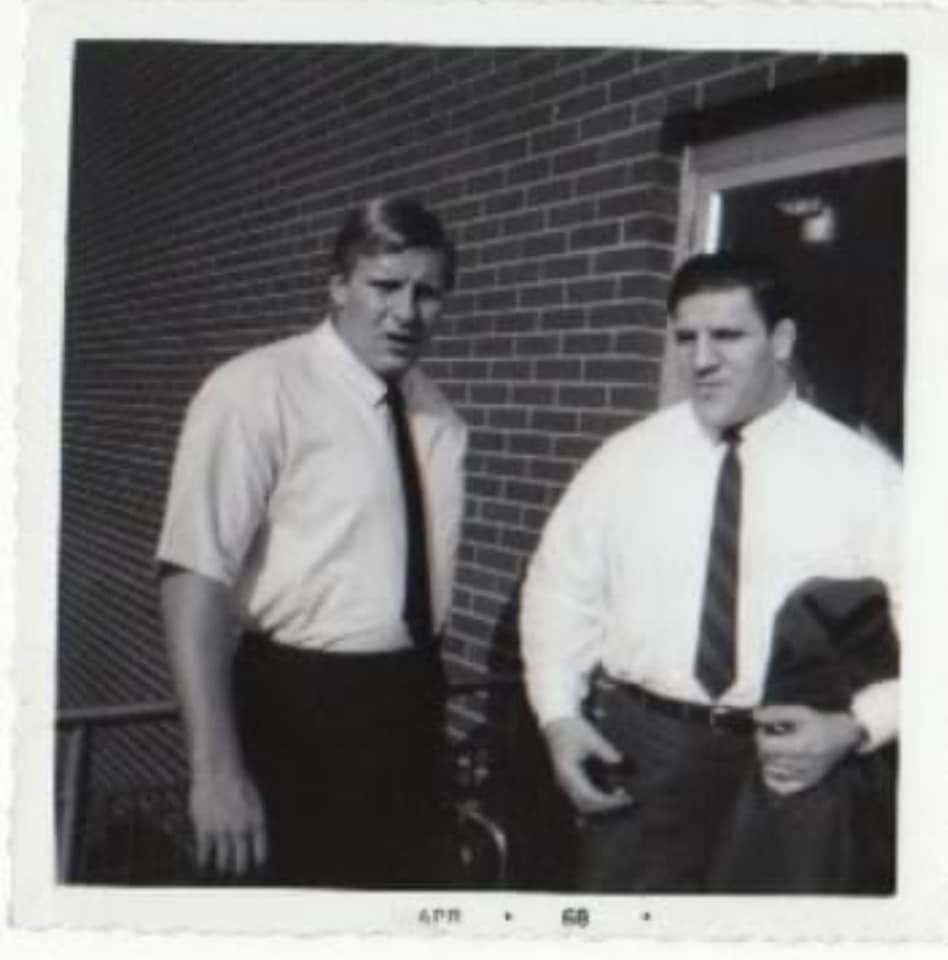
Pictured: Johnny Sullivan (Valiant) with his mentor Bruno Sammartino
Sullivan debuted in 1967 after training under the legendary Kangaroo Al Costello. He initially worked behind the scenes in the Detroit territory for promoter The Sheik, refereeing matches and setting up the ring before stepping between the ropes himself. Early on, he competed under his real surname as “John L. Sullivan,” a nod to the famous bare-knuckle boxer. From 1969 to 1973, he made a name for himself in the World Wide Wrestling Federation (WWWF, later WWF/WWE) as a mid-card babyface. He traded wins and losses with the era’s stars—falling to heels like Killer Kowalski and Toru Tanaka, battling Baron Mikel Scicluna to draws, and dispatching low-card opponents like Angelo Savoldi and Johnny Rodz. Though he never reached main-event status in those early years, Sullivan earned respect as a reliable, athletic worker who could hold his own in any territory.
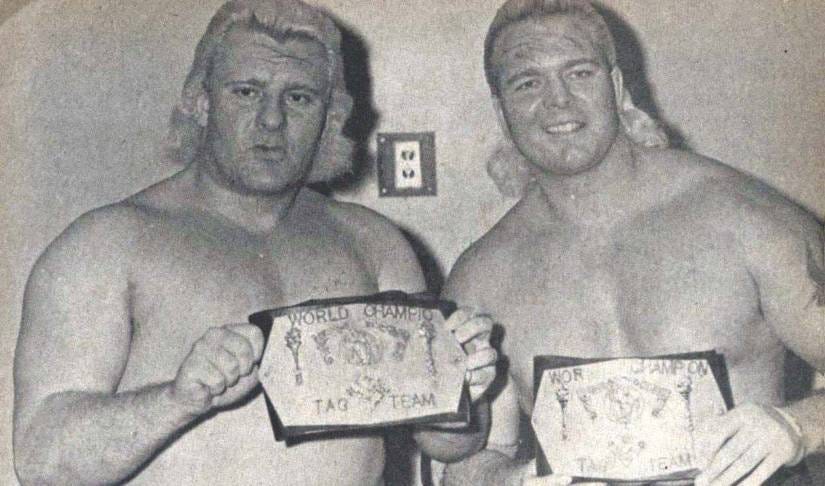
Pictured: Jimmy and Johnny Valiant, WWA World Tag Team Champions
His career truly exploded when he met James Fanning—“Handsome” Jimmy Valiant—while working in Ontario for promoter Dave McKigney. Jimmy took the enthusiastic young Sullivan under his wing, renamed him Johnny Valiant, and brought him to Dick the Bruiser’s World Wrestling Association (WWA) in Indianapolis. There, the two were billed as storyline brothers and formed the Valiant Brothers tag team. Their chemistry was instant. In one of their earliest high-profile victories, they defeated a dream team of Dick the Bruiser and Bruno Sammartino to capture the WWA World Tag Team Championship. The win launched a five-year run that saw the Valiants dominate multiple territories. They captured numerous regional titles, including the NWA World Tag Team Championship (San Francisco version), NWA Florida Tag Team Championship, NWA United States Tag Team Championship (Florida), and NWA Georgia Tag Team Championship. In 1974, Pro Wrestling Illustrated named them Tag Team of the Year.
The pinnacle of their in-ring success came in the WWWF. On May 8, 1974, Johnny and Jimmy defeated Tony Garea and Dean Ho to win the WWWF World Tag Team Championship. They held the belts for more than a year (approximately 370 days), defending them in packed arenas across the Northeast and main-eventing Madison Square Garden against legends like Chief Jay Strongbow and Bruno Sammartino. After the team split, Johnny formed a new partnership with “Gentleman” Jerry Valiant (John Hill). On March 6, 1979, they defeated Tony Garea and Larry Zbyszko for a second WWWF World Tag Team Championship reign. Together, the three Valiant “brothers” became synonymous with tag-team excellence in the 1970s.
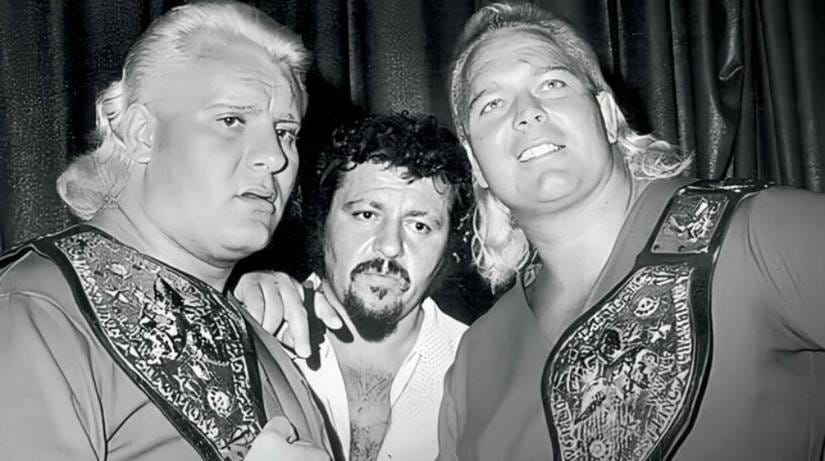
Pictured: Jimmy and Johnny Valiant with manager, Captain Lou Albano, WWWF World Tag Team Champions
When compared to other all-time greats, the Valiants shine brightest as pioneers of character-driven, heat-drawing tag team wrestling in the pre-national expansion era. They were not the most athletic or destructive duo, but their charisma and longevity set a template for heel teams that followed. In WWE’s official re-ranking of the 50 Greatest Tag Teams in WWE history, they slot in at #7—ahead of the Legion of Doom (#8), The Wild Samoans (#9), and The Dudley Boyz (#10)—underscoring their foundational role in the company’s tag division.
The Valiants’ signature 370-day WWWF reign was revolutionary for its era, when title changes were frequent and defenses were grueling weekly TV main events. This outlasted many 1970s peers: the Minnesota Wrecking Crew (Gene & Ole Anderson) excelled in NWA territories with multiple short reigns and a more brawling, stiff style, but never held a single world title as long; the Brisco Brothers (Jack & Jerry) were beloved babyface technicians who won the NWA World Tag Titles seven times across the decade, emphasizing clean, high-energy matches and broader territorial reach. The Blackjacks (Mulligan & Lanza) brought a rugged, cowboy-heel vibe with power offense, winning WWWF gold but lacking the Valiants’ sustained run or mainstream pop.
Fast-forward to the 1980s, and Demolition (Ax & Smash), inductees for this year’s WWE Hall of Fame in 2026, directly eclipsed them with a 470-day WWF reign in 1988, blending the Valiants’ heel swagger with a Road Warrior-inspired power aesthetic. Yet Demolition operated in the national TV era with bigger production, while the Valiants built the blueprint in smoky arenas. Teams like The Wild Samoans (Afa & Sika) mirrored the Valiants’ manager-assisted (Albano) dominance with three WWF reigns but relied more on raw strength and family legacy than promo heat.
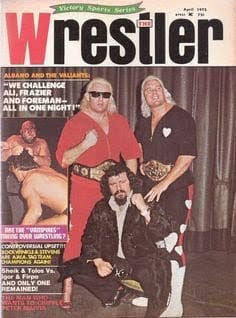
Stylistically, the Valiants were classic 1970s technicians with a flair for psychology—quick tags, double-team spots, and crowd-baiting antics that generated massive heat (and occasional cheers due to their over-the-top charm). They were not high-flyers like The Rock ‘n’ Roll Express (who revolutionized speed and babyface fire in the 1980s) or powerhouses like the Road Warriors/Legion of Doom (Hawk & Animal), whose spike-laden destruction and face-paint intimidation redefined “intimidation” across promotions. Nor were they the pure mat wizards of The Hart Foundation (Bret Hart & Jim Neidhart), whose technical precision and later 1980s/90s success emphasized storytelling depth.
The Valiants’ “pretty boy” gimmick—blond locks, sunglasses, and arrogant swagger—influenced narcissistic heels for decades, from The Midnight Express to modern acts. In Bleacher Report’s all-time top 50, they landed at #44, praised for multi-title success but noted as less flashy than Attitude Era standouts like The Hardy Boyz or Dudley Boyz, who added tables, ladders, and extreme spots.
Jimmy’s diving elbow drop—often preceded by his signature “boogie woogie” dance taunt—was the Valiant Brothers’ go-to finisher and the only move consistently labeled as iconic. Sources across wrestling databases call it the Flying Elbow or simply Diving Elbow Drop, used as his primary finisher from his 1964 debut through his retirement in 2022. In tag matches, Jimmy would isolate an opponent, strut and shimmy to the top rope (drawing boos and chants), then crash down with the elbow for the pin. The move wasn’t revolutionary—it was a classic top-rope elbow—but the theatrical setup made it memorable and heat-generating. It perfectly fit the “pretty-boy heel” gimmick: arrogant, showy, and dismissive of the audience. Commentators and fans later noted its influence on later elbow-based finishers (including echoes in The Rock’s People’s Elbow, though executed differently). In team context, it often capped a sequence of double-teaming or Albano’s cane shots, turning a basic high-impact strike into a psychological payoff.
Johnny was the more athletic and versatile of the original duo, often described as a reliable mid-card worker who could chain basic holds into credible offense. Profiles occasionally reference a Figure-Four Leglock as a submission finisher or setup move in his singles and tag work, fitting the era’s emphasis on leg-based psychology (think Ric Flair, who popularized it later). Beyond that, Johnny’s arsenal was classic 1970s heel: body slams, forearm smashes, hair pulls, eye rakes, and quick tags to keep the heat on the opponent. He wasn’t known for a singular “money” move; his value lay in selling, timing, and feeding perfectly for Jimmy’s elbow.
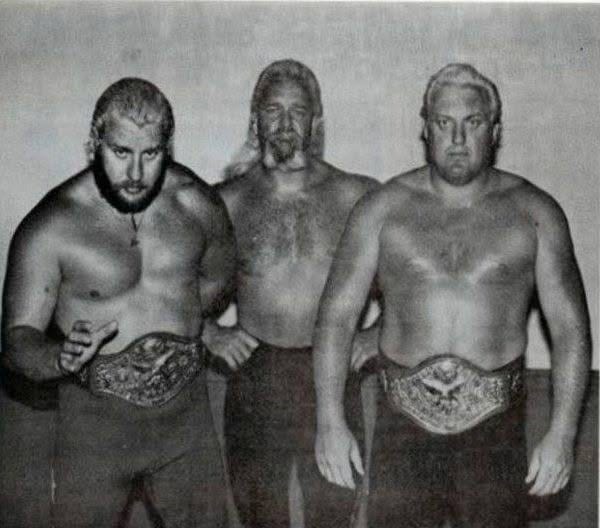
Pictured: The Valiant Brothers Trio: Handsome Jimmy, Lucious Johnny and Gentleman Jerry Valiant in 1979
“Gentleman” Jerry Valiant (John Hill), who joined in 1979 for a second WWWF title reign, brought a similar polished-heel style—slightly more “scientific” with suplexes and knee lifts—but again, no documented signature finisher. Like Johnny, Jerry excelled at the illegal double-team spots that defined the Valiants: double shoulder tackles, double stomps, or holding an opponent for Jimmy’s elbow. Their collective moveset was deliberately limited; the era rewarded endurance and storytelling over athletic spectacle.
Unlike later teams with signature tandem maneuvers (e.g., Demolition’s Decapitation clothesline or the Hart Foundation’s Hart Attack), the Valiant Brothers had no universally named “tag-team finisher.” Their offense was built on 1970s fundamentals sych as Quick tags and illegal double-teaming (two-on-one stomps or suplexes while the referee was distracted). Using heel cheating staples—forehead bites, eye rakes, low blows, and hair pulling—to draw nuclear heat. High-impact basics like clotheslines, atomic drops, and body slams to set up Jimmy’s elbow. Or at times, Albano’s interference (cane shots, salt, or distractions) as the true “third man” finisher.
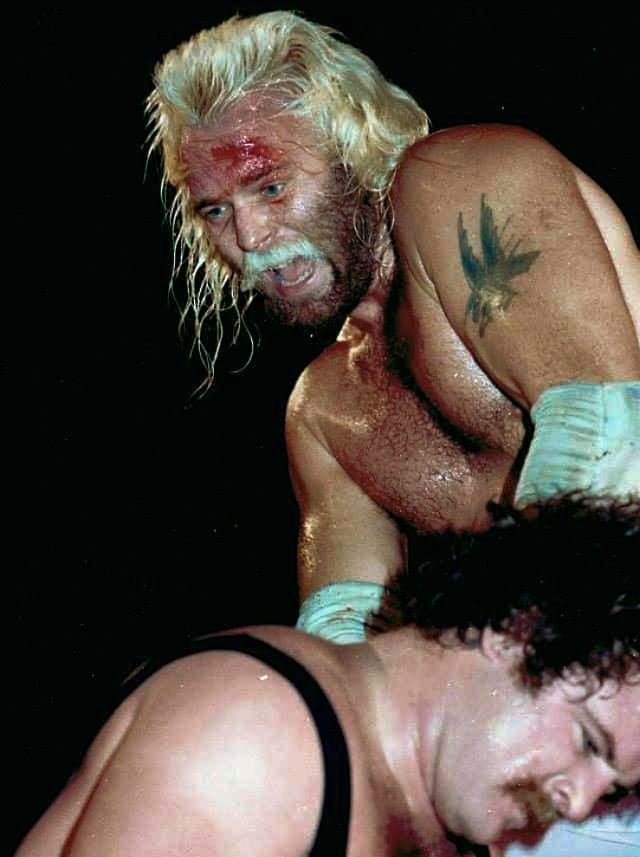
Pictured: Jimmy Valiant armbars Mike Graham in a match for the NWA Florida Tag Team Titles in 1979
This approach was brilliant for the territory era. Matches were long, crowd-work heavy affairs where the Valiants would dominate with underhanded tactics, sell comebacks from babyfaces like Chief Jay Strongbow or Tony Garea, and close with the Boogie Woogie Elbow after a flurry of double-team spots. Their psychology—isolating a limb, cutting the ring in half, and milking every cheap shot—made basic moves feel devastating and kept Madison Square Garden crowds erupting for years.
The Valiants bridged the territorial and national eras, helping elevate tag team wrestling from filler to main-event status in the Northeast. Their 1996 Hall of Fame induction (preceding even The British Bulldogs or Rockers) came decades before many flashier teams, reflecting WWE’s recognition of their foundational role. Teams like Edge & Christian (#1 in WWE’s ranking) or The New Age Outlaws revolutionized tag matches with ladders and DX antics in the Attitude Era, while The Usos brought familial athleticism and record-setting modern reigns. Yet the Valiants’ influence persists in character work: Johnny’s later managerial success with The Dream Team echoed how managers amplified teams like The Wild Samoans or Demolition.
In broad all-time lists, such as fan-voted or Bleacher Report, for instance, they often rank behind global juggernauts like the Road Warriors, often #1 in many polls for their worldwide dominance, or the Dudleys, the most decorated team with 23+ titles across ECW, WWE, TNA. The Valiants were territory specialists who excelled in one promotion’s ecosystem, whereas later teams like FTR or The Young Bucks thrive in a unified, international landscape.
Ultimately, the Valiant Brothers were not the most decorated or revolutionary in raw athleticism, but they were architects of tag team excellence in wrestling’s golden age. Their blend of charisma, endurance, and heel mastery created a mold that Demolition shattered, The Hart Foundation refined, and modern teams like The Usos have updated. In an era of spectacle, they proved that personality and psychology could make a 370-day reign feel eternal—and that’s why WWE still ranks them among the elite.
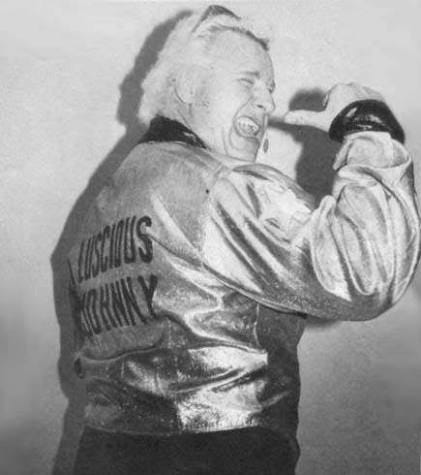
By the early 1980s, Sullivan largely stepped away from full-time in-ring competition (though he occasionally returned as a jobber). He reinvented himself as a manager, adopting the flamboyant “Luscious Johnny V” persona complete with slicked-back hair, loud suits, and a cigar. In 1981, he briefly managed a young Hulk Hogan in the American Wrestling Association (AWA). Returning to the WWF in 1984, he guided Brutus Beefcake through a high-profile feud and, in May 1985, teamed Beefcake with Greg “The Hammer” Valentine to create The Dream Team. Under Valiant’s guidance—and with occasional assistance from Jimmy Hart—the Dream Team captured the WWF World Tag Team Championship on August 24, 1985, defeating The U.S. Express (Barry Windham and Mike Rotunda) in dramatic fashion when Beefcake used Valiant’s lit cigar to blind Windham. They held the titles for eight months, defending against teams like The Killer Bees and The U.S. Express before losing them to The British Bulldogs at WrestleMania 2.
Valiant’s managerial run continued with memorable storylines. At WrestleMania III, he and Valentine abandoned Beefcake after a match with The Fabulous Rougeau Brothers, forming a “New Dream Team” with Dino Bravo. This betrayal sparked a personal feud with the now-“Barber” Brutus Beefcake, who famously cut and ruined Valiant’s hair on television. Valiant also introduced the team that would become Demolition (Ax and Smash) before they aligned with Mr. Fuji and provided color commentary on WWF broadcasts. In 1989, he returned to the AWA and managed The Destruction Crew (Wayne Bloom and Mike Enos) to the AWA World Tag Team Championship. His ability to elevate talent and generate heat made him one of the most effective managers of the 1980s.

In 1996, Johnny and Jimmy Valiant (along with Jerry) were inducted into the WWE Hall of Fame as the Valiant Brothers—the first tag team to receive the honor as a unit. Fittingly, they were inducted by The British Bulldog and Owen Hart, the reigning tag champions at the time. The induction capped a legendary in-ring and managerial career that touched every major promotion of the era.
After leaving full-time wrestling around 2006, Sullivan pursued acting and comedy under his ring name. He appeared in multiple episodes of The Sopranos and Law & Order, as well as several feature films. His one-man show, An Evening with Johnny Valiant, earned critical acclaim from publications like Time Out New York and The Village Voice. He also featured in the 2008 documentary The Absolute Truth About Pro Wrestling. Sullivan remarried in 2004 and split time between New York and his Pennsylvania roots.
Tragically, Sullivan’s life ended on April 4, 2018, at age 71. While crossing McKnight Road in Ross Township, Pennsylvania—a suburb of his hometown Pittsburgh—he was struck by a pickup truck at approximately 5:30 a.m. Police ruled it a tragic accident; Sullivan was not in a crosswalk, and the driver remained at the scene. He was pronounced dead at Allegheny General Hospital. The wrestling world mourned the loss of a man remembered as much for his charisma and humor as for his accomplishments inside the squared circle.
Johnny Valiant’s legacy endures as a bridge between wrestling’s territorial golden age and the national expansion of the 1980s. From knocking on Bruno Sammartino’s door as a wide-eyed teenager to headlining arenas, guiding future Hall of Famers, and entertaining audiences long after his last match, he embodied the larger-than-life spirit of professional wrestling. Whether as the slick tag-team specialist, the cigar-chomping manager, or the charming storyteller on stage, “Luscious” Johnny Valiant left an indelible mark—one that continues to inspire wrestlers and fans alike.
Thank You for Reading
I’m Tony Richards, Pro Wrestling Historian, Author and Storyteller. I share pro wrestling historical items in each issue of the Time Tunnel Pro Wrestling History Newsletter. Thanks for reading! If you enjoy my information on select events, matches and insights, please share it with folks you think might like to be a subscriber!
Remember, premium investors get access to exclusive and special content such as some special issues including a multi-part deep dives on wrestling territories, wrestler bios and championship title histories, special audio and video interviews on territory pro wrestling and more available in the Pro Wrestling Time Tunnel for Premium Investors.
They very well could have been, at least in my time of being a fan. The whole presentation with Captain Lou Albano was absolutely awesome!
Nice article. My wrestling fandom began very shortly before the Valiant Brothers arrived in the WWWF in 1974. To this day, I've never seen a tag team that had as much heat or charisma. They preceded Superstar Graham as the "cool" bad guys in the territory, drawing a good amount of cheers. I was mesmerized by them. Their later run in 1978-9 wasn't close to the 74-5 edition, unfortunately, but I do cherish my earliest wrestling memories that have stayed with me to this day of experiencing the phenomenon that was the Valiant Brothers.