



Happy Birthday to those who have passed on and to those great wrestlers still with us:
In Memoriam:
Eugen Sandow 1867
Don Stansauk\Hard Boiled Haggerty 1925
Happy Birthday:
(none)
RIP Memorial: We stop & remember those who have passed on this day and gave themselves to the business for us, the fans. We salute you and thank you.
Lee Wykoff 4-2-1974 at the age of 76

Reisor Bowden 4-2-2001 at the age of 73

Victor Quinones 4-2-2006 at the age of 47

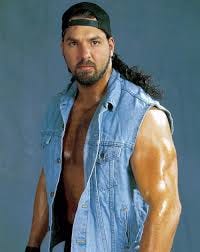
Chris Kanyon 4-2-2010 at the age. of 40
Siginificant Debuts
Frank Gotch 4-2-1899 at the age of 21
Rusher Kimura 4-2-1965 at the age of 23
The Life and Career of Hard Boiled Haggerty
Don Stansauk—better known by his ring name Hard Boiled Haggerty—was one of professional wrestling’s most memorable heels, a former NFL player who became a charismatic tough-guy actor, and a larger-than-life figure whose career bridged the rough-and-tumble world of 1950s–70s territory wrestling with Hollywood’s character-actor circuit. Standing 6 ft 1 in and weighing around 285 pounds, with a bald head, walrus mustache, and snarling presence, Haggerty drew genuine heat from crowds as an arrogant villain and later parlayed that same persona into dozens of film and television roles. Born Donald Joseph Stansauk on April 2, 1925, in Los Angeles to a Lithuanian family, he lived a life defined by physicality, showmanship, and adaptability until his death at age 78 in 2004.
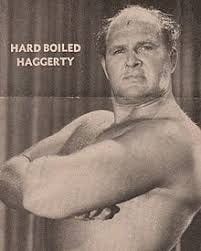
Stansauk’s early years prepared him for a career built on strength and discipline. He attended Franklin High School in Highland Park, where he took drama classes and played football. After high school he served in the U.S. Navy during World War II aboard the battleship USS New Jersey in the Pacific Theater. Following the war he studied drama at Pasadena City College, the University of Denver, Texas Christian University, and John Muir College while continuing to compete in collegiate football. In 1950 the Detroit Lions selected him in the eighteenth round of the NFL draft. He played defensive tackle for the Lions before being traded to the Green Bay Packers, appearing in 15 games over two seasons and recovering two fumbles. Though his NFL career was brief, Stansauk later joked that he had been “the largest player in the NFL.” The modest football salary—about $5,000 annually—prompted him to seek bigger paydays elsewhere.
In 1952 Stansauk entered professional wrestling, trained by Danny Loos and debuting in Green Bay, Wisconsin, under his real name. He briefly wrestled as “Don Sparrow” in Chicago after promoter Karl Pojello remarked that he “moved like a bird.” The name that stuck, however, came from Minneapolis promoter Wally Karbo: “Hard Boiled Haggerty.” Billed from Los Angeles and weighing in at a menacing 285 pounds, Haggerty quickly established himself as a classic heel—arrogant, loud, and crowd-hated. He wrestled across North America and beyond in promotions including the National Wrestling Alliance (NWA) territories in San Francisco, Texas, Hawaii, Vancouver, and Canada; the American Wrestling Association (AWA); the Worldwide Wrestling Associates (WWA) in Los Angeles; and Maple Leaf Wrestling.
Haggerty’s tag-team success defined much of his in-ring legacy. He captured the NWA World Tag Team Championship (San Francisco version) with Ray Eckert, the NWA Texas Tag Team Championship with Stu Gibson, the NWA Canadian Open Tag Team Championship with Dick Hutton, and the NWA Hawaii Tag Team Championship twice (once with Bill Savage and once with Butcher Vachon). In the AWA he held the World Tag Team Championship three times: first with Lenny Montana, then with Gene Kiniski (after Montana suffered a broken leg), and finally with Bob Geigel. In the WWA he secured the World Tag Team Championship four times—twice with The Destroyer (Dick Beyer) and twice with El Shareef. Additional singles honors included the NWA Hawaii Heavyweight Championship and the NWA Hawaii United States Championship. A short-lived reign as NWA World Tag Team Champion (Minneapolis version) with Kinji Shibuya lasted only one day before being vacated due to referee concerns—an anecdote that underscored the chaotic, territorial era of wrestling.
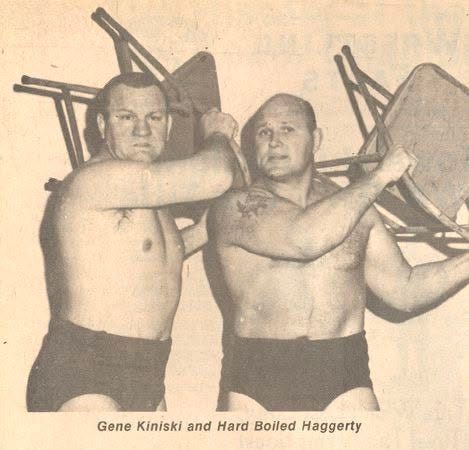
One of Haggerty’s most memorable AWA storylines centered on his on-again, off-again partnership with Gene Kiniski. After his original tag partner Lenny Montana suffered a broken leg in early 1961 (ending their first AWA World Tag Team title reign, which began October 4, 1960, when they defeated Tiny Mills & Stan Kowalski), Haggerty selected Kiniski as his replacement. The duo quickly clicked, winning the AWA World Tag Team titles from Wilbur Snyder & Leo Nomellini on July 19, 1961.
Shortly after teaming, Haggerty turned on his partner in classic heel fashion by challenging Kiniski for the AWA United States Heavyweight Championship. He defeated Kiniski to capture the belt (September 19, 1961, in Minneapolis) and held it for roughly a month before losing it to Bill Miller (as “Mr. M”) on October 17, 1961. The two continued as a tag team despite the US title drama, but the partnership imploded dramatically on August 8, 1961 (dates in some accounts place the interference slightly earlier relative to title wins). During a high-stakes match, Haggerty’s interference accidentally cost Kiniski a victory against AWA World Heavyweight Champion Verne Gagne. The AWA World Tag Team titles were vacated as a result, and a singles match was booked to determine who would retain control of the belts. Haggerty defeated Kiniski, kept the tag team championship rights, and immediately chose Bob Geigel as his new partner. The former allies’ feud added layers of personal betrayal to the territory’s booking, with the title switch highlighting the cutthroat nature of 1960s wrestling.
Haggerty & Geigel held the tag titles until November 16, 1961, when they lost them to Dale Lewis & Pat Kennedy. The Kiniski angle exemplified Haggerty’s ability to generate heat through storyline twists while elevating both men’s profiles in the AWA.
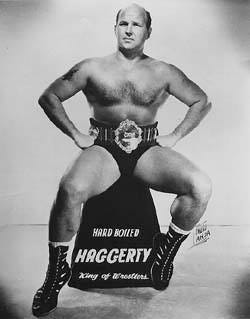
Haggerty’s longest-running and most iconic AWA feud was with Verne Gagne, the promotion’s founder, owner, and perennial World Heavyweight Champion. As a top heel, Haggerty was positioned to challenge Gagne repeatedly, drawing big gates and crowd reactions. The 1961 interference incident in the Kiniski-Gagne match served as a flashpoint that tied into broader Gagne-Haggerty animosity. Haggerty frequently clashed with Gagne in singles and tag matches throughout 1961, often in disqualification-heavy bouts that protected the champion while keeping Haggerty strong as a villain.
The rivalry extended into later years. In 1968, results from AWA cards in Minneapolis, Moorhead, and other towns show Gagne defeating Haggerty by disqualification on multiple occasions (e.g., February 24, 1968, in Minneapolis), with Haggerty often teaming with heels like Dutch Savage or others against Gagne & partners such as Bill Watts. These encounters kept Haggerty relevant as a veteran antagonist even as newer talent emerged. Sources consistently list Verne Gagne as one of Haggerty’s “notable feuds,” underscoring how the program helped define his AWA persona as the arrogant “King of the Wrestlers” who dared challenge the territory’s golden boy.
As a heel, Haggerty excelled at drawing heat. Fans in Louisville once shot him in the leg; a mob in Vancouver broke his arm; and in Duluth, Minnesota, he escaped an angry crowd by jumping from a second-story window into minus-18-degree weather. He self-proclaimed himself “King of the Wrestlers” and feuded memorably with stars such as Verne Gagne. Haggerty retired from full-time wrestling around 1972 but remained a respected figure in the industry.
Even before hanging up his boots, Haggerty had begun transitioning into acting and stunt work. His imposing physique and natural charisma made him a natural fit for tough-guy and villain roles. He made his memorable big-screen debut in the 1969 musical Paint Your Wagon alongside Clint Eastwood and Lee Marvin, playing Steve Bull, a horse doctor, blacksmith, and dentist. Over the next two decades he appeared in more than twenty films, including Foxy Brown (1974) as Brandi, The Muppet Movie (1979) as the lumberjack who hurls Kermit the Frog, The Big Brawl (1980), Micki & Maude (1984), and Million Dollar Mystery (1987) as Awful Abdul. Television credits spanned The Incredible Hulk, Columbo, Starsky & Hutch, The Love Boat, Buck Rogers in the 25th Century (as Tigerman #2), and Mr. Belvedere. He also performed stunts and was later inducted into the Stuntmen’s Hall of Fame. Haggerty often quipped that acting was easy: “It’s easy… to play my own, rotten self.”
In his personal life, Haggerty lived in Malibu and Pacific Palisades, where he was known for his sense of humor and loyalty to friends. He was an active member of the Cauliflower Alley Club for decades and received the prestigious Iron Mike Mazurki Award in 1993. On June 20, 2003, he suffered a broken neck and other injuries in a car accident in Los Angeles. He died peacefully of natural causes at his Malibu home on January 27, 2004, surrounded by family. He was survived by his daughter, Donna Brown, and two granddaughters. Services were held at Forest Lawn–Hollywood Hills Cemetery.
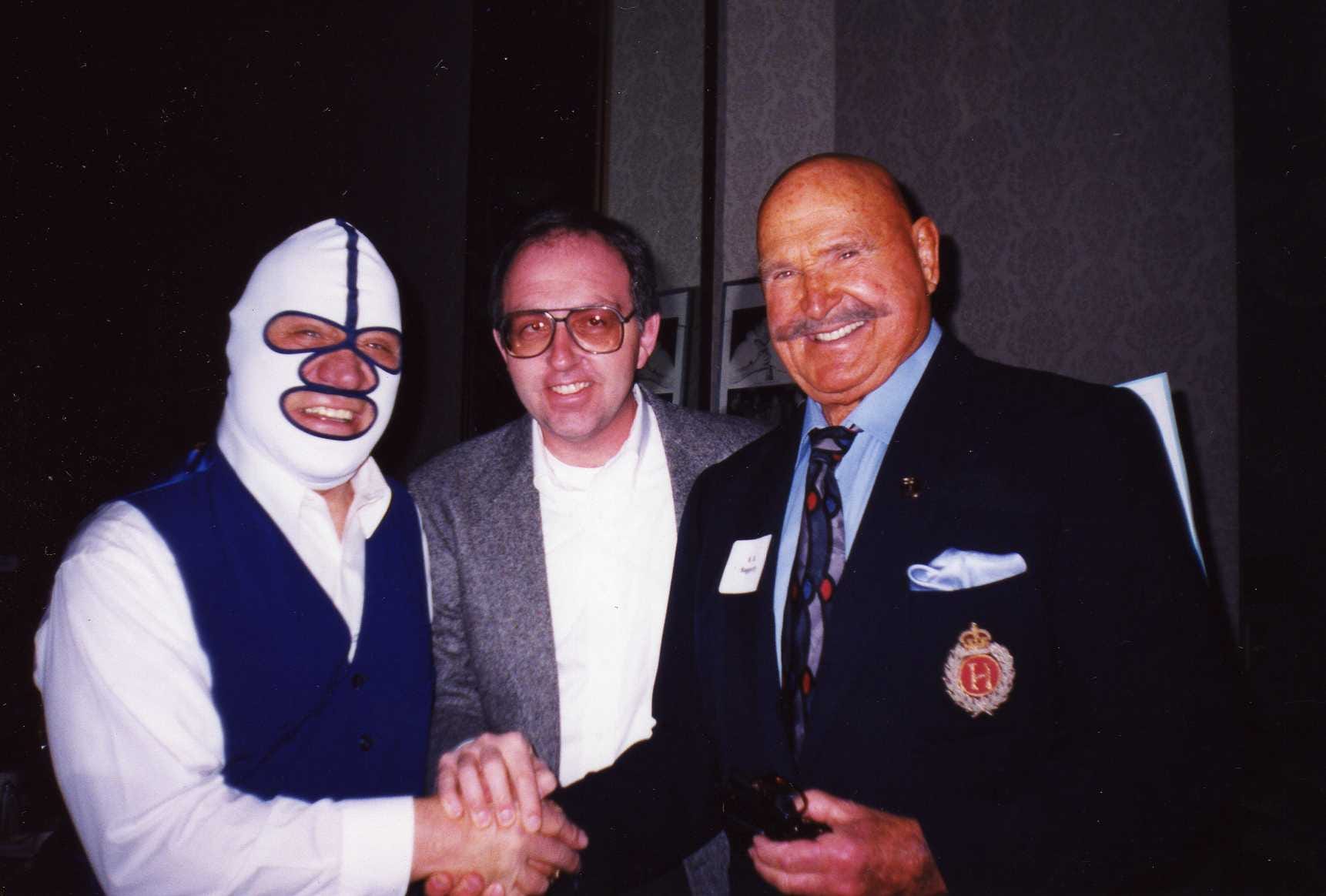
Pictured: Dick Beyer, The Destroyer, Historian George Schire and Hard Boiled Haggerty
Hard Boiled Haggerty’s career exemplified the old-school wrestling ethos of the territorial era—physical, theatrical, and unapologetically larger than life—while demonstrating how that same persona could open doors in Hollywood. From doubling his football salary in the ring to earning $60,000 a year as a top heel and then carving out a steady acting career, Stansauk never stopped adapting. Wrestlers, promoters, and fans remembered him as both a fierce competitor and a class act off the mat. In an industry that often chews up its stars, Hard Boiled Haggerty left behind championships, memorable matches, and a filmography that still entertains, proving that toughness and showmanship could carry a man from the gridiron through the squared circle and onto the silver screen.
One Thing I Learned About Lee Wykoff
He faced off against the legendary Ed “Strangler” Lewis in a rare, full-on real shoot contest on August 13, 1936, at New York City’s Hippodrome. The grueling bout lasted a staggering 2 hours and 14 minutes before both exhausted wrestlers tumbled out of the ring and were counted out in a double disqualification. This marathon shoot against one of the greatest grapplers of all time remains one of the most obscure highlights of his long career (1920s–1940s), which also included four MWA World Heavyweight titles and occasional masked runs as “The Big Bad Wolf.”
Thank You for Reading
I’m Tony Richards, Pro Wrestling Historian, Author and Storyteller. I share pro wrestling historical items in each issue of the Time Tunnel Pro Wrestling History Newsletter. Thanks for reading! If you enjoy my information on select events, matches and insights, please share it with folks you think might like to be a subscriber!
Remember, premium investors get access to exclusive and special content such as some special issues including a multi-part deep dives on wrestling territories, wrestler bios and championship title histories, special audio and video interviews on territory pro wrestling and more available in the Pro Wrestling Time Tunnel for Premium Investors.