


Happy Birthday to those who have passed on and to those great wrestlers still with us:
In Memoriam:
Salvador Luetteroth 1897
Toyonbori 1931
Richard Bryant\Chief Little Eagle 1935
Beverly Shade 1936
Frank Dalton 1941
Rick Sanchez\Abdul Zataar 1945
Chris Candido 1972
Happy Birthday:
Tony Stetson (67)
Grayson Waller (36)
Killer Kelly (34)
RIP Memorial: We stop & remember those who have passed on this day and gave themselves to the business for us, the fans. We salute you and thank you.
Bill Smithson\Moondog Spike 3-21-2013 at the age of 62
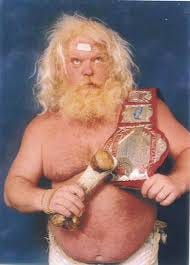
The Life & Career of Chief Don Eagle
Carl Donald Bell, known in the professional wrestling busiess as Chief Don Eagle was a native of Kahnawake, Quebec, Canada, and was a trailblazing Mohawk athlete who left an indelible mark on both boxing and professional wrestling during the mid-20th century. As one of the first prominent Native American wrestlers in the industry, Eagle combined technical prowess, cultural pride, and athletic innovation to become a star in the 1950s, a time when professional wrestling was gaining popularity through early television broadcasts. His career, however, was marred by injuries, controversies, and a tragic, mysterious end that continues to spark debates, such as the ones we’ve had on the Stories with Brisco and Bradshaw Show.

Carl Donald Bell grew up on the Kahnawake Mohawk reserve, where he was immersed in a community known for its ironworking traditions. Before pursuing athletics, Eagle worked in the steel and construction industry, laboring on bridges and buildings—a physically demanding job that likely built the foundation for his robust physique. Standing at 6 feet 2 inches and weighing around 222 pounds, he was trained from a young age by his father, Chief Joseph War Eagle (real name John Bell), a former Junior Heavyweight Champion and ring veteran who had competed in both boxing and wrestling. This paternal guidance was instrumental, as Joseph instilled in his son the skills and discipline needed for combat sports.
Eagle’s athletic journey began in earnest in 1945, at the age of 20, when he entered the world of amateur boxing. That year, he competed in 22 bouts, securing 17 victories and claiming the Cleveland Golden Gloves Heavyweight Championship Transitioning to professional boxing in 1947, he compiled a record of 16 wins (10 by knockout), 4 losses, and no draws over 20 fights through 1948. Notable moments included a swift victory over Red Dawson using a frog splash in under 16 minutes, though he also suffered setbacks, such as a disqualification and losses by decision. Despite his success, Eagle grew disillusioned with boxing and a conventional job, prompting him to shift his focus to professional wrestling, following in his father’s footsteps. As reported in The Indianapolis Star on March 4, 1945, “Don Eagle, an Indian from Quebec, will make his first local appearance on the Armory wrestling card Tuesday night when he meets Red Dawson of Minneapolis in a supporting tussle. Eagle, 20-year-old grappler managed by his father, always enters the ring attired in his native costume.”
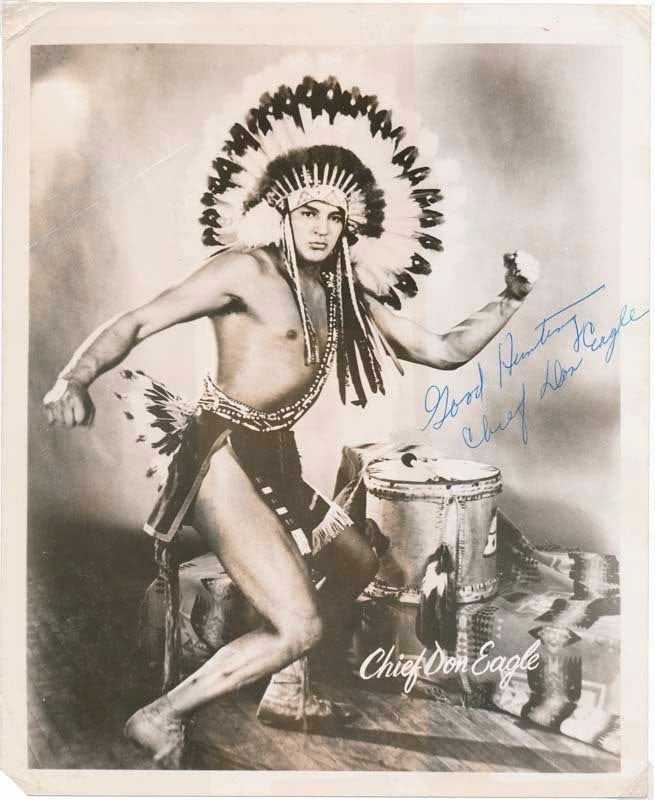
By the late 1940s, Eagle had fully embraced wrestling, adopting the ring name “Chief Don Eagle” to honor his Mohawk heritage. He became known for his scientific style, exceptional ability to escape and reverse holds, and innovative techniques that set him apart in an era dominated by brawlers. Based in Columbus, Ohio, he traveled extensively, often in a Cadillac topped with a 20-foot canoe, engaging in outdoor pursuits like spearfishing and hunting that reinforced his cultural identity. Eagle was a major draw in key markets such as New York, Chicago, St. Louis, Cleveland, and Minneapolis, where his matches captivated audiences during wrestling’s formative televised years. As Don Leo Jonathan recalled, “He had an outrigger built for that old thing. I’ve been out with him. I used to go out to the reserve, and we used to go to the Lachine rapids, spear sturgeon, shoot ducks and geese. He used it. He was quite a sportsman. Two things that he loved was Indian cornbread and roasted goose.”

His breakthrough came on May 23, 1950, when he defeated Frank Sexton in a best-of-three-falls match in Cleveland to capture the AWA World Heavyweight Championship (Boston version). This victory marked him as a world champion and solidified his status as a top-tier wrestler. Eagle held the title twice in the AWA (Boston), and he also claimed the World Heavyweight Championship (Illinois version) under Fred Kohler Enterprises and the MWA World Heavyweight Championship (Ohio version) under the Midwest Wrestling Association.
Other highlights included a 60-minute draw against Antonino Rocca at Chicago Stadium on May 19, 1951, and being the first wrestler to throw heavyweight boxing champion Primo Carnera off his feet in the early 1950s. Lou Thesz described him as a “very colourful” attraction, noting, “He did the little dance. The people were kind of Indian-oriented at that time, and everything was pro-Indian.” Hans Schmidt added, “When he was in his prime, he was pretty good... tall, skinny, no fat on him. He was in pretty good shape when his father was with him, taking care of him.”
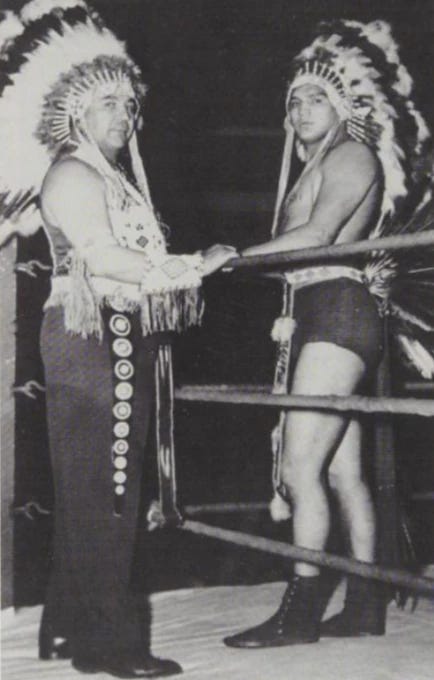
Pictured: Chief War Eagle and Chief Don Eagle
Eagle’s career was not without drama. Just three days after winning the AWA title, on May 26, 1950, he faced Gorgeous George in a televised match near Chicago. After winning the first fall, Eagle was counted out in the second and controversially pinned in the third via a “backyard entry cradle,” despite having one shoulder off the mat. Referee Earl Mullihan’s fast count sparked a riot, with fans hurling objects into the ring. In frustration, Eagle assaulted Mullihan, leading to a suspension from the Illinois State Athletic Commission and the stripping of his title. He regained the championship on August 31, 1950, but it was vacated in November due to inactivity from injuries. This “screwjob” finish remains one of wrestling’s early controversial moments, highlighting the scripted yet unpredictable nature of the sport.
Injuries further plagued Eagle. In 1953, during a match against Hans Schmidt, he was thrown over the top rope into ringside chairs, suffering damaged spinal discs and two broken ribs. This sidelined him for a year, during which he trained a young Billy Two Rivers, who later debuted in 1953 and occasionally teamed with Eagle. Chronic back problems persisted, forcing sporadic appearances and ultimately leading to his semi-retirement in the early 1960s. As Two Rivers recalled, “He saw some potential in me becoming a wrestler.” Eagle wrestled for the newly formed American Wrestling Association (AWA Minnesota) in 1960 but retired fully in 1965 at age 39.
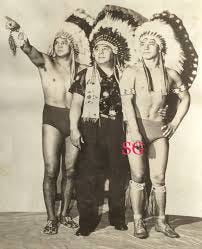
Pictured: Chief Don Eagle, Chief War Eagle and Billy Two Rivers
In his later years, Eagle focused on personal projects, including construction ventures like a Logan County (Ohio) Indian village, expansions to Zane Shawnee Caverns, and a $12 million Indian Center near Montreal. He was married to Jean Eagle, who predeceased him, adding to his personal hardships.
Tragically, on March 17, 1966, Eagle was found dead at age 40 in Kahnawake, with a .32 caliber revolver nearby. Initial reports cited suicide due to despondency over failed projects and chronic pain, but close associates, including Billy Two Rivers and Don Leo Jonathan, vehemently rejected this, suggesting foul play possibly linked to his wife’s death. Two Rivers recalled a recent conversation about Eagle’s struggles with retirement and back issues, insisting he showed no signs of suicidal intent.
Two Rivers recalled: “I went out and had a couple of beers with him. We talked, and sort of said how things were. He said that he was finding it difficult being retired and his back was giving him a lot of trouble.” The circumstances—whether at home or in his car—remain debated, leaving his death an unsolved mystery that haunts wrestling lore. Insisting on no suicidal intent, Two Rivers stated, “I personally don’t believe that it was suicide... Let me tell you safely that it was not enemies. It was not suicide.” Jonathan echoed, “A lot of times when you know a person, there’s just certain things that you figure they would never do. I heard that he had terminated his own life. I find that hard to believe.”
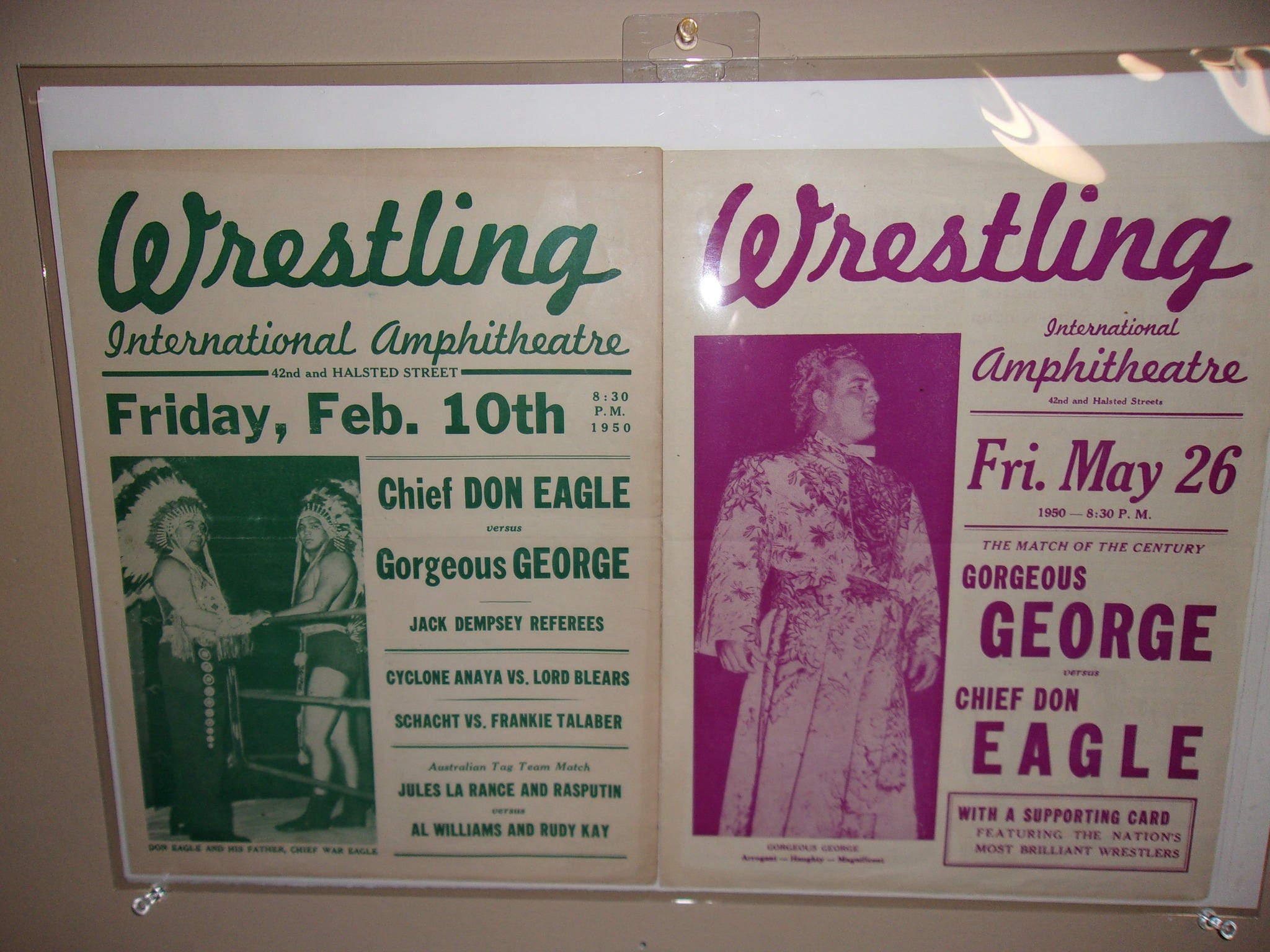
Pictured: Programs from two of the famous 1950 matches between Chief Don Eagle and Gorgeous George, including the May 26th “original screwjob” card
Chief Don Eagle’s legacy endures as a pioneer who broke barriers for Native American athletes in professional wrestling. Inducted into the Canadian Wrestling Hall of Fame in 2016, he is remembered for his technical innovation, cultural representation (despite occasional stereotypical imagery like Plains Indian gear), and contributions to the sport’s early popularity.
Don Leo Jonathan reflected, “I think the main thing with him, besides the fact that he was a good wrestler, a scientific wrestler, [was that] he gave the white people, or the rest of Canada, a better look at what the native people were like... First Nations peoples stand different in the eyes of their fellow Canadians than they did 40 years ago. It was a slow process, but one that I think Don Eagle sped up.”
Billy Two Rivers added, “It’s always been the curiosity of the Red Man in any kind of sport, and he personified it in his career... Basically, he was one of the front runners in the television era of wrestling. He was the pioneer in wrestling as an Indian person. Combined with his natural abilities, and the colourfulness of ourselves in costumes, and I guess the curiosity, he was a boom to wrestling, but also he was a role model for a lot of Indian people.” Two Rivers also noted Eagle’s pride in his heritage: “He always made it a point that it was Don Eagle from the Mohawk community of Kahnawake. A lot of times the wrestling announcers would say Don Eagle from Montreal or Don Eagle from Quebec, Canada. And if that was done, he’d correct it. … I took that as an example too to my travels.”
On his lasting impact, Two Rivers said, “We have quite an oral tradition here in our community. The names of people that achieve, whether it’s fame or notoriety, are remembered in our community. So he, as a wrestler, his name continuously crops up in talks, discussions... When wrestling comes up, or achievement or goals that have been achieved by Indian people or people of our community, he’s well remembered.” Jonathan further highlighted cultural challenges: “People never did understand him. You take white people looking at an Indian, they look at it completely differently than an Indian looking at an Indian... He was just an Indian. He was through and through an Indian, even though he dealt with white people, and he learned to get along in that world, he wasn’t completely accepted in that society, or he didn’t want to be into it.”
Chief Don Eagle’s story also underscores the physical toll of wrestling and the industry’s penchant for controversy. Though his life ended prematurely, Eagle’s influence paved the way for future generations, cementing his place in the annals of combat sports history.
One Thing I Learned About Toyonbori
He was notorious for his gambling addiction—particularly on horse racing—where he claimed to understand “horse language” and would meticulously examine a horse’s paddock behavior, physical features, and even its manure before placing bets.
Thank You for Reading
I’m Tony Richards, Pro Wrestling Historian, Author and Storyteller. I share pro wrestling historical items in each issue of the Time Tunnel Pro Wrestling History Newsletter. Thanks for reading! If you enjoy my information on select events, matches and insights, please share it with folks you think might like to be a subscriber!
Remember, premium investors get access to exclusive and special content such as some special issues including a multi-part deep dives on wrestling territories, wrestler bios and championship title histories, special audio and video interviews on territory pro wrestling and more available in the Pro Wrestling Time Tunnel for Premium Investors.