


Happy Birthday to those who have passed on and to those great wrestlers still with us:
In Memoriam:
Gino Garibaldi 1907
Mickey Poole 1952
Rick McGraw 1955
Jose Luis Alverado Nieves\Super Porky\Brazo de Oro 1963
Happy Birthday:
Scott Casey (73)
Jimmy Korderas (64)
Matt Sydal (43)
Jimmy Havoc (42)
AJ Lee (39)
RIP Memorial: We stop & remember those who have passed on this day and gave themselves to the business for us, the fans. We salute you and thank you.
3-19-2021 Barry O at the age of 62

Significant Debuts:
Dean Higuchi\Dean Ho 1962 at the age of 22
The Life & Career of Cora Combs
Emerging from humble beginnings in rural Kentucky, Combs transitioned from a promising career in country music to becoming a trailblazing wrestler who captivated audiences worldwide. She was born into this world as Beulah Mae Combs, and she stands as a remarkable figure in the annals of professional wrestling, particularly in the realm of women’s wrestling during its formative years. Her journey exemplifies resilience, adaptability, and passion, as she navigated the male-dominated world of professional wrestling in the mid-20th century. Over a career spanning several decades, Combs not only achieved personal success but also paved the way for future generations of female wrestlers, including her own daughter.
Cora Combs was born on March 17, 1927, in Hazard, Kentucky, a small town nestled in the Appalachian Mountains. Growing up in a modest family, with parents Lorenzo and Susie Mae Combs, she developed an early affinity for music, which would initially define her professional aspirations. As a young woman, Combs pursued a career as a country music singer and bassist, performing with a group known as the Trail Riders. This musical phase allowed her to hone her performance skills and gain experience in entertaining crowds, skills that would later prove invaluable in the wrestling ring. Living in Nashville, Tennessee—a hub for country music—Combs immersed herself in the vibrant scene, but her path took an unexpected turn in 1949.
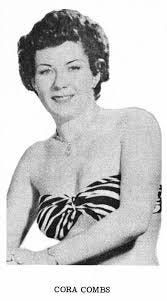
In 1948, Cora (then Beulah Mae) wasn’t a wrestling fan, but her sister, who sewed ring jackets for wrestlers, dragged her to a show at Nashville’s Hippodrome Arena. During a heated bout between Dot Dotson and Mildred Burke, Dotson took a dramatic tumble out of the ring and landed right in Cora’s lap, startling the young woman from Hazard, Kentucky. This serendipitous moment sparked her interest. Promoter Nick Gulas introduced her to Billy Wolfe backstage, and just six weeks later—after training under champion June Byers in Columbus, Ohio—she made her debut in a chaotic seven-woman battle royal in Jackson, Mississippi. Cora later recalled, “I got the stuff beat out of me,” enduring a rough initiation where the other wrestlers tested the newcomer mercilessly. This baptism by fire set the tone for her resilient career.
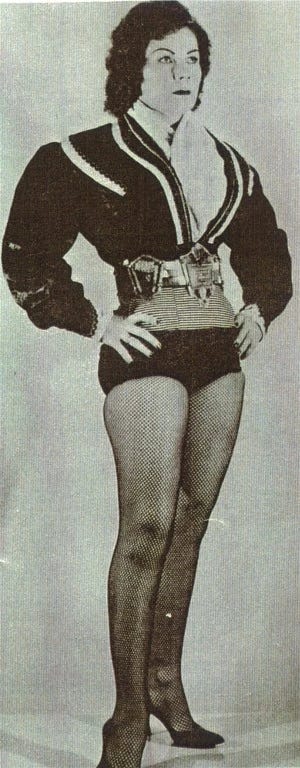
Combs’ entry into professional wrestling was swift and demanding. Under Wolfe’s tutelage, she quickly adapted to the rigors of the sport, debuting in the early 1950s. Standing at 5’5” and weighing around 138 pounds, she possessed a compact, athletic build that suited the high-energy style of women’s wrestling during that era. Combs primarily competed in Indianapolis but soon expanded her reach, touring extensively across the United States and internationally. Her matches were known for their intensity, and she became a globe-trotting champion, headlining cards in various promotions.As part of Billy Wolfe’s troupe, Combs wrestled alongside some of the era’s legends and was recognized as the last surviving member of that influential group. Her career highlights included capturing regional titles and engaging in memorable feuds.
Cora’s dual worlds of music and wrestling collided dramatically in 1953 when country legend Webb Pierce, fueled by drink, tried to force his way into her dressing room after a Nashville wrestling event. Patrolman Ramon Marler reported that Pierce fought to get backstage, leading to his arrest for drunkenness and resisting arrest. Cora, feeling responsible, visited the jail and vouched for him, saying, “It is all my fault. I feel responsible.” The two left arm-in-arm after his release, turning a potential scandal into a quirky tale of Nashville’s intersecting entertainment scenes.
Cora’s career took her far beyond Kentucky, wrestling over 1,200 matches across the U.S., Canada, Mexico, Japan, pre-Castro Cuba, Fiji, Nigeria, and even Germany, where she performed under the alias Hildegard Schmidt to appeal to local crowds. One brutal encounter with Sara Lee left both women bloodied in the ring, showcasing the physical toll of the sport. Cora accumulated injuries like a broken collarbone, dislocated shoulder, and a cauliflower ear on her left side—which she proudly wore as a badge of honor, proof of being a “good wrestler.” She also broke barriers, becoming one of the first women to wrestle in New York State on March 3, 1972, against Princess Ti Ti (Chi Chi Paris) after a 50-year ban was lifted, drawing major media attention.
Perhaps the most poignant anecdotes involve Cora’s daughter, Debbie Combs, who grew up immersed in wrestling—dressing as wrestlers as a child and traveling on the road from just six months old. Debbie debuted at 17 when an opponent no-showed, lasting five minutes before falling in love with the ring. The pair often faced off in the 1970s and 1980s, with Cora donning a mask as the villainous “Lady Satan” to hide their relation and amp up the drama. Cora admitted it was tough: “Yeah, it was hard, because I didn’t want to hurt her.” One memorable match in Lima, Ohio, saw Cora, nearly 70, growling like a heel and taking big bumps to draw heat from the crowd, followed by a mixed tag team bout. They also teamed up once in St. Louis on November 24-25, 1979, in a two-out-of-three-falls match against Kay Roberts and Sherrie Lynn, with Debbie securing the opener and Cora clinching the win.Their bond was unbreakable, with Cora describing Debbie as her best friend: “I love her with all my heart.”
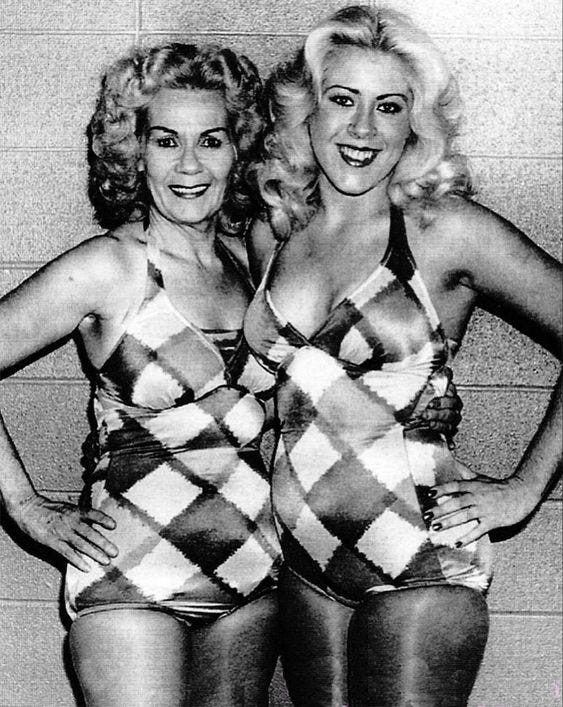
Pictured: Cora and Debbie Combs
This mother-daughter dynamic added a layer of intrigue to her story, blending family ties with professional rivalry. Combs’ ability to perform at a high level for over three decades solidified her status as a pioneer, especially in an era when women’s wrestling was often overshadowed by its male counterpart.
By the 1980s, as the wrestling landscape evolved, Combs began to wind down her active in-ring participation, officially retiring in 1985.
Beyond the spotlight, Combs’ personal life was marked by her role as a mother and her deep ties to Nashville. She raised her daughter, Debbie Combs, who followed in her footsteps to become a professional wrestler in her own right. This familial connection extended into the ring, creating a legacy that spanned generations. Combs’ life in Nashville allowed her to remain connected to her musical origins while embracing her wrestling fame. She was known for her warm personality and often participated in local reunions and events, staying engaged with the wrestling community long after her retirement.

In her post-wrestling years, Combs explored acting, appearing in projects like the 2000 film Blue Cyclone. Her contributions to wrestling were formally recognized in 2007 when she was inducted into the Professional Wrestling Hall of Fame, an honor that celebrated her pioneering role in women’s wrestling.
Combs continued to live in Nashville until her passing on June 21, 2015, at the age of 88, due to complications from pneumonia.
One Thing I Learned About Barry Orton
Despite his family legacy in wrestling, he originally aspired to be a musician rather than a wrestler, and his first band was called the Midget Monkees, which performed covers of hits by The Monkees.

Thank You for Reading
I’m Tony Richards, Pro Wrestling Historian, Author and Storyteller. I share pro wrestling historical items in each issue of the Time Tunnel Pro Wrestling History Newsletter. Thanks for reading! If you enjoy my information on select events, matches and insights, please share it with folks you think might like to be a subscriber!
Remember, premium investors get access to exclusive and special content such as some special issues including a multi-part deep dives on wrestling territories, wrestler bios and championship title histories, special audio and video interviews on territory pro wrestling and more available in the Pro Wrestling Time Tunnel for Premium Investors.
I enjoy your write-ups, but the ones I look forward to the most are those of the women wrestlers from the 1930's to the 1960's because they were such an important part of the business and it's history which early in my fandom had kind of been forgotten about. Although the presentation (and where tape exists, the commentary) would raise eyebrows today (treated as 'wildcats' or a comedy spectacle) they certainly could work and had good instincts in the ring. They also knew how to lean into their attractiveness too - wrestling has always been a 'bodies business'. A sign that trends come and go, and nothing is ever 'truly' new.
I know you will have seen it, but the 'Lipstick and Dynamite' film came along just at the right time to bring these amazing women and their legacy back to the current wrestling consciousness. As fans we truly are blessed to have heard the stories of these huge stars of the mid 20th century whilst they were still alive. I think I could make an argument that this is the most important wrestling film / documentary to exist.
Thanks Tony for your words every day