


Happy Birthday to those who have passed on and to those great wrestlers still with us:
In Memoriam:
Don Owen 1912
Rudy Kay 1914
Lance Russell 1926
Lorenzo Parente 1935
Happy Birthday:
Mark Lewin (89)
Mike McGuirk (71)
Kenny Bolin (66)
Mark Canterbury\Henry Godwin (61)
Steve Armstrong (61)
Kenny Dykstra (40)
Brett DiBiase (38)
RIP Memorial: We stop & remember those who have passed on this day and gave themselves to the business for us, the fans. We salute you and thank you.
Gary Hart 3-16-2008 at the age of 66
Significant Debuts:
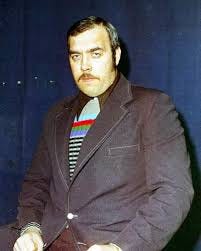
Gran Hamada 1972 age: 17
60 Year Flashback
March 1966: The Month In Pro Wrestling
Stage of the Territory Era:
Stage 5 of 7: Re-Consolidation
The DOJ probe into the professional wrestling business and particularly the National Wrestling Alliance began in 1953 amid complaints of blacklisting, arena lockouts, and monopoly tactics (especially the “California Combine”), escalated in 1956, and culminated in a 1957 consent decree. This civil judgment forced the NWA to relax some restrictive practices, causing membership to shrink from 36 promoters to 26, with further attrition into the early 1960s. The Alliance survived but emerged leaner, more cautious, and focused on internal stability rather than aggressive expansion or outright exclusion. This is the basis for my Stage Four of my model of The 7 Stages of the Territory Era of Professional Wrestling, which is called simply Stage 4: Investigation. Like all the stages in the model, it was a critical and transformative ten years in the professional wrestling business.
Stage 5, which is titled “Re-Consolidation” began in the year of 1965. The major theme during the state of re-consolidation is the transition from defensive contraction to confident expansion within boundaries—an essential bridge to the territory era’s peak years in the late 1960s and mid-1970s.
During the Stage 4 “Investigation” stage (1955-1965), the NWA, which was global by that point, with members in other parts of the world and North America, but specifically within the United States and the governmental oversight, the National Wrestling Alliance had portions of it broken off and separated. Specifically, the Minnesota Territory piece, which became the American Wrestling Association and the northeastern portion, which was branded as the World Wide Wrestling Federation. Even though these booking office members now operated seemingly apart from the NWA, they kept their membership active with the Alliance as well as the Alliance picking up new members during the stage, such as Australia’s World Championship Wrestling booking office, operated by Jim Barnett. The wrestling business worked to “re-consolidate” itself, where it looked different from the outside but continued to operate and collaborate internally.
By the second year of the re-consolidation paradigm shift in 1966, the industry had entered firmly into stage 5: promoters were re-consolidating power within their remaining territories, rebuilding audience trust, refreshing storylines with new champions, and resuming coordinated but compliant operations under the NWA umbrella while non-aligned groups like the AWA and WWWF operated successfully on the periphery. March 1966 perfectly embodies this re-consolidation. The calendar featured no seismic scandals, no major lawsuits, and no territory invasions—only steady, localized activity that demonstrated the system’s resilience after a decade of legal pressure. The new NWA World Heavyweight Champion, Gene Kiniski, was still integrating into his role after defeating the legendary Lou Thesz on January 7 in St. Louis.

Pictured: NWA World Champion, Gene Kiniski
Kiniski’s reign (which would last until 1969) symbolized renewal: a younger, Canadian powerhouse replacing Thesz’s 29-year-spanning era. In March, Kiniski defended the title across NWA territories, reinforcing the Alliance’s core mechanism—world-champion travel—while local promoters booked him selectively to boost gates without overexposure. This careful rotation helped rebuild fan excitement in markets still recovering from the antitrust spotlight. Kiniski’s March itinerary reflected the NWA’s booking model: the champion would fly or drive between territories for weekend cards or mid-week shows, facing top local talent in two-out-of-three-falls matches while cutting promos that emphasized his superior strength and Canadian pride.
No single, overarching angle dominated the month—Kiniski was still establishing himself as the new champion after Thesz’s long era—so the focus remained on straightforward title defenses designed to generate heat and sell tickets. His heel tactics (power moves, occasional rule-breaking, and arrogant post-match interviews) positioned local heroes as sympathetic underdogs chasing the gold, a classic territorial formula that kept fans invested without requiring complex long-term feuds in any one market.
The month opened for Kiniski in the Tennessee Territory for Roy Welch and Nick Gulas. He worked the biggest and best towns for them during this time, which would be Nashville, Chattanooga and Huntsville. On March 3rd, Kiniski continued his Tennessee swing at the Memorial Auditorium in Chattanooga. He defeated Sam Steamboat in a two-out-of-three-falls NWA World Heavyweight Title match to retain the championship. Steamboat’s aerial and technical offense provided strong contrast to Kiniski’s grinding power game, allowing the champion to sell vulnerability before the pin in the decisive fall. Kiniski’s heel character almost certainly involved rule-bending moments (stomps, eye rakes, or using the ropes) that fueled post-match angles. The storyline remained simple but effective: the arrogant world champion testing himself against regional talent, with Steamboat positioned as a credible challenger who could “almost” dethrone the outsider. This defense helped fill the auditorium and reinforced the NWA’s narrative that any top local star could earn a shot at the gold.
Mid-month, Kiniski headed west to the Dallas territory (NWA Big Time Wrestling, owned by Fritz Von Erich and booked by his Dallas office) for a pivotal encounter. On March 8, 1966, at the Sportatorium, he faced Fritz Von Erich in a two-out-of-three-falls NWA World Heavyweight Title match that ended in a 1-1 draw. Von Erich, already a massive draw in Texas as a heroic, patriotic babyface, was a natural rival for the heel champion. The two had crossed paths before Kiniski’s title win, and this draw kept the feud simmering without a decisive finish—perfect booking to guarantee return business. Kiniski likely controlled large portions with his strength, while Von Erich’s claw hold and comeback spots built drama; the time-limit draw protected both men and left fans clamoring for a rematch. The angle played on regional pride: the Texas icon versus the cocky Canadian interloper, with Kiniski’s promos dismissing Von Erich as “just another local” to generate heat. This match stands out as the most documented title bout of the month and exemplified how Kiniski’s touring style elevated territory stars without sacrificing the champion’s credibility.
Kiniski also wrestled Killer Karl Kox in Fort Worth at the Northside Coliseum that Monday, Dallas Tuesday, then an unusual interruption in the schedule to Kansas City at Memorial Hall to defeat a very hot star in Cowboy Bob Ellis in 2 out of 3 falls, then back to Texas to San Antonio. Kiniski defeated Joe Blanchard at the Wrestlethon. Then, he made a jump to Lake Charles, Louisiana to again face Kox in a successful title defense before returning to Houston’s Sam Houston Coliseum to secure a title defense over the very capable Billy Red Lyons.
On March 21st, it was back to Tennessee for Kiniski to have a return title match against Lou Thesz. After the hot run from late 1959 to late 1961 under booker Buddy Fuller, Memphis went back into the 2nd and sometimes 3rd position of best town in the territory. Kiniski would wrestle Lou Thesz in Memphis later in the month on March 21st. The Kiniski and Thesz return match was a significant draw during the year with the thought that “the old master” Thesz would get the title back. Kiniski would return for another Memphis appearance on the 28th to face the challenge of Sailor Art Thomas. A quick glance at any photo of Thomas during his career can illustrate how muscular, athletic and equipped with the body to compete with the rugged toughness of Gene Kiniski. Kiniski finished the loaded March schedule in Canada on March 30th to successfully defend the title against former champion, Whipper Billy Watson at the Forum in Hamilton, Ontario.
If you look simply at Kiniski’s challengers during the month, Fritz Von Erich, Sonny Myers, Sam Steamboat, Killer Karl Kox, Cowboy Bob Ellis, Billy Red Lyons, Joe Blanchard, Wilbur Snyder, Whipper Billy Watson, Lou Thesz and a couple others, it shows aside from the night after night schedule, the versatility the NWA champion had to have to continue to make the sport compelling, exciting and worth of purchasing a “championship ticket”, which was usually a buck or more higher than usual for fans
Overall, March 1966 illustrates the early phase of Kiniski’s reign: a grind of travel, title defenses, and heel heat-building rather than intricate, territory-spanning storylines. Angles stayed formulaic—the arrogant outsider champion versus sympathetic locals—because the NWA system prioritized short-term business over long-term serialization. Kiniski’s persona made him an ideal heel champion, drawing crowds while giving babyfaces credible shots.
Local title scenes illustrated territorial self-sufficiency. On March 3 in Salem, Oregon, Paul Jones defeated Stan Stasiak to capture the NWA Pacific Northwest Heavyweight Championship, injecting fresh blood into Don Owen’s longtime stronghold. Five days later, on March 8 in Tampa, Florida, The Missouri Mauler (Larry Hamilton) took the NWA Florida Southern Heavyweight Championship from Tarzan Tyler. These changes were classic territory-era storytelling: promoters used that elevated reliable midcarders or regional heels to main-event status, creating feuds that filled weekly arenas and television slots without needing national coordination. The fact that such switches occurred smoothly across distant regions (Pacific Northwest, Florida, Texas—where Fritz Von Erich had recently claimed the NWA Texas title in January) showed the NWA’s re-consolidated infrastructure working as intended post-decree.
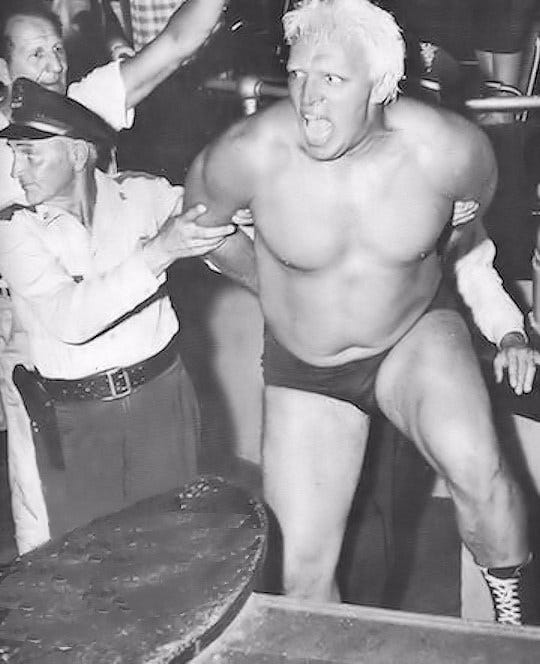
Pictured: Tarzan Tyler, NWA Southern Heavyweight Champion
In the Carolina area, Jim Crockett Promotions schedule in March followed the standard territorial blueprint. The promotion ran cards several nights a week across its key markets—Charlotte’s Park Center, the Greensboro Coliseum, Norfolk’s Arena, Richmond, and smaller venues like County Hall in Charleston, South Carolina. These were not big show spectacles or nationally televised extravaganzas; they were intimate arena shows designed for local audiences who followed the action on black-and-white television. Saturday mornings and afternoons brought JCP programming to homes via stations such as WBTV in Charlotte and WGHP in the Piedmont Triad. These shows featured in-ring highlights, interviews, and upcoming match announcements, serving as the primary marketing tool in an era before widespread cable or internet.
While Kiniski defended the belt primarily in other NWA territories in March, his status as champion lent prestige to every JCP card. Fans knew that any visiting NWA star—or a strong local performer—might one day earn a title shot, keeping the possibility of a world-title match alive in the territory. Locally, the most active championship was the NWA Southern Tag Team Championship (Mid-Atlantic version). In early 1966 the heels Bronko Lubich and Aldo Bogni were in the midst of a reign that included defenses all throughout the first three months of the year. The Italian duo’s arrogant, rule-breaking style made them perfect foils for the popular babyface teams of the day. George Becker and Johnny Weaver—clean-cut, athletic, and beloved by Carolina crowds—were already emerging as top contenders and would eventually claim the titles later in the year. Tag-team wrestling was JCP’s bread and butter; Crockett Sr. built his reputation on well-worked, story-driven doubles matches that could fill arenas night after night.
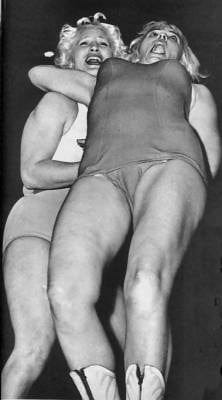
Pictured: Penny Banner tries to escape the hammerlock applied by Judy Grable
Women’s wrestling also had a foothold. On March 15, 1966, at County Hall in Charleston, South Carolina, one of the documented cards featured a singles match between two pioneering female stars: Penny Banner defeated Judy Grable. Banner, a tall, athletic babyface with a legitimate athletic background, was a regular draw in the territory. Grable, known for her toughness and technical skill, provided credible opposition. Their bout was typical of JCP’s approach—giving the women a featured spot on the undercard and using the match to promote future shows in nearby cities. Similar Banner–Grable encounters continued into June in Norfolk and Roanoke, showing that feuds were allowed to simmer across multiple markets rather than resolving in one night.
In the mid-1960s, Georgia Championship Wrestling (GCW) stood as one of the National Wrestling Alliance’s (NWA) most vibrant territories. Under the steady hand of the Atlanta booking office owners, Ray Gunkel, Buddy Fuller and the outside face of the office, Paul Jones, the promotion centered its operations in Atlanta, delivering weekly live events at venues like the Atlanta Municipal Auditorium and a popular television program that reached households across the Southeast. March 1966 represented a transitional yet explosive period for GCW. While the NWA Georgia Heavyweight Championship remained stable under Buddy Fuller’s reign (which had begun in May 1965 and would continue until late May 1966), the month’s action revolved around intense tag-team rivalries, the arrival of top NWA talent, and a landmark title change that reshaped the division heading into spring.
The territory’s tag-team scene provided the month’s biggest drama. Earlier in 1966, the NWA World Tag Team Championship (a version of the NWA World Tag Team titles defended regularly in Georgia) had changed hands multiple times: Al Costello and Louie Tillet claimed the vacant belts on February 4, only to lose them to the German duo Eric and Karl Von Brauner on February 11. By March, the Von Brauners were entrenched as heels, drawing heat with their stiff style and foreign menace gimmick. On Friday, March 25, in Atlanta, the masked Mysterious Medics—managed by a cunning handler and known for their rule-breaking tactics—challenged the Von Brauners in a brutal, heel vs heel, No DQ match. The Medics emerged victorious, capturing the “World” Tag Team titles in a finish that thrilled the capacity crowd and signaled a shift toward more chaotic, weapons-heavy storytelling in the territory.
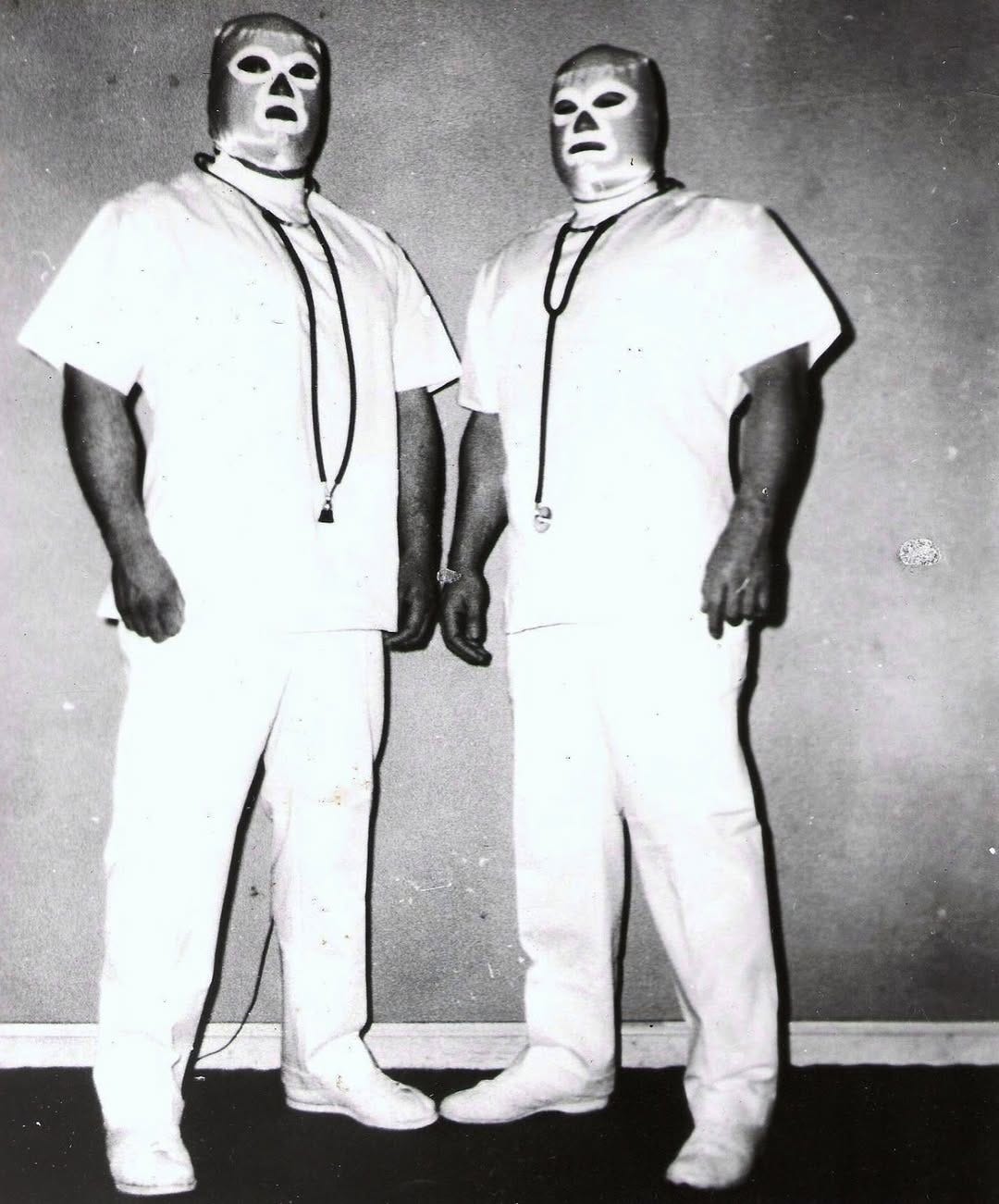
Pictured: The Mysterious Medics, Tony Gonzalez and Donald Lortie
The same March 25 card also featured movement in the singles division. Buddy Fuller, already the reigning NWA Georgia Heavyweight Champion, was recognized as the new NWA Southern Heavyweight Champion (Georgia version) on that date—though historical records remain unclear on the exact opponent or circumstances, noted only as a default or contested victory. This dual-title presence for Fuller underscored GCW’s practice of running multiple regional championships to keep storylines layered and house-show crowds engaged across Georgia.
The roster in Georgia at this time was strong. the masked Infernos (managed by J.C. Dykes), Louie Tillet (soon to challenge for the Georgia title), Ray Gunkel, Enrique Torres, Bobby Shane, Mario Galento, and carpenters such as Tony Nero, Chin Lee, and Swede Karlson. These weekly shows blended technical grappling, brawls, and colorful character work, with referees like Leo Garibaldi (who was also the booker) maintaining order amid the growing use of managers and interference.
Television tapings and house shows amplified the March 25 title change. The Medics’ victory propelled them into high-profile defenses the following month, including a no-contest against Ray Gunkel and Enrique Torres on April 8. Meanwhile, the Infernos captured the Southern Tag Team titles on April 1, setting up a crowded spring schedule of multi-title tournaments and loser-leaves-town matches. This rapid title movement kept fans invested and prevented any single act from growing stale—a hallmark of Leo Garibaldi’s booking philosophy that emphasized variety over long, static reigns and consistent television interest and arena-filling crowds at the City Auditorium in Atlanta, as well as Columbus, Augusta, Macon, Savannah and others.
By March 1966, The Sheik was not only the Detroit territory’s top villain and frequent NWA United States Heavyweight Champion (Detroit version) but also its booking office owner and promoter. His Big Time Wrestling promotion centered on the air-conditioned Cobo Arena, where sellout crowds regularly paid to watch him maim babyfaces with fireballs, hidden pencils, and his signature camel clutch. Weekly television tapings on local Channel 7 built storylines, while Saturday night house shows at Cobo Arena delivered the payoff. The Sheik’s gimmick—complete with a prayer rug, incoherent Arabic mutterings, and manager Abdullah Farouk (Ernie Roth)—made him the perfect monster. He rarely spoke English on camera, instead relying on stalling tactics, illegal objects, and literal flames to draw heat. Fans loved to hate him, and the Detroit territory rewarded that hatred with packed houses and bloody main events.
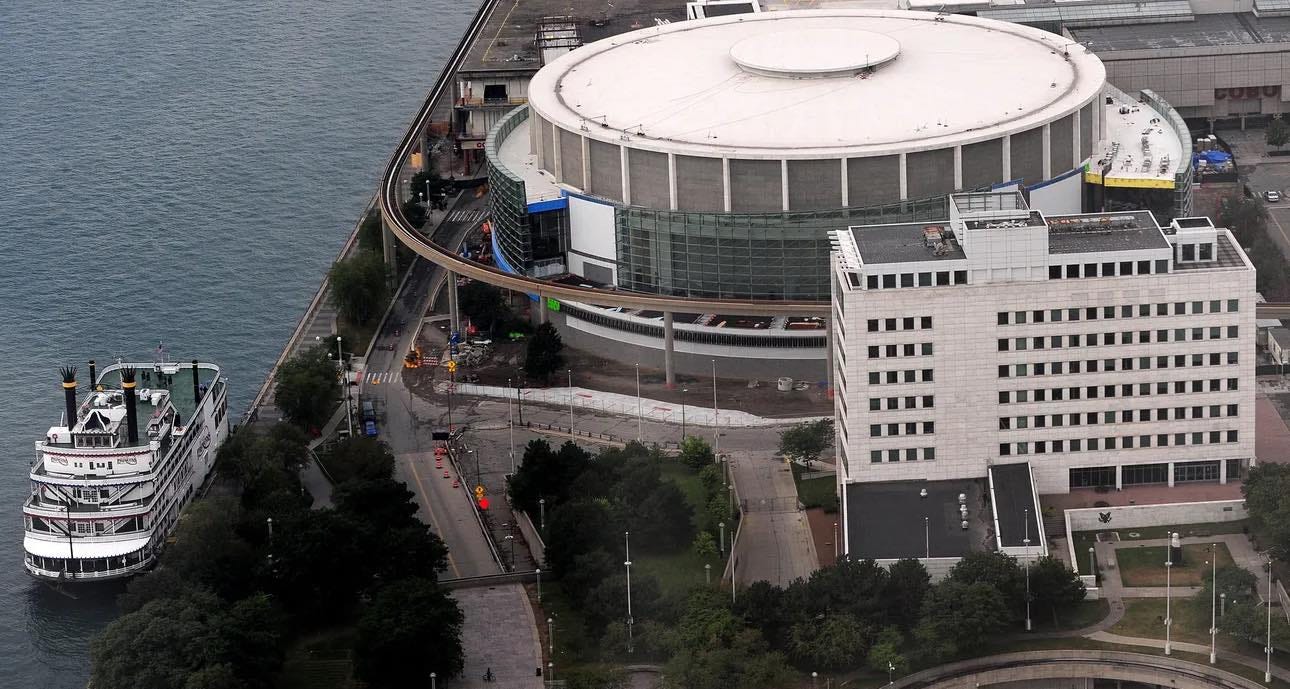
Pictured: Cobo Arena in Detroit, Michigan
The most documented Detroit card of the month came on March 5, 1966, at Cobo Arena, drawing a robust 10,500 fans. The Sheik did not appear in the featured bouts that night—common for a promoter who paced his in-ring schedule. The three top matches that anchored the card were Ernie Ladd & Lord Layton defeating The Volkoff Brothers, in the semi-main, it was Bobo Brazil defeating Bulldog Brower and the top of the card was a Steel Cage match with Mark Lewin defeating Killer Karl Kox. This lineup highlighted the promotion’s signature style—hard-hitting, weapon-heavy matches with frequent disqualifications and count-outs. The presence of stars like Bobo Brazil (The Sheik’s eternal rival), Ernie Ladd, and Killer Karl Kox (who would team with The Sheik just weeks later) kept the arena buzzing. Brazil’s ongoing war with The Sheik over the Detroit version of the U.S. title was the territory’s money feud; though they did not meet on March 5, their paths crossed constantly throughout 1966, frequently selling out Cobo Hall.
It might be significant to note The Sheik appearing in the Gulas-Welch territory on March 9th in the promotions biggest-drawing town, Nashville as The Shiek defeated Bob Hamby. Hamby, not a particularly well-remembered name, he wrestled and managed various heels in the Gulas-Welch territory, Jim Crockett Promotions, Central States, Texas, Alabama, Louisiana and others. My benchmark for a wrestler to be somewhat remembered is either a very significant angle or at least 1,000 matches in their career. Hamby had around 600, which is why he is low on the recall memory ladder for most fans and enthusiasts. Hamby stayed involved one way or another in wrestling until at least 2005. I think my point is bringing up this match outside The Sheik’s home territory is it show how territory heads often supplemented their local schedule with spot dates in other NWA regions while still controlling Detroit. Back home, the promotion continued building heat for upcoming title defenses. By early April, The Sheik was back in the Cobo main event, teaming with Killer Karl Kox to defeat Bobo Brazil & Mark Lewin by count-out—an outcome typical of the era’s booking for champions.
The Sheik’s reign(s) as U.S. Champion (he would hold the belt a record 12 times overall) anchored the territory’s drawing power. His hardcore adaptations—blading, fire, and foreign objects—set the tone for what fans expected every Saturday night. Matches rarely ended cleanly; DQs and count-outs protected the champion while leaving room for blood feuds to escalate. Under Farhat’s ownership (which ran from 1964 until the promotion’s close in 1980), Big Time Wrestling remained fiercely independent, refusing to cede control to national powers. Detroit fans got a steady diet of local heroes versus imported monsters, all orbiting The Sheik’s villainy.
Doc Sarpolis’ Western States Sports, the brand name of the Amarillo, Texas booking office continued its rough and rowdy ways. Centered in the Texas Panhandle and stretching across West Texas, eastern New Mexico, and parts of Oklahoma, this territory operated out of the iconic Amarillo Sports Arena (with regular stops in Lubbock, El Paso, Pampa, and Albuquerque). By March 1966, it was firmly under the control of main event wrestler (and minority owner) Dory Funk Sr., a tough, respected figure who had co-built the promotion alongside Sarpolis since 1955 after the purchase from Dory Detton. The territory was a proving ground for hard-hitting, realistic-style matches that emphasized endurance, technical grappling, and legitimate toughness—qualities that would later define the Funk family legacy.
Dory Funk Sr. was the heart and soul of the fans’ view of the operation. A former NWA Junior Heavyweight Champion and multiple-time titleholder, he wore many hats: booking contributor, talent scout, trainer, and in-ring competitor. In March 1966, he was the reigning NWA North American Heavyweight Champion (Amarillo version), a regional title that served as the territory’s top singles prize. Funk Sr.’s 17 reigns with that belt (across his career) made him a fixture, and he defended it regularly against touring heels and local challengers. His sons were already rising stars in the territory: Dory Funk Jr., who had debuted in Amarillo in 1963 and was honing the scientific, power-based style that would carry him to the NWA World Heavyweight Championship three years later, and the young Terry Funk, who had only recently broken into the business and was learning the ropes alongside his brother and father.
Funk Sr. primarily defended his Championship against long-time rival, Iron Mike DiBiase in Odessa, Lubbock and Abilene. DiBiase, managed by heel manager, Jack Cain, usually had an evil co-hort and at this time, it was Don Jardine (whoo would later become the masked Spoiler). Funk defeated Jardine in defense of the title in Amarillo and Albuquerque, New Mexico shows. Funk had capytured the title from DiBiase on March 10th in Amarillo in a “Mystery Box Texas Death Match” that lasted a little over 17 minutes. The rules of the “mystery box” part of the match aren’t clear but part of the stip was that the loser would not be allowed to wrestled again in Amarillo for 60 days, which explains why Funk and DiBiase’s matches were in all the other towns, while Funk Sr wrestled Jardine in Amarillo after the title change.
The NWA World Tag Team Championship (Amarillo/West Texas version) was also part of the landscape, though its title history shows a gap in recorded changes from mid-1965 until later in 1966 when Dory Jr. and Terry Funk will capture the titles from Fritz and Waldo Von Erich. The territory was working with established and interim tag teams like Ricky Romero, Dan Miller, Mike DiBiase, and others filling out the cards. Wahoo McDaniel was partnering with young Terry Funk in the tag team championship picture against Dutch Savage and Jardine. McDaniel and Funk forfeited a crucial match when it was stopped due to McDaniel having excessive bleeding.
The style was pure West Texas: spinning toe holds, airplane spins, iron claws, and plenty of brawling that felt authentic to the oil-field and ranching crowds who packed the arena. No pyrotechnics, no cartoon gimmicks—just wrestling that rewarded toughness. Amarillo’s office exchanged talent with other NWA hub booking offices (Dallas, St. Louis, Florida). March saw no major recorded title changes or angles, yet this quiet month laid groundwork for the explosion to come within a few years.
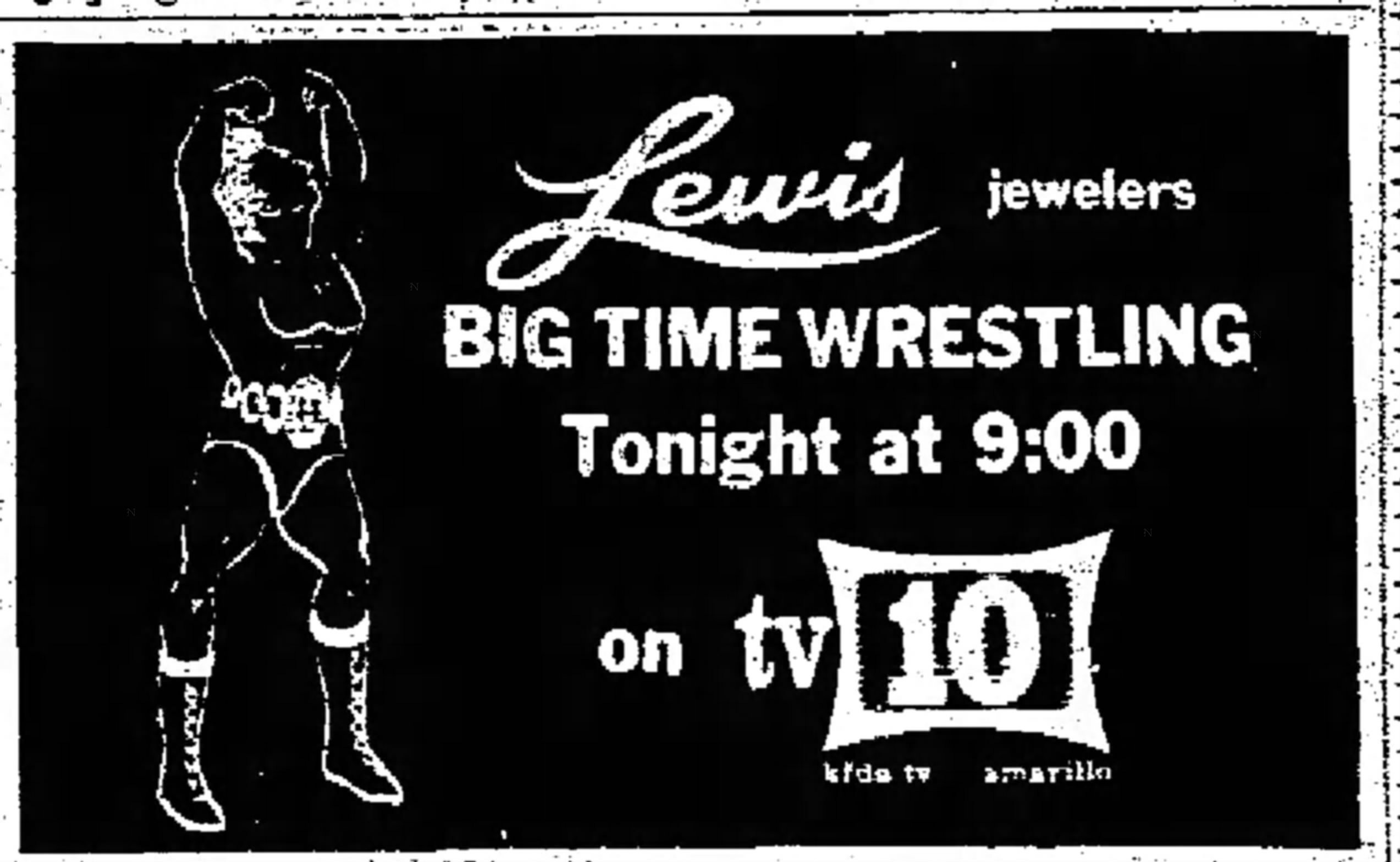
Pictured: The weekly Saturday Western States’ Wrestling Show sponsored by Lewis Jewelers on KFDA-TV channel 10, Amarillo, Texas
Roy Shire had taken control of the San Francisco scene in 1961 after outdrawing a Joe Maclewicz’ established NWA member office’s promotion at the Cow Palace. By March 1966, his Friday or Saturday night cards at the 14,000+ seat arena were must-see events, often drawing near-capacity crowds. Shire booked a mix of established NWA/AWA stars and homegrown talent, emphasizing athleticism, blood-soaked brawls, and larger-than-life personalities. The promotion sometimes billed titles under the “AWA San Francisco” banner (reflecting alliances with the American Wrestling Association) while remaining NWA-aligned overall. This hybrid status allowed Shire flexibility in importing talent and recognizing championships that resonated locally.
Bill Watts had just captured the office’s major singles title, the NWA United States Heavyweight Title (San Francisco version) on February 19, 1966, at the Cow Palace in a bloody best-of-three-falls match against Kinji Shibuya. The referee stopped the bout after Shibuya bled excessively, handing Watts the victory and the title. Watts—a 6’5”, 290-pound powerhouse known for his Oklahoma roughhouse style—entered March as the undisputed top singles star. He would hold the championship for over a year (until March 1967), making March 1966 the very beginning of one of the longest and most dominant reigns in the territory’s history. Watts defended the belt regularly against heels and tough challengers, establishing himself as a no-nonsense champion fans could cheer.
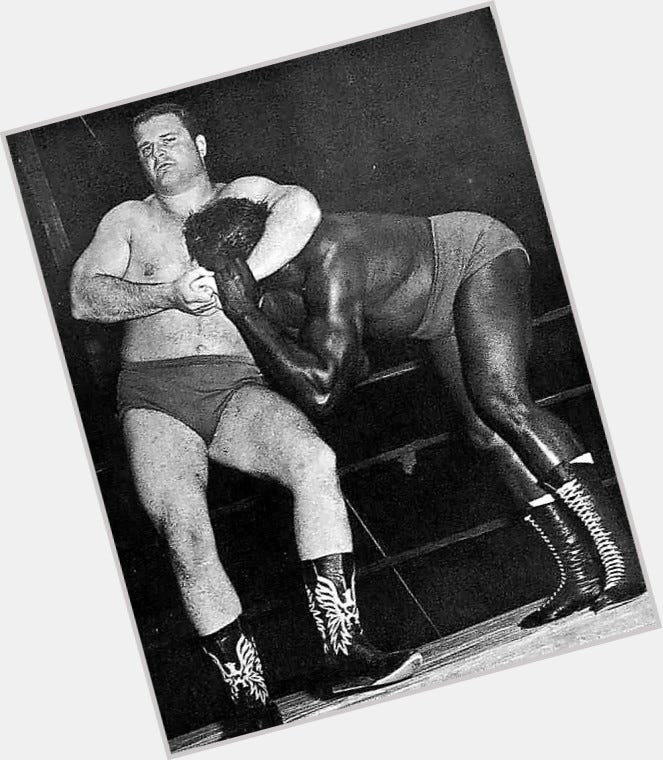
Pictured: United States Champion Cowboy Bill Watts headlocks the former champion, Bobo Brazil
The Blond Bombers—Pat Patterson and Ray Stevens—were the reigning AWA San Franciso Tag Team Champions heading into March of ‘66. The bleached-blond, rule-breaking duo had formed at Shire’s request (Patterson dyed his hair for the gimmick) and quickly became the territory’s premier heel tag team. On the same February 19 card where Watts won the U.S. title, the Bombers wrestled a 2-out-of-3-falls time-limit draw with the popular babyface pairing of Bobo Brazil and Bearcat Wright. This match was a preview of the central feud that carried through the spring and summer of 1966. No title changes occurred in March (or indeed all of 1966), so the Bombers continued defending against various challengers while the Brazil/Wright program simmered.
The heart of the territory’s programming in March was the ongoing war between the villainous Blond Bombers and the heroic tandem of Bobo Brazil and Bearcat Wright. Brazil and Wright, two of the most respected Black wrestlers of the era, represented pride and power; their matches against the arrogant Bombers drew strong emotional investment from diverse Bay Area crowds. Promotional interviews and TV segments (taped locally) kept the heat alive, with Patterson and Stevens cutting promos that played on racial and cultural tensions of the time while staying within wrestling’s kayfabe boundaries. Classic audio clips from February through August 1966 show the teams trading barbs about six-man tags and upcoming Cow Palace showdowns.
Rounding out Roy Shire’s booking concepts in March of 1966 were Gorilla Monsoon, who first appeared on the February card and continued into March as a special-attraction monster heel. Midcard talents included Pepper Gomez (a former U.S. champion and local favorite), Luis Hernandez & Luis Martinez, and various imports like Fritz Von Goering or Buddy Austin. The undercard featured solid workers who could deliver fast-paced openers and build heat for the stars. The Cow Palace shows were family-friendly spectacles with blood, high-flying, and athleticism—Shire’s formula for success. Attendance figures from nearby cards (nearly 10,000 on Feb. 19) suggest similar numbers throughout March.
Television on local stations kept storylines rolling between live events, while the territory also ran smaller shows in Fresno, Oakland, San Jose, and Sacramento. No major title changes or blow-off matches are recorded for March, indicating a month of steady building: Watts solidifying his reign, the Blond Bombers fending off challenges, and the Brazil/Wright program gaining momentum toward summer payoffs.
March 1966 captures Big Time Wrestling at a moment of stability and momentum. Bill Watts’ long U.S. title reign was just beginning, the Blond Bombers were at the height of their heel heat, and the Cow Palace remained the epicenter of California wrestling north of Los Angeles. The territory’s success helped launch or sustain careers of future legends—Patterson later became a WWE executive, Stevens a feared “Crippler,” and Watts, just 10 years later, a major promoter himself. While exact March 12, March 19, or March 26 card results are lost to time, the documented champions, feuds, and venue tell the story: Roy Shire’s San Francisco territory was thriving, delivering consistent, hard-hitting action that kept fans packed into the Cow Palace and talking about wrestling all month long.
Moving south in the state to Los Angeles, there was a pivotal transition happening. One of the owners, Cal Eaton had passed away on January 10, 1966, and his stepson Mike LeBell had taken over day-to-day operations on behalf of his mother, Aileen Eaton. The promotion had broken from the National Wrestling Alliance (NWA) years earlier—in 1959—and recognized its own WWA World Heavyweight Championship rather than the NWA title. Pedro Morales held the WWA crown entering 1966 (having won it in 1965), but he was largely absent from Los Angeles cards that spring, doing a lot of shots in Fritz Von Erich’s Dallas and Houston, Texas territory.
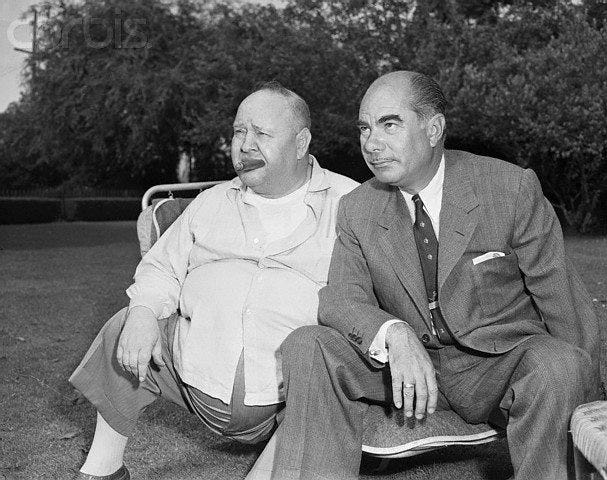
Pictured: Cal Eaton with Babe McCoy in 1955
The Olympic Auditorium served as the primary venue, hosting weekly Wednesday night cards that drew consistent crowds in the thousands (typical attendances for the era hovered around 8,000–10,000, though exact March figures are unrecorded in surviving reports). These shows featured a mix of power wrestlers, technicians, ethnic heels, and even occasional midget bouts—standard for mid-1960s territorial wrestling. No major title changes occurred in March; the focus was on building feuds and showcasing reliable mid-card talent.
Key roster members included heels like Buddy “Killer” Austin (a rising star who would capture the WWA title later in 1966), Mighty Atlas, Nikita Mulkovich, El Mongol, and Jack Lanza; babyfaces such as Alberto Torres, Thunderbolt Patterson, and Gorilla Monsoon (often working as a face or tweener in tags); and others like Dave Cox, Bob Meyer, and Beatnik Bill. The style emphasized two-out-of-three-falls matches, disqualifications, and tag-team main events, with plenty of blood-and-thunder brawling.
The month opened with Buddy Austin drawing with Alberto Torres in a competitive singles bout. Gorilla Monsoon and Crusher Karlsen defeated Jack Lanza and Dave Cox in a tag match. Thunderbolt Patterson drew with Nikita Mulkovich, and Mighty Atlas drew Tony Galarza. The show established Austin as a dangerous heel capable of going the distance with top faces. On March 9th, Alberto Torres and Thunderbolt Patterson drew with El Mongol and Nikita Mulkovich in a heated tag. Buddy Austin scored a decisive singles victory over Dave Cox (a match preserved on surviving footage, highlighting Austin’s vicious style). Gorilla Monsoon pinned Tony Galarza, and Mighty Atlas drew Jack Lanza. Austin’s win continued his momentum as a top antagonist.
Then, on the 16th, Buddy Austin defeated Bob Meyer. Thunderbolt Patterson pinned Nikita Mulkovich. Alberto Torres drew Jack Lanza, and Mighty Atlas beat Billy Klutzer. These results kept the mid-card churning while Austin remained undefeated in singles action. March 23rd at the Olympic featured Buddy Austin pinning Rich Renaldo. Gorilla Monsoon overpowered Broadway Venus. El Mongol defeated Jack Lanza by disqualification (a common finish to protect wrestlers and extend feuds). Beatnik Bill drew Bill Klutzer, and in the tag main event, Alberto Torres and Thunderbolt Patterson defeated Mighty Atlas and Johnny Vandor. The tag victory suggested a budding face tandem in Patterson and Torres.
On March 30th, The month closed with a two-out-of-three-falls tag main event: Gorilla Monsoon and Alberto Torres defeated Buddy Austin and Mighty Atlas. Supporting bouts included Little Beaver over Cowboy Cassidy (midget action), Gorilla Monsoon pinning Rick Renaldo, Beatnik Bill over Bobby Tipton, El Mongol over Jack Lanza, and Fuzzy Cupid defeating Jamaica Kid in another midget match. The main event fall series gave the faces a strong win, potentially setting up future singles programs.
These cards reflected the territory’s strengths and limitations. Gorilla Monsoon, already a national draw from his WWWF work, made frequent appearances and lent credibility. Thunderbolt Patterson (one of the few prominent Black wrestlers on the West Coast at the time) received solid pushes in tags and singles, hinting at the promotion’s willingness to feature diverse talent. Buddy Austin emerged as the breakout performer of the month, winning most of his matches and positioning himself as the top heel—foreshadowing his WWA title reign. El Mongol and Nikita Mulkovich provided ethnic heat as foreign heels, a staple gimmick of the era. The absence of Pedro Morales (and any WWA title defenses) suggests he was either resting or booked on the road; the promotion relied instead on tag-team and mid-card storytelling to fill the gap.
Under the new LeBell regime, the Olympic Auditorium cards delivered reliable weekly excitement: hard-hitting tags, grudge matches, and colorful characters. These shows kept the fanbase engaged while the promotion navigated its post-Eaton transition. By summer, Austin would claim the WWA title from Morales (August 5), and the territory would continue thriving until rejoining the NWA in 1968 and rebranding as NWA Hollywood Wrestling. The Los Angeles territory stood as a West Coast powerhouse, proving that consistent local action at venues like the Olympic could sustain a promotion without national affiliation.
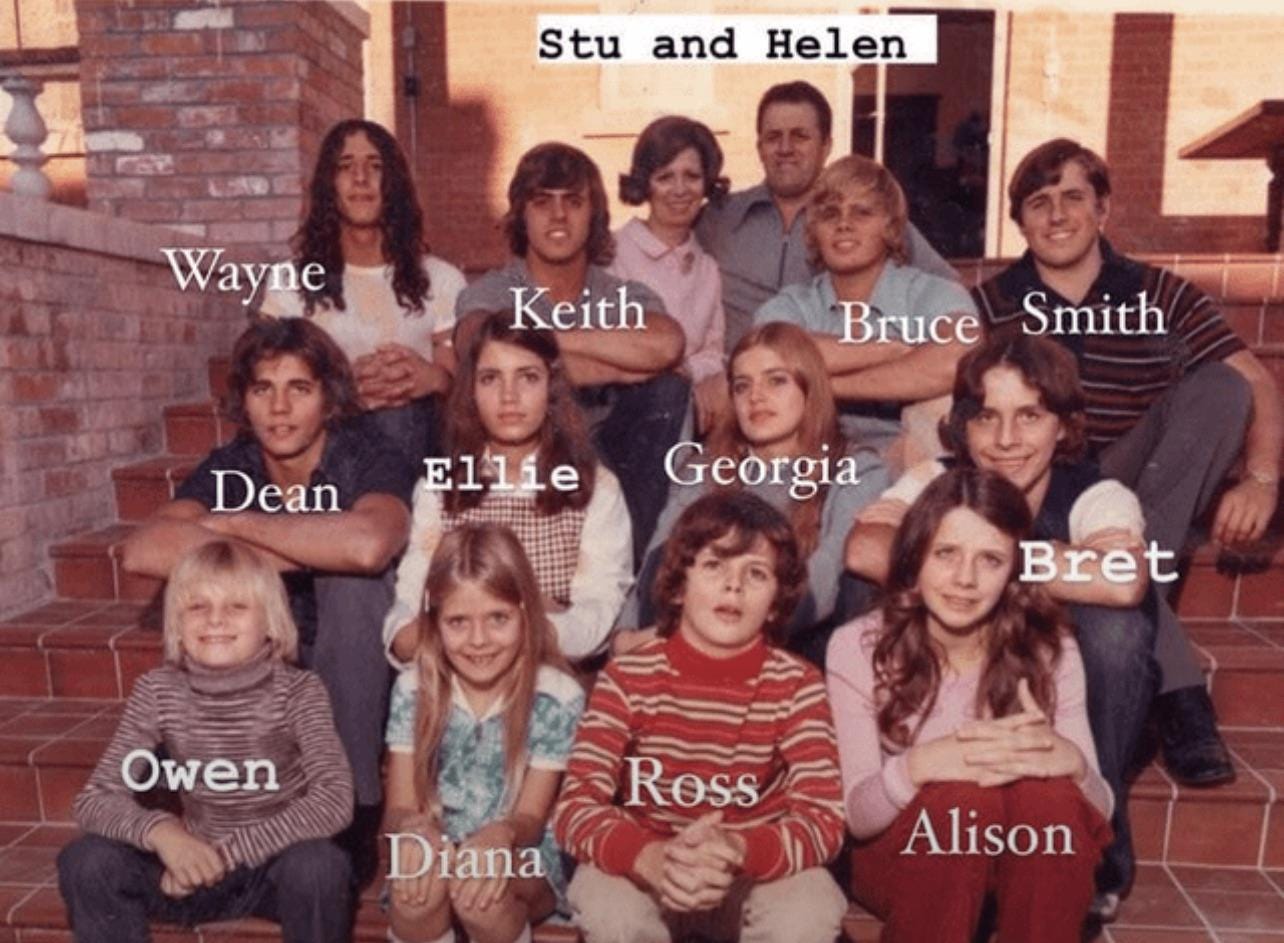
Pictured: The Hart Family, owners of Stampede Wrestling in Calgary, Alberta, Canada
Stampede Wrestling, the legendary Canadian promotion founded by Stu Hart in 1948 and headquartered in Calgary, Alberta, was one of the toughest and most respected territories in the National Wrestling Alliance (NWA) system by the mid-1960s. Operating across the prairie provinces (primarily Alberta, with frequent tours into Saskatchewan and occasional stops in British Columbia), the territory emphasized a hard-hitting, no-nonsense style that mirrored the rugged Western Canadian ethos. Matches often featured blood, submission holds, and legitimate toughness, thanks in large part to Hart’s infamous training methods in what would later become known as the Dungeon. By 1966, Stampede was a well-oiled machine: weekly house shows in Calgary’s Victoria Pavilion (and sometimes the Stampede Corral), regional tours, and a roster blending local stars, NWA journeymen, and up-and-coming talent. The promotion held the NWA Canadian Heavyweight Championship (Calgary version) as its flagship title, while also featuring tag-team and mid-card divisions that kept arenas filled.
The NWA Canadian Heavyweight Championship remained in the hands of Dave Ruhl (in his second reign of the year, with the exact transition from Sweet Daddy Siki occurring at an uncertain date earlier in 1966). No title defenses or switches were recorded in March itself; the next change came later when “The Beast” (Yvon Cormier) dethroned Ruhl at some point in 1966 before Ruhl regained it in December. The promotion ran a full schedule of house shows, with Cagematch.net records indicating approximately five Stampede-branded events across the territory that month (though complete cards for most have not survived in public databases). The most thoroughly documented card took place on Friday, March 25, 1966, at the Victoria Pavilion in Calgary. It drew a solid crowd of 2,400 fans — respectable for a non-televised mid-week show in a market of Calgary’s size at the time. Nick Pacchiano defeated Bob Sweetan by disqualification. Sweetan, a reliable heel known for his roughhouse style, likely drew heat with rule-breaking tactics that forced the referee’s intervention.
Mighty Ursus defeated Firpo Zbyszko. Ursus was positioned as a monstrous powerhouse, overpowering the veteran Zbyszko in what was probably a straightforward squash or power showcase and Johnny Kostas defeated The Scorpion in 16 minutes. The longest and most competitive bout of the night, this singles match pitted the skilled technician Kostas against a masked wrestler, giving fans a glimpse of the scientific wrestling that balanced the territory’s brawling reputation. Zbyszko is another pro wrestling in history with a very recognizable name but with little recall among fans or even historians today. He had a great career debuting in 1946 until retirement from the sport in 1969. He was never really featured as a championship wrestler, only having one title reign with the Louisiana Title with two runs in 1959 and 1960. He was legitimately from Poland and had most of his matches with guys like Adrien Ballergeon, Chris Belkas, Pete Managoff, Bob Sweetan, Tom Andrews and Stu Hart.
Wrestlers active in the Stampede territory that month and year included stalwarts like Dave Ruhl, Emile Dupree, Sweet Daddy Siki, Archie Gouldie, Ox Anderson, Sandy Barr, and various masked or monster heels. The roster was fluid — NWA talent drifted in and out — but the Hart family presence (Stu as the Calgary office owner and occasional in-ring performer) gave the territory its distinctive identity. The Calgary Stampede rodeo (the promotion’s namesake event) was still months away in July, and television exposure on local stations was beginning to expand the audience. The territory’s emphasis on legitimate toughness helped forge future stars: while the Hart Dungeon’s golden era of producing Bret Hart, Dynamite Kid, and others was still a decade or more off, the foundational training philosophy was already in place. Economically, Stampede thrived on loyal prairie fans who appreciated wrestling that felt real and regional rather than flashy.
The Oklahoma Territory was served primarily by the Tulsa booking office, which was run by longtime owner, LeRoy McGuirk. McGuirk’s booking philosophy emphasized legitimate wrestling skill, long-running feuds, and escalating stipulations rather than flashy gimmicks or national television. The territory’s flagship star was Danny Hodge, an Oklahoma native, Olympic silver medalist, and multiple-time NWA World Junior Heavyweight Champion whose stiff, mat-based style resonated with regional fans. Hodge had captured the Junior Heavyweight title on February 12, 1966, in Oklahoma City and held it steadily through March and into May.
The dominant storyline entering March was the blood feud between the masked heel team The Assassins (Tom Renesto and Joe Hamilton) and the popular babyface Kentuckians (Luke “Big Boy” Brown and Tiny Anderson aka Grizzly Smith). The rivalry had ignited on February 18 in Oklahoma City and ran hot through February with a series of escalating matches: standard tags, Mountaineer/Lumberjack matches, Battles to the Finish, and Texas Death matches across Tulsa, Little Rock, Arkansaas, Springfield, Missouri, Wichita Falls, Texas and Shreveport, Louisiana.
The Assassins won the blow-off Texas Death matches, but the Kentuckians generally prevailed in earlier bouts via count-outs, disqualifications, or referee decisions—standard heel-face psychology that kept crowds invested without clean finishes.
March continued this pattern with documented cards:
March 6 – Shreveport Municipal Auditorium (over 3,000 in attendance): Assassins vs. Kentuckians
March 9 – Springfield Shrine Mosque: Kentuckians def. Assassins
March 11 – Oklahoma City Stockyards Coliseum: Assassins vs. Kentuckians
March 13 – Shreveport Municipal Auditorium (3,900 attendance): Kentuckians def. Assassins by disqualification.
March 16 – Springfield Shrine Mosque: Assassins def. Kentuckians.
These were not isolated shows; the same teams looped the territory weekly, building heat through repetition—a hallmark of the territory era.
The turning point came via a classic kayfabe injury angle: Big Boy Brown “injured his ankle” during the Texas Death matches. This allowed the promotion to retire the Kentuckians from the program without cooling the Assassins’ heat. Starting March 19 in Oklahoma City, the new babyface tandem of NWA World Junior Heavyweight Champion Danny Hodge and Tiny Smith stepped in to challenge The Assassins.
The tour immediately hit Tulsa, Little Rock, and Springfield the following week. The stipulation escalated quickly: the teams returned to Oklahoma City for a best-of-five-falls match (instead of the standard two-out-of-three). Subsequent loops featured Falls Count Anywhere in the Arena matches, again repeating across the territory, plus a regular tag in Wichita Falls followed by another best-of-five. One confirmed later-March result underscores the momentum: on March 28 in Tulsa, Hodge & Tiny Smith defeated The Assassins.
This transition was brilliant booking. It preserved the Assassins as the top heel unit (they would later win a tournament for the vacant NWA United States Tag Team titles and defend them through a cage match on May 20), while elevating Hodge’s drawing power into the tag division without diminishing his singles status. Tiny Smith’s role as the replacement partner kept continuity with the prior feud. The “injured ankle” device was pure territory psychology—protecting Brown while giving fans a fresh matchup that still felt connected.
The midcard featured familiar names like Joe McCarthy, Jerry Kozak, Lorenzo Parente, Chuck Karbo, Boris Managoff, and emerging heels. Skandor Akbar (Jim Wehba) had just begun his long run in the territory in 1966 as the “wildman from Lebanon,” already feuding with Hodge in singles and occasionally teaming with him in ironic angles. Jack Brisco was also working the region after his professional debut in 1965, often tagging against the Assassins and drawing packed houses. By March of 1966, Brisco had moved to the Nashville Territory, where he met Eddie Graham for the first time in the locker rooms.

Pictured: One of the Kentuckians, Luke Brown attempts to unmask Jody Hamilton, one of the Masked Assasins
This would be a good time to zoom out of the Oklahoma Territory and take a look at the psychology behind the booking philosophy designed and executed to keep continued interest through a classic tag team program like The Assassins and The Kentuckians.
Booking for a Territory 101:
Let’s break out the booking technique step-by-step:
Long build with non-finish wins to keep fans returning.
Blow-off hardcore matches.
Injury angle to refresh without killing heat.
Immediate re-escalation with new stipulations (best-of-five, Falls Count Anywhere) on the same circuit.
This created the illusion of an ongoing war rather than isolated cards. Attendance figures (ex: 3,000+ in Shreveport) and the loop’s geographic spread (Oklahoma City to Springfield to Tulsa) show the territory’s efficiency—talent traveled together, towns were spaced for maximum draw, and local pride (especially for Oklahoma native Hodge) sold tickets.
This stage of the territory era’s reliance on legitimate wrestlers like Hodge also distinguished Tri-State from other promotions. Matches were stiff and believable; feuds felt personal. The Assassins’ masked menace and anti-hero tactics contrasted perfectly with Hodge’s all-American amateur pedigree, a dynamic that would define the territory into the next decade of the 1970s.
Earlier in this feature, I mentioned the NWA’s expansion into other countries besides Canada. In fact, the NWA had developed a robust international presence through affiliated territories, and none was more culturally distinct or consistently popular than its Mexican outpost in Mexico City. Officially operated by Empresa Mexicana de la Lucha Libre (EMLL, later rebranded as CMLL), this territory—centered on the iconic Arena México and the historic Arena Coliseo—embodied the NWA’s commitment to regional autonomy while upholding the Alliance’s world titles and cross-promotional standards. EMLL, founded by Salvador Lutteroth in 1933, had long been the NWA’s Mexican representative, blending traditional lucha libre rules (best-two-out-of-three falls, high-flying, and high-stakes apuesta matches) with occasional defenses of NWA championships.
EMLL ran regular Tuesday cards at Arena Coliseo—the smaller, more intimate venue often used for mid-week action—while Friday “Super Viernes” programs at the larger Arena México (the self-proclaimed “Catedral de la Lucha Libre”) likely followed a similar rhythm, though fewer specific March 1966 Friday results survive in digitized archives. These shows featured a mix of established veterans, rising masked wrestlers, and rudo (heel) factions, drawing families, working-class fans, and tourists to the historic center of Mexico City.
Records from Arena Coliseo paint a picture of straightforward, competitive lucha libre without blockbuster stipulations. On Tuesday, March 1, the card opened with a multi-man torneo (tournament-style match) involving Leopardo, Zorro, and others, concluding with a disqualification finish typical of rudo interference. March 8 brought more focused singles and tag action: Rolando Costa faced Fantasma Negro in the opener, Fantasma de la Quebrada defeated Sergio Borrayo, and additional bouts rounded out the evening. Two weeks later, on March 15, Rolando Costa again featured prominently against Kirvan Kid; the main portion ended in straight falls with the final fall awarded by disqualification after the rudo “Angels” faction cheated to secure victory—a classic heel tactic that built heat for future rematches. The month closed with a stronger tournament emphasis on March 29: As Negro defeated Raúl Guerrero in the opener, followed by quarterfinals, semifinals, and a final that rewarded the night’s top performers.

Pictured: Outer Entrance to Arena Coliseo in Mexico City, Mexico
These cards highlight the depth of EMLL’s roster. Midcarders like Rolando Costa (who would soon challenge for national titles) and masked competitors such as Fantasma de la Quebrada and As Negro filled the undercards, while veterans and emerging stars (including figures like Jerry London, already working in Mexico ahead of his May title win) anchored higher-profile segments. Icons such as El Santo, Blue Demon, Ray Mendoza, René Guajardo, Karloff Lagarde, and Dr. Wagner—hallmarks of the era—were almost certainly active across the territory’s shows, though not explicitly listed on the surviving Coliseo cards; they often headlined Arena México Fridays or toured other EMLL outposts. The NWA World Middleweight Championship remained a focal point of prestige, with defenses or build-up occurring in the region, even if no change happened in March. National titles (Mexican National Heavyweight, Lightweight, etc.) saw peripheral movement nearby—Pantera Negra captured the Mexican National Heavyweight belt on March 13 in Guadalajara—but Mexico City’s focus stayed on weekly consistency rather than immediate crown changes.
Operationally, the NWA Mexico City territory thrived on Lutteroth’s model: family-friendly yet dramatic storytelling, strong local commission oversight (via the Distrito Federal Boxing and Wrestling Commission), and the unique cultural flavor of masked luchadores risking their identities in apuesta matches. Attendance at Arena Coliseo and Arena México remained solid, supported by radio coverage and word-of-mouth in an era before widespread television in the capital. The NWA affiliation ensured occasional crossover—American or international talent could appear—but March 1966 leaned heavily on homegrown Mexican talent navigating the post-Thesz era.
March 1966 served as a quiet but foundational month for the NWA’s Mexican stronghold. Without the flash of September’s EMLL 33rd Anniversary Show (where hair-vs-hair matches involving René Guajardo and Jerry London would captivate fans) or December’s Juicio Final, the territory simply delivered what it did best: accessible, high-quality lucha libre that reinforced Mexico City’s status as the spiritual home of the sport. These Tuesday Coliseo cards kept the roster sharp, heated up feuds, and maintained momentum heading into spring title opportunities. For historians and fans today, the sparse but surviving details underscore a key truth about classic NWA territories—success often came not from monthly spectacles, but from week-in, week-out excellence in iconic venues.
In Japan, the month of March encapsulated both the JWA’s traditional strengths—annual tournaments featuring global talent—and the growing internal fractures that would eventually splinter puroresu. The promotion ran its MSG Series (a house-show tour) from February 24 through March 25, filling arenas across Japan with a mix of veteran Japanese stars and visiting NWA-affiliated gaijin (foreign) wrestlers. While detailed daily cards from the era are sparsely preserved online, the series served as the standard lead-in to JWA’s signature annual event, maintaining steady business and keeping the roster sharp ahead of the bigger spotlight.
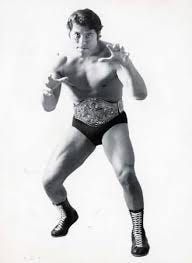
Pictured: Kanji Antonio Inoki
The most seismic event of the month occurred on March 21, 1966, when the JWA board expelled both Toyonobori and the rising 23-year-old star Antonio Inoki. Toyonobori, who had briefly inherited Rikidōzan’s mantle as president and top star after 1963, had been forced out of the presidency in January (publicly framed as a resignation) due to financial irregularities and gambling issues. Inoki, whom Toyonobori had personally recruited and mentored, was collateral damage in the power struggle. The pair would go on to launch the rival Tokyo Pro Wrestling promotion on April 23, 1966—marking the first serious crack in JWA’s monopoly and foreshadowing the 1972 births of All Japan Pro Wrestling (by Baba) and New Japan Pro Wrestling (by Inoki). For the remainder of March, however, the expulsions created immediate backstage tension while the shows continued uninterrupted under Baba’s leadership.
As the MSG Series wrapped on March 25, the JWA immediately pivoted into its flagship 8th Annual World League (also called World Big League) tournament, which ran from March 25 through May 13. This was no ordinary round-robin; the format deliberately split the field into separate Japanese and gaijin blocks, with every Japanese wrestler facing every foreigner in a points-based system. The gaijin block featured NWA imports such as Wilbur Snyder (who topped the block with 6.0 points), Pedro Morales (5.5), Donn Lewin, Armand Hussein, Lonnie Mayne, Billy Two Rivers, Jim Grabmire, and Kangaroo Kennedy. The Japanese block was headlined by Giant Baba (7.5 points), Kintaro Ohki (6.5), Michiaki Yoshimura (6.0), Yoshinosato, Mitsu Hirai, Mr. Moto, and Umanosuke Ueda.
The tournament structure underscored the JWA’s role as the NWA’s Japanese outpost: it imported established American and international talent to lend credibility and create compelling cross-cultural clashes, while elevating local heroes through endurance-based storytelling. Giant Baba ultimately won the league by defeating Snyder 2-1 in the decisive best-of-three final (13:15, 18:39, 20:14), further cementing his status as the territory’s unbreakable champion. The event drew strong crowds and media attention, reinforcing JWA’s position as puroresu’s premier promotion even as internal politics simmered.
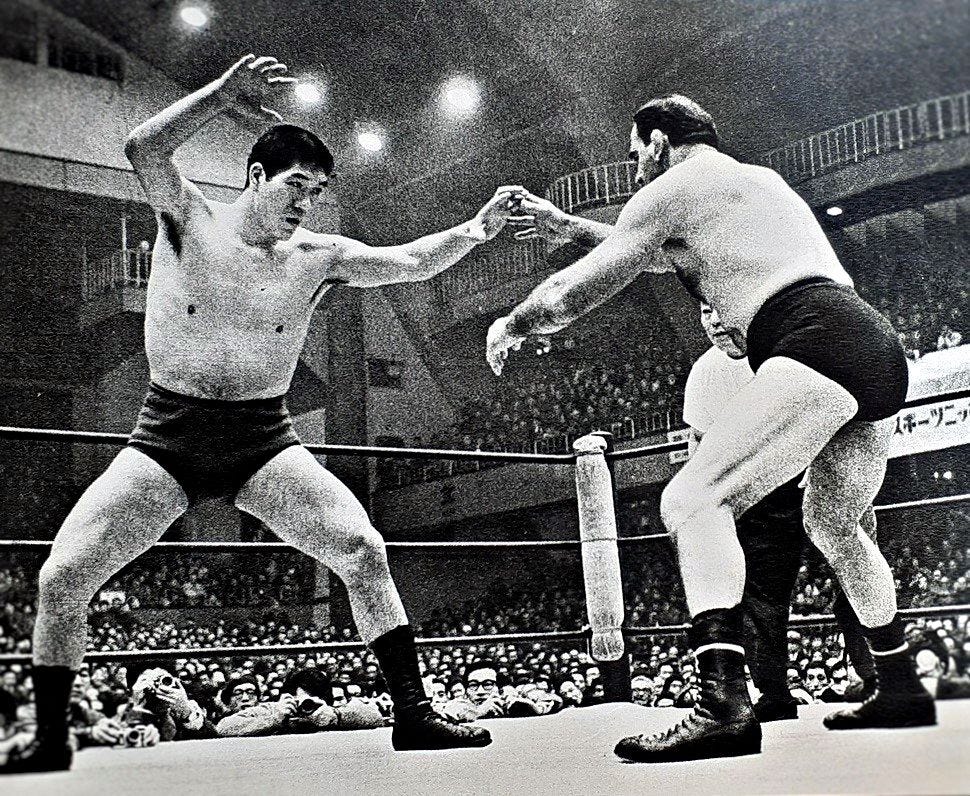
Pictured: Giant Baba prepares to lock up with Lou Thesz in a match for the International Championsip, February 28th, 1966
Championship-wise, March 1966 was relatively quiet on the title-change front. Baba continued his dominant reign with the NWA International Heavyweight Championship, making occasional defenses against gaijin challengers during the MSG Series and early World League dates. The All-Asia Tag Team Championship and other secondary belts (Japanese Heavyweight, Junior Heavyweight, etc.) remained in familiar hands, with no major switches recorded that month. March 1966 illustrated the dual nature of the JWA as an NWA territory: a well-oiled machine of international tournaments and house-show consistency that kept the promotion thriving, yet one increasingly vulnerable to the personal and financial conflicts that defined the post-Rikidōzan era. The expulsion of Toyonobori and Inoki on March 21 injected real drama behind the scenes, while the launch of the World League on March 25 reaffirmed Giant Baba’s supremacy and the promotion’s global reach.
One of the most amazing paradigm-shifting and transformational shifts in pro wrestling happened in Australia in the mid-1960s. Jim Barnett and Johnny Doyle. After scouting the scene in 1964, they launched World Championship Wrestling (WCW) — an independent promotion under the banner of the International Wrestling Alliance (IWA) — with their first show at Sydney Stadium on October 23, 1964. By 1966, the territory had become a thriving operation, running regular cards in Sydney, Melbourne, and other cities, often tied to television exposure. Barnett, a savvy booking agent with prior experience in the U.S. Midwest, and Doyle, a veteran promoter, imported top international talent while elevating local Australian wrestlers. Their model emphasized athletic, hard-hitting matches in iconic venues like Sydney Stadium, drawing large crowds in a market previously dominated by smaller, regional operations.
March 1966 represented a pivotal month of growth and innovation for the territory. The promotion focused heavily on Sydney Stadium (Friday night cards), showcasing a core roster of imported stars alongside homegrown talent. Key figures included Dominic DeNucci (the reigning IWA World Heavyweight Champion, who had held the title through February defenses), the menacing Killer Kowalski, the versatile Pepper Gomez, the rule-breaking Pampero Firpo, Art Nelson, Waldo von Erich, Dick Steinborn, and Roy Heffernan. Locals like Larry O’Day, Spike Robson, Brian Ashby, and George Lackey rounded out the undercards. New arrival Nick Bockwinkel — who had traveled from the U.S. specifically for Barnett and Doyle — quickly integrated into main-event storylines, signaling the promoters’ strategy of refreshing the roster with proven American grapplers.
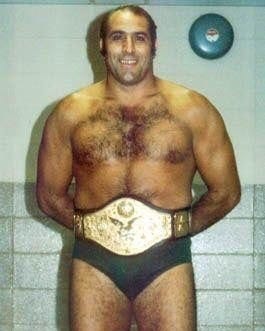
Pictured: Dominic DeNucci, IWA World Heavyweight Champion
The month’s standout event came on Friday, March 4, 1966, at Sydney Stadium. The card featured standard tag and singles bouts building ongoing rivalries such as Roy Heffernan wrestling to a draw with Art Nelson, Dominic DeNucci beating Pampiero Firpo by DQ, Killer Kowalski defeating Pepper Gomez and Waldo Von Erich defeating Dickie Steinborn.
The main attraction was the promotion’s first-ever Russian Roulette — a 10-man, over-the-top-rope elimination battle royal with a $5,000 prize. Nick Bockwinkel emerged victorious after eliminating Roy Heffernan, Pepper Gomez, Pampero Firpo, Brian Ashby, Dick Steinborn, Art Nelson, Dominic DeNucci, Killer Kowalski, and Waldo von Erich (in that order). This stipulation match was groundbreaking; it marked the debut of battle royals in Australian wrestling under Barnett-Doyle and quickly became a fan favorite, adding spectacle and high-stakes drama to the weekly shows. The innovation helped differentiate WCW from prior Australian promotions and boosted attendance at the historic Sydney Stadium.
Subsequent Friday cards continued the momentum with evolving feuds:
March 11: Spike Robson defeated Alan Pinfold; Larry O’Day defeated Col Currie; Roy Heffernan defeated Brian Ashby; Dominic DeNucci defeated Pampero Firpo; Killer Kowalski & Art Nelson defeated Pepper Gomez & Dick Steinborn; Nick Bockwinkel defeated Waldo von Erich in the main event.
March 18: Spike Robson defeated Arthur Openshaw; Larry O’Day defeated George Lackey; Roy Heffernan drew Pepper Gomez; Nick Bockwinkel defeated Pampero Firpo; Dick Steinborn drew Art Nelson; Waldo von Erich defeated Killer Kowalski by disqualification.
March 25: Brian Ashby & Spike Robson defeated Johnny Boyd & Alan Pinfold; Pepper Gomez defeated Pampero Firpo; Killer Kowalski defeated Roy Heffernan; Waldo von Erich defeated Nick Bockwinkel; Art Nelson defeated Dick Steinborn.
These matches highlighted tag-team chemistry (Kowalski & Nelson vs. Gomez & Steinborn) and personal rivalries, particularly Bockwinkel’s integration against von Erich and Kowalski’s aggressive style drawing disqualifications. No title changes occurred — DeNucci’s IWA World Heavyweight Championship remained defended off the March cards — but the groundwork was laid for later developments, including the formal introduction of the IWA tag titles in July 1966 and high-profile tours by stars like Bruno Sammartino.
Barnett and Doyle’s approach in March 1966 exemplified their long-term success formula: consistent weekly programming in a flagship venue, a blend of imported “monsters” and athletic technicians, and creative stipulations to generate buzz. The territory avoided the territorial wars plaguing the U.S. NWA scene, instead capitalizing on Australia’s relative isolation to create a star-driven product. Crowds at Sydney Stadium responded enthusiastically, and the promotion’s television presence amplified the reach. While Doyle passed away in 1969 and Barnett eventually sold the operation fully in 1974, the foundation built in these early years — including the innovations of March 1966 — helped WCW Australia thrive into the 1970s as one of the most successful non-U.S. territories of its era.
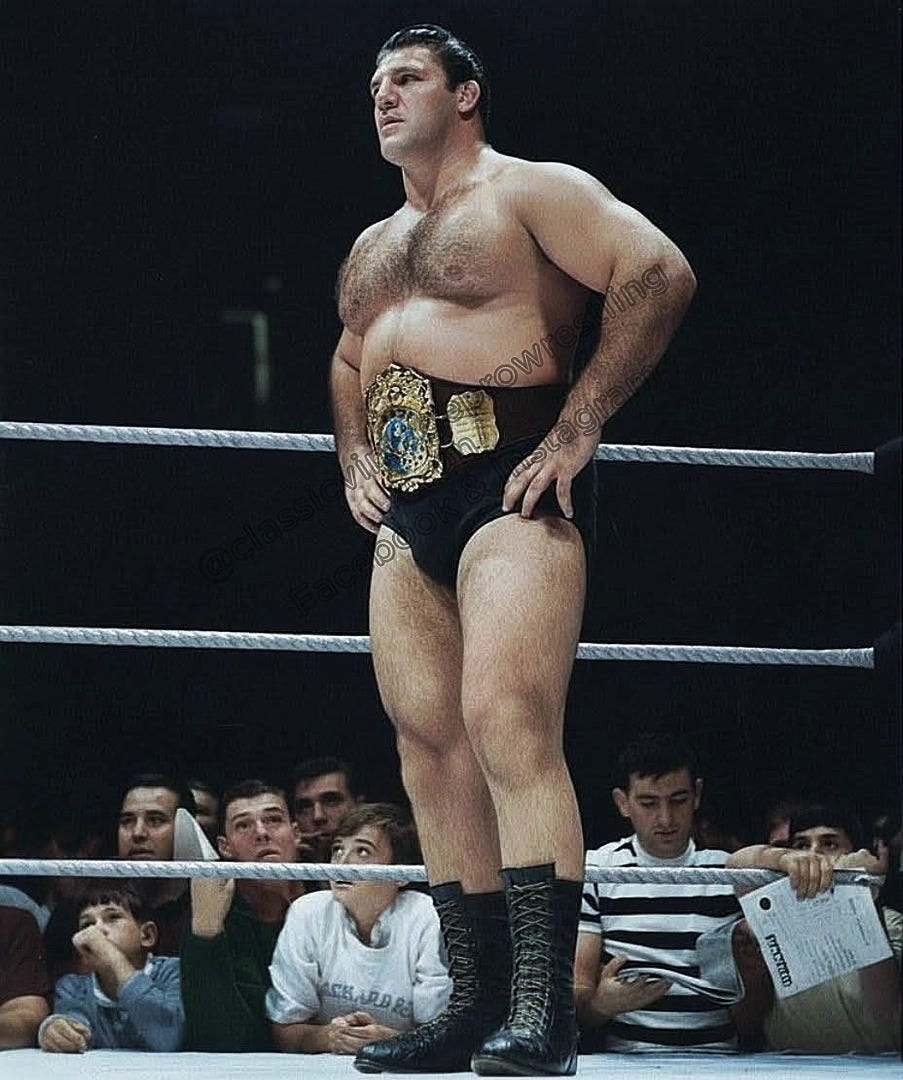
Pictured: Bruno Sammartino, WWWF World Heavyweight Champion during his first reign in the 1960s
Meanwhile back in the United States, the now independent entities thrived, further evidencing more Stage 5 adaptation. n March 1966, Bruno Sammartino stood at the absolute peak of professional wrestling as the undisputed WWWF World Heavyweight Champion. Having captured the title from Buddy Rogers in a famous 48-second victory on May 17, 1963, Sammartino was already deep into what would become the longest recognized world title reign in wrestling history (2,803 days). The WWWF—still in its early years under Vincent J. McMahon—operated primarily as a Northeast territory, with Bruno headlining house shows nearly every night while drawing massive crowds at iconic venues like Madison Square Garden. March 1966 exemplified the era’s grind: non-stop title defenses, tag team alliances, controversial finishes designed to protect the champion, and a roster of recurring heel challengers who built heat through disqualification-heavy bouts and TV tapings. While long-term “angles” and scripted storylines were rudimentary compared to later decades (relying on live interviews, disqualifications, and undercard rivalries), the month showcased Sammartino’s dominance alongside the ongoing defense of the WWWF United States Tag Team Championship.
Storylines for Sammartino and others in 1966 WWWF were less about intricate long-arc narratives and more about weekly heat-building through disqualifications, tag alliances, and personal rivalries teased on local TV. Sammartino’s primary angles revolved around a rotating cast of midcard-to-upper-midcard heels who could generate credible threats without ever winning the belt. Sammartino had plenty of credible challengers including Baron Mikel Scicluna. Scicluna emerged as a top antagonist. The illegal pin on March 23 in Baltimore (feet on the ropes) was a textbook angle—Scicluna “stole” a victory on paper but lost the moral high ground, setting up future Garden programs. Earlier tag losses and singles defeats kept the feud simmering. Also included in Sammartino’s programs was a very young Curits Iaukea, known as Prince Iaukea at this stage in his career. Iaukea scored a DQ win over Bruno on March 4 in Pittsburgh and teamed against him multiple times. The March 28 MSG title match served as the payoff, with Iaukea positioned as a dangerous Hawaiian powerhouse challenger.
Rounding out the antagonist roles were The Beast (John Yachetti, not Yvon Cormier) and Big Bill Miller. These two provided reliable weekly opposition. Multiple pins, draws, and DQs against The Beast (March 1 tag involvement, March 7, 8, 16, 17, 21, 22) and Miller (March 3 draw, March 26 win) portrayed them as persistent but ultimately outmatched threats. In addition, A recurring angle framed Antonio Pugliese (sometimes billed as a relative or protégé of Sammartino) as Bruno’s trusted partner. Their frequent tags (March 1, 10, 14, 17, 21, 24, 31) reinforced Bruno’s leadership while elevating Pugliese as a rising star. These elements created a simple but effective dynamic: Bruno as the unbreakable Italian strongman against foreign or rule-breaking invaders, with finishes that protected the champion while giving heels “moral” victories to sell tickets for returns.
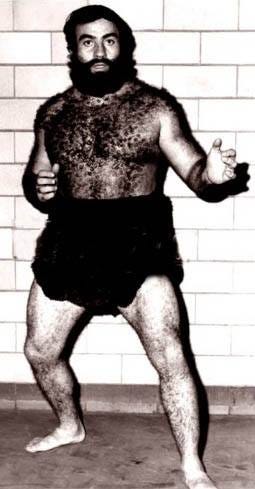
Pictured: John Yachetti as The Beast in the 1960s
The WWWF’s primary tag title in 1966 was the United States Tag Team Championship (not yet the full “World” version that evolved later). Johnny Valentine and Antonio Pugliese had captured the belts on February 21, 1966, from the Miller Brothers (Dan & Dr. Bill) and held them through September. On March 8th in Hagerstown, Maryland, Valentine & Pugliese successfully defended against Smasher Sloan & Curtis Iaukea in a best-of-three-falls match (2-0). This was one of the few explicit title matches of the month and tied directly into Bruno’s orbit, as Pugliese frequently teamed with the champion. Then, at the biggest show of the month at New York’s Madison Square Garden, Valentine & Pugliese defeated Bill & Dan Miller in a non-title bout, continuing their program with the former champions while appearing on the same card as Bruno’s title defense. Pugliese’s dual role—tag champion and Bruno’s frequent partner—created crossover storylines, with the tag division feeding into the world title scene. Other tag action involved undercard teams like Argentina Apollo & Pugliese or multi-man bouts, but the Valentine/Pugliese reign provided stability amid Bruno’s singles dominance.
Other semi-main event or undercard stories included Johnny Valentine matched up against Scicluna and Iaukea, as well as Bobo Brazil as a credible and well-over babyface against Big Bill Miller and Scicluna as well. Brazil, a paradigm-breaking Black wrestler and occasional tag partner for Bruno, traded wins and draws with Miller (March 23) and Scicluna (March 26, 28), adding prestige to the midcard. Other crowd hating heels, The Beast and Smasher Sloan appeared in losses or DQs against faces like Arnold Skaaland, Chief Big Heart, and Antonio Pugliese, serving as reliable enhancement talent while occasionally challenging Bruno.
In March 1966, the American Wrestling Association (AWA) operated as one of the premier territories in professional wrestling, centered in the Midwest with strongholds in Minnesota, Iowa, Nebraska, Illinois, and Colorado. The promotion emphasized rugged, often bloody brawls over scripted drama, with house shows and television tapings in Minneapolis feeding into live arena cards. The landscape featured AWA World Heavyweight Champion Mad Dog Vachon in a lengthy reign, while the tag team division simmered with intense challenges to champions Larry Hennig and Harley Race. No titles changed hands that month, but the in-ring action—marked by disqualifications, death matches, injury angles, and cross-brand rivalries—built significant momentum for later storylines. Feuds revolved around top babyfaces like The Crusher, Dick the Bruiser, and Verne Gagne pressing the heels, with recurring antagonists such as Mighty Igor Vodik and Chris Markoff adding depth.
Vachon, the snarling French-Canadian heel-turned-champion, anchored the promotion as a dominant but frequently tested figure. He made multiple successful defenses, often ending in controversial finishes that protected his belt while keeping challengers credible. On March 2 in Denver, he pinned Mighty Igor Vodik after a hard-hitting encounter. He repeated the feat on March 15 in the same venue. Other defenses included a disqualification win over “Mad Russian” Stan Pulaski on March 5 in Omaha, a count-out victory over Wilbur Snyder on March 19 in St. Paul, and a pinfall over Reggie Parks on March 22 in Sioux City. On March 17 in St. Peter, Minnesota, he defeated Chris Markoff cleanly, and on March 26 in Chicago he retained via DQ against Dick the Bruiser, as at this point Gagne and Afflis’ WWA were in a collab situation with the Windy City, the 3rd largest market in the US.
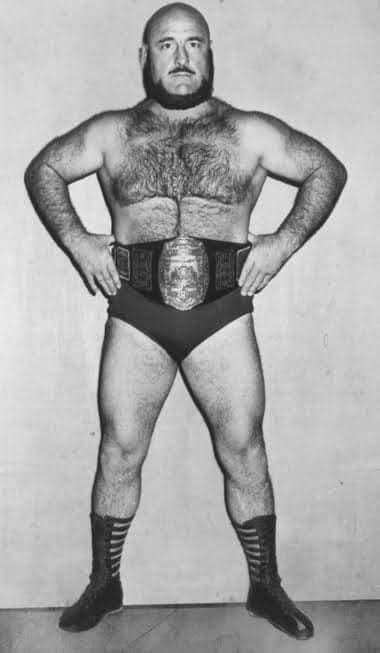
Pictured: Maurice “Mad Dog” Vachon, AWA World Heavyweight Champion
A notable exception in the Vachon AWA tile month came on March 8 in Sioux City, where Vodik scored a victory over the champion, as Vachon continued defending the title immediately afterward without interruption. These repeated clashes with Vodik (a massive, unpredictable babyface) highlighted a simmering singles feud rooted in power-versus-power brawling. Vachon’s matches underscored the AWA’s style: physical, grudge-driven contests where heels like Markoff, Tolos, or Arakawa filled undercard roles, while top challengers like Bruiser tested the champion’s limits without dethroning him. Verne Gagne, a former champion and perennial top star, appeared more in tag and midcard singles action rather than direct title pursuits that month.
Larry Hennig (“Pretty Boy”) and Harley Race held the AWA World Tag Team titles throughout March, having won them from The Crusher and Verne Gagne on August 7, 1965 (a reign that ultimately lasted 294 days until May 28, 1966). Their run faced relentless pressure from multiple babyface teams, creating the month’s most compelling ongoing storyline. Challengers repeatedly forced non-title or DQ outcomes, building heat for a future title change.
The standout feud involved Dick the Bruiser and The Crusher, the promotion’s premier brawling tandem. On March 5 in St. Paul, they defeated the champions in a high-profile Non-Title Death Match (33 minutes), signaling their intent and drawing strong attendance (8,450). They followed up with another DQ victory on March 19 in St. Paul. Earlier, on March 1 in Moline, The Crusher teamed with Mighty Igor Vodik to beat Hennig and Race by DQ. On March 31 in Mankato, Reggie Parks and The Crusher again scored a DQ win over the champs. These encounters portrayed Hennig and Race as slippery heels who retained gold through rules loopholes, while Bruiser and Crusher emerged as unstoppable forces of justice.
Other teams piled on: Verne Gagne and Danny Hodge (a respected technical star) defeated the champions on March 15 in Denver, but no title changed hands due to a clever injury substitution angle—Hennig was hurt in the first fall, Vachon replaced him, and the challengers couldn’t secure two falls against the legal team. Non-title losses to combinations like Igor Vodik & Ivan Kalmikoff (March 9 in Owatonna and March 10 in Mankato) and defenses against Mitsu Arakawa & Haru Sasaki (March 18 in Omaha) further illustrated the champs’ vulnerability. Singles crossovers amplified the feud: on March 21 in Moline, Gagne pinned Hennig and The Crusher beat Race in separate bouts; on March 22 in Kewanee, The Crusher pinned Markoff while Igor beat Hennig by DQ. TV tapings in Minneapolis (March 5, 7, 12, 14, 19, 21, 26, 28) routinely featured the champs in handicap or tag scenarios against carpenters or midcarders, keeping their reign visible while babyfaces like The Crusher racked up wins.
Beyond the title scenes, March featured scattered but thematically consistent rivalries. The Crusher remained hyper-active as a singles babyface, defeating Mitsu Arakawa (March 2 Denver), Chris Markoff multiple times (March 21–22), and others like Gene Anderson or Guy Taylor on TV. His clashes with heels like Markoff and Tolos fed into the larger tag narrative. Mighty Igor Vodik oscillated between title challenger and tag partner, adding chaotic energy. Danny Hodge’s appearances (teaming with Gagne or scoring wins over Markoff and Tolos) positioned him as a credible threat across divisions. Underneath, Paul “Butcher” Vachon (Mad Dog’s brother) and Omaha centered names like Tim Woods, Billy Red Cloud, or Haru Sasaki filled cards with straightforward matches, while women’s bouts (rare) and other specials rounded out shows.
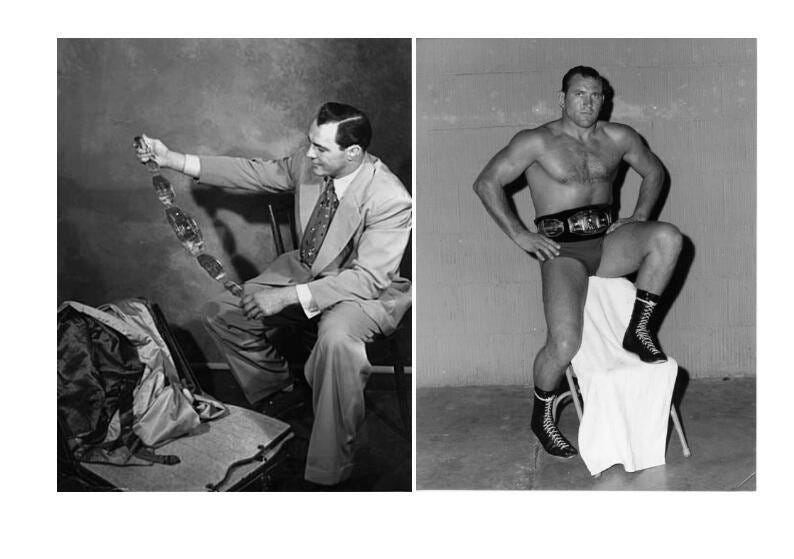
Pictured: Verne Gagne and Danny Hodge
March 1966 encapsulated the AWA’s blue-collar appeal: no flashy promos dominated reports, but the in-ring wars spoke volumes. Vachon’s steady defenses kept the world title scene stable, while the tag division’s multi-team assault on Hennig and Race created palpable tension. The Bruiser/Crusher push—highlighted by the death match and repeated DQs—directly foreshadowed their May 28 title victory in Minneapolis, one of the era’s most celebrated changes. Other threads (Vachon vs. Igor, Crusher’s singles dominance) simmered without resolution, ensuring ongoing house-show business. In an era before any widespread national television TV angles, these matches and stipulations built authentic heat through customization to local markets with repeated beatings and rule-bending finishes, cementing the AWA’s reputation for tough, grudge-filled wrestling that kept Midwest arenas packed.
March 1966 in Stage 5: Re-Consildation Stage (1965-1974)
March 1966 thus exemplifies my model’s Stage 5 in super-microcosm. After ten years of DOJ scrutiny that trimmed the NWA’s ranks and curbed its most overt monopolistic edges, promoters were no longer fighting for survival; they were methodically rebuilding. Local championships turned over cleanly, the world title refreshed the product, and regional stars like Jones, the Mauler, and Sammartino drew consistent crowds. Talent moved between territories under reformed rules, television deals held steady, and the “territory system” re-asserted itself as a decentralized yet interconnected network. The legal clouds of the 1950s had lifted, allowing the business to refocus on what it did best: weekly live events, blood feuds, and regional pride.
Thank You for Reading
I’m Tony Richards, Pro Wrestling Historian, Author and Storyteller. I share pro wrestling historical items in each issue of the Time Tunnel Pro Wrestling History Newsletter. Thanks for reading! If you enjoy my information on select events, matches and insights, please share it with folks you think might like to be a subscriber!
Remember, premium investors get access to exclusive and special content such as some special issues including a multi-part deep dives on wrestling territories, wrestler bios and championship title histories, special audio and video interviews on territory pro wrestling and more available in the Pro Wrestling Time Tunnel for Premium Investors.