


Happy Birthday to those who have passed on and to those great wrestlers still with us:
In Memoriam:
Lou Daro 1884
Cowboy Bob Ellis 1929
Khosrow Vaziri\The Iron Sheik 1942
Happy Birthday:
J.D. McDonough (36)
Maxwell Jacob Friedman (30)
RIP Memorial: We stop & remember those who have passed on this day and gave themselves to the business for us, the fans. We salute you and thank you.
Antonino Rocca 3-15-1977 at the age of 55
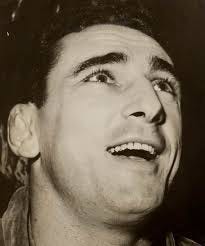
Jeff Gaylord 3-15-2023 at the age of 64
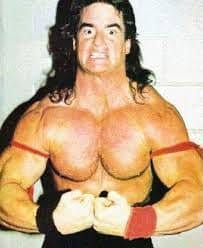
70 Year Flashback
3-15-1956: Whipper Billy Watson defeated Lou Thesz (ch) to win the NWA World Heavyweight Championship at the Maple Leaf Gardens in Toronto, Ontario, Canada
In front of a packed crowd of 15,000 fans, the hometown hero Watson ended Thesz’s record 2,300-day reign as NWA World Heavyweight Champion (the longest in NWA history at the time) by count-out. Former boxing champion Jack Dempsey served as special guest referee and counted Thesz out after he failed to return to the ring.
Thesz had been the undisputed face of the NWA since 1949—a legitimate tough guy and technical master who unified the world titles. Watson, already a massive star in Toronto and a two-time world champion (his first reign came in 1947), represented Canadian pride in the NWA’s territorial era. Promoters loved using local heroes to draw huge gates, and this was perfectly executed.
The count-out finish (repeated when Thesz regained the belt by count-out in St. Louis on November 9, 1956) was classic 1950s booking: it protected both men’s credibility—no clean pinfall—and allowed the title to “tour” territories for big money. Watson held the belt for 239 days before the return match.
The win electrified Canadian fans, cemented Watson as a national legend, and proved Maple Leaf Gardens was a premier wrestling venue. It was pure old-school territory storytelling: the champion travels, the local hero gets his moment, and business booms. A short but unforgettable chapter in NWA history.
Get my complete analysis pf this title change match and the complete state of Pro Wrestling in the month of March in 1956 in Issue 328 of The Daily Chronicle (March 9th, 2026).
Click here:
Issue 328 The Daily Chronicle (March 9th, 2026) March 1956 Analysis of the Month in Pro Wrestling
50 Year Flashback
January-March 1976 Tampa Office, NWA Florida Territory Analysis
In early 1976, Championship Wrestling from Florida—Eddie Graham’s Tampa-based NWA territory—was one of the hottest promotions in the country. Weekly TV tapings (syndicated across Florida and beyond) were anchored by the legendary Gordon Solie’s smooth, authoritative commentary, while live events drew strong crowds in arenas from Tampa and St. Petersburg to Miami, Jacksonville, and West Palm Beach. The roster blended established NWA stars, local heroes, veteran heels, and big-name visitors. The first three months of the year were defined by rapid-fire Florida Heavyweight Championship changes, the invasion of NWA World Heavyweight Champion Terry Funk and the Funk family, and the explosive personal angle involving “The American Dream” Dusty Rhodes. These elements turned CWF into a masterclass in 1970s territory wrestling: equal parts athleticism, blood-feud storytelling, and sympathetic babyface booking.
The year opened with Frank Goodish (later: Bruiser Brody) as the reigning NWA Florida Heavyweight Champion. He had won the belt from Rocky Johnson on December 31, 1975, in Tampa in a quick 35-day reign that ended on February 4. Brody’s power-based, brawling style fit the territory’s hard-hitting aesthetic, but he was largely a transitional champion used to elevate others.

Pictured: Terry Funk at the interview desk with Gordon Solie
The real story in January was the arrival of NWA World Heavyweight Champion Terry Funk. Funk’s presence instantly elevated every card. On January 8 in Jacksonville, Funk defeated Dusty Rhodes in a high-profile singles match. Rhodes was being positioned as the top contender to the world title (at least in the Florida territory) and planted the seeds for the year’s biggest angle.
House shows featured the usual mix of midcard talent: Beauregard vs. Ron Starr, George McCreary vs. Tom Jones, Karl Von Steiger vs. Omar Negro, and tags involving Dino Bravo, Bill Dromo, and Jerry Brisco. Veterans like Haystacks Calhoun and The Great Mephisto popped in for handicap or battle-royal spots. The Florida Tag Team titles were held early in the year by the excellent combination of Bob Orton Jr. & Bob Roop, while Billy Robinson carried the Southern Heavyweight Championship as a secondary championship. The TV show focused heavily on promoting Funk’s defenses and Rhodes’ rising star power, with Solie hyping the “only man to pin the world champion” narrative.
February kept things hot with a title change that gave the territory a fresh face. On February 17th in Tampa, Thunderbolt Patterson dethroned Frank Goodish to begin a 42-day reign as Florida Heavyweight Champion. Patterson, a charismatic and athletic babyface, brought credibility and crowd support to the top territory singles title and helped transition the belt away from Brody’s short run.
The month’s marquee TV moment came on February 10 when Terry Funk and Dusty Rhodes clashed again on Championship Wrestling from Florida. The match was physical and heated, reinforcing the personal stakes between the world champion and the territory’s top star.
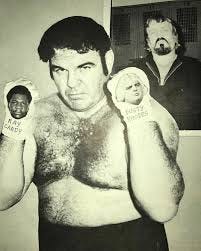
Pictured: The Missouri Mauler with the pictures of Ray Candy and Dusty Rhodes on his taped fists
Crucially, days later after Rhodes’ earlier pinfall victory over Funk, the Missouri Mauler—hired by Funk with a $10,000 bounty—seriously injured Rhodes during a match. Rhodes was rushed to the hospital with paralysis on the right side of his face. This was classic territory era wrestling psychology: a real-looking injury angle designed to generate sympathy and heat. Funk publicly expressed disappointment that Rhodes wasn’t hurt worse and told his brother Dory to cancel the check because “the job wasn’t done.” The Mauler (brother of The Assassin) bragged that he had partially succeeded and wanted to finish the job for the bounty. Manager Rock Hunter appeared as the mouthpiece, and the angle quickly expanded to include threats against anyone who interfered.
This bounty/injury storyline dominated TV promos and interviews throughout February and into March, turning a standard world-title feud into something deeply personal. Rhodes began selling the injury on television (wearing sunglasses and a newsboy cap, speaking with noticeable slurred speech), which only heightened fan investment.
March was the most turbulent month for the Florida Heavyweight Championship. On March 17 in Miami, Korean heel Pak Song defeated Thunderbolt Patterson after just 42 days. Song’s reign lasted only two days. Jack Brisco (a multi-time champion and Florida favorite) regained the belt on March 19 in St. Petersburg for a six-day reign. Pak Song then won it back on March 25th and held it into April. These rapid switches—four title changes in roughly three weeks—were classic NWA territory era booking: keep the fans guessing and give multiple wrestlers credible runs.

Pictured: Pak Song with manager Gary Hart
Behind the scenes, the bounty angle continued to simmer. By late March the Missouri Mauler was still gunning for Rhodes, and promos teased Pak Song’s potential involvement in the Funk family’s schemes. Rhodes, still visibly affected by the paralysis, cut emotional promos vowing revenge on the Mauler, Rock Hunter, and the entire Funk family. He specifically noted that the Mauler hadn’t collected the $10,000 because Rhodes was still wrestling, and a counter-bounty rumor ($5,000 on the Mauler) added layers of intrigue.
Other March action included battle royals featuring Andre the Giant, Bob Roop, Bill Watts, and Rhodes (who once eliminated himself via the middle rope to let Andre win). Tags with Steve Keirn, Mike Graham, and Gerry Brisco rounded out the undercard. The TV product stayed focused on the Rhodes-Funk-Mauler drama while using the rotating Florida title to keep house-show crowds engaged.
The January–March 1976 period was a textbook example of Eddie Graham’s booking genius. CWF used believable personal stakes and NWA cross-promotion to create must-see television.

Pictured: Dusty Rhodes with the paralysis on the right side of his face
The pin over Terry Funk + the subsequent facial-paralysis injury was Dusty Rhodes’ definitive babyface turn moment for 1976 in Florida. By selling a real-looking injury while cutting fiery promos about revenge and the bounty, Rhodes cemented himself as the territory’s working-class hero. This angle ran for months and directly fed into his later world-title pursuits. It also introduced the Missouri Mauler and Rock Hunter as heat magnets and tied the Funk family (Terry, Dory, and associates) into Florida storylines for the rest of the year.
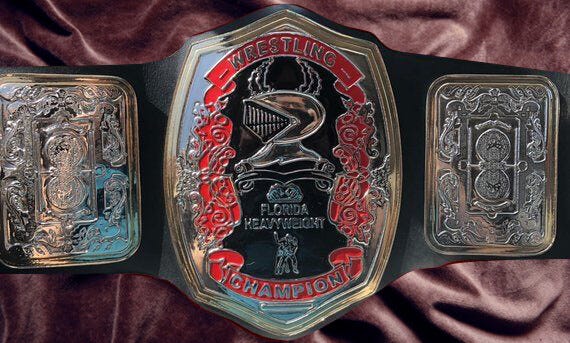
Four Florida Heavyweight Championship changes in the first 90 days (Brody → Patterson → Song → Brisco → Song) prevented fan fatigue. Each champion brought a different flavor: Brody’s brute power, Patterson’s athletic charisma, Song’s foreign-heel menace, and Brisco’s clean-cut heroism. This “hot potato” approach kept live gates strong and gave Solie plenty to hype on TV.
Bringing Terry Funk in for multiple dates (including the February 10 TV match) lent national credibility. Funk wasn’t just a guest—he was an active antagonist who placed bounties and ordered injuries. It blurred the lines between world and territorial titles, making every Rhodes-Funk interaction feel massive.
Roster depth was always maintained in the Tampa booking office, no matter who the booker was working under Eddie Graham. The undercard was rock-solid with reliable workers (Von Steiger, Mephisto, Calhoun, the Orton/Roop team, Billy Robinson). Solie’s interviews—especially the somber Dusty segments and the arrogant Funk/Mauler promos—were appointment television. The mix of squashes, tags, and battle royals gave fans variety while always circling back to the main angles.
By the end of March 1976, CWF had successfully:
Turned Dusty Rhodes into an unstoppable sympathetic babyface
Established a long-running personal blood feud that would pay off for years
Kept the Florida title hot and unpredictable
Used the NWA World Champion to elevate the entire territory
The stage was perfectly set for Dusty’s continued rise, more Funk family invasions, and the explosive angles that would define CWF through the late 1970s. Even though the Dusty-Hart-Pak Song babyface turn happened in 1974, this is when Dusty’s real huge run in Florida started on a consistent basis.
Dusty was a rising territory star in Eddie Graham’s CWF, building his babyface credibility through straightforward, personal, and often gut-wrenching interviews with Gordon Solie. The most famous and representative promo from that year — and the one that defined the first half of 1976 — aired on the April 21 episode of Championship Wrestling from Florida. It perfectly encapsulated the bounty/injury angle that had been simmering since late January and exploded in February–March. While no complete verbatim transcripts exist in public archives, detailed contemporary recaps, surviving footage, and fan recollections paint a clear picture of Rhodes’ style: vulnerable yet defiant, slurred yet scorching, and relentlessly fan-focused.
Thank You for Reading
I’m Tony Richards, Pro Wrestling Historian, Author and Storyteller. I share pro wrestling historical items in each issue of the Time Tunnel Pro Wrestling History Newsletter. Thanks for reading! If you enjoy my information on select events, matches and insights, please share it with folks you think might like to be a subscriber!
Remember, premium investors get access to exclusive and special content such as some special issues including a multi-part deep dives on wrestling territories, wrestler bios and championship title histories, special audio and video interviews on territory pro wrestling and more available in the Pro Wrestling Time Tunnel for Premium Investors.