



Happy Birthday to those who have passed on and to those great wrestlers still with us:
In Memoriam:
Milo Steinborn 1893
George Tragos 1897
Don Bass 1946
Happy Birthday:
Larry Heiniemi\Lars Anderson (87)
Bryan Clarke\Adam Bomb (62)
Trisa Laughlin\Beulah McGuillicutty (57)
Santino Marella (52)
Shotzi Blackhart (34)
RIP Memorial: We stop & remember those who have passed on this day and gave themselves to the business for us, the fans. We salute you and thank you.
Saul Weingeroff 3-14-1988 at the age of 72
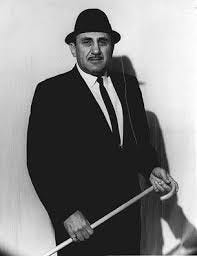
Happy Humphrey 3-14-1989 at the age of 62

Tony Baillargeon 3-14-1997 at the age of 68
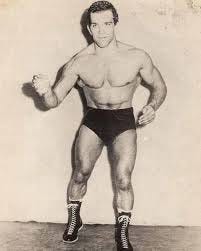
Tony Garibaldi 3-14-1997 at the age of 80

Francois Miquet\Corsica Joe 3-14-2010 at the age of 90
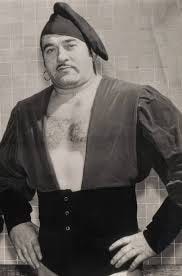
Don Carson 3-14-2013 at the age of 78

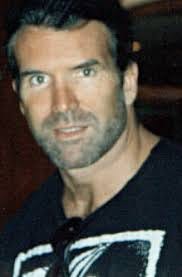
Scott Hall 3-14-2022 at the age of 63
The Life & Career of George Tragos
He stands as one of the most influential yet underappreciated figures in the history of professional wrestling. George Tragos, a formidable amateur wrestler in his native Greece, a tough “hooker” in the American pro ranks, and the man who shaped the career of three-time NWA World Heavyweight Champion Lou Thesz, Tragos bridged the old-world discipline of Greco-Roman wrestling with the rugged catch-as-catch-can style of the American Midwest. The George Tragos/Lou Thesz Professional Wrestling Hall of Fame—part of the National Wrestling Hall of Fame Dan Gable Museum in Waterloo, Iowa—bears his name alongside that of his most famous pupil, a lasting testament to his impact on the sport.

Born in Katsaros (or Katsaro), Messinia, Greece, on March 14, 1897, Tragos grew up in a nation that still revered the ancient Olympic tradition. He excelled in amateur wrestling and captured numerous national titles. Although it been somewhat of a narrative at times, Tragos was never a member of Greece’s Olympic teams. He competed regularly at the Greek Athletic Club in Chicago, which is most likely the location of the group photo in this feature. 1
In the late 1900s, Tragos emigrated to the United States, where he quickly transitioned from competitor to educator, serving as an amateur catch-wrestling coach at the University of Missouri in Columbia for several years. His reputation as both a skilled technician and a demanding instructor spread rapidly. Eventually, he resigned his collegiate post to focus fully on professional wrestling, a decision that allowed him to travel the Midwest circuit while continuing to teach.

As a professional, Tragos wrestled primarily out of St. Louis, Missouri, where he was billed at roughly 5 ft 9 in and around 215 pounds—solid middleweight territory in an era when heavyweights dominated marquees. He captured the Missouri Wrestling Club’s Missouri Heavyweight Title and earned a fearsome reputation as a “hooker”—a wrestler capable of ending any match at will with devastating joint locks and submission holds. He faced many of the era’s top stars, including the father of future AWA champion Nick Bockwinkel. Though he never achieved national heavyweight stardom, Tragos was respected (and sometimes feared) for his technical mastery and no-nonsense approach inside the ring.
Tragos’s greatest contribution to wrestling, however, occurred outside the spotlight. In the early 1930s he took a teenage Lou Thesz under his wing in St. Louis. Thesz later recounted in his autobiography Hooker how friends had warned him about Tragos’s vicious reputation, yet the young man found only respect and rigorous training. Tragos taught Thesz the intricate art of catch wrestling—hooks, counters, and the psychology of the ring—that would later help Thesz become one of the greatest champions of the 20th century. Thesz often spoke of his mentor with profound gratitude: “George Tragos was a great wrestler and a great human being. I’ve learned more from him, about life as well as wrestling, than I could ever possibly repay.”
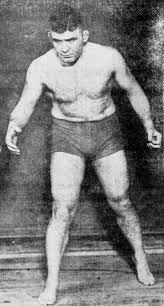
Tragos’s teaching style was legendary—and occasionally brutal. Stories circulated of him deliberately maiming opponents who insulted him or when promoters ordered him to lose. In one notorious incident, Tragos applied a double wristlock so viciously that the opponent’s arm developed gangrene and required amputation; Tragos reportedly showed no remorse, viewing such tactics as part of the rough-and-tumble world of “true” professional wrestling. These tales only enhanced his aura as a no-nonsense guardian of the old-school style.
Beyond Thesz, Tragos trained and influenced countless young wrestlers who passed through the Midwest. He combined his love of competition with a genuine desire to teach, traveling circuits while mentoring the next generation. His dual identity as both competitor and coach made him a bridge between amateur purity and professional pragmatism at a time when the sport was evolving rapidly.
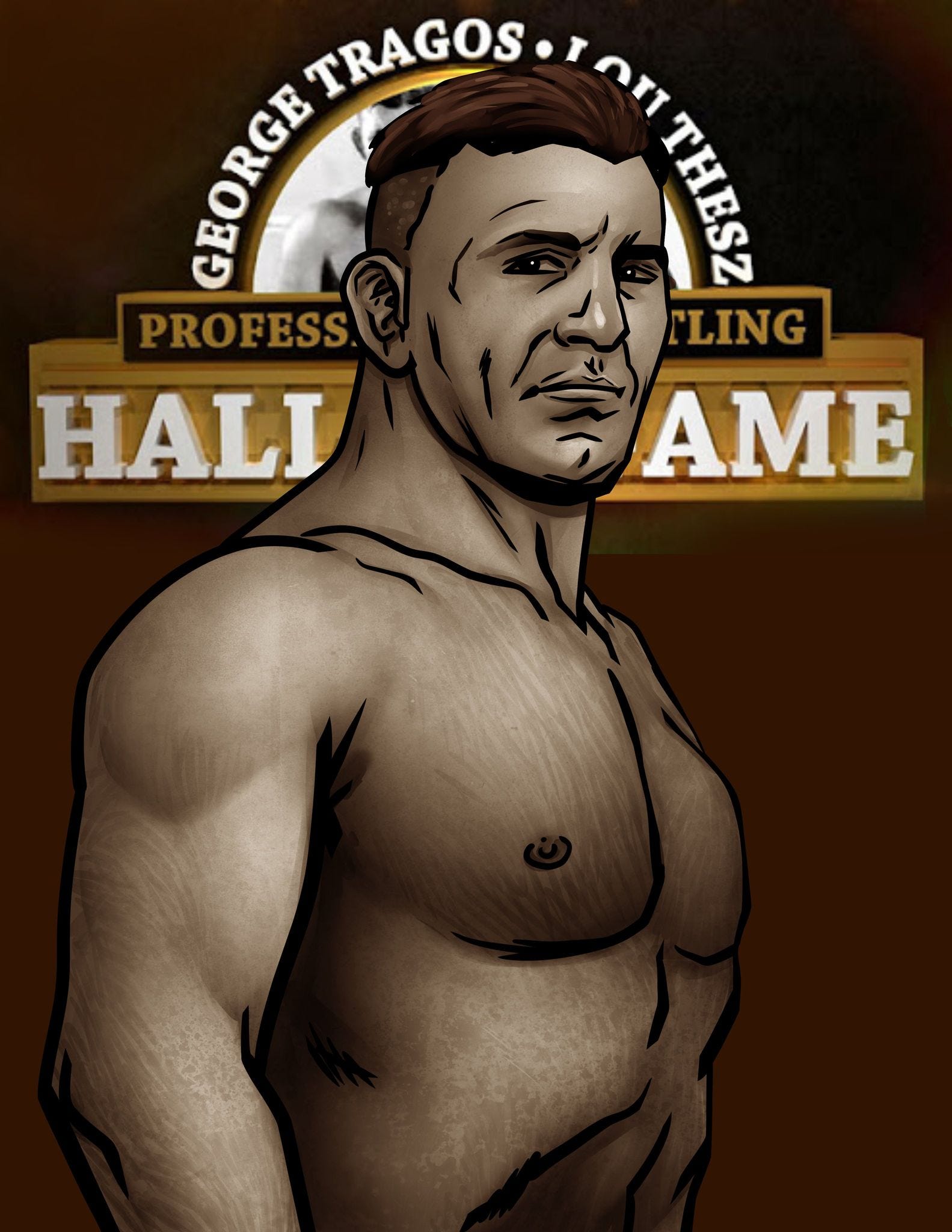
Tragos passed away in St. Louis on September 5, 1955, at the age of 58. His death came just as professional wrestling was entering its television golden age—an era he helped shape through his most famous student. In 1999, the International Wrestling Institute and Museum (now part of the National Wrestling Hall of Fame) honored him posthumously by naming its professional wing the George Tragos/Lou Thesz Professional Wrestling Hall of Fame. Tragos was inducted that same year. The hall annually presents the George Tragos Award to wrestlers who exemplify competitive excellence and amateur-to-pro transition, keeping his name alive for new generations.
Today, George Tragos is remembered not for championship belts but how he carried the Greco-Roman tradition from the Olympics of the 1920s into the smoky arenas of Depression-era America, forged it in the fires of catch wrestling, and passed it to Lou Thesz and countless others. In an industry often defined by flash and spectacle, Tragos embodied substance, toughness, and mentorship. The hall of fame that bears his name is not merely an honor—it is a living legacy of a man who understood that wrestling’s true greatness lies in what is taught, not just what is won.
One Thing I Learned About Don Carson
His signature wrestling weapon was a black loaded glove that he affectionately nicknamed “Peanut Butter”—and the reason for that quirky name was a mystery known only to him. He’d dramatically slip it on during matches or TV segments to deliver extra-stiff, knockout-style punches (often with a microphone nearby for those signature “thud” sounds), making it a perfect old-school heel gimmick in territories like the Gulf Coast, Mid-America, and Southeastern Championship Wrestling. It became his calling card as a tough, raspy-voiced villain who feuded with everyone from Bobby Fields and Ron Wright to Freddie Blassie.
Carson started wrestling in the early 1960s, racked up dozens of regional titles, later became a manager (notably for the Mongolian Stomper), and even worked as a real-life deputy sheriff on the side—but that loaded glove was what fans remembered most about the “Tennessee Jawjacker.”
Thank You for Reading
I’m Tony Richards, Pro Wrestling Historian, Author and Storyteller. I share pro wrestling historical items in each issue of the Time Tunnel Pro Wrestling History Newsletter. Thanks for reading! If you enjoy my information on select events, matches and insights, please share it with folks you think might like to be a subscriber!
Remember, premium investors get access to exclusive and special content such as some special issues including a multi-part deep dives on wrestling territories, wrestler bios and championship title histories, special audio and video interviews on territory pro wrestling and more available in the Pro Wrestling Time Tunnel for Premium Investors.
Jason Presley research
You might want to make a distinction between myth versus fact for George Tragos. Tragos was not part of the Greece Olympic team. He was already living in the US by 1910, living in Chicago. There is coverage in the 1916 & 1918 Chicago Daily Tribune of Tragos wrestling in tournaments at the "Greek Athletic Club". I suspect that has been conflated over the years into his being on the Greek Olympic team and is most likely where the photo is from.