



Happy Birthday to those who have passed on and to those great wrestlers still with us:
In Memoriam:
Lenny Montana\The Zebra Kid 1926
Geoff Portz 1935
Happy Birthday:
Kurt Brown\Vandal Drummond (64)
Masakatsu Funaki (57)
Matt Jackson (41)
RIP Memorial: We stop & remember those who have passed on this day and gave themselves to the business for us, the fans. We salute you and thank you.
Gene DuBuque\Magnificent Maurice 3-13-1974 at the age of 46

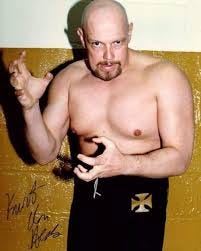
Kurt Von Hess 3-13-1999 at the age of 56
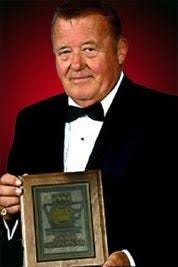
Arnold Skaaland 3-13-2007 at the age of 82
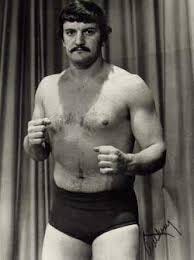
Andrew James Robert Patrick Martin\Test 3-13-2009 at the age of 33

Joe McCarthy 3-13-2012 at the age of 82

Dennis Stamp 3-13-2017 at the age of 70
The Life & Career of Arnold Skaaland
Arnold Skaaland is one of the most understated yet indispensable figures in the history of American professional wrestling. A decorated U.S. Marine, agile in-ring competitor, tag team champion, trusted business partner to the McMahon family, and pioneering face manager, Skaaland touched nearly every facet of the industry over six decades. Unlike the flamboyant heels who dominated managerial roles, Skaaland embodied quiet loyalty and old-school integrity. He guided two of wrestling’s longest-reigning world champions—Bruno Sammartino and Bob Backlund—while holding ownership stakes in the Capitol Wrestling Corporation, the precursor to WWE. Inducted into the WWE Hall of Fame in 1994, he was remembered by colleagues as “the most loyal man I’ve ever met” and a cornerstone who helped build the empire that became the World Wrestling Federation.
Born and raised in White Plains, New York, Skaaland came of age during the Great Depression and World War II. He enlisted in the United States Marine Corps and served honorably before returning home. Post-discharge, he briefly pursued amateur boxing but found it unprofitable. A chance discovery—reportedly by New York promoter Rudy Dusek while Skaaland refereed a YMCA tournament—steered him toward wrestling. By age 21 (or as early as 19 by some accounts), he debuted in 1946 under his real name, often billed as hailing from Norway to play up a Scandinavian heritage angle.
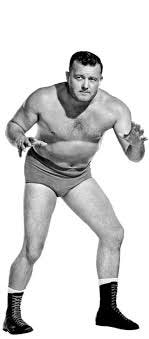
Skaaland quickly earned the nickname “The Golden Boy” for his flashy style and crowd appeal. Billed at 6 ft 0 in (1.83 m) and 240 lb (110 kg)—though actual measurements placed him closer to 5 ft 11 in and 205 lb—he was never a powerhouse in an era dominated by giants. Instead, he relied on speed, agility, clever chain wrestling, and signature diving dropkicks. Early programs described him as “one of the fastest and one of the most clever wrestlers in the game today,” a “colorful young Norwegian flash” who thrilled audiences in the Pacific Northwest, the Northeast, and beyond. He claimed to have worked an astonishing 10,000 matches across five decades.
He competed extensively on the independent circuit and in National Wrestling Alliance (NWA) territories. In the late 1950s, he worked the Georgia territory as “Bobby Weaver.” In the early 1960s, he earned world title shots against NWA Heavyweight Champion Pat O’Connor and the charismatic “Nature Boy” Buddy Rogers—though he came up short each time. In 1962, he even refereed a historic match in Japan between Freddie Blassie and Rikidōzan. His Northeast roots eventually led him to Vince McMahon Sr.’s territory. By 1963, Skaaland was a full-time performer for the newly formed World Wide Wrestling Federation (WWWF) in New York.
His crowning in-ring achievement came on June 1, 1967, when he and Spiros Arion captured the WWWF United States Tag Team Championship. Tony Parisi (Antonio Pugliese) essentially gifted Skaaland his half of the belts after an injury. The duo held the titles for just over a month before losing them to The Sicilians (Lou Albano and Tony Altimore) on July 10, 1967, in Atlantic City, New Jersey. Arion and Sammartino quickly regained and retired the championship.

Pictured: Spiros Arion & Bruno Sammartino, WWWF United States Tag Team Champions
Skaaland continued wrestling regularly into the 1970s, often as an underdog babyface taking on much larger opponents like Gorilla Monsoon and Killer Kowalski. He wrestled sporadically until around 1978, occasionally filling in as a substitute.
Skaaland’s relationship with Vince McMahon Sr. proved transformative. He became a shareholder in the Capitol Wrestling Corporation (the WWWF’s parent company) and a close business confidant. Beyond the ring, he promoted events at the Westchester County Center (near his White Plains home), handled box-office duties, collected receipts, and deposited funds—an extraordinary level of trust in the notoriously cutthroat wrestling business of the era. He also served as a road agent and produced shows. Later, when Vincent K. McMahon took the company national in the 1980s, Skaaland remained involved as a road agent and early investor alongside Gorilla Monsoon and others.
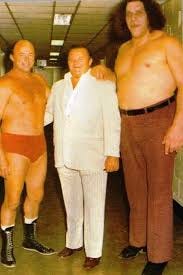
Pictured: Verne Gagne, Arnold Skaaland & Andre The Giant
His international work included acting as André the Giant’s agent and caretaker. In New Japan Pro Wrestling, where McMahon Sr. booked André, Skaaland portrayed a heel manager—his only notable villainous role—escorting the Giant and representing American interests. This multifaceted involvement made him a rare “utility player” who understood every side of the business.
In 1978, Skaaland retired from full-time competition and transitioned into managing—uniquely as a babyface manager at a time when most managers were loud, cheating heels. His calm, laid-back demeanor contrasted sharply with the screaming antics of Captain Lou Albano, Freddie Blassie, or the Grand Wizard. “I didn’t have to scream and shout about my guys,” he later reflected. Skaaland operated in the opposite lane: calm, loyal, soft-spoken, and protective. He let his wrestlers’ accomplishments speak for him rather than stealing the spotlight.
Skaaland never needed any of that. His quiet authority made him the perfect cornerman for clean-cut babyface champions like Bruno Sammartino and Bob Backlund. The only time he ever played heel was briefly in Japan managing André the Giant for New Japan Pro-Wrestling—a role that proved he could do it but chose not to in his primary territory.
Skaaland entered managing with credentials few others possessed. A legitimate former wrestler, Marine veteran, and actual shareholder in the Capitol Wrestling Corporation (the precursor to WWE), he was a trusted lieutenant to both Vince McMahon Sr. and Jr. He handled box office, road agent duties, and even invested in the company’s national expansion alongside Gorilla Monsoon. Skaaland’s deep business role made him irreplaceable. He wasn’t just ringside; he was part-owner and decision-maker.
He guided two of the WWWF/WWF’s longest-reigning world champions: Bruno Sammartino and Bob Backlund. Pro Wrestling Illustrated named him Manager of the Year in both 1978 and 1979.

Pictured: Bruno Sammartino, Arnold Skaaland & Bob Backlund
Sammartino, already an established icon, credited Skaaland as “a great influence in my whole wrestling career” who helped him reach his goals. Backlund, the clean-cut All-American, benefited immensely from Skaaland’s guidance during his epic reign (1978–1983). Total combined championship days under Skaaland: 6,175 days—almost 17 years. No other manager comes close. Paul Heyman, despite two decades at the top with Brock Lesnar (multiple reigns totaling 1,514 days), CM Punk (434 days), Roman Reigns (732+ days and counting), and others, sits at roughly 2,831 days—nine years behind Skaaland. As one analysis put it: “In Terms Of Championship Success, Arnold Skaaland Is The Best WWE Manager Ever.”
The Backlund-Skaaland partnership became iconic. On December 26, 1983, at Madison Square Garden, Skaaland made the most agonizing decision of his managerial career: with Backlund trapped in the Iron Sheik’s camel clutch and unable to continue, Skaaland threw in the towel to save his protégé from serious injury. The act ended Backlund’s 2,135-day reign and sparked controversy—rumors persisted that Backlund privately begged for a rematch. Skaaland stood by his choice: “I figured I didn’t want to see the kid get hurt... I’d rather do something like that than see the kid get hurt.”
Skaaland also managed Antonio Pugliese (Tony Parisi) and others like Rick McGraw. His quiet authority earned respect across the industry; Sgt. Slaughter later called him “probably the greatest manager of all time” for guiding two world champions. In a lighter moment, he appeared as a construction foreman in the 1987 music video for Koko B. Ware’s “Piledriver.”

Pictured: Bob Backlund, WWWF World Champion and Manager Arnold Skaaland
In 1994, Bob Backlund inducted Skaaland into the WWE Hall of Fame (Class of 1994), recognizing his managerial accomplishments and decades of service. That same year, in a scripted angle, Backlund—turning heel—attacked his former manager on WWF television to generate heat. Skaaland received the Cauliflower Alley Club’s “Other Honoree” award in 1994 and the WWF Lifetime Achievement Slammy Award in 1997. Vince McMahon praised him as “the most loyal person I’ve ever known” and credited him with helping build the modern WWF.
Away from wrestling, Skaaland was a devoted family man. He married Betty (Elizabeth) Skaaland, and the couple had three sons: Edward Patrick, James Allen, and George (who briefly wrestled in the mid-1980s). He was also a grandfather to four: Jordan, Paige, Britt, and James. Betty remained by his side until the end; years later, she appeared ringside at WrestleMania 28, embraced by John Cena before his match with The Rock.
Skaaland had been ill for some time when he passed away on March 13, 2007, at age 82 in White Plains, New York. Tributes poured in across WWE programming, with commentators Jim Ross, Jerry Lawler, Michael Cole, and John “Bradshaw” Layfield honoring his legacy. He was interred at Gate of Heaven Cemetery in Hawthorne, New York. Captain Lou Albano, a longtime rival, summed up the industry’s feelings: Skaaland was “the most loyal man I’ve ever met.
One Thing I Learned About Dennnis Stamp
In 1975, while working the NWA Los Angeles territory (where he was a two-time “Beat the Champ” Television Champion), Stamp appeared on Bryant Gumbel’s local TV show Be What You Want To Be. The segment featured a fan who wanted to become a wrestler, and the promoter instructed Stamp to “break a bone” on the guy to convince viewers the business was real.
Stamp refused to legitimately hurt the aspiring wrestler and instead worked the match safely. The promoter was furious, and the other wrestlers in the territory gave Stamp the silent treatment for days, with some telling him, “How are you going to get people to believe it’s real if you don’t really hurt them?”
This story (recounted by Stamp himself in a 2015 interview) perfectly captures the old-school territory mindset and his reputation as a straight-shooting, technically sound journeyman who prioritized protecting opponents over enforcing the “code.”
Thank You for Reading
I’m Tony Richards, Pro Wrestling Historian, Author and Storyteller. I share pro wrestling historical items in each issue of the Time Tunnel Pro Wrestling History Newsletter. Thanks for reading! If you enjoy my information on select events, matches and insights, please share it with folks you think might like to be a subscriber!
Remember, premium investors get access to exclusive and special content such as some special issues including a multi-part deep dives on wrestling territories, wrestler bios and championship title histories, special audio and video interviews on territory pro wrestling and more available in the Pro Wrestling Time Tunnel for Premium Investors.