


Happy Birthday to those who have passed on and to those great wrestlers still with us:
In Memoriam:
Lee Wykoff 1898
Orville Brown 1908
Ace Freemen 1914
Frank Hickey 1915
Jesse James 1917
Randy Barber 1958
Happy Birthday:
Narberto Salcedo\Pierroth, Jr. (68)
Debbie Malenko (55)
Austin Morelson\Luchasaurus (41)
Joseann Offerman\Jojo (32)
RIP Memorial: We stop & remember those who have passed on this day and gave themselves to the business for us, the fans. We salute you and thank you.
Dino Bravo 3-10-1993 at the age of 44
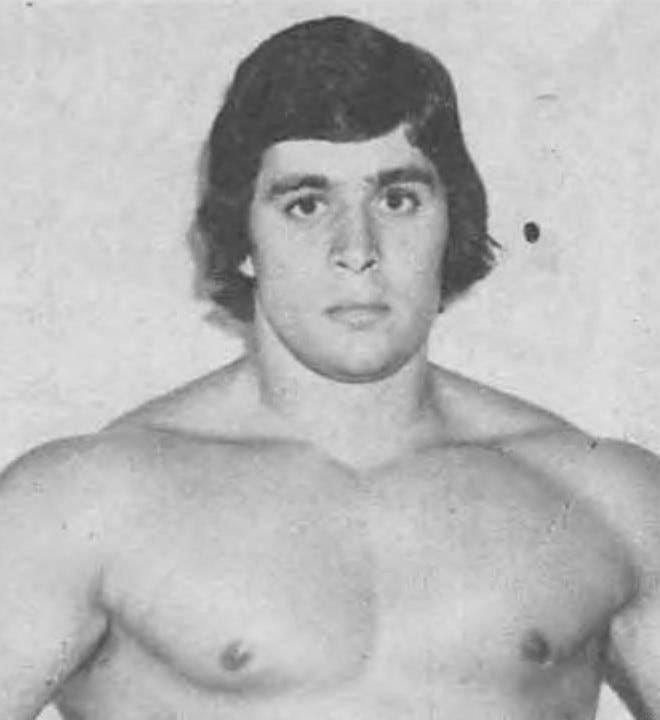
Aldo Bogni 3-10-1997 at the age of 82
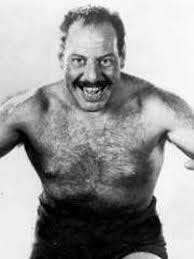
John Schweigert\The Great Scott 3-10-2205 at the age of 81
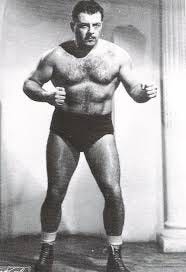
Ernie Ladd 3-10-2007 at the age of 68
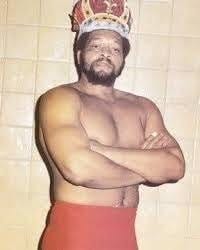
Guy Mitchell\Jerry Valiant 3-10-2010 at the age of 68
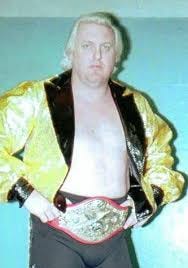
Sandy Scott 3-10-2010 at the age of 75
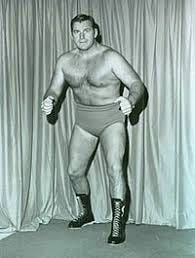
The Life & Career of Sandy Scott
Best known as half of the legendary tag team The Flying Scotts alongside his older brother George, Sandy enjoyed a ring career that spanned nearly two decades before transitioning into influential behind-the-scenes roles. From high-flying main events in Stampede Wrestling and the NWA territories to executive positions with Jim Crockett Promotions and co-founding Smoky Mountain Wrestling, Scott’s contributions bridged the territorial era and the dawn of modern promotions.
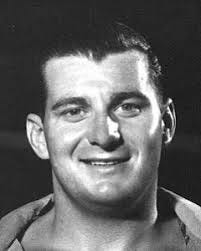
Born in Hamilton, Ontario, Canada, on May 27, 1934, Scott grew up in a working-class household that emphasized physical fitness and discipline. He played football, wrestled at the local YMCA, and trained in bodybuilding alongside future pro Mike Sharpe at Al Spittles’ Hamilton gym. His entry into wrestling came through family ties. In 1954, older brother George—already established in the business—brought the 20-year-old Sandy to Calgary to work for promoter Stu Hart in Stampede Wrestling. George not only trained him but also gave him the ring name “Sandy” after noticing his sun-bleached hair. The brothers quickly clicked as a unit, adopting a fast-paced, aerial style that featured flying head-scissors, dropkicks, and precision tackles. Fans dubbed them The Flying Scotts, and their chemistry proved electric.
Success arrived almost immediately. In their debut year in Stampede, the team captured the NWA Canadian Tag Team Championship (Calgary version) multiple times, including victories over teams like Chico Garcia & Roberto Pico and the Kalmikoffs. They became one of Western Canada’s most popular attractions, headlining cards that sometimes drew overflow crowds—once forcing promoters to turn away 6,000 fans for a match against the Miller Brothers. Over six years based in Calgary, Sandy and George won the Alberta Tag Team titles three times, the NWA Canadian Tag Team Championship (Calgary) four times, and the Stampede International Tag Team Championship six times. Their feuds with the Tolos brothers and the Vachons (Butcher and Mad Dog, or Maurice and Paul) became territorial classics.
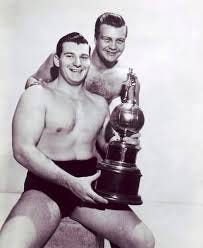
Pictured: The Flying Scotts, George and Sandy Scott
The Flying Scotts expanded their reach throughout the late 1950s and 1960s, working major NWA territories across the Midwest and Mid-Atlantic, as well as Maple Leaf Wrestling in Toronto, the American Wrestling Association (AWA), and international tours. They captured the AWA World Tag Team Championship (Indiana version) twice, the NWA World Tag Team Championship (Central States version) once, and the NWA International Tag Team Championship in Japan. In Australia, they dominated as three-time IWA World Tag Team Champions between 1966 and 1968. Brief but memorable stops in the Carolinas in 1957 evolved into regular Southern bookings by the early 1960s, where they held the NWA Southern Tag Team Championship (Mid-Atlantic version) on two occasions and the NWA Atlantic Coast Tag Team Championship once (with partner Nelson Royal). Whether defending titles against the Fabulous Kangaroos or trading holds with teams like Skull Murphy & Brute Bernard, the Scotts earned a reputation for clean, athletic wrestling that elevated every card.
Sandy always preferred tag team competition to singles matches. In a later interview, he explained that the intuitive bond with George allowed for seamless, high-speed matches without long mat sequences—“it just came automatic.” The duo’s popularity endured into the 1970s, when Sandy also teamed successfully with Jerry Brisco and Bearcat Wright while mentoring younger talent. A personal rift with George after their mother’s death—Sandy chose not to attend the funeral—eventually led to a years-long estrangement, but the brothers’ in-ring legacy remained untouched. By the early 1970s, Sandy began phasing out of active competition to pursue opportunities behind the curtain.
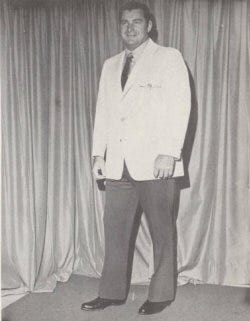
The 1980s marked Scott’s second act as a wrestling executive. He joined Jim Crockett Promotions (JCP) in the Mid-Atlantic territory as an office executive, handling booking, venue coordination, television advertising, and day-to-day operations. His business acumen helped keep the promotion thriving during its glory years. On-air, he served as a respected commentator and host, appearing in major angles and storylines. When Ted Turner purchased JCP in 1988 and rebranded it World Championship Wrestling (WCW), Scott stayed on, continuing in production roles and hosting WCW WorldWide. He later criticized WCW’s decline under non-wrestling leadership, particularly Jim Herd’s mismanagement, which he believed eroded the product’s traditional strengths.
In 1991, Scott helped launch one of the last great independent promotions of the territorial era: Smoky Mountain Wrestling. Partnering with Jim Cornette and financier Rick Rubin, he served as a producer and key behind-the-scenes figure, lending credibility and old-school booking philosophy to the Appalachian-based outfit. Smoky Mountain became a haven for traditional wrestling fans, featuring stars like Brian Lee, the Rock ‘n’ Roll Express, and a young Kane (then Glen Jacobs). Even in retirement, Scott remained active. In his later years in Roanoke, Virginia, he worked as commissioner for local independent promotion American Championship Wrestling (ACW), bringing in veterans like Johnny Weaver and helping develop new talent until shortly before his death.
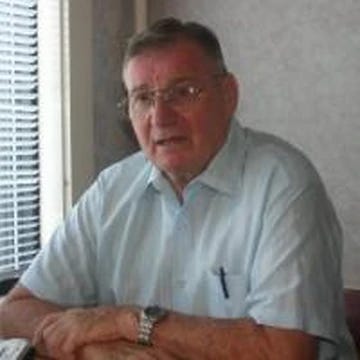
Outside the ring, Sandy Scott lived a grounded life. He settled in Roanoke with his wife Sandra, raising daughter Tracy while maintaining close ties to sons Drew and Sandy from a previous relationship and grandson Coleton. Friends and colleagues remembered him as soft-spoken, clean-cut, and refreshingly honest—a man who avoided profanity, loved telling stories about icy Canadian road trips, and approached life with quiet positivity. Bob Caudle, who inducted him into the Mid-Atlantic Wrestling Hall of Heroes in 2008, praised Scott’s humor and integrity. Earlier honors included the Kingsport Wrestling Hall of Fame (Class of 2001).
Sandy Scott passed away on March 11, 2010, in Roanoke after a brief battle with pancreatic cancer. Memorial services reflected the respect he commanded: visitation at Oakey’s Funeral Home and a service at Westhampton Christian Church. Donations were directed to local charities and a golf scholarship in memory of a friend. His death marked the end of an era, but his influence endured through the countless wrestlers he mentored and the promotions he helped sustain.
One Thing I Learned About Dino Bravo
He was so massively over with Montreal crowds—even as a heel—that WWE once canceled a planned match against Hulk Hogan there because they feared fans would boo Hogan and cheer Bravo instead, potentially costing him a big payday. This happened during his strong run in the mid-1980s when he was billed as the WWF Canadian Champion and treated like a hometown legend no matter which side he was on. Some even called it the “original Montreal Screwjob” years before the infamous 1997 Bret Hart incident.
Thank You for Reading
I’m Tony Richards, Pro Wrestling Historian, Author and Storyteller. I share pro wrestling historical items in each issue of the Time Tunnel Pro Wrestling History Newsletter. Thanks for reading! If you enjoy my information on select events, matches and insights, please share it with folks you think might like to be a subscriber!
Remember, premium investors get access to exclusive and special content such as some special issues including a multi-part deep dives on wrestling territories, wrestler bios and championship title histories, special audio and video interviews on territory pro wrestling and more available in the Pro Wrestling Time Tunnel for Premium Investors.