


Happy Birthday to those who have passed on and to those great wrestlers still with us:
In Memoriam:
Joe Acton 1858
Julius Sigel 1895
Jack Claybourne 1910
Balk Estes 1913
Happy Birthday:
Maki Veda (67)
Ursula Hayden\The Farmer’s Daughter (57)
Michael Tarver (49)
Chad Gable (40)
RIP Memorial: We stop & remember those who have passed on this day and gave themselves to the business for us, the fans. We salute you and thank you.
Adam Weismuller 3-8-1937 at the age of 37

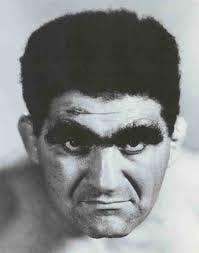
Wild Bull Curry 3-8-1985 at the age of 71
50 Year Flashback
January-March 1976 Nashville Office, NWA Gulas-Welch Tennessee Territory Analysis
The promotion operated under the NWA banner with regional titles like the NWA Southern Heavyweight Championship (often just called the Southern Title) and NWA Southern Tag Team Championship as the main focus. Early 1976 was pre-split (the Jarrett/Gulas territory divided in early 1977), so it was still a unified Gulas-Welch operation. A notable external factor was direct competition in Nashville from the short-lived Universal Wrestling Association (UWA), backed by Lou Thesz, Buddy Lee, and Danny Davis, which ran opposing TV on WTVF and arena shows—creating a real promotional war in the Nashville market.
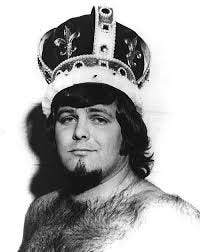
Pictured: Jerry Lawler
The year kicked off with Jerry Lawler continuing to be the territory’s lead heel. He had already had a short program with one of the area’s top young babyfaces in Ricky Gibson. Lawler was a multiple-time Southern champion and local hero\villian who had trained under Jackie Fargo, Lawler embodied the “King of Wrestling” persona. By January 1976 he had reclaimed the Southern title on January 19 at the Mid-South Coliseum that drew 5,995 and defeating Ricky Gibson in a rematch after the belt had been held up. Lawler’s reign positioned him as the territory’s top draw and a veteran gatekeeper.
Tommy Rich, by contrast, was the fresh-faced babyface being fast-tracked. Born in 1956, Rich was still a teenager when he arrived in the Gulas-Welch territory. Promoters saw star potential in his athleticism, fire, and natural charisma; on television he was sometimes billed in patriotic interview segments that played to America’s 1976 celebration. Rich was not yet the polished “Wildfire” of later Georgia and NWA World Title fame, but his in-ring aggression and crowd-pleasing style made him the perfect foil for Lawler’s established dominance.
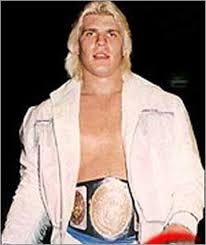
Pictured: Tommy Rich
The feud ignited in earnest during the first weeks of February. On February 2, Lawler teamed with David Schultz to defeat Rich and Bill Dundee in a standard tag match, establishing the personal stakes. A week later, on February 8 (a Sunday show, attendance 7,430), champion Lawler and challenger Rich fought to a no-contest, teasing the fans with unfinished business. The tension escalated on February 16 when Rich scored a disqualification victory over Lawler (attendance 5,691). The DQ finish was classic 1970s booking: it protected the champion while allowing the young challenger to look strong and build heat for a decisive blow-off.
That blow-off came on February 22, 1976—another specially promoted Sunday card at the Mid-South Coliseum that drew a strong 8,019 fans. In a no-disqualification match, the 20-year-old Rich pinned Lawler to capture the NWA Southern Heavyweight Championship for the first time. The victory was a landmark moment. It ended Lawler’s latest reign and thrust Rich into the spotlight as the new face of the territory. Contemporary accounts noted that Rich’s singles push was “in high gear,” and the crowd response confirmed that promoters had correctly identified a future star.
With the title now on Rich, the feud did not cool off. On March 2 (a special Tuesday night show), champion Rich defended against Lawler and retained via disqualification, once again using the DQ finish to keep both men strong and extend the program. By mid-March the rivalry spilled into tag-team action. On March 22 at the Mid-South Coliseum in Memphis, they drew 8,129 and Rich teamed with Ron Mikolajczyk to defeat Lawler and Plowboy Frazier by disqualification. Lawler had begun aligning himself with heel partners like Frazier and Sam Bass, adding layers of betrayal and factional warfare to the personal conflict. The month closed on March 29 with Lawler, Bass, and Frazier defeating Rich, Jerry Jarrett, and Mikolajczyk in a six-man tag, keeping the heat alive as Rich headed into spring still the champion.
WHBQ TV-13 studio segments featured awkward but earnest promos from the young Rich, while Lawler—already a master on the microphone—cut promos that blended cockiness with the wounded pride of a deposed king. These segments, preserved in rare surviving footage, helped sell the house shows and deepened fan investment in the “youth versus experience” dynamic. The January–March 1976 Lawler-Rich program was more than a simple title switch. It represented a deliberate passing-of-the-torch attempt by the booker, Jerry Jarrett. Lawler, already a proven draw, could afford to lose cleanly to elevate a new star without damaging his long-term status. Rich, meanwhile, gained instant credibility; within months he would win the title a second time, later in September and eventually become a major name across the NWA, especially in Georgia. The feud also foreshadowed the territory’s coming upheaval.
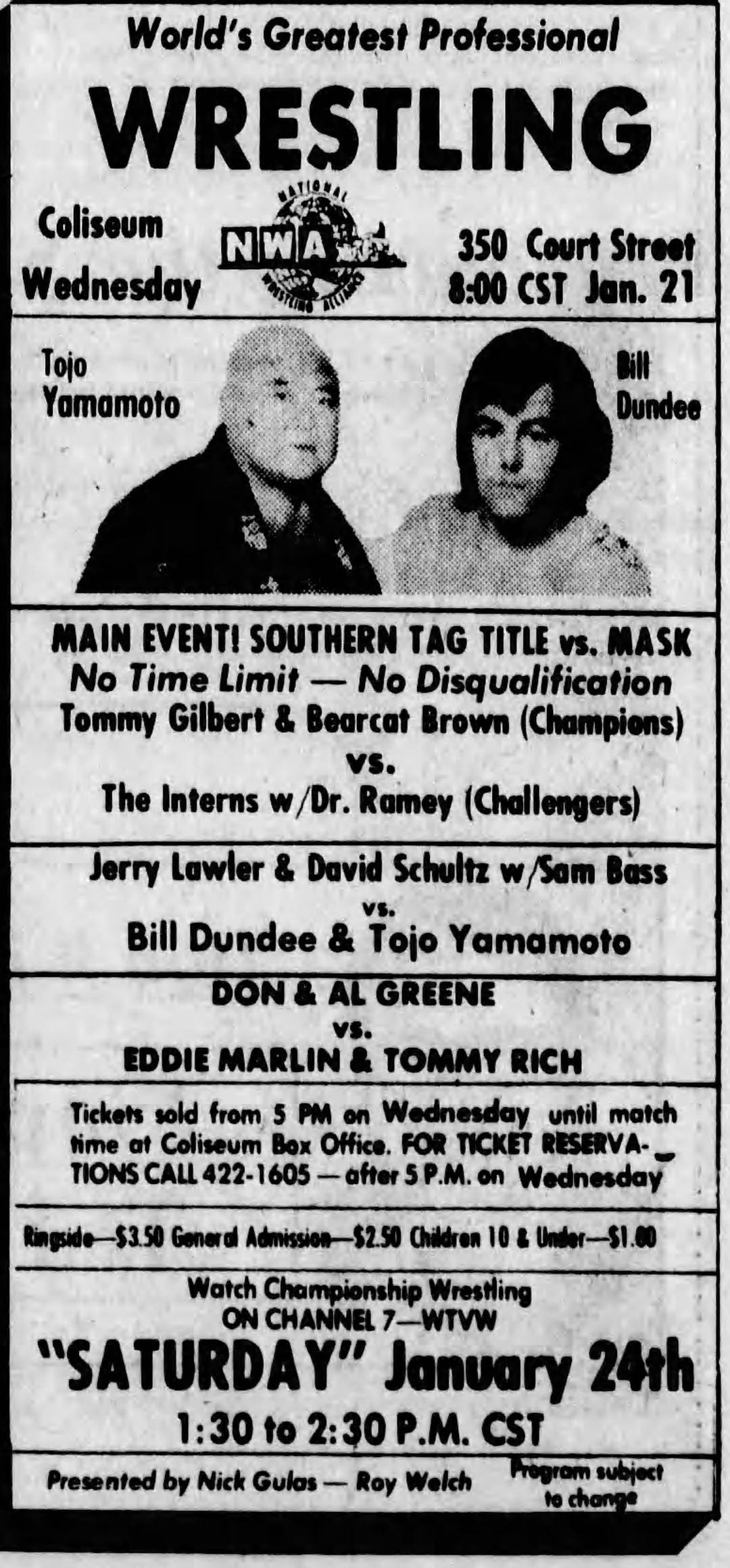
Pictured: January 21st, 1976, Evansville, Indiana
The NWA Southern Tag Team Titles were also usually pushed as a semi-main event to Lawler-Rich primarily on the Western end of the territory (Memphis-Louisville-Evansville-Jonesboro). Rapid title switches with masks, hair, and no-DQ stipulations (e.g., Interns’ mask vs. title loss, Gilbert’s hair bet). Teams like Tojo Yamamoto & Bill Dundee, the Greenes, The Interns and new heels (The Spoiler, Mitsu Arakawa, Big Bad John) rotated in multi-man tags and six-man tags. This created ongoing “revenge” rematches. The champions were Tommy Gilbert and Bearcat Brown.
Tommy Gilbert was a veteran of the Gulas territory who had debuted in 1969. A reliable worker capable of playing babyface or heel, he would later become best known as the father of “Hot Stuff” Eddie Gilbert and “Dangerous” Doug Gilbert. By 1976 Gilbert had already collected multiple NWA Southern Tag Team reigns and the NWA Tennessee Tag Team Championship. Bearcat Brown was one of the South’s pioneering Black wrestlers. Billed at 245 pounds and known for his power and charisma, Brown had broken racial barriers in Alabama in the early 1960s by teaming with white star Len Rossi to become the territory’s first integrated world tag champions. He held the NWA Southern Tag Team Title a remarkable 19 times overall, three of them with Gilbert.
Gilbert and Brown had already enjoyed one short reign together in late 1975, defeating The Interns (Don Bass & Jerry Janetta) on December 21 in Memphis. That reign ended quickly when the Interns regained the belts on January 4, 1976, in a wild “no DQ masks vs. title” match (Brown teamed with Eddie Marlin that night while Gilbert was absent). The stage was set for a dramatic rematch two weeks later. On January 12, 1976, at the Mid-South Coliseum before 4,840 fans, Tommy Gilbert and Bearcat Brown defeated The Interns once more—this time in a no-DQ match with Gilbert’s hair on the line if his team lost. The babyface duo prevailed, regaining the NWA Southern Tag Team Championship for what would be their second (and final) joint reign. Attendance figures and the stipulation underscored the personal stakes and the drawing power of the feud with the hated masked Interns.
Over the next eight weeks the champions defended the belts regularly on the Tennessee circuit.
The reign ended on March 7, 1976, at the Mid-South Coliseum before a strong 10,800 fans. David Schultz & Roger Kirby, a rugged heel combination, defeated Gilbert and Brown to claim the Southern Tag Team Championship. The loss marked the end of the duo’s partnership as champions; Brown continued working the territory into 1977 (when the Memphis office split to form the Continental Wrestling Association under Jerry Jarrett), while Gilbert remained a fixture for years.
The Gulas-Welch territory in the mid-1970s was a classic Southern outpost: weekly television in at least 18 markets, regular weekly cards at the Mid-South Coliseum, Nashville’s Municipal Auditorium, Chattanooga’s Memorial Auditorium, the Louisville Gardens, Evansville Coliseum and more along with a roster heavy on local stars and traveling talent. Jackie Fargo was already a living legend in the area—charismatic, interview-savvy, and a former multiple-time champion who embodied the tough-but-fair Southern babyface. Roughhouse Fargo brought the rough-and-tumble style that matched his name. Together they represented experience, pride, and fan loyalty.
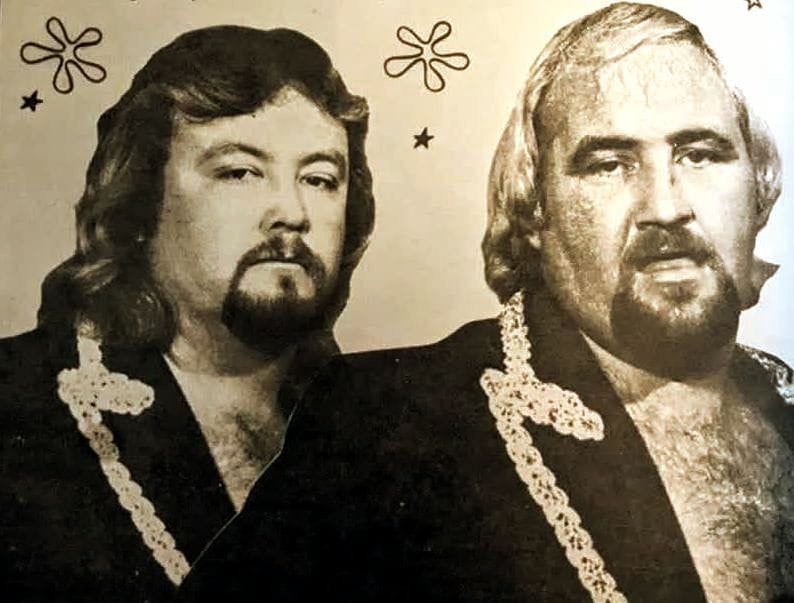
Pictured: Dennis Condrey and Phil Hickerson
Opposing them were Hickerson (a Tennessee native with a mean streak) and Condrey (then a rising star years away from his Midnight Express fame). By late 1975 the pair had already captured the NWA United States Tag Team Championship (Mid-America version) several times and were positioned as the territory’s top heel team. In 1976 they leaned fully into the Bicentennial gimmick: royal robes, arrogant promos about being “kings” of the new America, and underhanded tactics that made them instantly hateable. Fargo famously mocked Condrey’s distinctive mustache and hair by calling him a “Pekinese dog” on television, turning personal insults into weekly must-see segments that Gulas replayed in highlight packages to build heat.
The feud was already simmering by New Year’s, with the Kings positioned as dominant heels (they would hold multiple tag titles throughout the year). Early 1976 Memphis cards at the Mid-South Coliseum featured the teams clashing in matches that rarely ended cleanly. One notable bout saw Hickerson and Condrey defeat the Fargos by disqualification in just 8:14 after the babyfaces had taken the fight outside the ring—typical of the era’s psychology, where DQs kept the issue alive and protected the heels while letting the faces look strong. Another Memphis encounter was billed as a “no disqualification” match with the Southern Tag Team titles (or local equivalents) on the line; the Kings retained amid chaos involving chairs and interference. Jarrett’s booking was so logical and made so much sense each week that these finishes were not disappointments to fans; they were promises of more violence to come.
The peak moment of the January–March stretch occurred on February 17, 1976, at Chattanooga’s Memorial Auditorium. What was advertised as a standard tag match exploded into a bloody brawl. Jackie and Roughhouse Fargo took the victory, but the real story was the aftermath: Phil Hickerson was left a crimson mask, bleeding profusely in one of the more memorable blade jobs of the territory that year. Contemporary photos captured Hickerson slumped in the ring or backstage, his face a mess, while the Fargos stood tall. The image became iconic in local wrestling circles and was widely circulated in fan groups and programs. The Chattanooga crowd—always vocal in Gulas-Welch territory—erupted, and the bout cemented the personal nature of the war. Fargo’s promos afterward emphasized that the Kings’ arrogance had finally been punished in their own backyard.
The violence spilled into other Tennessee cities through February and March. Matches in Nashville and Memphis continued the pattern: wild brawls, frequent disqualifications, and occasional six-man tags when the Fargos brought in allies like Tojo Yamamoto or Eddie Marlin. The Kings, true to heel form, used every trick—eye rakes, hair-pulling, and outside interference—to maintain their edge. By March the feud was still white-hot; reports from the period note the teams continuing to trade blows on house shows, keeping the issue alive even as other storylines Lawler-Rich, etc shared top billing. No clean title change occurred in this window for the Fargos (the Kings’ major Southern Tag reign came later in July), but that only prolonged the drama—fans kept coming back hoping for the night the veterans would finally dethrone the “Kings.”
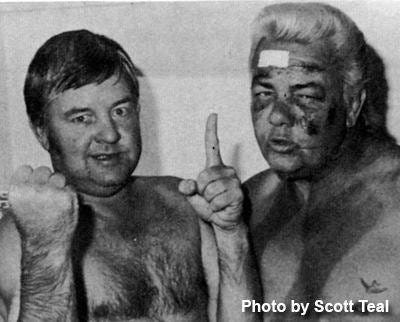
Pictured: Jackie & Roughhouse Fargo
What made this feud special was its pure territorial flavor. No national television, no scripted long-term angles dictated from afar—just weekly TV promos, packed arenas, and real blood. The Bicentennial gimmick gave the heels a timely hook, while the Fargos’ veteran credibility made every near-fall feel epic. Promoter Gulas knew how to milk it: highlight reels of the bloody Chattanooga brawl aired repeatedly, and Jackie Fargo’s insults became catchphrases. The war even set the stage for later wrinkles, such as Big Bad John joining the babyface side later in 1976 and billing himself as the “Bicentennial Baby” (a clever jab at the Kings).
By the end of March 1976 the feud showed no signs of cooling. It would rage on for much of the year, with the Kings dominating tag team gold across the territory and the Fargos remaining the fan-favorite roadblock. In the larger story of Southern wrestling, this January–March stretch stands as a textbook example of how a simple tag feud—built on charisma, gimmicks, personal insults, and legitimate violence—could carry an entire territory through the Bicentennial year.
A feud that had started back in 1972 between Jerry Jarrett and Al Greene, which created the first ever scaffold match in Louisville was kept alive through creative tag team-driven booking. Personal and heated. Culminated in a no-DQ hair vs. hair match (Jarrett won) and a follow-up five-minute stipulation where Greene had to beat Jarrett or Bass got shaved. The Greenes (Al & Don) were frequent heel antagonists in tags and multi-man matches and Big Bad John was a partner to Jarrett’s team on the babyface side. Tojo Yamamoto and Bill Dundee were kept busy battling Japanese heels like Professor Toru Tanaka and Mitsu Arakawa.
I also have to mention Sam Bass, the top heel manager in the territory, who was always involved in the top programs like Lawler-Rich or Jarrett-Greene. Bass was the big manager heat-magnet of the 1970s in Tennessee, a role that Jimmy Hart would later fill. Bass would unfortunately lose his life later in the year in a horrible car accident after matches in Memphis had taken place. I wish there was much more abundance of film footage of Sam Bass at ringside and promos. Like many veterans of this era, he would be much more remembered and honored if more people saw his work.
Thank You for Reading
I’m Tony Richards, Pro Wrestling Historian, Author and Storyteller. I share pro wrestling historical items in each issue of the Time Tunnel Pro Wrestling History Newsletter. Thanks for reading! If you enjoy my information on select events, matches and insights, please share it with folks you think might like to be a subscriber!
Remember, premium investors get access to exclusive and special content such as some special issues including a multi-part deep dives on wrestling territories, wrestler bios and championship title histories, special audio and video interviews on territory pro wrestling and more available in the Pro Wrestling Time Tunnel for Premium Investors.