



Happy Birthday to those who have passed on and to those great wrestlers still with us:
In Memoriam:
Bobby Fields 1934
Marie LaVerne 1942
Jeff Raitz 1963
Happy Birthday:
Ron Fuller (78)
Johnny Heffernan\Bob Della Serra (75)
PJ Black (45)
Todd Smith\Ivar (42)
Channing “Stacks” Lorenzo (29)
RIP Memorial: We stop & remember those who have passed on this day and gave themselves to the business for us, the fans. We salute you and thank you.
Benny Reuben 3-3-1945 at the age of 50

George Mack 3-3-1945 at the age of 56

Kid Chapman 3-3-1945 at the age of 32

Gaius Young 3-3-1945 at the age of 41

Al Sabath 3-3-1945 at the age of 28
(no photo available)
Jack Ross 3-3-1945 qat the age of 36
(no photo available)
Billy Robinson 3-3-2014 at the age of 75
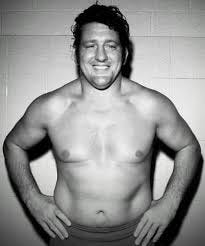
Lord James Blears 3-3-2016 at the age of 92
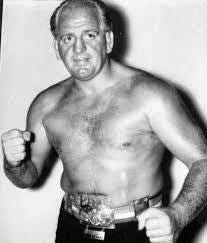
Hayabusa 3-3-2016 at the age of 46

Angelo Poffo 3-3-2010 at the age of 84
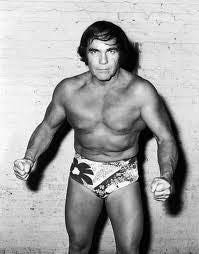
Jim Crockett, Jr. 3-3-2021 at the age of 76
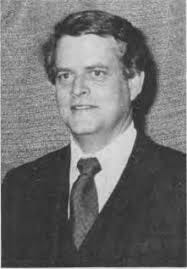
Buddy Colt 3-3-2021 aat the age of 84
Flashback 1945
The Tragic USO Plane Crash Claims The Lives of 6 Wrestlers and Others
In the waning months of World War II, as Allied forces pushed deeper into Europe, the United States Organization (USO) played a crucial role in boosting the morale of American troops far from home. Through its Camp Shows program, the USO dispatched entertainers—actors, musicians, comedians, and even professional wrestlers—to perform for soldiers in combat zones. These exhibitions provided a much-needed escape from the horrors of war, featuring feats of strength, grappling demonstrations, and mock matches that reminded servicemen of the sports and spectacles they enjoyed back home. However, this noble effort was not without peril. On March 3, 1945, a routine flight carrying a troupe of wrestlers and other personnel ended in disaster, claiming the lives of 15 individuals, including six prominent professional wrestlers. This crash, occurring amid the chaos of wartime Europe, underscored the risks entertainers took to support the troops and left an indelible mark on the history of professional wrestling.

The United Service Organizations (USO), founded in 1941 at the request of President Franklin D. Roosevelt, emerged as a vital lifeline for American troops during World War II, providing entertainment, recreation, and a touch of home amid the grind of global conflict. By organizing Camp Shows—live performances ranging from comedy sketches and musical numbers to vaudeville acts—the USO delivered over 400,000 shows to millions of service members, both stateside and overseas, helping to combat isolation, boredom, and the psychological toll of war. While lesser-known performers made up the bulk of these efforts, often volunteering their talents in hopes of advancing their careers, it was the star power of Hollywood celebrities, musicians, and comedians that captured headlines and hearts. Beyond the tragic plane crash of March 3, 1945, which claimed the lives of six professional wrestlers on a USO tour, countless other entertainers risked their safety to uplift troops, forging a legacy of patriotism and resilience.
Among the most iconic USO figures was comedian Bob Hope, whose association with the organization spanned decades but began in earnest during WWII. Hope’s first major USO show occurred on May 6, 1941, at March Air Reserve Base in California, where he performed for troops with his signature golf club in hand and rapid-fire jokes tailored to military life. He headlined numerous overseas tours, including performances in the South Pacific and Europe, often braving dangerous conditions to reach remote outposts. Accompanied by regulars like singer Frances Langford and comedian Jerry Colonna, Hope’s shows blended humor, music, and audience interaction, earning him the nickname “the USO’s one-man morale machine.” His efforts not only entertained but also symbolized Hollywood’s commitment to the war effort, inspiring other stars to join.
Singers and musicians played a pivotal role in evoking nostalgia and emotional release for homesick soldiers. Bing Crosby, dubbed the “most admired man alive” during the war, toured with the USO and popularized “White Christmas,” a poignant anthem for troops dreaming of home. The Andrews Sisters, with their harmonious hits like “Boogie Woogie Bugle Boy,” performed extensively, logging millions of miles alongside other vocalists such as Lena Horne and Dinah Shore. Shore, known as “America’s Darling Daughter,” made in-person visits to the front lines in France and entertained via radio broadcasts, earning the USO Medallion Award for her dedication. Marlene Dietrich, a German-born actress who renounced her citizenship to become an American, embarked on two grueling USO tours: one to North Africa and Italy, where she was the first entertainer to reach Allied soldiers in Anzio, and another 11-month stint in France and Germany starting shortly after D-Day. Dietrich’s acts included singing, dancing, and even playing a musical saw, often performed perilously close to combat zones.
Hollywood actors and actresses brought glamour and escapism to the troops, volunteering for the Foxhole Circuit—the most hazardous overseas tours where performers lived like soldiers, donning uniforms and facing the same risks. Judy Garland, Mickey Rooney, and Humphrey Bogart were among those who traveled to Europe post-D-Day, performing in makeshift venues amid ongoing battles. Bogart, often paired with his wife Lauren Bacall, joined shows that included comedy routines and skits, while Bette Davis and Rita Hayworth volunteered at stateside canteens like the Hollywood Canteen, serving food and dancing with servicemen. Ann Sheridan, dubbed “America’s Oomph Girl,” toured the front lines, as did Ingrid Bergman and Lucille Ball, who waved from trains and signed autographs to boost spirits. Comedic duos like Laurel and Hardy and Chico Marx headlined early overseas tours to the Caribbean, while veterans like Al Jolson and Joe E. Brown delivered laughs in the Pacific and European theaters.
These entertainers faced real dangers: 37 USO performers lost their lives during the war, including bandleader Glenn Miller and actress Tamara Dreisen. Women like Martha Raye and Joan Crawford pushed boundaries, performing near combat zones despite societal norms, with Crawford continuing her support into the postwar era. The USO’s inclusive approach allowed African American artists like Lena Horne to shine, performing for segregated troops and advancing civil rights through visibility. General Dwight D. Eisenhower praised the USO for uniting Americans of diverse backgrounds in a shared mission.
The March 3rd ill-fated journey began in England, where the group had boarded an Army Air Force C-47A Skytrain (serial number 43-48223), a military variant of the Douglas DC-3 transport plane commonly used for ferrying personnel and supplies. The flight was en route to Paris, France, to continue the USO tour with performances for Allied soldiers. The wrestlers aboard were part of a specialized athletic contingent, selected for their ability to deliver high-energy shows that resonated with the troops—wrestling had proven immensely popular in USO programs, drawing large crowds and fostering a sense of normalcy and camaraderie. Among the passengers were six wrestlers: George Mack (also known as George Matkovich), Jack Ross, Lester “Kid” Chapman, H.A. “Al” Sabath, Gaius W. Young, and Ben Reuben. Most hailed from Chicago, except for Young, who was from Minnesota. These men were not mere performers; they were seasoned athletes who had built careers in the rough-and-tumble world of pre-war professional wrestling, a sport that blended athleticism with theatrical flair. Recruited by promoter Fred Kohler, they embodied the rugged, regional talent of the era, often mid-card performers who brought athleticism and showmanship to the ring.
Here are short biographies of the six pro wrestlers on that fateful flight:
George Mack (George Matkovich)
George Mack, whose real name was George Matkovich, was a Chicago-based wrestler active in the regional circuits during the 1930s and early 1940s. Little is known about his early life or specific achievements, as records from that era are sparse, but he was part of Fred Kohler’s stable of performers, wrestling in the Midwest and likely participating in carnival-style exhibitions common to the time. Mack’s style emphasized strength and grappling, fitting the USO’s needs for entertaining troops with physical demonstrations. He perished at age unknown in the crash, one of the six wrestlers killed while volunteering to boost morale overseas. His involvement highlights the patriotic spirit among wrestlers, many of whom paused their careers to support the war effort.
Jack Ross (Henry J. Ross)
Born in 1909 in Florida, Henry J. Ross, better known in the ring as Jack Ross, was a 36-year-old semi-professional wrestler residing at 6008 Morgan Street in Chicago at the time of his death. He had wrestled professionally for about a decade, achieving notable success as a former Florida State Heavyweight Champion. Ross fought in 86 documented matches, often in regional promotions, showcasing a rugged, competitive style that made him a solid mid-card draw. He was the brother of Arthur and William Ross, and sister Sally Suarez (possibly also involved in wrestling circles). Like his peers, Ross volunteered for the USO tour, traveling to Europe to perform for troops. He is buried at Fairmount-Willow Hills Memorial Park in Willow Springs, Illinois, a testament to his Chicago roots despite his Florida origins.
Lester “Kid” Chapman (Gerald “Kid” Chapman)
Gerald “Kid” Chapman, billed as Lester “Kid” Chapman in promotions, was around 40 years old at the time of the crash, defying his youthful nickname. Hailing from Chicago, he had been wrestling out of Fred Kohler’s office for nearly a decade, often promoted as being from Texas—”the pride of the Panhandle”—to add flair to his persona. Chapman’s career focused on regional matches in the Midwest, where he was known for agility and crowd-engaging antics, typical of the era’s theatrical wrestling. His family chose to inter him at the Épinal American Cemetery in France, alongside fallen soldiers, symbolizing his wartime service through entertainment. Chapman’s participation in the USO tour reflected his commitment to the troops, even as a veteran performer in his forties.
Harold “Al” Sabath
Harold “Al” Sabath, sometimes spelled “Sabbath” in records, was a Chicago wrestler in his thirties or forties, part of the same Kohler-promoted group as his fellow crash victims. Like Chapman, he was often billed from Texas to enhance his ring appeal, despite his Midwestern roots. Sabath was respected for his technical skills and endurance, competing in regional circuits where he demonstrated holds and grapples—ideal for the USO’s educational-style shows for soldiers. Details on his early life or specific titles are scarce, but his inclusion in the tour underscores the demand for wrestlers who could deliver high-energy performances under wartime conditions. He died in the crash, leaving a legacy tied to the sacrifices of entertainers supporting the Allied effort.
Gaius W. Young
Gaius Wesley Young, born on January 19, 1904, in Weyerhaeuser, Rusk County, Wisconsin, was the only non-Chicagoan among the group, hailing from Minnesota. At 41 years old, he was a seasoned professional known for powerful holds and feats of strength that captivated audiences. Young’s career spanned the Midwest, where he built a reputation in regional promotions before joining the USO tour. His family opted for burial at the Épinal American Cemetery in France, aligning him eternally with the soldiers he aimed to uplift. As a Minnesotan in a Chicago-dominated troupe, Young’s presence highlighted the broader national call for entertainers during the war.
Ben Reuben (Benny Reuben)
Born on January 1, 1895, Ben Reuben (sometimes billed as Benny Reuben) was the eldest of the group at 50 years old, a veteran of early 20th-century wrestling. The son of Russian-Jewish immigrants who settled in Chicago in 1888, he began wrestling at just 120 pounds as a teenager, joining the Chicago Hebrew Institute’s team in 1909. Reuben became an AAU Champion and mentored future stars like Earl Caddock, later coaching at the Institute in the 1910s.His career bridged amateur and professional worlds, emphasizing technique and athleticism. Despite his age, Reuben volunteered for the USO, demonstrating holds for troops. His death in the crash marked the loss of a foundational figure in Chicago’s wrestling community.
Tragedy struck approximately midway through the flight, near the town of Pontoise in northern France, not far from Paris. The exact cause of the crash remains shrouded in the fog of wartime records, but it was not attributed to enemy action—likely a mechanical failure, adverse weather, or pilot error in the challenging conditions of occupied Europe The plane plummeted to the ground, killing 15 of the 17 people on board instantly. The victims included the six wrestlers, as well as other civilians like Mrs. Ruth G. Donor, military personnel such as Lieutenant Lawrence Leopold Lionel Heideman, and the flight crew. Remarkably, two wrestlers survived the ordeal: Al Williams and Joe Corbett, who endured injuries but lived to recount the horror. News of the crash spread quickly through newspapers back home, with headlines in outlets like the Duluth News Tribune and Norfolk Virginian-Pilot mourning the loss of these “athletic entertainers” who had volunteered to lift spirits overseas.
The wrestlers who perished were emblematic of the era’s grappling scene, a time when professional wrestling was transitioning from carnival sideshows to organized promotions. George Mack and Jack Ross were known for their rugged styles, often performing in regional circuits across the Midwest. Lester “Kid” Chapman, with his youthful moniker, brought agility and crowd-pleasing antics to the ring, while Al Sabath and Ben Reuben were respected for their technical prowess and endurance. Gaius W. Young, the Minnesotan in the group, had a reputation for powerful holds and feats of strength that wowed audiences. Their decision to join the USO tour reflected a broader patriotism among entertainers; many wrestlers, like other celebrities, set aside lucrative careers to contribute to the war effort. The USO’s wrestling shows were particularly effective, as one contemporary report noted that “that type of entertainment has gone over very big with the boys overseas.” Yet, this crash highlighted the dangers: performers traveled in military aircraft, often under hasty schedules and in unpredictable weather, all while the war raged on.
The impact of the March 3, 1945, crash reverberated through the wrestling community and beyond. It was one of the deadliest incidents involving USO performers during the war, prompting reflections on the sacrifices made by non-combatants in support roles. Families back home grieved, and some chose to inter their loved ones in American military cemeteries in France, such as Epinal American Cemetery, where Chapman and Young were laid to rest alongside fallen soldiers—a poignant symbol of their shared commitment to the cause. In the post-war years, the tragedy faded from public memory as wrestling evolved into the spectacle-dominated industry of the 1950s and beyond. However, it served as a somber reminder of the human cost of entertainment in wartime, influencing how future tours were organized with greater emphasis on safety.
The plane crash of March 3, 1945, stands as a testament to the bravery of those who brought joy to the front lines. The six wrestlers—George Mack, Jack Ross, Lester “Kid” Chapman, Al Sabath, Gaius W. Young, and Ben Reuben—did not die in battle, but their mission was no less vital. They embodied the spirit of resilience that defined the Greatest Generation, using their talents to sustain morale when it was needed most.
One Thing I Learned About Jim Crockett, Jr.
He and his family owned the Charlotte Orioles, a minor league baseball team, from 1976 to 1987—overlapping with the peak years of his wrestling promotion.

Thank You for Reading
I’m Tony Richards, Pro Wrestling Historian, Author and Storyteller. I share pro wrestling historical items in each issue of the Time Tunnel Pro Wrestling History Newsletter. Thanks for reading! If you enjoy my information on select events, matches and insights, please share it with folks you think might like to be a subscriber!
Remember, premium investors get access to exclusive and special content such as some special issues including a multi-part deep dives on wrestling territories, wrestler bios and championship title histories, special audio and video interviews on territory pro wrestling and more available in the Pro Wrestling Time Tunnel for Premium Investors.