


Happy Birthday to those who have passed on and to those great wrestlers still with us:
In Memoriam:
Jess Westergard 1882
Dave Reynolds 1913
Dewey Robertson\The Missing Link 1939
Joey Marella 1963
Happy Birthday:
Ricky Steamboat (73)
Norman Smiley (61)
Masaro Tanaka (53)
Lance Archer (49)
Aaron Aguilera (49)
Brock Anderson (29)
RIP Memorial: We stop & remember those who have passed on this day and gave themselves to the business for us, the fans. We salute you and thank you.
Larry Tillman 2-28-1997 at the age of 88

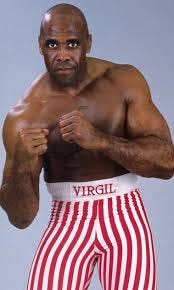
Michael Jones\Virgil 2-28-2024 at the age of 72
Significant Debuts:
Wilbur Snyder age: 23 in 1953
Hiroshi Hase age: 24 in 1986
The Life and Career of Billy Robinson
Billy Robinson transitioned from a successful amateur wrestler to a global professional star, winning championships across continents, and later became an influential coach who shaped modern mixed martial arts (MMA) and wrestling. Robinson’s life was defined by his dedication to the “physical chess” of wrestling, a term he coined to describe the strategic depth of catch wrestling, and his career spanned over three decades until his retirement in 1992. His legacy endures as one of the most technically proficient wrestlers of the 20th century, bridging traditional grappling with contemporary combat sports.
Robinson came from a family with a strong fighting heritage. His great-grandfather, Harry Robinson, was a bare-knuckle boxing champion, while his uncle Alf fought heavyweight boxer Max Baer and wrestled professionally. His father, Harry Robinson Jr., was a light-heavyweight boxer who initially steered young Billy toward boxing. Born to William James and Frances Hester (née Exley), Robinson began boxing at age four or five and worked in his family’s grocery store. However, an eye injury at age 11 or 12, sustained while at the store, required five months of hospitalization and prevented him from obtaining a boxing license. At 14, he turned to amateur wrestling, and a year later, his father introduced him to Billy Riley’s legendary gym in Wigan, known as “The Snake Pit.” This grueling training ground, famous for its rough environment, produced icons like Karl Gotch and Bert Assirati. Under Riley and later Billy Joyce, Robinson honed his skills for eight years.

His amateur success was swift. In 1957, he won the British National Wrestling Championship in the light heavyweight class. The following year, 1958, he claimed the European Open Light Heavyweight Wrestling Championship, defeating an Olympic bronze medalist in the finals. These victories established him as a prodigy in freestyle wrestling and set the stage for his professional transition.
Robinson turned professional in 1958, debuting under the name Bill Kenton in matches across the north and midlands for promoters like Wryton, Morrell & Beresford, and Relwyskow Green. Early opponents included Francis Sullivan, Ray Apollon, and his future mentor Billy Joyce. By 1959, he was wrestling in London for Norman Morrell and Dale Martin Promotions. Billed at 5 feet 11 inches and 240 pounds, he quickly built a reputation for technical prowess.
In the 1960s, Robinson became a dominant force in Joint Promotions. A pivotal moment came in May 1961, when he won a heavyweight tournament at the Royal Albert Hall by defeating Alan Garfield, Gordon Nelson, and Joe Cornelius. His rivalry with Billy Joyce defined his UK career; after challenging Joyce for the British Heavyweight Championship in 1963 (losing due to injury) and drawing in a rematch, Robinson defeated him on June 12, 1965, to win the European Heavyweight Championship. He defended it successfully and, on January 18, 1967, beat Joyce again to claim the British Heavyweight Championship, holding both as an undefeated double-crown champion. He vacated the titles in 1970 upon moving to America. Robinson also feuded intensely with masked wrestler Kendo Nagasaki, securing multiple knockout wins in over a dozen encounters. In 1978, he returned briefly for a UK tour, notably defeating Lee Bronson on television.
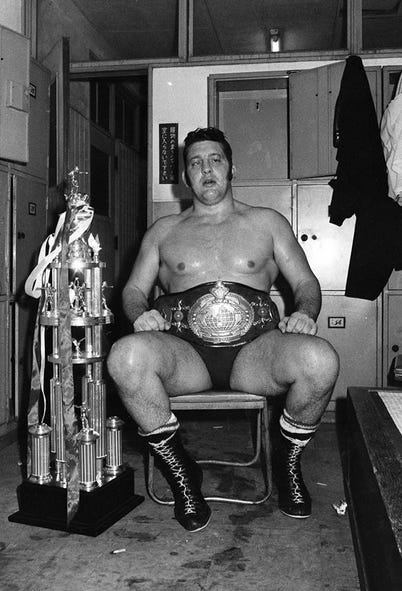
Robinson’s career expanded internationally in the late 1960s. He first visited Japan in 1968, drawing with George Gordienko in a “world championship tournament” match in Sapporo. He won the IWE World Series for International Wrestling Enterprise in 1968 and 1970. In Japan, his submission expertise made him a star; a 1975 match against Antonio Inoki was billed as “The Match Between the World’s Top Two Technicians” and earned the Tokyo Sports Match of the Year Award. He influenced the shoot-style movement, wrestling in the Universal Wrestling Federation (UWF) and retiring on May 8, 1992, against Nick Bockwinkel in a UWFi exhibition. In All Japan Pro Wrestling, he won the 1980 January Korakuen Hall Heavyweight Battle Royal and received Technique Awards in the 1978 and 1980 World’s Strongest Tag Determination League.
In North America, Robinson arrived in 1969 for Stu Hart’s Stampede Wrestling in Canada, earning a shot at NWA World Heavyweight Champion Dory Funk Jr. after defeating Archie Gouldie. From 1970, he starred in Verne Gagne’s American Wrestling Association (AWA), where he was a three-time AWA British Empire Heavyweight Champion, defending across the U.S. and Canada. He won the AWA World Tag Team Championship twice—once with Gagne and once with The Crusher. In 1974, he appeared in the film The Wrestler alongside Gagne and Ed Asner.
In Montreal (1982–1983), he captured the International Championship by beating Dino Bravo and the Canadian International Tag Team Championship with Pierre Lefebvre. A notable draw came against WWF Champion Bob Backlund in a 60-minute match in 1982. He also held the NWA Southern Heavyweight Championship (Florida version) once. Robinson retired from the AWA in 1988.

Beyond competing, Robinson was a revered coach. He trained wrestlers like Marty Jones and Johnny Saint in England and, at the UWF Snake Pit in Japan, mentored MMA pioneers including Kazushi Sakuraba, James Maritato, Kiyoshi Tamura, Josh Barnett, Shayna Baszler, and El Signo. His coaching philosophy, echoing Riley’s “do it again,” emphasized repetition and precision. In later years, he conducted seminars worldwide.
Personally, Robinson inspired the anime character Robin Mask in Kinnikuman. After retiring, he managed a convenience store and worked as a security guard at the Gold Coast Hotel and Casino. In 2001, he moved to Little Rock, Arkansas, to be near his son’s family. He authored Physical Chess: My Life in Catch-as-Catch-Can Wrestling in 2012.
Robinson passed away in his sleep on February 27, 2014, in Little Rock, Arkansas, at age 75. Tributes highlighted his toughness and influence; his biographer Jake Shannon noted, “You will be sorely missed, my friend.” Robinson’s legacy includes inductions into the Cauliflower Alley Club (1994), George Tragos/Lou Thesz Professional Wrestling Hall of Fame (2002), Stampede Wrestling Hall of Fame (1995), and International Professional Wrestling Hall of Fame (2022). Pro Wrestling Illustrated ranked him No. 151 in its top 500 wrestlers in 2003, and he was PWI’s Most Popular Wrestler in 1974.
One Thing I Learned About The Missing Link
Dewey Robertson, better known as The Missing Link, lived his wildman gimmick 24 hours a day—even outside the ring—which unfortunately allowed him to mask his growing issues with alcohol and drug abuse as simply part of the character’s unpredictable behavior.
Thank You for Reading
I’m Tony Richards, Pro Wrestling Historian, Author and Storyteller. I share pro wrestling historical items in each issue of the Time Tunnel Pro Wrestling History Newsletter. Thanks for reading! If you enjoy my information on select events, matches and insights, please share it with folks you think might like to be a subscriber!
Remember, premium investors get access to exclusive and special content such as some special issues including a multi-part deep dives on wrestling territories, wrestler bios and championship title histories, special audio and video interviews on territory pro wrestling and more available in the Pro Wrestling Time Tunnel for Premium Investors.