



Happy Birthday to those who have passed on and to those great wrestlers still with us:
In Memoriam:
Leo “Daniel Boone” Savage 1899
Ken Fenelon 1909
Fred Ward 1914
Verne Gagne 1926
Helen Hild 1926
Reid Flair 1988
Happy Birthday:
Chuck Wepner (87)
Father James Mitchell (61)
Robert Kellum\The Maestro (55)
RIP Memorial: We stop & remember those who have passed on this day and gave themselves to the business for us, the fans. We salute you and thank you.
George Culkin 2-26-2005 at the age of 78

Don Joyce 2-26-2012 at the age of 82

Johnny DiFazio 2-26-2021 at the age of 80
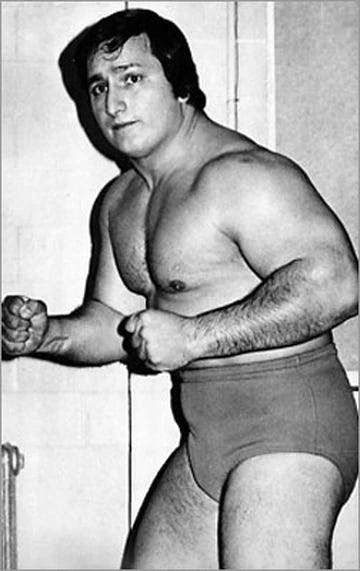
Ole Anderson 2-26-2024 at the age of 81

The Life and Career of George Culkin
Born in the heart of the American South during the Great Depression era, Culkin’s journey from a teenage grappler to a prominent promoter encapsulates the grit, controversy, and evolution of the wrestling territory system in the mid-20th century. His career spanned decades, intertwining athletic prowess with business acumen, and left an indelible mark on the regional wrestling scene. While not a household name on the scale of national stars, Culkin’s influence in the Magnolia State helped shape the careers of legends and sustained wrestling as a cultural staple in small-town arenas and big-city auditoriums alike.
Elva George Culkin was born on an unspecified date in 1926 or 1927 in Vicksburg, Mississippi, a historic river town steeped in Civil War lore and Southern traditions. Growing up in a working-class environment, Culkin’s path to wrestling was influenced by family ties. His older half-brother, Jack Curtis Sr., was already making waves in the ring during the 1940s, and young George followed suit, adopting the ring name George Curtis to capitalize on the familial connection. Standing at 5’11” and weighing around 200 pounds in his prime, Culkin was not the largest wrestler of his era but compensated with technical skill and a rugged style honed in the carnival circuits and early territorial promotions.
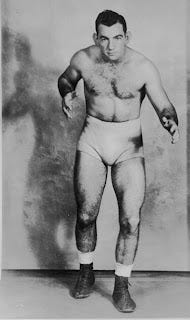
Pictured: Culkin as George Curtis
Culkin began wrestling in his teens, debuting in the late 1940s amid the post-World War II boom in professional wrestling. He teamed frequently with his brother as the “Curtis Brothers,” one of the earliest prominent brother tandems in the sport. Their matches were mainstays in promotions across the South and Midwest, including stints with Jim Crockett Promotions in the Carolinas, where they headlined cards in 1954. The duo’s act blended athleticism with storytelling, drawing crowds eager for the drama of sibling synergy. George wrestled throughout the 1940s and 1950s, facing a roster of era-defining talents in smoky arenas from Mississippi to Texas. His in-ring career, while solid, was not defined by championship reigns or international fame; instead, it laid the groundwork for his transition to the business side of wrestling.
Beyond the ring, Culkin led a multifaceted life that reflected his roots in public service. From 1960 to 1968, he served as chief deputy sheriff in Warren County under sheriffs J.H. Henderson and Vernon O. Luckett. He later worked in the chancery clerk’s office for J.L. “Pewee” Hudgins and served as a county election commissioner. In 1973, he was elected circuit clerk of Warren County, a position he held until his retirement in 1988. This parallel career in law enforcement and local government provided financial stability and community standing, allowing him to invest in wrestling promotion without the financial desperation that plagued many in the industry.
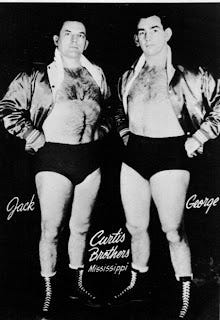
Pictured: The Curtis Brothers, George and Jack
By the 1960s, Culkin had shifted his focus from performing to promoting, recognizing the lucrative potential in booking shows. He aligned with Leroy McGuirk’s Oklahoma-based promotion, which was part of the National Wrestling Alliance (NWA), the dominant governing body for territorial wrestling. As a sub-promoter, Culkin brought talent to Mississippi towns, filling venues like the Jackson City Auditorium with weekly spectacles. His events featured stars from McGuirk’s roster, blending local flavor with national draws. This period coincided with the rise of Mid-South Wrestling, which became a hotbed for talent under promoters like Bill Watts.
Culkin’s promotional style was hands-on and community-oriented. He understood the Southern audience’s appetite for heroic babyfaces and villainous heels, often incorporating regional rivalries to boost attendance. His son, George Gilman “Gil” Culkin, joined the business in 1974, adding a family dynamic to the operation. Together, they navigated the territorial system’s intricacies, where promoters controlled exclusive regions and shared talent through NWA affiliations. Gil later reflected on this era in his book, The Mississippi Wrestling Territory: The Untold Story, describing it as a time when wrestling was “bigger than life” yet grounded in everyday struggles.
The Culkins’ tenure under McGuirk was prosperous but fraught with tensions. Mississippi’s wrestling scene was a “small part of the territory days,” as Gil put it, but it was vibrant, with cards drawing thousands in cities like Jackson, Tupelo, and Vicksburg. George’s reputation grew as the “top promoter in Mississippi history,” credited with elevating the sport to major venues like Jackson’s “big house.”
The pinnacle—and nadir—of Culkin’s career came in 1977 when he and Gil split from McGuirk and the NWA. Frustrated by what they perceived as unfair treatment, including talent allocation and revenue shares, the Culkins went “outlaw,” forming International Championship Wrestling (ICW) in Mississippi. This independent promotion operated outside NWA sanctions, a bold move in an era when the Alliance held a near-monopoly. ICW ran shows across the state, booking talent like Kamala, Terry Gordy, and Michael Hayes, who would later achieve fame in larger promotions.
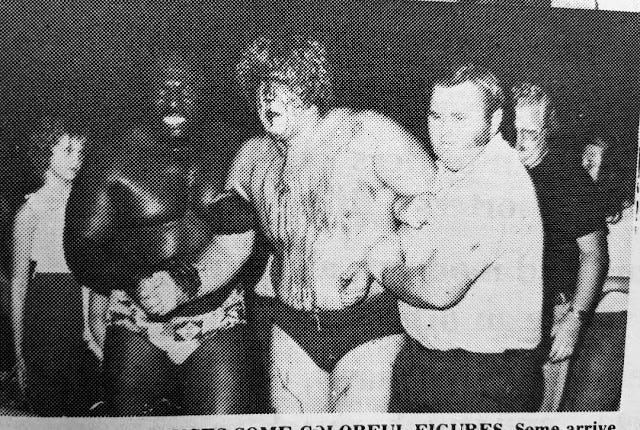
Pictured: A bloody, young Terry Gordy with Tom Shaft at an Mississippi ICW Show in 1977
The split was not without conflict. The NWA blacklisted the Culkins, barring affiliated wrestlers from their cards. In response, George and Gil filed an antitrust lawsuit against McGuirk and the NWA in 1979, alleging monopolistic practices that stifled competition. The legal battle highlighted the cutthroat nature of territorial wrestling, where promoters guarded their turf aggressively. Ultimately, the Culkins rejoined the NWA through a merger with Bill Watts’ Mid-South Wrestling, marking a reconciliation that allowed them to continue promoting under a larger umbrella. This era kickstarted careers and influenced the Universal Wrestling Federation (UWF), an extension of Mid-South.
No discussion of Culkin’s career is complete without addressing controversies, particularly allegations of racial bias. In the racially charged South of the 1970s and 1980s, wrestling promotions often mirrored societal divisions. Reports suggest Culkin refused to book Black wrestlers on his cards when receiving talent from Bill Watts, a claim echoed in wrestling lore and online discussions. While not universally documented in primary sources, this allegation aligns with broader critiques of Southern promotions, where segregationist attitudes lingered. Culkin never publicly addressed these claims, and his defenders point to the era’s cultural context, but it remains a stain on his legacy, underscoring how wrestling reflected—and sometimes perpetuated—social inequalities.
Additionally, the outlaw period bred “axes to grind,” as Gil Culkin noted, with feuds over talent poaching and territorial encroachments. These disputes were emblematic of the industry’s Wild West mentality, where loyalty was fleeting and survival depended on cunning maneuvers to survive.
After retiring from full-time promotion in the late 1980s, Culkin focused on his civic duties, concluding his tenure as circuit clerk. He remained a fixture in Mississippi wrestling circles, occasionally appearing at events and sharing stories with fans. His health declined in later years, and on February 26, 2005, George Culkin passed away at his home in Vicksburg at the age of 78. Obituaries highlighted his dual legacy as a wrestler-promoter and public servant, noting his contributions to Warren County’s governance.
Culkin’s impact endures through his family and the wrestlers he influenced. Gil continues promoting with Legacy Championship Wrestling, preserving the family’s tradition. Books like Jeffrey Martin’s Professional Wrestling in Mississippi: A History, with a foreword by Gil, chronicle the territory’s untold stories, crediting George with sustaining wrestling during transitional times. Inducted into the Mississippi Pro Wrestling Hall of Fame, Culkin is remembered as “Mr. Curtis,” the architect who brought pro wrestling to prominence in the state.
One Thing I Learned About Ole Anderson
In May 1976, while arguing with fans after a match in Greenville, South Carolina, he was stabbed by a knife-wielding audience member in his late 70s named Oscar Ramsey, requiring surgery to reattach tendons and numerous stitches.
Thank You for Reading
I’m Tony Richards, Pro Wrestling Historian, Author and Storyteller. I share pro wrestling historical items in each issue of the Time Tunnel Pro Wrestling History Newsletter. Thanks for reading! If you enjoy my information on select events, matches and insights, please share it with folks you think might like to be a subscriber!
Remember, premium investors get access to exclusive and special content such as some special issues including a multi-part deep dives on wrestling territories, wrestler bios and championship title histories, special audio and video interviews on territory pro wrestling and more available in the Pro Wrestling Time Tunnel for Premium Investors.