


Happy Birthday to those who have passed on and to those great wrestlers still with us:
In Memoriam:
Hans Steinke 1893
Maxx Muscle 1963
Efren Marquez\Mr. Niebla 1973
Happy Birthday:
Juan Gonzalez\Psicosis (59)
Rafeal Garcia\Super Calo (55)
RIP Memorial: We stop & remember those who have passed on this day and gave themselves to the business for us, the fans. We salute you and thank you.
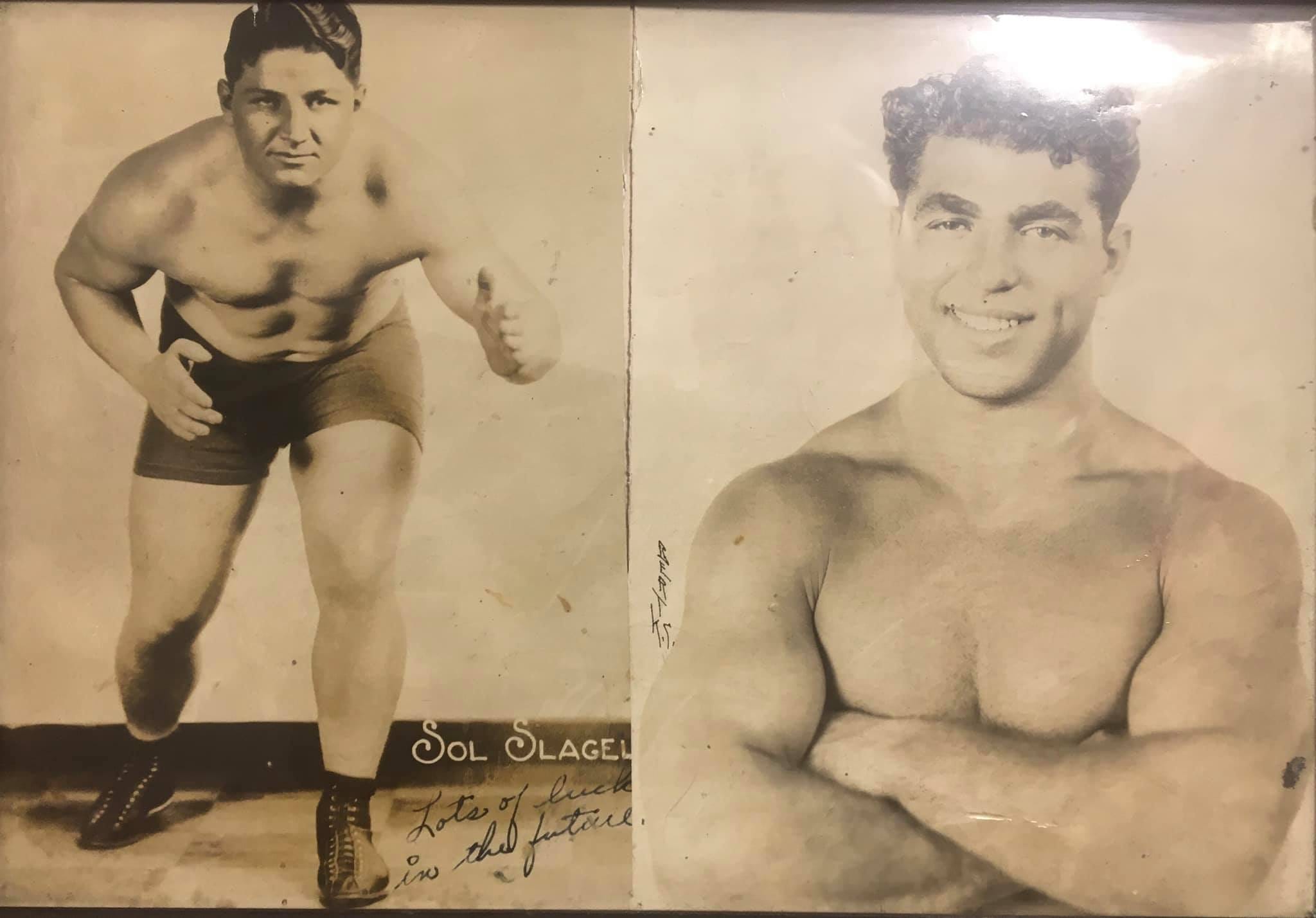
Sol Slagel 2-22-1942 at the age of 33
Mike Meroney 2-22-1974 at the age of 78
(no photo available)
Significant Debuts:
Salman Hashmikov age:35 1989
50 Year Flashback
January-March 1976 Los Angeles Office, NWA Hollywood Territory Analysis
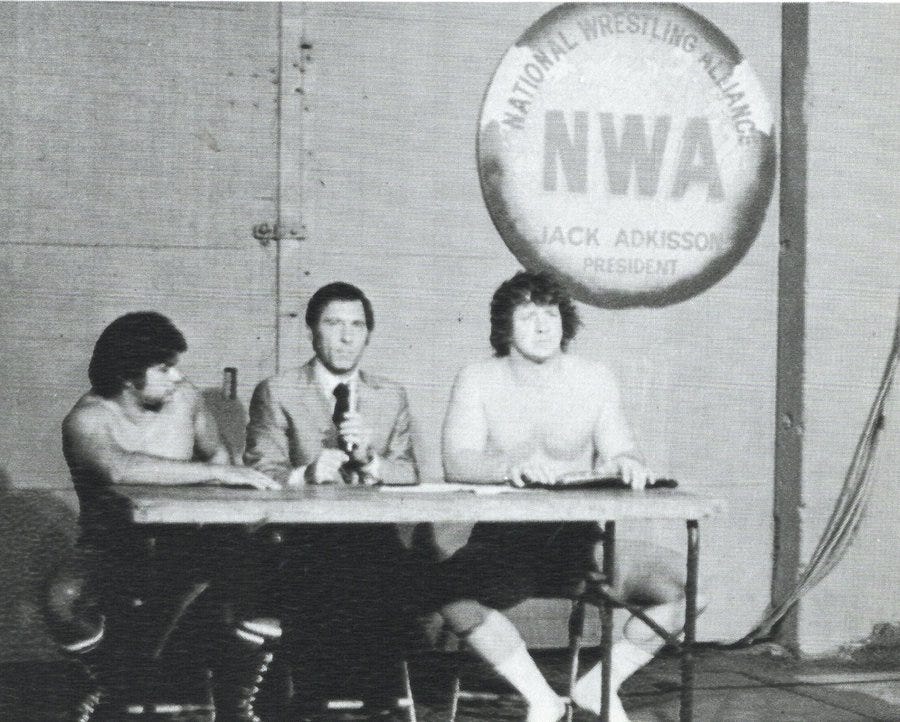
Pictured: NWA World Champion Terry Funk and NWA Americas Champion Chavo Guerrero at the television set with Gene LeBell. Notice the NWA Logo in the backrground listing Fritz Von Erich as the President under his real shoot name.
The National Wrestling Alliance (NWA) Hollywood Territory, based in Los Angeles, California, was a cornerstone of professional wrestling’s territorial system during the 1970s. Operating primarily out of the historic Grand Olympic Auditorium, the promotion blended high-flying lucha libre influences, hardcore brawls, and star power to captivate Southern California’s diverse fanbase. The first three months of 1976—January through March—were marked by intense title activity, including defenses of the prestigious NWA World Heavyweight Championship, shifts in regional belts, and the seeds of iconic feuds.
By 1976, NWA Hollywood had been firmly established since its re-affiliation with the NWA in 1968, under the guidance of promoters Mike LeBell and his mother Aileen Eaton. Mike LeBell was a member of the NWA Championship Committee and was one of the swing votes from the Western end of the US that had put the NWA World Title on Terry Funk when Jack Brisco’s Title run was winding down in 1975. It was now time for the LeBell family to reap the benefits of voting for Funk as the Champion. The Funks had always been a draw in the LA territory, going back to their father Dory Funk, Sr from the 1940s up through brother Dory, Jr’s NWA World Title reign from 1969 through 1973, when all three Funks were part of the World Title angles and matches from the period.
The territory emphasized a mix of local heroes, international imports, and visiting NWA champions, with bookings handled by figures like Freddie Blassie and Gory Guerrero. The roster featured a blend of established stars such as John Tolos, Black Gordman, and The Great Goliath, alongside rising names like Chavo Guerrero and the brash newcomer Roddy Piper. Television tapings at the Olympic Auditorium aired locally, building hype for live events that drew thousands, with attendance figures often hovering around 2,500 to 3,000 for mid-week shows in venues like San Diego’s Coliseum and Bakersfield’s Strelich Stadium.
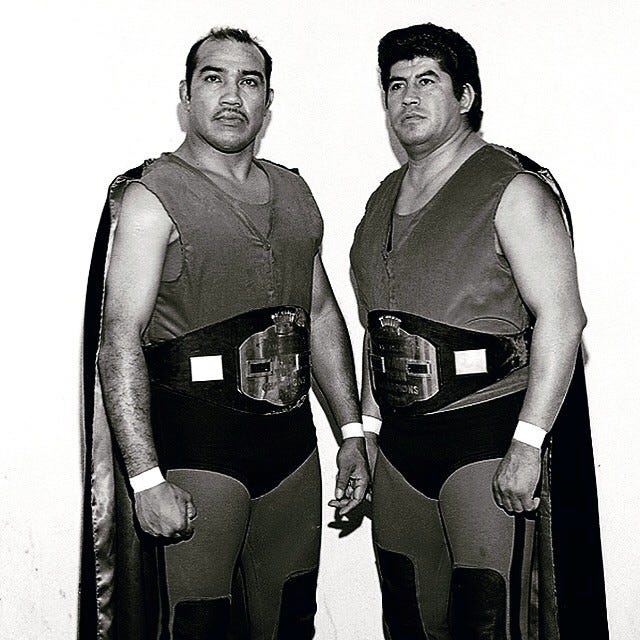
Pictured: Black Gordman and Great Goliath
The period began amid ongoing storylines from late 1975, including tag team dominance by Black Gordman and The Great Goliath, who held the NWA Americas Tag Team Championship into early 1976. Feuds often revolved around family legacies, such as the Guerreros, and ethnic rivalries that appealed to Los Angeles’ multicultural audience. The NWA World Heavyweight Champion Terry Funk, a rugged Texan, toured the territory in March, bringing national prestige and setting the stage for local challengers to shine.
NWA Hollywood’s schedule featured regular weekly cards, with flagship events at the Olympic Auditorium on Fridays or Saturdays, supplemented by tours to nearby cities. One of the standout shows occurred on January 24, 1976, at the Olympic Auditorium: an 18-man battle royal with a $15,000 prize. This high-stakes spectacle drew a raucous crowd and included luminaries like Andre the Giant, Dory Funk Jr., Java Ruuk (Johnny Rodz on loan from Vince McMahon, Sr and the WWWF), Chavo Guerrero, and Pat Patterson. Mr. Fuji emerged victorious, eliminating competitors in a chaotic display of power and cunning. The event underscored the territory’s ability to attract top talent and generate buzz, serving as a mid-winter highlight.
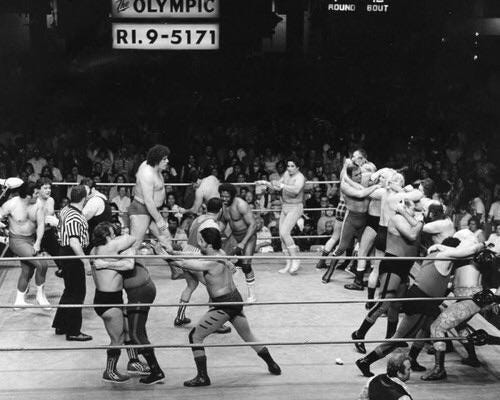
Pictured: The 1976 Olympic Auditorium Battle Royal won by Java Ruuk (Johnny Rodz)
February brought a flurry of activity, including a February 6th card at the Olympic Auditorium featuring mid-card clashes like Bengali defeating Roddy Piper, alongside appearances from Black Gordman, The Great Goliath, and Raul Mata. On February 10 in San Diego, a tag team tournament unfolded, with matches such as Java Ruuk and Mr. California facing John Tolos and Tony Rocco, and a no-disqualification NWA Americas Heavyweight Title bout between champion Chavo Guerrero and Karl von Brauner. Attendance reached 2,507, reflecting steady fan interest.
February 12 in Bakersfield highlighted a Freddie Blassie Cage Match pitting Black Gordman against Raul Mata, emphasizing the promotion’s penchant for stipulation bouts. They were booking “Blassie Cage Matches” around the spot show towns during February 1976 , named after the iconic Freddie Blassie and John Tolos cage matches from a couple years earlier.
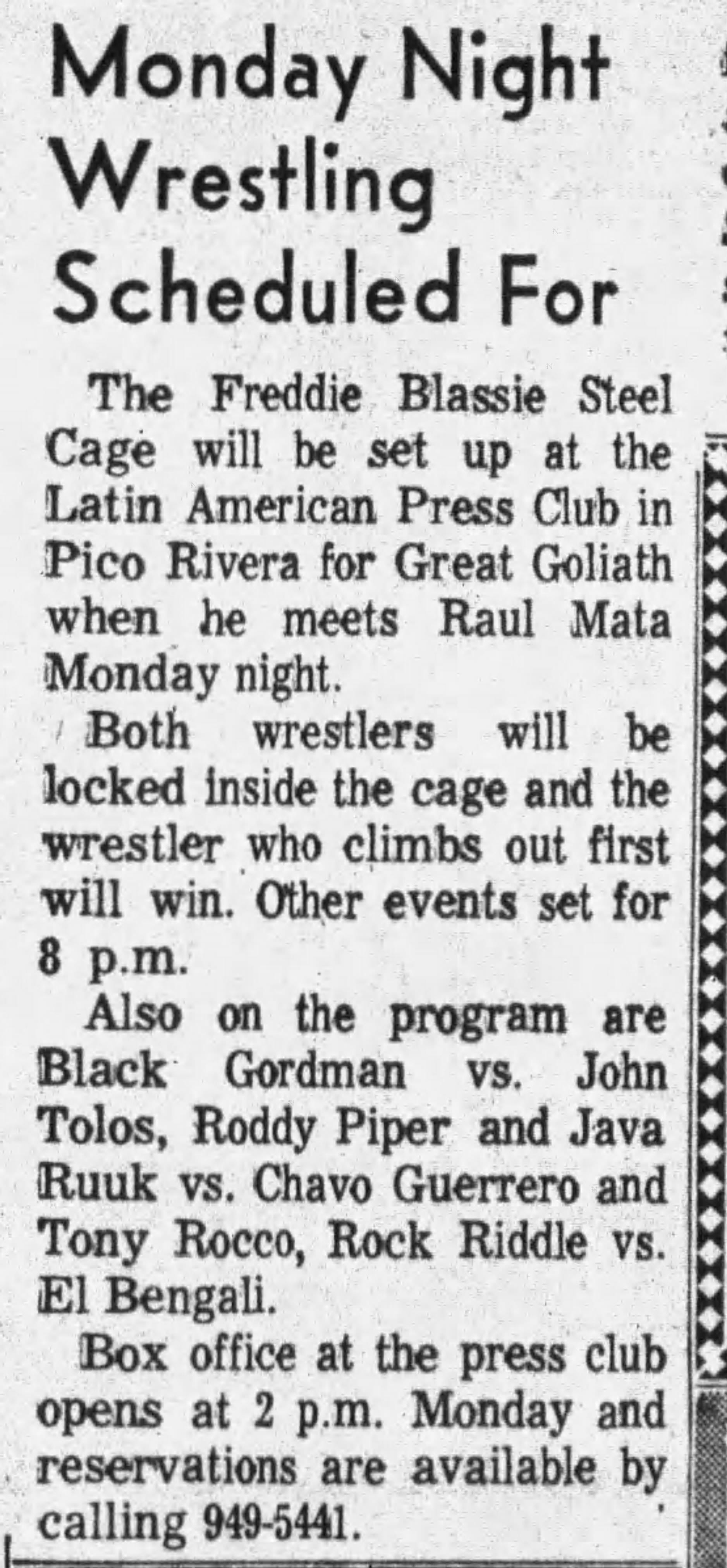
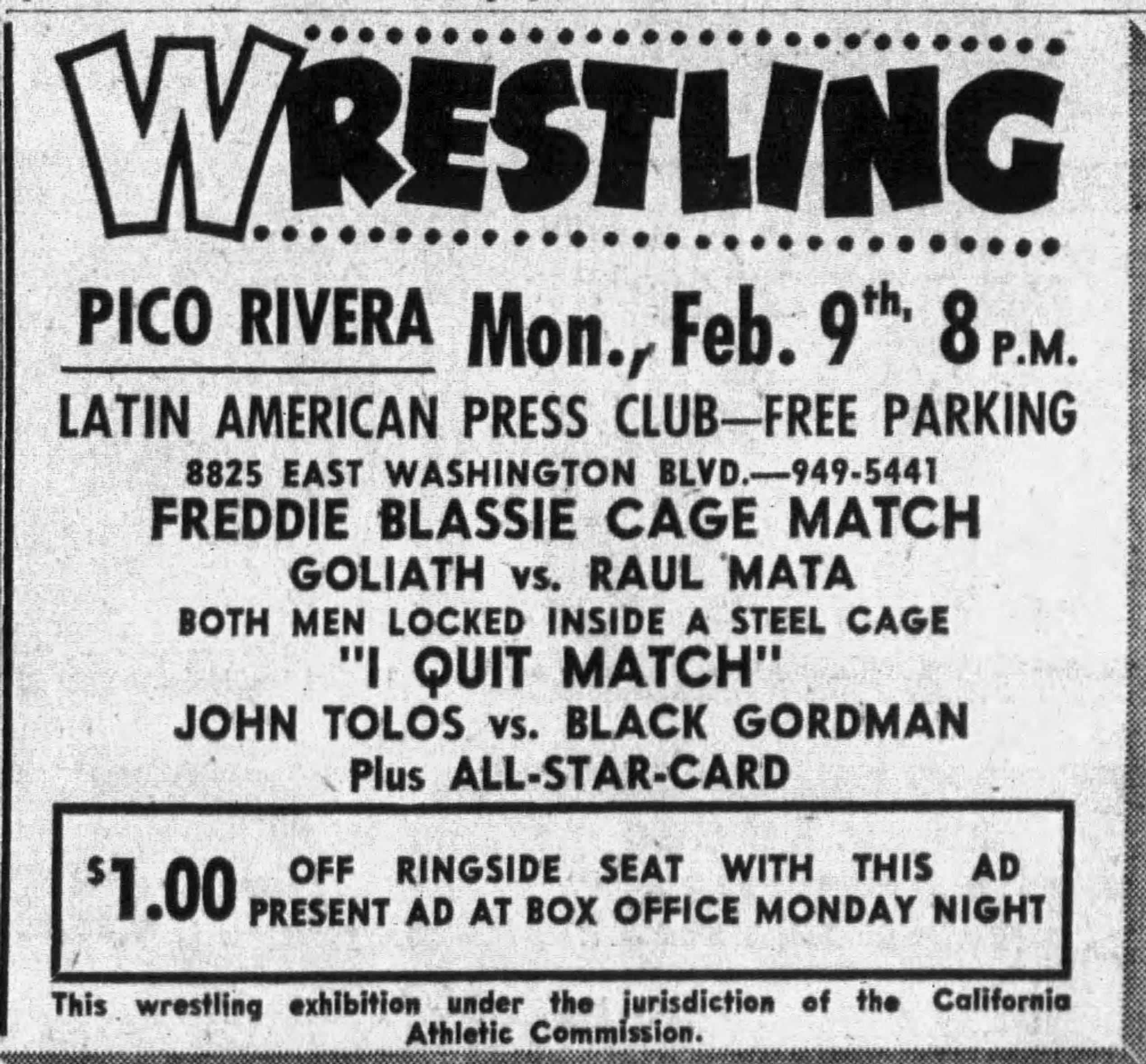
Pictured: 2-12-1976, Whittier, California Ad and promotional article
Later that month, on February 26 in Bakersfield, a “Loser Leaves Town” match saw Gory Guerrero battle Senor X, adding personal stakes to the undercard. Senor X was the masked heel team, The Infernos’ manager, J.C. Dykes under a mask. The Infernos had departed the region some time ago, but Dykes stayed behind to keep working. Gory Guerrero had established himself as a Latin American icon almost 30 years prior in 1946, winning the World Middleweight Title in Mexico and having amazing runs through Mexico and the United States, including buying the promotional rights for the El Paso, Texas and Juarez, Mexico markets in the late 1960s. Gory Guerrero had an on and off-again relationship with the Amarillo booking office in the 1970s when business had dropped off significantly.
March intensified with Terry Funk’s NWA World Title title defenses. According to Rock Rims’ excellent book “Legends and Icons”, Funk sent taped promos from Texas taunting Guerrero and included racial comments that were allowed at the time about Mexicans. Handbills were reportedly distributed that offered a $1,000 bounty to anyone who could cripple or injure Guerrero prior to his March 5th match in Los Angeles. Between the bounty and Funk’s insults of Chavo and Mexican people, intrest in the match and the heat of rit were sky-high, and ticket prices were raised 50% for the Olympic Auditorium event.
On March 1, Funk defended against Raul Mata and March 2 in San Diego drew about 3,000 fans for Funk vs. Chavo Guerrero, with went to a 60-minute time-limit draw, showcasing Guerrero’s resilience. The March 4 Bakersfield event featured Tony Rocco vs. Rock Riddle and Black Baron vs. Raul Mata. The pinnacle was March 5 at the Olympic Auditorium, where Funk faced Guerrero again in the main event. In the finish of the match, the NWA Champion gave Chaavo a piledriver on the concrete floor near ringside and it looked like Guerrero was beaten. However, he continued on. After an hour had elapsed, neighter man had scored a pinfall. Both were given a chance to continuing the match for another five minues, Chavo said yes but Funk said no.
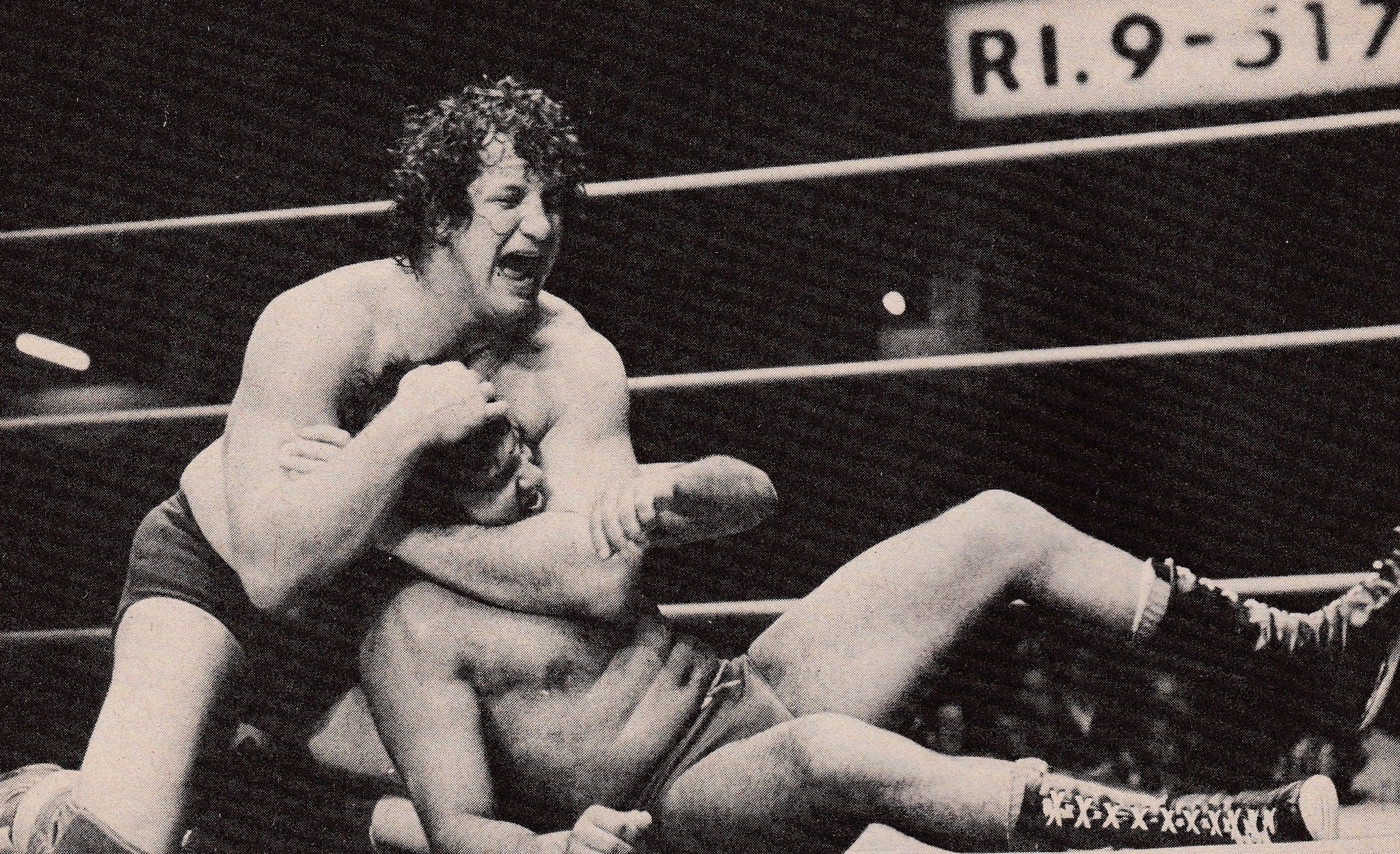
Pictured: NWA World Champion Funk clamps down on a sleeper hold on Chavo Guerrero in their match from March 5th, 1976 in Los Angeles, California
So, the rematch on March 5th ended with Guerrero “winning” via disqualification, a controversial finish that elevated Guerrero’s status without dethroning Funk. Anecdotal accounts of fans at the card remarked that when Chavo’s hand was raised the Olympic crowd erupted in a massive roar not realizing Guerrero had not won the NWA World Title. They described the crowd’s emotion as “magical”. Also on the card that night was Roddy Piper vs. Gory Guerrero which added familial tension, while veterans like Mr. Fuji and Raul Mata provided solid mid-card action.
Matches in early 1976 highlighted athleticism and drama, with several title changes fueling rivalries. The NWA Americas Tag Team Championship experienced a whirlwind of turnovers in February, reflecting the heated competition among teams. Entering the year, Black Gordman and The Great Goliath held the titles, having won them on December 30, 1975. On February 13, 1976, at the Olympic Auditorium in Los Angeles, Chavo Guerrero and John Tolos dethroned them to begin their first reign as a team, capitalizing on Guerrero’s popularity and Tolos’ veteran savvy. However, their championship was short-lived; the very next day, on February 14, Karl Von Brauner and Senor X captured the belts in a surprise upset, marking their inaugural reign and injecting international intrigue with Senor X’s masked persona. The Guerreros struck back on February 27, when Chavo teamed with his father Gory Guerrero to win the titles, emphasizing family bonds and marking the first time any of the Guerrero Family had become a tag team together. Yet again, the reign was brief: on February 28, Roddy Piper and Crusher Verdu seized the championships, with Piper’s emerging heel tactics and Verdu’s brute force proving decisive.
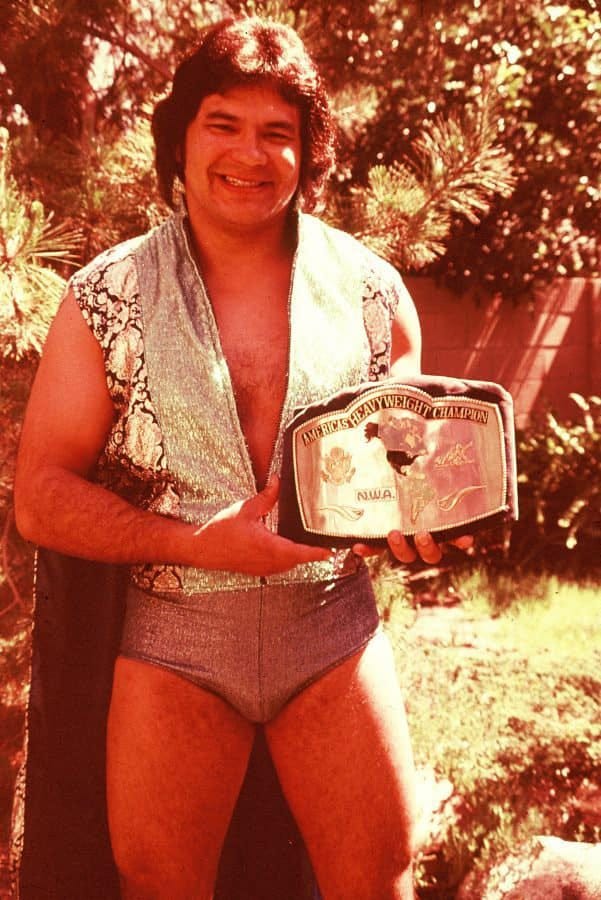
Pictured: Chavo Guerrero, NWA Americas Heavyweight Champion, NWA Hollywood Territory
The NWA Americas Heavyweight Championship also saw significant action. Chavo Guerrero entered February as champion but solidified his hold by defeating challengers like Karl von Brauner in a no-disqualification match on February 10 in San Diego. Guerrero had won his second reign on February 6, 1976, though details of the opponent are sparse; it positioned him as the territory’s top singles star. The title changed hands on March 12, 1976, at the Olympic Auditorium in Los Angeles, where Roddy Piper defeated Guerrero to claim his first major singles gold. This victory, achieved through Piper’s cunning interference and aggressive style, ignited their legendary feud, rooted in cultural clashes—Piper’s Scottish bravado against Guerrero’s Mexican heritage—which escalated through bloody encounters and would become one of NWA Hollywood’s most memorable, drawing massive crowds later in the year.
Other notable clashes included Black Gordman and The Great Goliath’s tag victories, such as their January win over Bob Orton Sr. and Mickey Doyle at the Olympic, perpetuating their heel dominance. The NWA Hollywood Territory always showcased international flavors with wrestlers like The Guerreros, Roddy Piper, Crusher Verdu, El Azteca and Java Ruuk, blending styles that appealed to the region’s wrestling fan demographics and psychograhics.
Thank You for Reading
I’m Tony Richards, Pro Wrestling Historian, Author and Storyteller. I share pro wrestling historical items in each issue of the Time Tunnel Pro Wrestling History Newsletter. Thanks for reading! If you enjoy my information on select events, matches and insights, please share it with folks you think might like to be a subscriber!
Remember, premium investors get access to exclusive and special content such as some special issues including a multi-part deep dives on wrestling territories, wrestler bios and championship title histories, special audio and video interviews on territory pro wrestling and more available in the Pro Wrestling Time Tunnel for Premium Investors.