


Happy Birthday to those who have passed on and to those great wrestlers still with us:
In Memoriam:
John Pesek 1894
Ronda Sing\Bertha Faye 1961
George Tragos 1907
John Heath 1923
Happy Birthday:
Dos Caras (75)
Carlos Colon, Jr\Carlito (47)
Wes Brisco (43)
Anthony Mayweather (41)
Ricky Starks\Saints (36)
RIP Memorial: We stop & remember those who have passed on this day and gave themselves to the business for us, the fans. We salute you and thank you.
Luther Lindsey 2-21-1972 at the age of 47

Ian Croitoru\Johnny K-9\Bruiser Bedlam 2-21-2017 at the age of 53
Two Tragic In-Ring Deaths In The Same Week 10 Years Apart In February Wrestling History
Wrestling’s origins in traveling carnivals and vaudeville shows prioritized spectacle over safety. Performers, often real grapplers in “shoot” matches, faced unregulated environments with rudimentary equipment. Mats were primitive—straw or horsehair stuffed into canvas covers—offering little cushioning and prone to causing burns and infections. There were no standardized rules for moves, and injuries like broken bones or concussions were dismissed as part of the job. The 1950s saw initial improvements with the introduction of foam mats by innovators like Warren Tischler of Resilite, who developed PVC Rubber Nitrile foam-covered designs that were lighter and more shock-absorbent than canvas predecessors. These could withstand impacts without breaking (demonstrated by egg-drop tests), marking the first technological leap in mat safety.
In the prime period of the territorial era (1940s-1970s), under the National Wrestling Alliance (NWA), safety remained ad hoc. Wrestlers toured grueling schedules, often wrestling multiple times weekly without medical screenings. Heart attacks, like those claiming Chick Garibaldi (1961) and Luther Lindsay (1972), underscored undetected health risks, but reforms were slow. Skin infections from close contact were rampant, addressed only through basic hygiene like immediate showers and apparel washing. Equipment like headgear and knee pads existed in amateur wrestling but were rare in pros, where “toughness” was valorized.
The 1980s marked a pivotal shift with deregulation, spearheaded by figures like Vince McMahon Jr., who rebranded the World Wrestling Federation (WWF, now WWE) as entertainment rather than sport to evade athletic commission oversight. This move, aligning with broader economic policies, classified wrestlers as independent contractors, stripping them of employee protections like health insurance and workers’ compensation. The result? A spike in premature deaths—over 100 documented cases post-1989, often from cardiovascular issues linked to steroids, painkillers, and physical toll. Corporate practices, including WWE’s “death clauses” absolving liability, prioritized profits over welfare.
The 1990s “Attitude Era” amplified dangers with edgier content: unprotected chair shots, high-flying maneuvers, and hardcore matches. Concussions surged, incentivized by production pressures and viewer demands for boundary-pushing drama. Economic precarity forced risk-taking, as “free agents” lacked consistent healthcare, clashing with self-identity and reputational concerns.
Today in this space, let’s travel back in the Pro Wrestling Time Tunnel to re-visit two in-ring tragedies occurring in the territory era of wrestling’s past.
2-18-1961:
Wrestlers perform high-risk maneuvers in front of live audiences, pushing their bodies to extremes that can sometimes lead to catastrophic outcomes. In-ring deaths, though rare, serve as stark reminders of the sport’s physical toll, particularly in its earlier eras when medical oversight and safety protocols were minimal. Two such heartbreaking incidents occurred in February, separated by just over a decade: the death of Chick Garibaldi on February 18, 1961, and that of Luther Lindsay on February 21, 1972. Both men succumbed to heart attacks during matches, highlighting the hidden dangers of cardiovascular strain in a demanding profession.
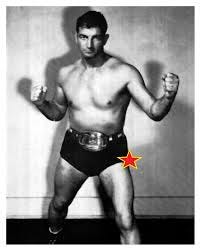
Charles Curcuru, better known in the ring as Chick Garibaldi, was born on August 18, 1914, in St. Louis, Missouri, into a family deeply entrenched in professional wrestling. He was one of five brothers—Gino, Joe, Tony, and Ralph—who all pursued careers in the squared circle, with his nephew Leo later joining the family tradition. Growing up in a wrestling-centric household, Garibaldi debuted professionally in 1938 in New York City, quickly establishing himself as a reliable mid-card performer known for his tag team work and technical skills. He frequently teamed with his brothers, particularly Gino and Ralph, in territories across the United States, including St. Louis and California from 1946 to 1952. His career spanned over two decades, during which he competed in the National Wrestling Alliance (NWA) territories, Canada, and Australia, facing off against legends like Stu Hart, Rip Hawk, Freddie Blassie, and Dick Steinborn.
Garibaldi’s accomplishments, while not as flashy as those of top-tier champions, reflected his consistency and versatility. In 1948, he captured the World Light Heavyweight Championship (Tennessee and Alabama version), showcasing his agility despite his stocky build. e also held the NWA Southern Tag Team Championship (Mid-Atlantic version) with his nephew Leo in 1956 after defeating Mr. Moto and Kinji Shibuya, as well as the NWA Southeastern Tag Team Championship (West Virginia version) with Bill Curry. Much of his work was in the Capitol Wrestling Corporation under Vince McMahon Sr., where he served as a solid enhancement talent, helping elevate younger stars while maintaining a respectable win record. Garibaldi’s style was grounded in traditional grappling, emphasizing holds and teamwork over high-flying antics, which suited the era’s focus on storytelling through physicality.
Video: Bruno Sammartino On How Chick Garibaldi Died During Their Match
Tragedy struck on February 18, 1961, during an afternoon matinee at Sunnyside Gardens in Queens, New York—a venue synonymous with gritty, intimate wrestling shows. Garibaldi, at 46 years old, was facing a rising young powerhouse, Bruno Sammartino, in what was expected to be a routine match. Early in the bout, Sammartino executed a powerful body slam on Garibaldi, who landed and remained motionless on the mat. Sammartino later recounted in interviews that he noticed Garibaldi’s eyes rolling back into his head, a chilling sign that something was gravely wrong. He alerted the referee, who halted the match and declared Sammartino the winner by default. Doctors rushed to the ring, but Garibaldi was pronounced dead shortly after, with a medical examiner attributing the cause to a massive heart attack. The incident profoundly affected Sammartino, who described it as haunting him for years, underscoring the emotional toll on survivors in such events.
Garibaldi’s death highlighted the vulnerabilities of wrestlers in an era without rigorous pre-match health screenings. At 46, he was still active, but the physical demands—constant travel, grueling schedules, and in-ring exertion—likely contributed to his undetected heart condition. His passing left a void in the family-oriented wrestling scene and served as an early warning about the sport’s risks, though it did not immediately spur widespread reforms.
2-21-1972:
Luther Jacob Goodall, who performed as Luther Lindsay (adopting his wife’s surname), was born on December 30, 1924, in Norfolk, Virginia, on a modest farm. His early life was marked by service and athletic excellence: he served as a corporal in the U.S. Army during World War II, then excelled in college football at Hampton Institute, earning All-CIAA honors as an offensive guard and becoming a wrestling champion.
Segregation laws barred him from competing against white athletes, a barrier that foreshadowed his groundbreaking role in professional wrestling. Trained by the legendary Stu Hart in Canada, Lindsay made Hart submit in the infamous “Hart Dungeon,” earning a lifelong friendship—Hart even named his son Ross Lindsay in tribute and carried Lindsay’s photo in his wallet until his death. Lindsay debuted around 1950, quickly rising as one of the first major African American stars in a segregated industry.
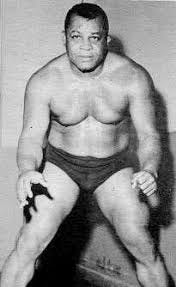
Lindsay’s career was a testament to resilience and skill, spanning the NWA, All Japan Pro Wrestling, Stampede Wrestling, and more. Billed at 5’8” and 227 pounds, he was a submission specialist, feuding with icons like “Iron” Mike DiBiase, Mad Dog Vachon, and Pat Patterson, while teaming with Shag Thomas, Bearcat Wright, and Nick Bockwinkel. He broke racial barriers, participating in the first interracial matches south of Washington, D.C., in the late 1950s, and was billed as the U.S. Colored (or Negro) Heavyweight Champion from 1953. Notably, between 1953 and 1956, he challenged NWA World Heavyweight Champion Lou Thesz multiple times, often going to time-limit draws, making him the first African American to vie for the title and earning Thesz’s admiration. His accolades included the NWA Pacific Northwest Heavyweight Championship (1961), multiple tag team titles across Hawaii, Canada, and the Pacific Northwest (10 times with various partners), and the All Asia Tag Team Championship in Japan (1962). In the 1960s, he toured extensively, winning fan favor in the Pacific Northwest and Mid-Atlantic, where his athleticism and charisma transcended racial prejudices.
On February 21, 1972, at Park Center in Charlotte, North Carolina, Lindsay, aged 47, faced local wrestler Bobby Paul in a mid-card match for Jim Crockett Promotions. Just ten minutes in, Lindsay executed his signature diving belly-flop to secure the pinfall victory. Tragically, he suffered a fatal heart attack during the maneuver, collapsing lifelessly on top of his opponent. When he failed to respond to the referee’s count, police were summoned, and despite attempts at resuscitation, he was pronounced dead in the dressing room. Lindsay had hidden health issues, including possible heart problems and walking pneumonia, which his wife had urged him to address, but he continued wrestling. His funeral drew wrestlers like Les Thatcher, who served as a pallbearer, and his legacy endured through posthumous honors, including inductions into the WWE Hall of Fame (Legacy Wing, 2017), George Tragos/Lou Thesz Hall of Fame (2009), and Stampede Wrestling Hall of Fame (1995).
The deaths of Garibaldi and Lindsay share eerie similarities: both were in their mid-to-late 40s, succumbed to heart attacks mid-match, and left indelible marks on witnesses—Sammartino’s trauma paralleling the shock felt by Paul and the Charlotte crowd. Yet differences abound; Garibaldi’s occurred in the Northeast during wrestling’s territorial boom, while Lindsay’s unfolded in the South amid his trailblazing against segregation, in an era inching toward greater inclusivity. Garibaldi was a family man in a clan of grapplers, his career steady but unheralded, whereas Lindsay was a pioneer whose challenges to world champions and international tours elevated African American representation.
These February tragedies underscore the evolution of professional wrestling safety. In the 1960s and 1970s, performers often ignored health warnings due to financial pressures and the “tough guy” ethos, with little medical intervention available ringside. Today, promotions like WWE mandate annual physicals, EKGs, and wellness policies, partly inspired by such losses.
Garibaldi, at age 46, and Lindsay, at 47, epitomize a cluster of heart-related in-ring deaths that predominated in wrestling’s territorial era (roughly 1950s-1980s), when performers often wrestled multiple times a week without routine cardiac screenings. Both men collapsed mid-match—Garibaldi after a body slam, Lindsay during a diving splash—succumbing to massive heart attacks exacerbated by the physical strain of their profession. This pattern mirrors several contemporaries and successors who shared similar fates, often linked to factors like poor diet, smoking, steroid use, and the cumulative toll of travel and exertion.

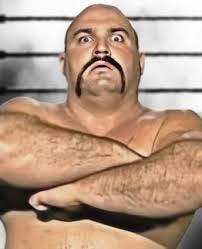
Pictured: Iron Mike DiBiase
A direct comparator is “Iron” Mike DiBiase, who died on July 2, 1969, at age 45 during a match in Lubbock, Texas. Like Garibaldi and Lindsay, DiBiase suffered a fatal heart attack immediately after tagging out in a bout against Man Mountain Mike, collapsing in the ring without prior warning. DiBiase, a veteran of the NWA circuits and adoptive father of “Million Dollar Man” Ted DiBiase, had a career marked by tag team success, much like Garibaldi’s family-oriented runs. His death, occurring just eight years after Garibaldi’s, amplified calls for better health monitoring, though changes were slow.
Extending into later decades, heart attacks continued to claim lives, often among wrestlers in their 40s and 50s pushing through demanding schedules. Larry Cameron, a former CFL football player turned wrestler, died on December 13, 1993, at age 41 from a heart attack during a match in Bremen, Germany, for Otto Wanz’s Catch Wrestling Association. Cameron’s collapse after a clothesline echoed Lindsay’s post-move failure to rise, highlighting how even powerhouse athletes could harbor undetected vulnerabilities. Similarly, Gary Albright, known for his suplex-heavy style and trained in the Hart Dungeon like Lindsay, succumbed to a heart attack on January 7, 2000, at age 36 during an independent show in Pennsylvania. Albright’s youth relative to Garibaldi and Lindsay suggests emerging influences like performance-enhancing drugs, which were rampant in the 1990s.
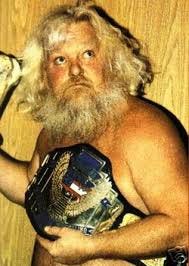
Pictured: Larry Booker, Moondog Spot
More recent examples include Moondog Spot (Larry Booker), who died of a heart attack on November 29, 2003, at age 51 during a Memphis Wrestling event, collapsing mid-match in a concession stand brawl revival. And Silver King (César Cuauhtémoc González Barrón), a luchador famous for portraying Ramses in Nacho Libre, suffered a myocardial infarction on May 11, 2019, at age 51 while wrestling Juventud Guerrera in London. These cases, like those of Garibaldi and Lindsay, often involved veterans in smaller promotions with lax medical protocols, contrasting with modern WWE’s mandatory EKGs and wellness policies instituted post-2000s tragedies.
In aggregate, these heart-related deaths share demographic similarities—predominantly male wrestlers over 40 with extensive road miles—and causal factors tied to lifestyle stresses. Unlike Garibaldi and Lindsay’s era, however, post-1980s incidents prompted incremental reforms, such as improved ringside medical teams.
When you look at the data on in-rink relaated deaths in the territory era versus in-ring deaths in the modern era, the deaths reveal temporal shifts: pre-1990s fatalities, like Garibaldi and Lindsay’s, lean toward cardiovascular issues (about 40-50% of cases), tied to an unregulated industry. Post-1990s, trauma dominates (e.g., neck/spinal injuries in 30-40% of incidents), correlating with globalized, high-spot wrestling. Demographically, victims are overwhelmingly male (over 80%), with ages averaging 35-50, though outliers like Oro (brain aneurysm) skew younger. Geographically, the U.S. accounts for many heart attacks, while Mexico and Japan see more trauma from the modern more high-spot driven work style.
One Thing I Learned About John Pesek
Beyond his fearsome reputation in the ring, he became a highly successful greyhound racing dog breeder in the late 1920s, building a leading stable on 800 acres in Nebraska where one of his dogs, “Just Andrew,” had a pedigree that could be traced in an astonishing 95 percent of all American greyhound stock by 1975.

Thank You for Reading
I’m Tony Richards, Pro Wrestling Historian, Author and Storyteller. I share pro wrestling historical items in each issue of the Time Tunnel Pro Wrestling History Newsletter. Thanks for reading! If you enjoy my information on select events, matches and insights, please share it with folks you think might like to be a subscriber!
Remember, premium investors get access to exclusive and special content such as some special issues including a multi-part deep dives on wrestling territories, wrestler bios and championship title histories, special audio and video interviews on territory pro wrestling and more available in the Pro Wrestling Time Tunnel for Premium Investors.