


Happy Birthday to those who have passed on and to those great wrestlers still with us:
In Memoriam:
Buddy Rogers 1921
Frankie Williams 1940
Dos Caras 1931
Antonio Inoki 1943
Snake Brown 1953
Happy Birthday:
Keiji Takayama\Gedo (57)
Gail Kim (49)
Killian Dain (41)
RIP Memorial: We stop & remember those who have passed on this day and gave themselves to the business for us, the fans. We salute you and thank you.
Bobby Shane 2-20-1975 at the age of 29
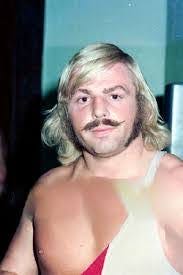
Ciclon Negro 2-20-2013 at the age of 80

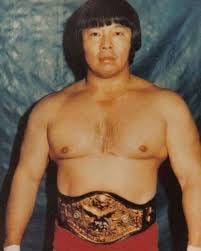
Dean Higuchi\Ho 2-20-2021 at the age of 80
Significant Debuts:
Bronko Nagurski (25) 1933
Pirata Morgan (16) 1979
The Life and Career of Ciclon Negro
He forged a career that spanned nearly three decades, from 1956 to 1984, captivating audiences across continents with his imposing physique, villainous charisma, and unyielding work ethic. He was known as Ciclon Negro, but his real name was Ramon Eduardo Rodriguez, and he stands as one of professional wrestling’s most enigmatic and well-traveled figures. He was a native of Venezuela, but became a world traveler in professional wrestling with his imposing physique, villainous charisma, and unyielding work ethic. Known for his heel persona, Negro’s journey took him through Europe, Japan, Australia, Puerto Rico, Canada, and the United States, where he amassed an impressive collection of championships and left an indelible mark on the sport. Despite his global fame, Negro remained a private individual, shunning the spotlight after retirement to live a quiet life.
Growing up in a working-class environment, he trained as a welder—a trade he would return to after his wrestling days. From a young age, Rodriguez displayed remarkable athleticism, standing at 6 feet 1 inch and eventually building a muscular 250-pound frame through rigorous gym routines. His first passion, however, was boxing. As an amateur, he competed in the inaugural Pan-American Games in Buenos Aires, Argentina, in 1951, where he faced off against the legendary Floyd Patterson. Though he didn’t win, the experience honed his combat skills and instilled a fighter’s mentality that would define his future in the ring.
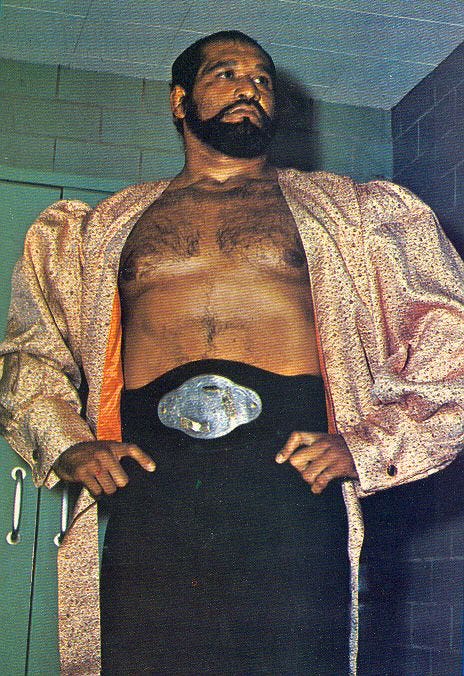
By the mid-1950s, Rodriguez found himself too heavy for competitive boxing. Inspired by the spectacle of professional wrestling, he made the pivot at age 24. He debuted in Caracas in 1956 under the ring name Ciclón Venezolano, or “Venezuelan Cyclone,” a moniker that reflected his explosive energy and national pride. His early matches in Venezuela were raw and formative, allowing him to develop a style that blended his boxing background with grappling techniques. A natural showman, he would demonstrate his strength by breaking boards over his head, captivating crowds and establishing himself as a formidable presence.
Seeking greater opportunities, Rodriguez ventured to Europe in 1958, marking the beginning of his nomadic career. Over the next six years, he wrestled intermittently in Spain, France, Belgium, England, Germany, and Italy, gaining invaluable experience against diverse opponents. This period was crucial for refining his craft; the European circuits emphasized technical wrestling and storytelling, which complemented his physicality. During this time, he formed key friendships, notably with Omar Atlas (real name Omar Mijares), whom he met in a gym and later invited to Spain. When Atlas suffered an injury, Rodriguez supported him financially and trained him, launching Atlas’s own successful career.

Pictured: Omar Negro (Atlas), Andre The Giant, Ciclon Negro
His European stint also introduced him to the business side of wrestling. Rodriguez scouted talent, such as helping Mario Milano transition to the U.S. and discovering Benji Ramirez, who became known as The Mummy. By 1960, his reputation had crossed the Atlantic, leading to a U.S. debut. Scouted by Blackie Guzman, a promoter in Houston specializing in South American talent, Rodriguez was rechristened Ciclón Negro (or Cyclone Negro in English-speaking territories). This name stuck, evoking a storm-like force that matched his aggressive, heel-oriented style.
Upon arriving in the U.S., Negro quickly adapted to the territorial system, wrestling from coast to coast. In 1961, he briefly worked for Capitol Sports (a precursor to the WWWF) in New York as Lalo Rodriguez, appearing in Madison Square Garden. However, he thrived as a villain, and his babyface experiment was short-lived. He found greater success in Texas, Florida, and the Southwest, where his expressive face and brutal tactics drew massive heat from crowds.
Negro’s career exploded in the 1960s and 1970s with extensive international tours. He made 23 trips to Japan, first in 1964 with the Japan Pro Wrestling Alliance under the name Calypso Hurricane (or Caripus Hurricane). There, he teamed with Gene Kiniski to win the All Asia Tag Team Championship on May 14, 1964, defeating Michiaki Yoshimura and Toyonobori. Japan appreciated his hardcore style, and he returned repeatedly. Similarly, he visited Australia 20 times, capturing the IWA World Tag Team Championship with Baron Mikel Scicluna in 1968.
In the U.S., Negro headlined in promotions like NWA Texas, NWA Florida, and NWA Western States. He specialized in brass knuckles matches, leveraging his boxing roots to win titles in Florida (1971 and 1982), Amarillo (1973 and 1977), and Los Angeles (1975). His Florida run included a memorable stint in 1977-1978 as the masked “Mr. Uganda,” managed by Sonny King, where he feuded with Dusty Rhodes and captured the NWA Florida Heavyweight Championship by defeating Rhodes in 1978. Other aliases like Chief Guaconopoulos and Punchy Pinero added layers to his character.
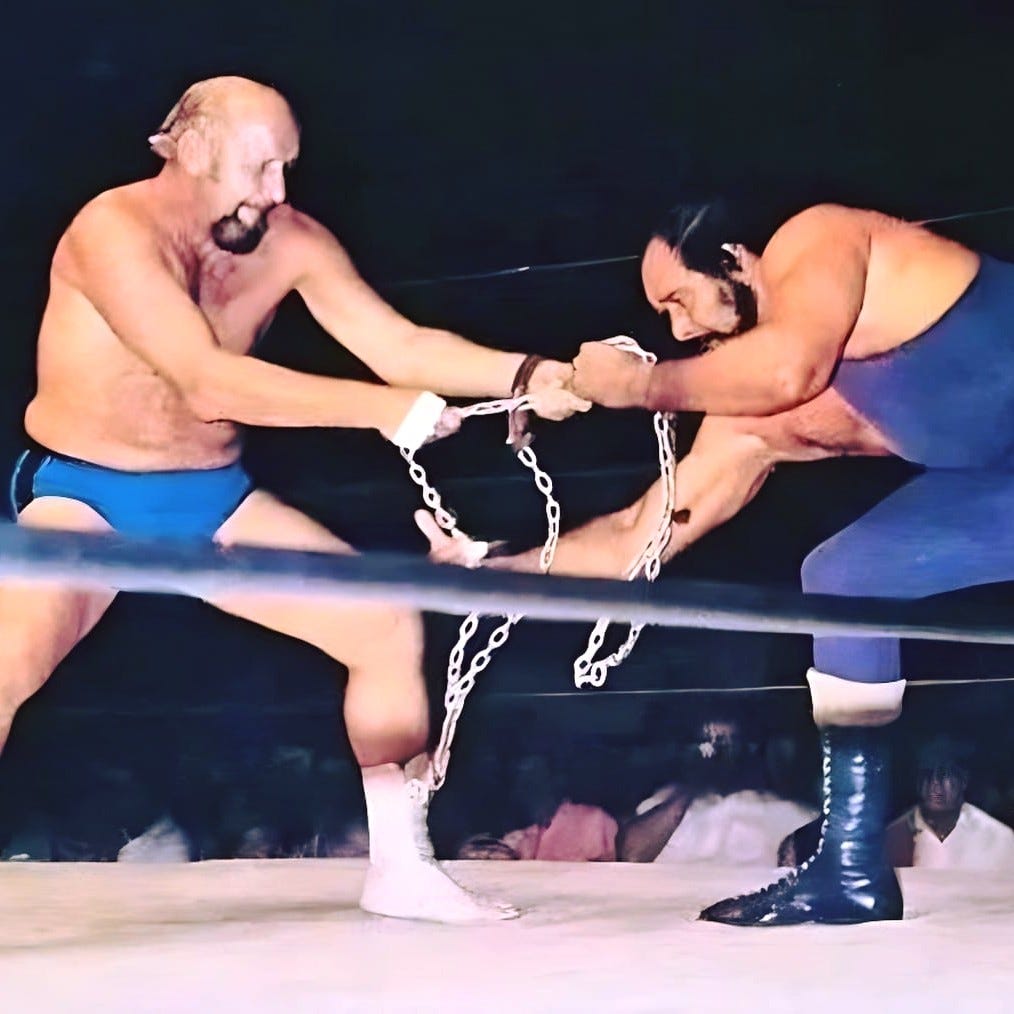
Pictured: Dory Funk, Sr and Ciclon Negro in a Russian Chain Match at the Sports Arena in Amarillo, Texas
Negro’s career was defined by intense rivalries that showcased his endurance and flair for drama. In Amarillo, Texas, he clashed with the Funk family, including a legendary “Texas Death Match” against Terry Funk in 1973, which ended with both men hospitalized—a staged spectacle involving Alka-Seltzer to simulate foaming at the mouth. He defeated Dory Funk Sr. and both Funk brothers multiple times, including n infamous King of the Texas Death Match Tournament in 1972, where he defeated Funk, Sr in Funk’s specialty gimmick match when he reached his feet before the 10-count only a microsecond before Funk was counted out as the loser.
Other notable feuds included bouts with Ricky Romero, Jerry and Nick Kozak, and Dusty Rhodes. In Puerto Rico with WWC, he won the Caribbean Heavyweight Championship twice (1969 and 1979) and the North American Tag Team title with Huracán Castillo in 1979. His finishing move, the Jumping Piledriver, became a signature weapon in these encounters.
Ciclon Negro’s championship honors are staggering including the NWA International Championship, the NWA Western States Championship, the NWA Florida CHampionship, NWA Americas Championship, Brass Knuckles Titles in Florida, Amarillo and Los Angeles, as well as NWA World Tag Championships, NWA Florida Tag Championship and the All Japan Pro Wrestling\NWA International Tag Team Championship.He also held tag titles in Australia, Japan, and Puerto Rico, solidifying his status as a global star. Beyond the ring, Negro appeared on the TV show Lie Detector hosted by F. Lee Bailey, defending wrestling’s legitimacy. When accused of lying, he stormed off, adding to his mystique.
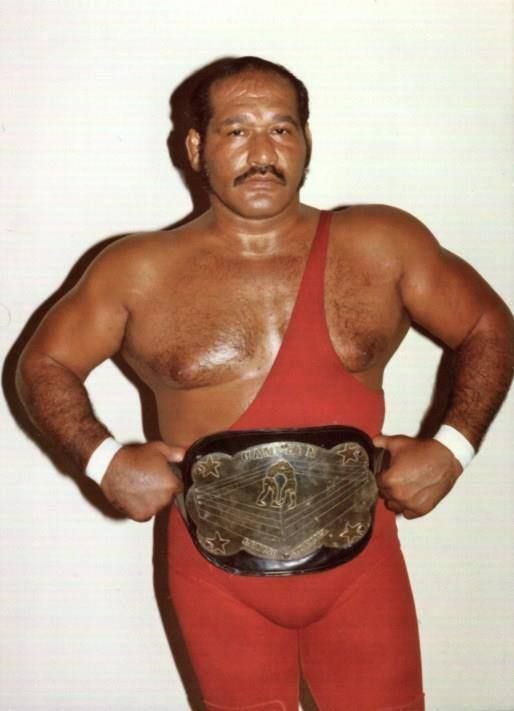
Negro retired in 1984 after a tour with Japan’s UWF, though he briefly returned in 1988 to promote shows in Yugoslavia amid civil unrest. Post-retirement, he distanced himself from wrestling, returning to welding and opening a gym in Melbourne, Florida, in the 1970s. He viewed the industry as a “big game” and prioritized normalcy.
His personal life was rich yet challenging. From his first marriage to Gladys, he had six children, including son Michael, who briefly pursued football at the University of Alabama before a knee injury ended his NFL aspirations. In 1969, Negro met his second wife, Cheryl, 20 years his junior, at a Florida convenience store. Their romance began with him singing to her, and they married, having daughter Sherri Rodriguez-Jones. The family traveled extensively, living in Canada, Australia, and Puerto Rico, but the nomadic lifestyle strained them. Negro was known for his kindness, cooking (sharing recipes with Ata Maivia, mother of Dwayne “The Rock” Johnson), singing, and faith, converting to Christianity in 1982.
Health declined in later years. A hip fracture in 2003 led to surgery, ending his workouts. By 2006, he battled COPD from welding fumes, congestive heart failure, and dementia from head trauma. Bedridden for over six years, he remained devoted to Cheryl until the end.
Ciclón Negro passed away on February 20, 2013, in Melbourne, Florida, at age 80, from natural causes exacerbated by his conditions. He was cremated without a public funeral, survived by Cheryl, Sherri, and other family. Tragically, he outlived two children: a daughter 15 years prior and son Ramon Jr. in 2012.
One Thing I Learned About Buddy Rogers
Before becoming a pro wrestling legend, Buddy Rogers worked as a police officer in Camden, New Jersey, in the late 1930s
Thank You for Reading
I’m Tony Richards, Pro Wrestling Historian, Author and Storyteller. I share pro wrestling historical items in each issue of the Time Tunnel Pro Wrestling History Newsletter. Thanks for reading! If you enjoy my information on select events, matches and insights, please share it with folks you think might like to be a subscriber!
Remember, premium investors get access to exclusive and special content such as some special issues including a multi-part deep dives on wrestling territories, wrestler bios and championship title histories, special audio and video interviews on territory pro wrestling and more available in the Pro Wrestling Time Tunnel for Premium Investors.