



Happy Birthday to those who have passed on and to those great wrestlers still with us:
In Memoriam:
Chris Adams 1955
Chris Romeo\Youngblood 1966
Louis Spicolli 1971
Happy Birthday:
Haku (67)
Victoria\Tara (55)
RIP Memorial: We stop & remember those who have passed on this day and gave themselves to the business for us, the fans. We salute you and thank you.
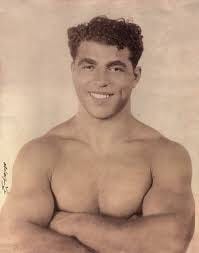
Everett Marshall 2-10-1973 at the age of 67
David Von Erich 2-10-1984 at the age of 25

Curt Hennig 2-10-2003 at the age of 44
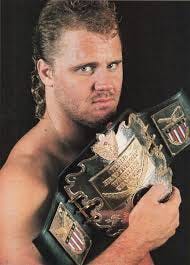
Bob Sweetan 2-10-2017 at the age of 76

Koji Kitao 2-10-2019 at the age of 55

Eric Froelich 2-10-2023 at the age of 85

Chris Markoff 2-10-24 at the age of 85

Significant Debuts:
George Takano age:19 in 1977
Eddie Gilbert age: 18 in 1979
The Life and Career of Eric Froelich
Born on May 3, 1937, in Einbeck, Lower Saxony, West Germany, Froelich grew up in a post-World War II environment. His birth name was Udo Frohlich, which he later anglicized for his wrestling persona. As a young man, he excelled in gymnastics and amateur wrestling, skills that would later define his professional style. In 1956, at the age of 19, Froelich emigrated to Vancouver, British Columbia, Canada, to avoid being drafted into the German army, as his birth year was next in line for conscription. He arrived in December of that year and initially continued his gymnastics training at the University of British Columbia. This move marked the beginning of his new life in North America, where he became a Canadian citizen in 1961.
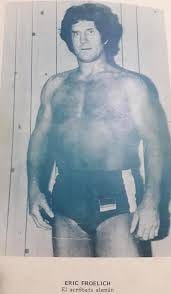
While performing gymnastics routines, he caught the eye of Canadian promoter and wrestler Rod Fenton, who invited him to train for the pro circuit. Fenton recognized Froelich’s athletic potential, and under his guidance, Froelich quickly adapted to the sport. His background in gymnastics allowed him to incorporate flips, nip-ups (a signature move where he would spring from a prone position to his feet), and other agile techniques that set him apart from the more brute-force styles common at the time. He made his professional debut in 1960 (or 1961, per some sources) in Vancouver, initially wrestling under Big Time Wrestling before joining Gene Kiniski’s NWA All-Star Wrestling around 1962. Froelich chose the ring name “Erich” after promoters suggested changing “Udo” to avoid associations with judo.
Standing at 5’11” (1.80 m) and weighing around 220-230 lbs (100-104 kg), Froelich was a middleweight by modern standards but competed as a heavyweight in his era. His decision to wrestle barefoot became a trademark, enhancing his image as an unconventional, agile performer. This, combined with his handsome looks and technical prowess, made him an anomaly—a German wrestler cheered by audiences rather than booed.
Froelich’s career took off in the Pacific Northwest, particularly with NWA All-Star Wrestling in British Columbia. He debuted for Pacific Northwest Wrestling in 1966 and spent many years there, building a reputation for exciting matches. He worked across British Columbia, Toronto, Texas, California, and the Midwest, including stops in Puerto Rico (where he held the NWA North American Tag Team Championship). He toured Japan in several tours, which showcased his skills against some of the top talent there. He visited Australia twice and performed in Hawaii and the Fiji Islands. A brief 1963 tour of Britain and Germany saw him face prominent heavyweights as a popular babyface. Froelich often teamed with partners like Carlos Colon, Mighty Igor, Ruben Juarez, Ricky Romero, and Mr. Wrestling.
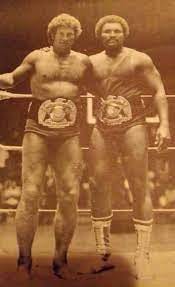
Pictured: Eric Froelich and Carlos Colon, NWA North American Tag Team Champions in Puerto Rico
The Nip-up was Froelich’s most iconic signature move, a quick recovery technique that demonstrated his core strength and agility. From a prone position on his back, he would pull his legs toward his stomach and explosively thrust forward, propelling himself directly into a standing position without using his hands for support. It originated spontaneously during a match and became a crowd-pleasing staple, often used to escape pins or reverse momentum. He also performed a move where he would run the ring ropes into a dropkick. Froelich was reportedly the first wrestler some peers saw perform this sequence: He would sprint along all four sets of ring ropes in a continuous loop, building speed before launching into a powerful dropkick.
The dropkick itself was a flying kick where both feet struck the opponent simultaneously, often to the chest or face. Dutch Savage recalled: “Eric was the first guy that I ever saw run the ring ropes. He’d run all four ring ropes then dropkick you.” Froelich’s repertoire focused on technical holds, quick counters, and acrobatic recoveries rather than finishers or high-risk dives. He wasn’t known for a specific finisher like a submission or powerbomb, but his style influenced peers like John Quinn, who admired his technical prowess: “Eric Froelich, a technical wrestler and his ability, I wanted to be like that.”
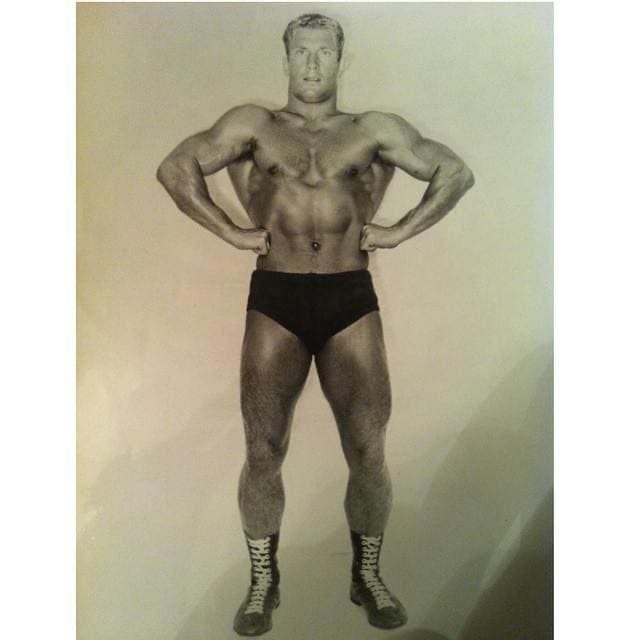
While he was not a prolific champion, his victories underscored his reliability as a technical and agile performer, often partnering with established stars to capture regional gold. His first major accomplishment came as a singles competitor when he captured the NWA “Beat the Champ” Television Championship on August 12, 1972, in Los Angeles, defeating Kinji Shibuya in a high-profile match. This title, promoted under NWA Hollywood Wrestling, highlighted his ability to shine in televised bouts, though his reign was short-lived, ending about a month later in a loss to Masa Saito.
Froelich’s tag team prowess was evident in several key wins. In 1972, he teamed with Ruben Juarez to win the NWA Americas Tag Team Championship, also in the Los Angeles territory, by overcoming the formidable duo of Kinji Shibuya and Masa Saito—sources vary on the exact date, with some citing June and others August 30. They held the belts for roughly two months before dropping them to Black Gordman and Great Goliath in November. Earlier or around the same period, Froelich paired with Mighty Igor to secure the WWA International Television Tag Team Championship once, further cementing his status in California’s competitive scene.
Venturing into other regions, Froelich claimed the NWA Texas Tag Team Championship (sometimes referred to as the North American Tag Team Championship in the Amarillo version) once alongside Ricky Romero under NWA Southwest Sports. He also triumphed in the NWA Western States Tag Team Championship once with Mr. Wrestling in the Western States Sports promotion. Back in his adopted home base of Vancouver, British Columbia, Froelich’s final documented title win came on August 29, 1977, when he and Mr. X (also known as Guy Mitchell or John Hill) captured the NWA Canadian Tag Team Championship (Vancouver version) in NWA All-Star Wrestling. Their reign lasted 35 days, ending in a defeat to Black Avenger and Mike Sharpe on October 3.
Froelich retired in 1981 or 1982 after accumulating severe injuries, including the need for open-heart and open-lung surgeries, as well as hip and knee replacements. Post-retirement, he lived a quiet life in Mission, British Columbia, with his wife Pamela, whom he was married to for over 40 years. They had three sons and two daughters.
Erich Froelich passed away on February 10, 2023, at the age of 85 in Vancouver, British Columbia.
One Thing I Learned About David Von Erich
Before fully committing to professional wrestling, he excelled in high school athletics and earned a scholarship to North Texas State University (now the University of North Texas) for both basketball and football, where he lettered in basketball.
Thank You for Reading
I’m Tony Richards, Pro Wrestling Historian, Author and Storyteller. I share pro wrestling historical items in each issue of the Time Tunnel Pro Wrestling History Newsletter. Thanks for reading! If you enjoy my information on select events, matches and insights, please share it with folks you think might like to be a subscriber!
Remember, premium investors get access to exclusive and special content such as some special issues including a multi-part deep dives on wrestling territories, wrestler bios and championship title histories, special audio and video interviews on territory pro wrestling and more available in the Pro Wrestling Time Tunnel for Premium Investors.