


Happy Birthday to those who have passed on and to those great wrestlers still with us:
In Memoriam:
Fred Kohler 1903
Tojo Yamamoto 1927
Tony Halme 1963
Happy Birthday:
Konnan (63)
Ryan Parmeter\Konnor (46)
Natalia Class\Salina De La Renta (29)
RIP Memorial: We stop & remember those who have passed on this day and gave themselves to the business for us, the fans. We salute you and thank you.
Butch Boyette\Mario Galento 2-6-1989 at the age of 74

Dick Lane 2-6-1992 at the age of 60
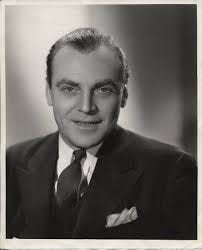
Joe Chrstie 2-6-1999 at the age of 83

Bobby Davis 2-6-2021 at the age of 83

Significant Debuts:
Dos Caras 2-6-1970 age: 19
George Gulas 2-6-1974
Rey Misterio 2-6-1976 age: 21
Konnan 2-6-1987 age: 23
50 Year Flashback
2-6-1976: Antonio Inoki (ch) defeated Olympic Gold Medalist Willem Ruska via TKO at Nippon Budokan in Tokyo, Japan
In the 1970s, Antonio Inoki was seeking to guide New Japan Pro Wrestling into and through a transformative era. By 1976, he was attempting to elevate pro wrestling by blending it with elements of combat sports, eventually creating what he called “strong style.” This approach involved staging mixed-style matches against practitioners from other martial arts disciplines to prove the superiority of professional wrestling.
On February 6, 1976, at the iconic Nippon Budokan in Tokyo, Japan, Inoki faced off against Willem Ruska, a formidable Dutch judoka and double Olympic gold medalist from the 1972 Munich Games in both the heavyweight and open weight categories. This bout, billed as the “World’s Top Martial Artist Deciding Match,” was not only a defense of Inoki’s self-proclaimed Real World Martial Arts Championship but also a strategic primer for his highly anticipated showdown with boxing legend Muhammad Ali later in the year.
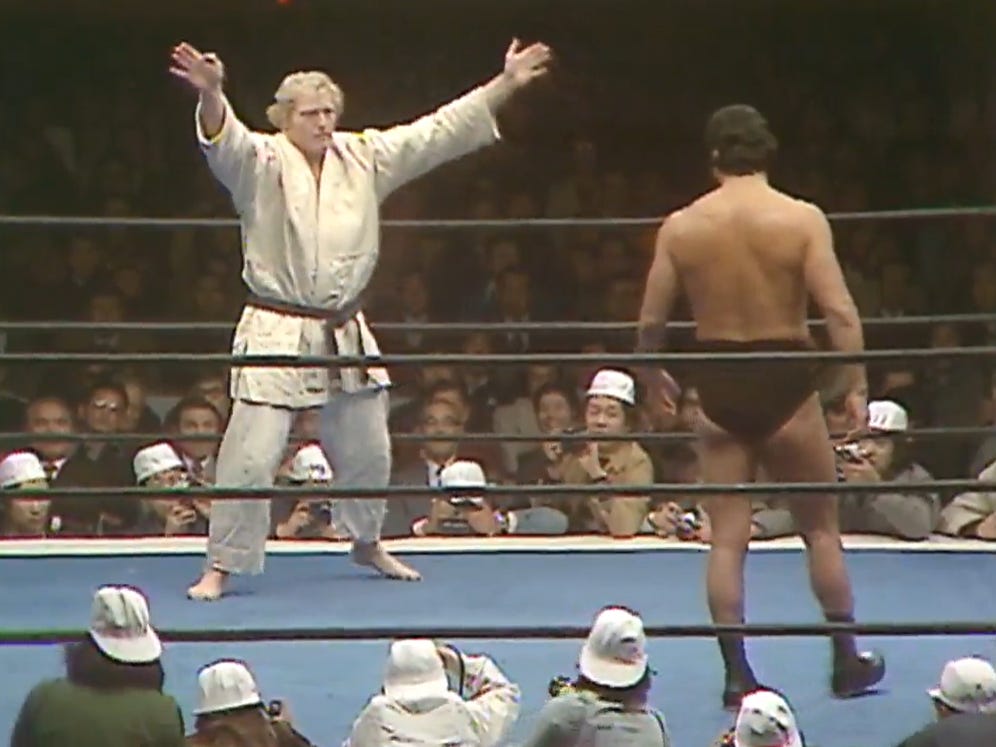
Ruska entered the ring as a credible threat, his Olympic pedigree lending authenticity to the contest. At 35 years old, he was a master of judo, known for his powerful throws and ground control techniques. Inoki, then 32, was no stranger to hybrid fights, having been trained in “hooking and shooting” by the legendary Karl Gotch, which equipped him with legitimate grappling skills alongside his wrestling prowess. The match was contested under rules that allowed a fusion of styles, emphasizing strikes, throws, and submissions, making it an early precursor to modern mixed martial arts (MMA). Ruska wore his traditional judo gi, which played a role in the action, while Inoki opted for standard wrestling attire, symbolizing the clash between judo purity and wrestling versatility.
The bout unfolded with intensity from the outset. Ruska asserted dominance early, utilizing his judo expertise to control Inoki on the mat. He frequently applied the ude-garami (a cross-armbreaker) and executed oo-soto-gari throws, maintaining side control to grind down his opponent. A notable incident occurred when Ruska’s gi scraped Inoki’s eye, drawing blood and adding a layer of realism to the encounter. Ruska employed heelish tactics, such as refusing to break holds on the ropes and feigning innocence during a handshake attempt, which incited the crowd. In response, Inoki retaliated with stiff strikes, including a bow to Ruska’s face that escalated the physicality. Comedic yet tense moments arose when punches were thrown, with the referee intervening to clarify they were “forearms,” prompting Ruska to throw his hands up in frustration.
As the match progressed, Inoki’s resilience shone through. He reversed several pin attempts and escaped Ruska’s holds, including a surprising breakout from an Octopus Stretch mid-match. The tide turned decisively when Inoki unleashed a barrage of backdrop suplexes—powerful throws that slammed Ruska to the canvas repeatedly. Using Ruska’s own black belt to hoist him up for the final suplex, Inoki secured the victory at approximately 20:56 via technical knockout (TKO), as Ruska was unable to continue. Some accounts describe it as a pinfall, but the essence was Inoki’s overwhelming suplex assault that demonstrated wrestling’s effectiveness against judo. The crowd at Budokan erupted, affirming Inoki’s status as the “ultimate shooter.”
This victory held profound significance beyond the ring. It reinforced Inoki’s narrative that professional wrestling was the supreme combat form, boosting NJPW’s popularity and setting the stage for his controversial draw with Ali on June 26, 1976. Some online databases reference the WWF World Martial Arts Heavyweight Title being defended in this match, that championship was actually created later, on December 18, 1978, by Vince McMahon Sr., and awarded to Inoki in recognition of his prior achievements, explicitly including his win over Ruska. The 1976 match was instrumental in establishing the legacy that led to the WWF Championship.
2-6-1976: The Spoiler defeated Dusty Rhodes (ch) to regain the NWA Georgia Heavyweight Title at the City Auditorium in Atlanta, Georgia
The February 6 encounter was electric, stemming directly from a brutal cage match just one week prior on January 30, 1976 (see Daily Chronicle Issue 290). In that showdown, also at the City Auditorium, Rhodes challenged The Spoiler for the title in a steel cage to prevent outside interference—a stipulation that amplified the drama. The match was a war of attrition: Rhodes, the fan favorite, absorbed punishing blows from The Spoiler’s claw and suplexes, while countering with his own hard-hitting offense. The Atlanta crowd erupted as Rhodes, bloodied but unbowed, pinned The Spoiler after a grueling battle, claiming his first NWA Georgia Heavyweight Championship.
The Spoiler, seeking to reclaim his prestige, relied on his signature claw to target Rhodes’ head and neck, wearing down the champion’s resilience. Rhodes, defending his newly won gold, fought with the fire of a man protecting his dream, landing heavy elbows and body slams to rally the crowd. In the end, The Spoiler emerged victorious, pinning Rhodes to regain the title after a mere seven-day reign for the American Dream. The Spoiler, with his second Georgia title run, continued as a formidable heel, holding the belt until August 20, 1976, when he lost it to Dick Slater. Dusty and The Spoiler’s paths crossed again in later years, including memorable bouts in Florida in 1978, where titles were once more on the line.
Thank You for Reading
I’m Tony Richards, Pro Wrestling Historian, Author and Storyteller. I share pro wrestling historical items in each issue of the Time Tunnel Pro Wrestling History Newsletter. Thanks for reading! If you enjoy my information on select events, matches and insights, please share it with folks you think might like to be a subscriber!
Remember, premium investors get access to exclusive and special content such as some special issues including a multi-part deep dives on wrestling territories, wrestler bios and championship title histories, special audio and video interviews on territory pro wrestling and more available in the Pro Wrestling Time Tunnel for Premium Investors.