


Happy Birthday to those who have passed on and to those great wrestlers still with us:
In Memoriam:
Eddie Sharkey 1936
Ed Gantner 1959
Happy Birthday:
Jim Powers (69)
Peter Stilsbury\Outback Jack (68)
Chris Sabin (44)
Aaron Solo (39)
Santana (35)
RIP Memorial: We stop & remember those who have passed on this day and gave themselves to the business for us, the fans. We salute you and thank you.
Whipper Bill Watson 2-4-1990 at the age of 74

Axl Rotten 2-4-2016 at the age of 44

Significant Debut:
2-4-1954: Doug Donnan\Karl Von Brauner age:25 in Milwaukee, Wisconsin
William Douglas Donnan on December 31, 1930, in Stirling, Ontario, Canada, Donnan would later adopt the ring name Doug Donovan (sometimes spelled Donnan) before becoming the infamous Karl Von Brauner. His career spanned decades, but its foundations were laid in the early 1950s, a period when wrestling was transitioning from carnival sideshows to televised spectacle. While historical records point to his professional debut in 1952 with Stampede Wrestling in Canada, some anecdotal sources suggest he began competing in 1954, potentially including events in the American Midwest like Milwaukee, Wisconsin.

Pictured: Doug Donovan
Donnan’s path to wrestling was rooted in his athletic prowess. Growing up on a dairy farm, he excelled in junior football in Edmonton, Alberta, and trained under the legendary Stu Hart, founder of Stampede Wrestling. Hart’s dungeon-style training emphasized toughness and technical skill, shaping Donnan into a formidable competitor. By 1952, he made his professional debut in Stampede, honing his craft in Canada’s rugged independent scene. The following year, he crossed into the United States, joining Don Owen’s Portland Wrestling promotion in the Pacific Northwest. Here, under the name Doug Donovan, he quickly rose through the ranks, capturing his first titles in 1955: the NWA Pacific Northwest Tag Team Championship twice with partner Ivan Kameroff, and the NWA Pacific Northwest Heavyweight Championship by defeating Herb Freeman.
If February 4, 1954, in Milwaukee represents a key moment—perhaps an early U.S. match or a regional debut— it would fit the timeline of Donnan’s expansion beyond Canada. Milwaukee was a hotbed for wrestling in the 1950s, hosting cards under the American Wrestling Association (AWA) and other NWA affiliates. Match records from that year show events in the city featuring stars like Verne Gagne, Reggie Lisowski (later The Crusher), and international heels, but specific listings for Donnan on that date are absent from major databases. Nonetheless, 1954 was a pivotal year for wrestling in the region, with promotions drawing crowds to venues like the Milwaukee Auditorium amid post-war economic booms and the rise of television broadcasts. For a young Donovan, such a debut would have been a stepping stone, exposing him to American audiences hungry for athletic displays and dramatic storytelling.
Anecdotal accounts paint Donnan as a natural performer from the start. His matches in 1954, documented in areas like Michigan and the Northwest, often involved hard-hitting brawls, as seen in a May bout where he lost to Barney Deighan in 14 minutes. These early encounters built his reputation as a versatile wrestler capable of singles and tag work, setting the stage for his transformation into a heel icon.
Donnan’s true breakthrough came in January 1960 when he teamed with Jimmy Brawner (as Kurt Von Brauner) in Oklahoma. Suggested by promoter Dick Steinborn due to their physical resemblance, the duo adopted the “Von Brauners” persona—shaved heads, thick mustaches, and a faux German accent, portraying evil twin brothers from the Black Forest. Managed by Saul Weingeroff, they leaned into post-World War II sensitivities, grunting “Jah!” and feigning misunderstandings with referees to cheat blatantly. This gimmick was a masterstroke in an era when heels drew heat by evoking real-world antagonists, often inciting near-riots from patriotic crowds.
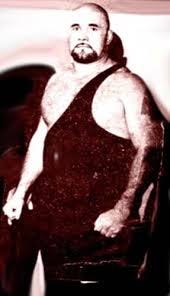
Pictured: Karl Von Brawner
The Von Brauners’ style was ruthless: synchronized stomps, nerve claws, and foreign objects defined their matches. They captured over 35 world and regional tag team titles, including 20 as the original Karl and Kurt pairing. Rivalries with teams like the Fargo Brothers and Len Rossi cemented their legacy in territories like NWA Mid-America and Florida. Later iterations included Donnan’s real brother Ron (as Eric Von Brauner) and others, extending the stable into the 1970s. Karl’s solo ventures, such as teaming with Al Costello as “The Internationals” in the mid-1960s, added layers, winning titles in Texas and beyond.
Post-war America craved escapism, and promotions like the NWA capitalized on cultural tensions with foreign heel gimmicks. Karl Von Brauner’s character, while effective, was controversial—banned in some areas for “extreme viciousness,” it played on anti-German sentiments lingering from WWII. This drew massive heat but also reflected wrestling’s kayfabe-driven drama, where villains like the Von Brauners elevated babyfaces through contrast.
Donnan’s journey from a 1950s debutant to a 1970s staple mirrors the industry’s shift to character-driven storytelling. His early matches as Doug Donovan emphasized athleticism, but the Von Brauner persona amplified spectacle, influencing future heels like the Iron Sheik. Critically, while the gimmick was politically incorrect by modern standards, it was substantiated by the era’s context—wrestling as morality play, with heels like Karl embodying societal fears.
Donnan retired in 1975 after a final match in San Francisco, settling in Texas before passing on July 5, 2009, at age 78.
50 Year Flashback
2-4-1976: Thunderbolt Patterson defeated Frank Goodish (ch) for the NWA Florida Heavyweight Championship at the Auditorium in Miami Beach, Florida
Frank Goodish, as the defending champion, embodied the brutal enforcer archetype, using his size and aggression to dominate opponents. Patterson, the challenger, brought a narrative of redemption and defiance, appealing to audiences with his underdog charisma amid his real-life struggles against the wrestling establishment. While specific promotional vignettes or interviews from the era are scarce in surviving records, the match was likely framed as a classic good-vs-evil showdown, with Patterson’s fiery rhetoric hyping the crowd in arenas across Florida. Events in nearby cities, such as West Palm Beach and Jacksonville, had seen Patterson clashing with heels like The Mauler and teaming with stars like Dusty Rhodes, building momentum toward this title opportunity.
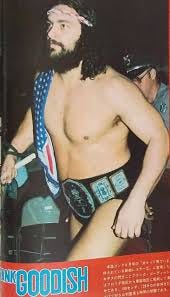
Pictured: Frank Goodish, NWA Florida Heavyweight Champion
The match featured Patterson’s agile strikes and holds countering Goodish’s overpowering offense—perhaps a mix of chain wrestling, brawling outside the ring, and dramatic near-falls that thrilled the audience. Patterson’s win was clean, underscoring his technical edge over the raw, emerging talent of Goodish. For Patterson, the victory was a brief but meaningful affirmation of his star power in Florida, where he held the title for just over a month before losing it to Pak Song on March 17 in Miami.

Pictured: Thunderbolt Patterson, NWA Florida Heavyweight Champion
It added to Patterson’s legacy as a champion who fought not just in the ring but for the sport’s integrity, in which he had influenced future stars like Dusty Rhodes who adopted elements of his promo style. For Goodish, the loss was an early chapter in a career that would see him become one of wrestling’s most enigmatic figures, freelancing across promotions and achieving fame in Japan with All Japan Pro Wrestling before his tragic murder in 1988.
In the Florida territory, this title change was part of a whirlwind period; the belt would soon pass to Jack Brisco shortly after, reflecting the rapid booking typical of the NWA’s regional system.
Thank You for Reading
I’m Tony Richards, Pro Wrestling Historian, Author and Storyteller. I share pro wrestling historical items in each issue of the Time Tunnel Pro Wrestling History Newsletter. Thanks for reading! If you enjoy my information on select events, matches and insights, please share it with folks you think might like to be a subscriber!
Remember, premium investors get access to exclusive and special content such as some special issues including a multi-part deep dives on wrestling territories, wrestler bios and championship title histories, special audio and video interviews on territory pro wrestling and more available in the Pro Wrestling Time Tunnel for Premium Investors.