


Happy Birthday to those who have passed on and to those great wrestlers still with us:
In Memoriam:
Ski Hi Lee 1910
Corsica Jean 1921
Kerry Von Erich 1960
Happy Birthday:
Dory Funk, Jr (85)
Marty Jennetty (66)
RIP Memorial: We stop & remember those who have passed on this day and gave themselves to the business for us, the fans. We salute you and thank you.
Dick Trout 2-3-1964 at the age of 53

Mickey Baarnes 2-3-1996 at the age of 77
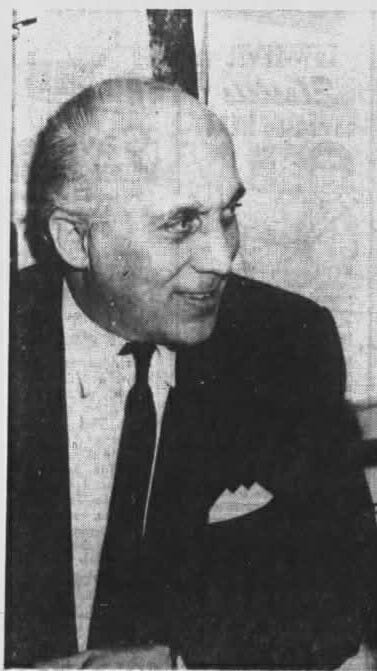
Nelson Royal 2-3-2002 at the age of 66
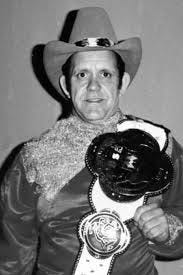
50 Year Flashback
2-3-1976: Eddie Sullivan defeated Bob Sweetan (ch) to win the NWA Gulf Coast Championship at the Exhibition Hall in Mobile, Alabama
Eddie Sullivan, born Edward Wiskoski in 1940, had been a mainstay in professional wrestling since the early 1960s. Nicknamed “Sensational” for his charismatic style and technical prowess, Sullivan was a journeyman who competed across various promotions, often portraying a heroic figure with a no-nonsense attitude. By 1976, he had already amassed an impressive resume, including stints in Japan and multiple tag team championships. However, his return to the Gulf Coast territory after a 16-month hiatus injected fresh energy into the scene. Sullivan was portrayed as a resilient underdog, a “tough guy” who resonated with blue-collar audiences in Alabama and surrounding states.

Pictured: Eddie Sullivan, NWA Gulf Coast Heavyweight Chamption
In contrast, Bob Sweetan, known as “Bruiser” for his aggressive, heelish tactics, was the dominant force holding the NWA Gulf Coast Heavyweight Title. Sweetan, a Canadian wrestler with a reputation for brawling and rule-breaking, had captured the belt earlier and defended it with a mix of brute force and cunning alliances. His reign was marked by controversy, often involving tag team partners like Gene Lewis, and he embodied the villainous archetype that fans loved to hate.

Pictured: Bob Sweetan
The build-up to the February 3 match was a classic wrestling feud, rooted in escalating confrontations that spanned several weeks. Sullivan’s return sparked immediate tension when he teamed with longtime ally Rip Tyler to challenge Sweetan and Lewis in a tag team bout. The initial encounter descended into chaos, ending in a four-way disqualification due to the sheer brutality involved—chairs, punches, and referee interventions couldn’t contain the animosity. A rematch followed, where Sullivan and Tyler emerged victorious, with Sullivan securing the pin on Sweetan. This loss infuriated the champion, who, desperate for revenge, publicly demanded a one-on-one showdown. In a bold move to lure Sullivan into the ring, Sweetan offered to put his Gulf Coast title on the line, turning the personal grudge into a championship affair. Promotional hype in local newspapers and on GCCW television broadcasts amplified the stakes, portraying Sullivan as the returning hero seeking justice against Sweetan’s tyrannical rule.
The match, held before a fervent crowd at Mobile’s Exposition Hall, was a “savage battle” that lived up to the territory’s reputation for hard-hitting action. While detailed blow-by-blow accounts from the era are scarce, reports describe it as a rough, no-holds-barred contest blending technical wrestling with brawling elements. Sullivan, leveraging his experience and fan support, countered Sweetan’s power moves with precision holds like the Boston Crab, a signature maneuver that had won him matches in the past. Sweetan, true to his bruiser moniker, relied on illegal tactics and raw strength, but Sullivan’s determination prevailed. In a climactic finish, Sullivan pinned Sweetan to capture the NWA Gulf Coast Heavyweight Title, his first singles championship in the territory after nearly a decade of appearances there.
Sullivan successfully defended his new heavyweight belt against challengers like Don Carson, a returning veteran, in a grueling match that earned him a shot at the prestigious NWA World Heavyweight Title. That opportunity came against champion Terry Funk in a 35-minute epic, where Sullivan pushed the limits but ultimately fell short via a roll-up pin. Despite the loss, Sullivan’s performance garnered a standing ovation, boosting his popularity and cementing his status as a territorial star. Sweetan, meanwhile, faded from the spotlight in the immediate wake, though he would continue wrestling elsewhere.
2-3-1976: Ole & Gene Anderson defeated Rufus R. Jones & Wahoo McDaniel to re-capture the NWA World Tag Team Championships at The Dorton Arena in Raleigh, North Carolina
Known collectively as the Minnesota Wrecking Crew, Ole and Gene Anderson had been a staple in the NWA since the early 1970s, employing a ruthless, no-nonsense style that emphasized brawling, double-teaming, and strategic interference. By 1975, they had already captured the NWA World Tag Team Titles twice, first in January of that year via a tournament and again in June after defeating Paul Jones and Wahoo McDaniel. Their reigns were characterized by defensive battles against top babyface teams, solidifying their reputation as heels who would do anything to retain power. The Andersons’ chemistry was unmatched; they moved as a unit, with Gene often providing the powerhouse offense and Ole delivering cunning tactics.

Pictured: Gene and Ole Anderson
On the other side of the ring stood Rufus R. Jones and Wahoo McDaniel, a dynamic duo whose partnership was forged in the fires of opportunity and mutual respect. Rufus R. Jones, an African American trailblazer in wrestling, was beloved for his charismatic persona and signature “Freight Train” headbutts that could level opponents. A veteran of the ring, Jones brought energy and resilience, often rallying crowds with his underdog spirit. Wahoo McDaniel, a former NFL player of Native American heritage (Choctaw-Chickasaw), was a fan favorite known for his devastating knife-edge chops and football-inspired toughness. McDaniel had previously held the titles with Paul Jones in 1975, showcasing his prowess as a tag team specialist. Together, Jones and McDaniel represented a formidable alliance of power and agility, appealing to audiences with their heroic stand against the Andersons’ villainy.

Pictured: Rufus R. Jones and Wahoo McDaniel, NWA World Tag Team Champions
The buildup to the February 3 encounter was swift and intense, stemming from a shocking title change just one week prior. On January 27, 1976, in Columbia, South Carolina, Jones and McDaniel pulled off an upset victory over the Andersons in a best-two-out-of-three-falls match, dethroning the champions and claiming the NWA World Tag Team Titles for the first time as a team. This win was seen as a momentary triumph for the babyfaces, injecting fresh excitement into the territory. However, the Andersons, ever the resilient heels, demanded a rematch, capitalizing on their established dominance and the promotion’s penchant for quick title flips to keep storylines engaging. The rematch was set for Raleigh’s Dorton Arena, a venue synonymous with MACW events, where thousands of fans packed the seats to witness what promised to be a brutal confrontation.
Ole and Gene Anderson outmaneuvered their opponents, leveraging their experience and underhanded strategies to secure the victory and reclaim the championships after just seven days out of possession. The bout featured McDaniel’s signature chops clashing with the Andersons’ double-team assaults, Jones’ headbutts attempting to turn the tide, and perhaps a controversial finish involving referee interference or a timely pinfall. The crowd at Dorton Arena, a staple for high-stakes MACW cards had the Dorton Arena erupting in a mix of boos for the heels’ win and cheers for the valiant effort by Jones and McDaniel.
The aftermath of this title recapture extended the Andersons’ influence in the territory, leading to a 92-day reign that included defenses against formidable challengers like the Mongols (Geeto and Bolo) in a series of inter-promotional clashes. This period solidified their status as one of the greatest tag teams in NWA history, with Ole later transitioning into booking roles and Gene continuing as a ring veteran. For Jones and McDaniel, the loss was a setback but not the end; both went on to successful singles careers, with McDaniel feuding memorably against Ric Flair and others, and Jones becoming a beloved figure in Mid-Atlantic lore.
One Thing I Learned About Dick Trout
He was a wrestler from the mid-20th century who also went by Sailor Trout and was born in Sharon, Tennessee, competed at 190 pounds despite his relatively short stature of 5’9”.
Thank You for Reading
I’m Tony Richards, Pro Wrestling Historian, Author and Storyteller. I share pro wrestling historical items in each issue of the Time Tunnel Pro Wrestling History Newsletter. Thanks for reading! If you enjoy my information on select events, matches and insights, please share it with folks you think might like to be a subscriber!
Remember, premium investors get access to exclusive and special content such as some special issues including a multi-part deep dives on wrestling territories, wrestler bios and championship title histories, special audio and video interviews on territory pro wrestling and more available in the Pro Wrestling Time Tunnel for Premium Investors.