


Happy Birthday to those who have passed on and to those great wrestlers still with us:
In Memoriam:
Charlie Cutler 1884
John Pesek 1894
Ray St. Clair\Tinker Todd 1928
Jack Veneno 1942
Happy Birthday:
Genichiro Tenryu (76)
Sue Sexton (68)
Naoki Sano (61)
Abraham Washington (48)
Brian Cage (42)
Isla Dawn (32)
RIP Memorial: We stop & remember those who have passed on this day and gave themselves to the business for us, the fans. We salute you and thank you.
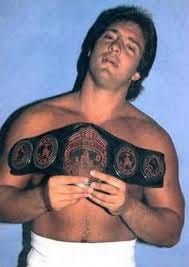
Charles Wolfe\Gino Hernandez 2-2-1986 at the age of 28
Jim Wilson 2-2-2009 at the age of 66

Tom Drake 2-2-2017 at the age of 86

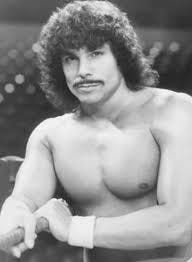
Lanny Poffo 2-2-2023 at the age of 68
**Programming Note: Special Bonus Podcast Episode for February 2026

I am very excited to announce that we have a special bonus episode of The Pro Wrestling Time Tunnel History Show dropping this month in February to commemorate the 40th anniversary of the passing of Gino Hernandez. Known as “The Handsome Half-Breed”, Hernandez’ star was on the rise in 1986 when he was found dead in his apartment, apparently from a drug overdose, at only 28 years old and a promising career ahead. Many have challenged the drug overdose story. I will have the author of the Gino Hernandez biography, “I Am Your Champion”, Lizzy Flanagan joining me on the show to talk about her journey as a wrestling historian, the book and the life of Gino Hernandez. I will be releasing a special programming note to let you know when to expect this special show to be available in the Pro Wrestling Time Tunnel.
Two Tag Team Championships Change Hands In Jim Crockett Promotions, 20 Years Apart, Both Taped For Television
60 Year Flashback
2-2-1966: Bronko Lubich & Aldo Bogni defeated George Becker & Johnny Weaver (ch) to win the NWA Southern Tag Team Championships at the television tapings at WRAL-TV in Raleigh, North Carolina
On February 2, 1966, at a television taping held at WRAL-TV studios in Raleigh, North Carolina, the villainous duo of Bronko Lubich and Aldo Bogni achieved a shocking victory by defeating the beloved fan favorites George Becker and Johnny Weaver to capture this prestigious championship. This match not only marked a pivotal title change but also exemplified the heated rivalries that defined Mid-Atlantic wrestling during this period.
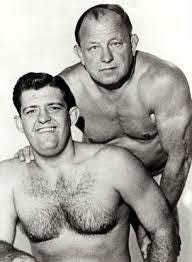
Pictured: George Becker and Johnny Weaver
George Becker, born in 1914, was a veteran of the ring with a storied career spanning decades. Known for his technical prowess and resilience, Becker had already amassed an impressive record, holding the NWA Southern Tag Team Championship a record 23 times across various partnerships. His teaming with Johnny Weaver, a North Carolina native born in 1935, formed one of the most iconic babyface (hero) tandems in the territory. Weaver, with his charismatic presence and innovative moves like the “Weaver Lock” (a modified sleeper hold), complemented Becker’s experience perfectly. Together, they had captured the titles for the first time on September 9, 1965, in Greensboro, North Carolina, after dethroning Lubich and Bogni in their initial reign. Becker and Weaver represented the everyman heroes—hardworking, honorable, and adored by the blue-collar fans who tuned in weekly to see them defend justice in the squared circle.

Pictured: Bronko Lubich, Colonel Homer O’Dell and Aldo Bogni
On the opposing side stood the heels. Bronko Lubich and Aldo Bogni, a formidable pair managed by the cunning Colonel Homer O’Dell. Lubich, born Bronko Sandor Lupsity in 1925 in Hungary, was a rugged grappler who emigrated to Canada and later became a staple in American wrestling circuits. His partnership with Bogni, often billed as an Italian strongman, was built on brute force, underhanded tactics, and O’Dell’s managerial interference, which included using his ever-present cane as a weapon. The duo had been billed as champions upon their arrival in the Mid-Atlantic territory in May 1965, claiming titles from prior stints in Florida and other regions. Their style was the antithesis of Becker and Weaver’s: sneaky, aggressive, and designed to incite boos from the audience. Throughout 1965, Lubich and Bogni engaged in a bitter feud with Becker and Weaver, trading victories in house shows and building tension through promos and skirmishes that spilled over into television tapings.
The rivalry reached its boiling point in early 1966. Becker and Weaver had held the NWA Southern Tag Team Titles for nearly five months, defending them successfully against various challengers and solidifying their status as the territory’s top team. However, Lubich and Bogni, with O’Dell’s scheming, positioned themselves for a rematch. The stage was set at WRAL-TV in Raleigh, a modest studio that hosted “Championship Wrestling,” the weekly program that brought the action into living rooms across the Carolinas. These tapings were crucial for building storylines, as they allowed promoters to capture dramatic moments that would air later, hyping live events in cities like Charlotte, Greensboro, and Richmond.
Becker and Weaver started strong, using their synergy to control the early pace with chain wrestling, dropkicks, and crowd-pleasing comebacks. Lubich and Bogni, however, relied on their manager’s distractions and illegal double-teaming to turn the tide. O’Dell’s involvement was key, as he often interfered to aid his charges, drawing ire from the fans and referees alike. In a controversial finish, Lubich and Bogni capitalized on the chaos to pin their opponents, securing the victory and the titles. This marked the second reign for the villainous pair in the Mid-Atlantic version of the championship, a testament to their persistence and the promoters’ desire to keep the feud alive for future gates. The aftermath of this title change rippled through the territory. Becker and Weaver, undeterred, continued to chase the belts, leading to more intense confrontations with Lubich, Bogni, and O’Dell. Their feuds often involved six-man tags or special stipulations, such as matches where O’Dell was barred from ringside or placed in a cage to prevent interference.
This victory elevated Lubich and Bogni’s status as top antagonists, allowing them to draw heat (negative crowd reaction) that packed houses for months. For Becker and Weaver, the loss added layers to their heroic narrative, setting up triumphant returns that would see them reclaim the titles multiple times in the coming years—ultimately achieving seven combined reigns together, with their longest at 284 days. The NWA Southern Tag Team Championship itself would evolve, eventually being renamed the NWA Atlantic Coast Tag Team Championship in 1967, but this 1966 transition remained a highlight of its history.
My friend and Tragos\Thesz Hall of Fame journalist, Mike Mooneyham has said that his first exposure to wrestling was around this time and the first heel team he ever saw on television were Lubich and Bogni.1 “Lubich, in particular, cast an imposing figure. Not a large man in stature, with dark, close-cropped hair and well-groomed mustache, he moved methodically in the ring, contemplating his bigger, lumbering partner. What set him apart, though, was a hold he called “the corkscrew” that rendered his opponents helpless and unconscious. And it was as painful as it sounded, with Lubich digging his knuckles into his foe’s temple until the unfortunate wrestler eith submitted or blacked out.” Mooneyham admitted he utilized the hold himself on other kids when there was a battle in the local schoolyard, but he says, it was only a defensive measure.
Mooneyham says that Lubich and Bogni both were excellent heels because they understood the psychology that made the fans hate them.
40 Year Flashback
2-2-1986: The Midnight Express (Condrey\Eaton) defeated The Rock & Roll Express (Morton\Gibson) (ch) to win the NWA World Tag Team Championship at the Omni in Atlanta, Georgia
The Midnight Express, consisting of “Beautiful” Bobby Eaton and “Loverboy” Dennis Condrey, managed by the charismatic and conniving Jim Cornette, embodied the quintessential heel tag team—slick, ruthless, and always ready to bend the rules. In contrast, the Rock ‘n’ Roll Express, featuring the high-flying Ricky Morton and the resilient Robert Gibson, represented the babyface heroes: energetic, crowd-pleasing underdogs who thrived on speed, teamwork, and heart. Their battles, which spanned promotions like Mid-South Wrestling and Jim Crockett Promotions (JCP) under the National Wrestling Alliance (NWA), were masterclasses in tag team psychology, blending athleticism with storytelling that kept audiences on the edge of their seats. This rivalry reached a pivotal moment on February 2, 1986, when the two teams clashed not once, but twice in a grueling doubleheader—first in the afternoon in Charlotte, North Carolina, and later that evening in Atlanta, Georgia, where the NWA World Tag Team Titles changed hands in dramatic fashion.

Pictured: The Rock & Roll Express, Ricky Morton and Robert Gibson, NWA world Tag Team Champions with Tony Schiavone
The roots of this epic confrontation traced back to late 1985, when the Rock ‘n’ Roll Express captured the NWA World Tag Team Championships from Ivan and Nikita Koloff at Starrcade ‘85. Meanwhile, the Midnight Express had been honing their craft, using Cornette’s infamous tennis racket as a weapon and employing dirty tactics to dominate opponents. By early 1986, the feud had reignited in JCP, with the Midnights attacking the Rock ‘n’ Roll Express during television tapings, setting the stage for a series of intense encounters. What made February 2 particularly remarkable was the scheduling: a matinee house show in Charlotte followed by an evening television taping in Atlanta. This double booking tested the endurance of both teams, highlighting the demanding nature of the wrestling circuit in that era.
The afternoon bout in Charlotte, North Carolina in front of 12,000 fans and drawing a $101,000 house, was a non-televised house show that served as a prelude to the night’s main event. As the reigning NWA World Tag Team Champions, Morton and Gibson entered with the belts, facing off against Eaton and Condrey in a match filled with the signature back-and-forth action that defined their rivalry. The Midnight Express struck first, seemingly securing the titles when Eaton pinned Gibson using Cornette’s tennis racket behind referee Tommy Young’s back. However, Young, suspecting foul play, ordered the match to continue. This restart allowed the Rock ‘n’ Roll Express to rally, with Morton ultimately pinning Eaton via a sunset flip into the ring to retain the championships.
That evening in Atlanta, Georgia, at the Omni Coliseum with 10,000 fans paying $60,000, the stakes were elevated for a match taped for TBS’s “Superstars on the Superstation” special, which aired February 7. The Rock ‘n’ Roll Express, still holding the titles after their Charlotte victory, started strong with their trademark high-energy offense. They dominated the early shine phase, using rope throws, double dropkicks, and innovative teamwork like leg work on Condrey and a sunset flip attempt that involved both partners assisting. The Midnight Express struggled to gain momentum, but hope spots emerged, such as Eaton’s powerful corner strikes on Morton and a catapult maneuver that led to double-team attacks on Gibson. The match followed the classic Southern tag team formula: the babyfaces building crowd heat through comebacks, only for the heels to cut off the ring with chinlocks and isolation tactics.

Pictured: The Midnight Express, Bobby Eaton, Jim Cornette and Dennis Condrey, NWA World Tag Team Champions
As the action intensified past the 10-minute mark, chaos ensued. A referee bump created an opening for interference, with Cornette playing a pivotal role. In the frenzy, the Midnight Express capitalized on the disarray—Condrey walloped Morton, and Cornette pulled Eaton on top for the controversial pinfall. This underhanded victory marked the end of the Rock ‘n’ Roll Express’s reign, as Eaton and Condrey were crowned the new NWA World Tag Team Champions. The Atlanta crowd, already electric from the day’s wrestling buzz, reacted with a mix of shock and outrage, solidifying the Midnights as despised villains and hated heels.
Thank You for Reading
I’m Tony Richards, Pro Wrestling Historian, Author and Storyteller. I share pro wrestling historical items in each issue of the Time Tunnel Pro Wrestling History Newsletter. Thanks for reading! If you enjoy my information on select events, matches and insights, please share it with folks you think might like to be a subscriber!
Remember, premium investors get access to exclusive and special content such as some special issues including a multi-part deep dives on wrestling territories, wrestler bios and championship title histories, special audio and video interviews on territory pro wrestling and more available in the Pro Wrestling Time Tunnel for Premium Investors.
Pgs 168-169 Final Bell by Mike Mooneyham