



Happy Birthday to those who have passed on and to those great wrestlers still with us:
In Memoriam:
George Temple 1919
Jean Holland 1923
Gary Hart 1942
Michael Alfonso\Mike Awesome 1965
Happy Birthday:
Akira Maeda (67)
Reggie Bennett (65)
RIP Memorial: We stop & remember those who have passed on this day and gave themselves to the business for us, the fans. We salute you and thank you.
Bull Montana 1-24-1950 at the age of 62
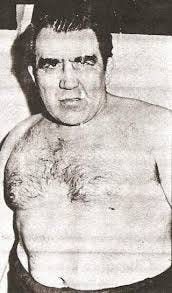
Dick Daviscourt 1-24-1960 at the age of 72

Orville Brown 1-24-1981 at the age of 68

Dr. Jerry Brown 1-24-1997 at the age of 68

Jack Tunney 1-24-2004 at the age of 69
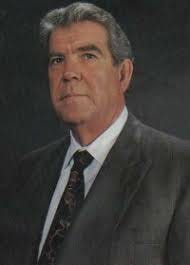
Tommy Marlin 1-24-2018 at the age of 85

Ken Raper 1-24-2022 at the age of 67

The Life and Career of Orville Brown
Born in the rural heartland of America, Brown rose from humble beginnings to become the inaugural National Wrestling Alliance (NWA) World Heavyweight Champion, only to have his in-ring career cut short by a devastating accident. His transition to promotion helped shape the wrestling landscape in the Midwest, leaving a lasting legacy in the sport. This essay explores Brown’s early life, his ascent in wrestling, key achievements, the pivotal events that ended his competing days, his promotional endeavors, and his enduring impact.
Orville Brown was born on March 10, 1908, in Sharon, Kansas, as the youngest of five children to Clarence and Ellen Brown. His childhood was fraught with hardship; his father left the family shortly after his birth due to threats from relatives, and his mother passed away in 1919, leaving him orphaned at age 11. Brown was passed among family members, working on farms to earn his keep, including breaking horses and performing field labor. He attended only one year of high school, prioritizing work over education, but excelled in football as a freshman.
By his late teens, Brown became a professional rodeo cowboy, competing in bronco riding and steer bulldogging events across Kansas and beyond. In 1927, at the Briggs Ranch Rodeo, he made history as the first cowboy to bulldog a buffalo from horseback. However, as he grew heavier, rodeo became impractical, leading him to farm work and blacksmithing in Wallace, Kansas. It was there, in early 1931, that he met Ernest Brown (no relation), a local wrestling trainer who recognized his powerful build and convinced him to enter the ring. Orville trained rigorously—running mornings, blacksmithing days, and practicing mat work evenings—at Wallace High School.
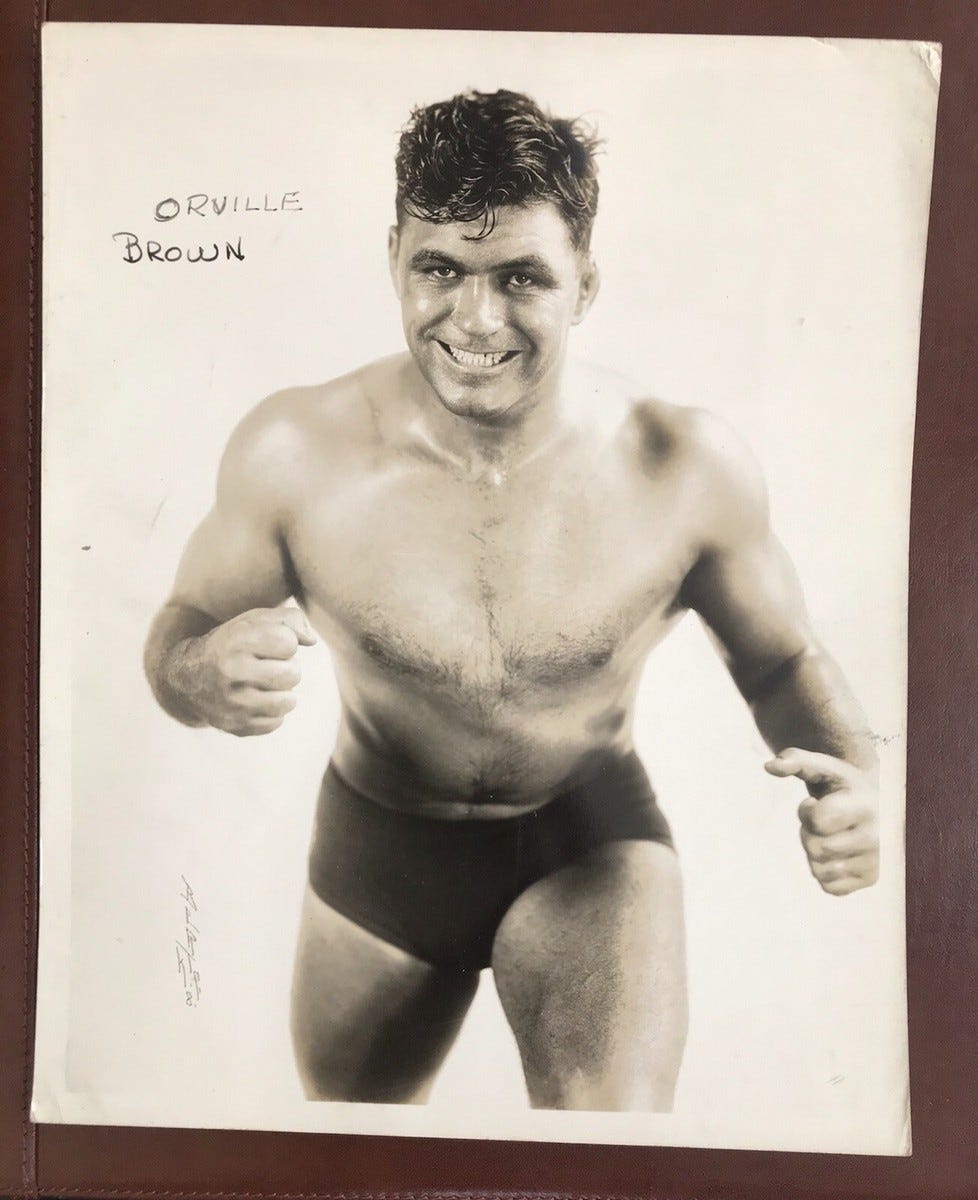
Brown’s personal life provided stability amid his nomadic early years. He eloped with Grace Charlotte Springer on October 13, 1927, and they had one son, Richard, born on July 17, 1929. Grace and Richard often accompanied him, with family photos featured in newspapers to bolster his image as a wholesome, family-oriented cowboy wrestler.
Brown’s wrestling debut came in October 1931, kicking off an unbeaten streak of 72 matches, many against local farmers and town champions in shoot-style bouts common in the Midwest. On September 2, 1932, he captured the Kansas State Heavyweight Championship by defeating Allen Eustace, a veteran shooter. Realizing fans preferred worked professional style over amateur shoots, Brown parted ways with his trainer and sought opportunities in pro wrestling.
Recommended by Abe Coleman, Brown impressed promoter Tom Packs in St. Louis, debuting with a win over Ivan Vacturoff on June 8, 1933. He trained in Baltimore with George Zaharias and quickly rose, wrestling draws against top stars like Dick Shikat, Gino Garibaldi, and Jim Browning. Billed as a former Kansas cowboy (and sometimes fictitiously as a USC Trojan football player), Brown gained fame in the 1930s, facing legends like Jim Londos and Ed “Strangler” Lewis.
In 1934–1935, Brown challenged Londos multiple times, including high-drawing matches in Detroit that set attendance records. He also drew with Lewis and defeated Ray Steele, establishing himself as a title contender. By 1937, working for Al Haft in Columbus, Ohio, Brown challenged for the Midwest Wrestling Association (MWA) World Heavyweight Championship and wrestled John Pesek in notable bouts, including a 1938 match drawing over 10,000 fans.
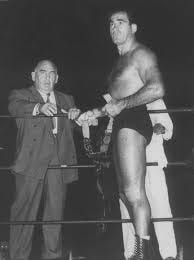
Pictured: NWA World Heavyweight Champion, Orville Brown and Stangler Ed Lewis
Brown’s dominance peaked in the 1940s. He captured the MWA World Heavyweight Championship (Kansas version) a record 11 times between 1940 and 1948, defeating opponents like Bobby Bruns, Lee Wyckoff, Tom Zaharias, Swedish Angel, Roy Graham, and Tug Carlson. He also won the MWA (Ohio) version once from Dick Shikat on June 27, 1940. In July 1940, when the MWA was absorbed into the newly formed NWA, Brown was awarded the NWA World Heavyweight Championship. He was recognized as the first official NWA champion in 1948 by promoters including Pinkie George. A key moment came on March 15, 1949, when Brown unified titles by defeating Frank Sexton for the American Wrestling Alliance Heavyweight Championship. Overall, he was a thirteen-time world champion, retiring undefeated as champion.
Tragedy struck on November 1, 1949, when Brown was involved in a severe car accident en route to a show, sustaining injuries that ended his wrestling career. He was scheduled to face Lou Thesz in a title unification match on November 25, but could not compete; Thesz was awarded the belt. Brown officially retired in 1950, at the height of his powers.
Undeterred, Brown pivoted to promotion. He took control of the Kansas City territory in 1940, expanding it to include St. Joseph, Topeka, and other areas. As a promoter for the MWA (later Heart of America Sports Attractions), he booked from 1948 until 1958, when Bob Geigel took over. Brown also served as Thesz’s handler during title reigns and helped expand the NWA. He remained active as a successful promoter until retiring in 1964, finding satisfaction in mentoring wrestlers and managing events.
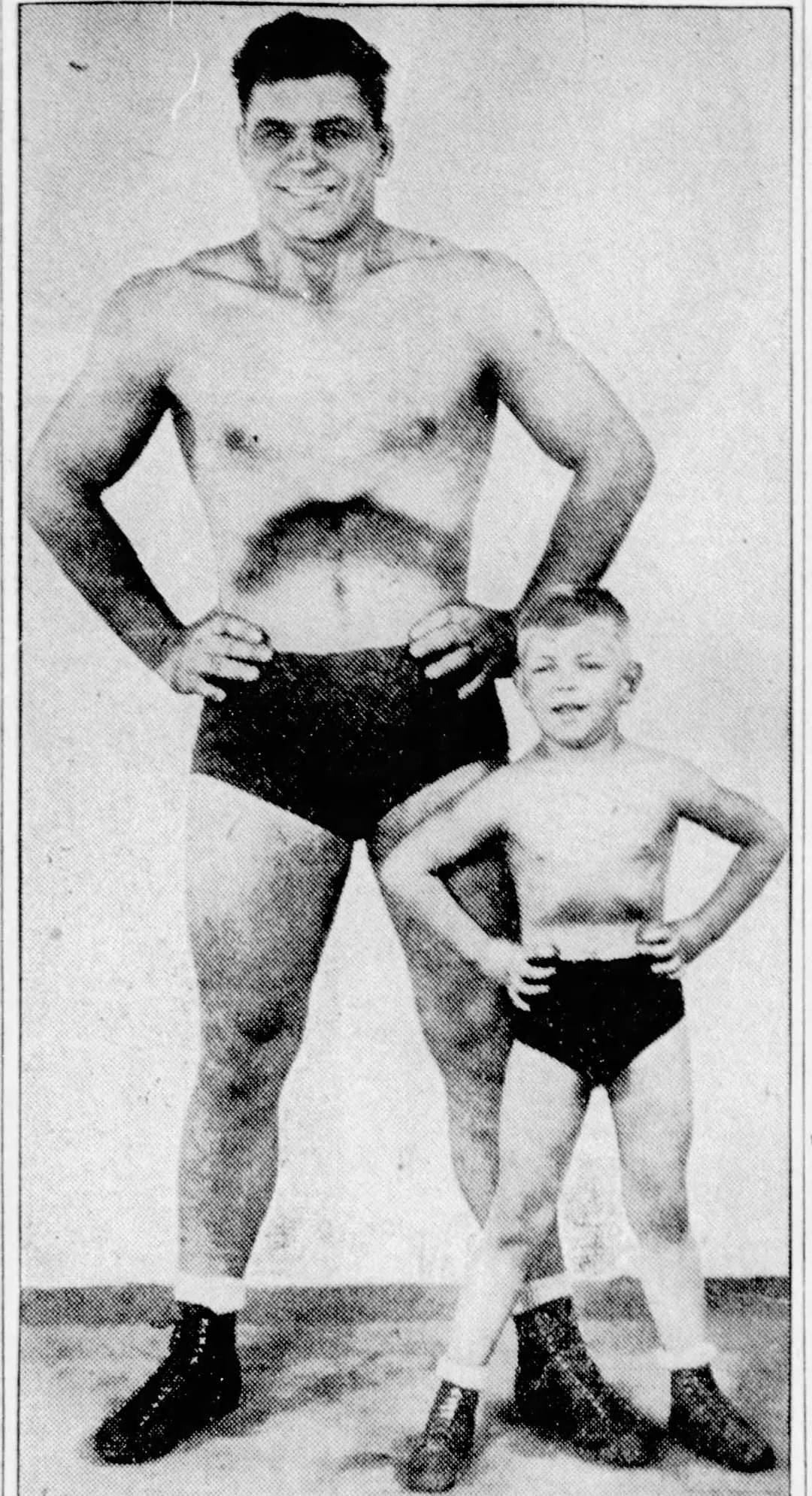
Pictured: Orville Brown and 5-year old son, Richard in the 1930s
Brown resided in Lee’s Summit, Missouri, with Grace until his death on January 24, 1981, at age 72. Their marriage endured 53 years, and son Richard followed in his footsteps as a wrestler. Brown’s legacy endures as a pioneer. Inducted into the Professional Wrestling Hall of Fame in 2005 (Pioneer Era) and honored by the Cauliflower Alley Club in 2008, he is celebrated for unifying championships and promoting wrestling’s growth.
One Thing I Learned About Playboy Gary Hart
Hart’s real name is Gary Williams. Keeping his first name, he got the pro wrestling last name Hart from a soldier named Hart Key, who saved the life of Gary’s uncle when they were both in the Korean War.

Thank You for Reading
I’m Tony Richards, Pro Wrestling Historian, Author and Storyteller. I share pro wrestling historical items in each issue of the Time Tunnel Pro Wrestling History Newsletter. Thanks for reading! If you enjoy my information on select events, matches and insights, please share it with folks you think might like to be a subscriber!
Remember, premium investors get access to exclusive and special content such as some special issues including a multi-part deep dives on wrestling territories, wrestler bios and championship title histories, special audio and video interviews on territory pro wrestling and more available in the Pro Wrestling Time Tunnel for Premium Investors.