


Happy Birthday to those who have passed on and to those great wrestlers still with us:
In Memoriam:
Jack Carkeek 1861
Pinkie George 1905
ules Strongbow 1906
Sonny Myers 1924
Anthony Pugliese\Tony Parisi 1941
Happy Birthday:
Tully Blanchard (72)
Rita Chatterton (69)
Alfred Polling\911 (69)
Masa Takanashi (43)
RIP Memorial: We stop & remember those who have passed on this day and gave themselves to the business for us, the fans. We salute you and thank you.
Billy Edwards 1-22-1941 at the age of 51

Jerry Blackwell 1-22-1995 at the age of 45
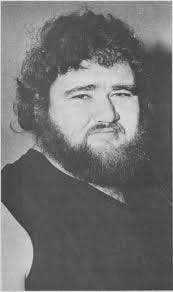
Al Costello 1-22-2000 at the age of 80
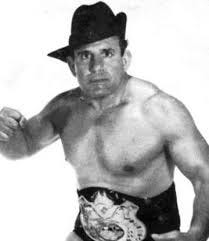
Hercules Ayala 1-22-2020 at the age of 69
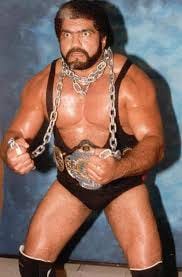
Ed Wiskowski\Colonel DeBeers 1-22-2025 at the age of 80
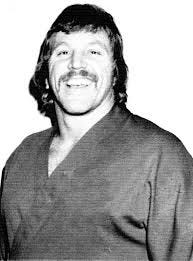
40 Year Flashback
1-21-1986: Buddy Landel defeated Koko Ware (ch) for the Mid-America Heavyweight Title at the Gardens in Louisville, Kentucky
Adopting the “Nature Boy” moniker—a nod to the legendary Ric Flair—Landel exuded arrogance and flair, often entering the ring in lavish robes and boasting about his superiority. By 1986, he had already established himself in the CWA, having previously held the Mid-America Heavyweight Title twice before. His style was a blend of technical prowess and brawling aggression, making him a formidable opponent who thrived on mind games and opportunistic strikes. Landel’s return to the CWA earlier that month, after a stint in Jim Crockett Promotions the previous year, set the stage for his pursuit of gold.
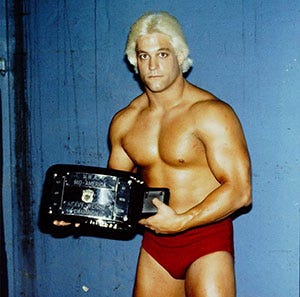
Pictured: Buddy Landel Mid-America Heavyweight Champion
Opposing him was Koko B. Ware, a fan-favorite known for his high-flying maneuvers and charismatic entrance accompanied by his macaw, Frankie. Born James Ware on June 20, 1958, in Union City, Tennessee, Koko had transitioned from a tag team specialist to a singles competitor by the mid-1980s. He captured the Mid-America Heavyweight Championship for his sixth time on November 16, 1985, in Memphis, and defended it successfully leading up to the Louisville clash. Ware’s aerial assaults, including his signature missile dropkick, made him a thrilling champion, but his reign was under constant threat in the competitive CWA landscape, where stars like Jerry Lawler and Bill Dundee often headlined.
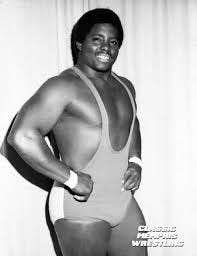
Pictured: Koko Ware
The buildup involved heated promos and prior confrontations, as Landel positioned himself as the cocky challenger. On that winter evening, the Louisville Gardens buzzed with anticipation as Landel and Ware locked up. The bell rang, and the two circled each other warily, the crowd’s cheers for Koko drowning out the boos aimed at the smirking Landel. Ware, ever the agile showman, started strong with a quick arm drag that sent Landel sprawling across the mat, followed by a series of crisp dropkicks that had the Nature Boy reeling against the ropes.
But Landel, true to his heel nature, wasn’t about to let the high-flyer dictate the pace. As Ware ascended the turnbuckle for an early aerial assault, Landel shook off the cobwebs and yanked the referee’s attention, allowing him to sneak in a low blow that brought Koko crashing down in agony. The crowd erupted in jeers as Landel stomped away mercilessly, grinding his boot into Ware’s midsection before locking in a figure-four leglock mid-ring. Koko writhed in pain, his face contorted, but the fans’ chants fueled his comeback—he reversed the hold, flipping Landel over and breaking free to a massive pop.
The action spilled outside the ring, where Landel rammed Ware’s head into the steel post, drawing a trickle of blood that only fired up Koko more. Back inside, Ware mounted a furious rally: a missile dropkick from the top rope staggered Landel, followed by a brainbuster that nearly ended the match with a two-count. The champion went for his patented Ghostbuster—a swinging neckbreaker—but Landel countered mid-move, shoving Ware into the referee and creating chaos. Seizing the moment, Landel grabbed a foreign object from his tights and cracked Koko across the skull while the ref recovered.
Dazed and bleeding, Ware struggled to his feet, but Landel pounced with a vicious piledriver, driving Koko’s head into the canvas with authority. The Nature Boy then covered for the pin: one... two... three! The bell tolled, and Landel snatched the title belt from the ringside attendant, parading around the ring with a triumphant grin as boos rained down. After this hard-fought battle, Landel emerged victorious, pinning Ware to claim his third reign as champion.
50 Year Flashback
1-20-1976: The Poffo Brothers (Randy\Lanny) defeated The British Bulldogs (Foley\Heath) (ch) for the NWA Gulf Coast Tag Team Championship at the Exposition Center in Mobile, Alabama
The Poffo Brothers entered the wrestling scene as a familial powerhouse, drawing on their athletic backgrounds and the influence of their father, Angelo Poffo, a veteran wrestler known for his toughness and longevity in the ring. Randy, the elder brother born in 1952, had transitioned from a brief stint in minor league baseball to wrestling, debuting in 1973. Lanny, two years his junior, followed suit, and together they formed a tag team that emphasized agility, technical prowess, and raw intensity. By early 1976, they had already made waves in GCCW, earning a shot at the titles after a strong showing in a four-team tournament. Their style blended high-flying maneuvers with brawling grit, making them fan favorites in the Southern circuit where storytelling and physicality reigned supreme.

Pictured: Randy and Lanny Poffo
Opposing them were the original British Bulldogs, a duo not to be confused with the more famous 1980s incarnation featuring Dynamite Kid and Davey Boy Smith. This original version, active in the mid-1970s, consisted of British expatriates John Foley and Ted Heath, who adopted aristocratic gimmicks as Lord Jonathan Foley and Sir Edward Heath. They embodied the classic “heel” archetype—arrogant foreigners with a stuffed bulldog mascot named Winston, playing on British stereotypes to rile up American audiences. Their wrestling was rooted in traditional catch-as-catch-can techniques, emphasizing holds, submissions, and chain wrestling, which contrasted sharply with the Poffos’ more dynamic approach. The Bulldogs had captured the Gulf Coast Tag Team Titles earlier in the territory’s booking cycle and defended them successfully, including a retention just a week prior on January 13, 1976, solidifying their status as dominant champions.
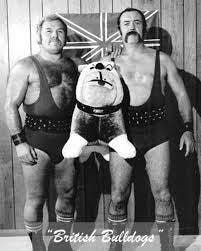
Pictured: The Original British Bulldogs, Ted Heath and John Foley
The match was a classic territorial showdown, blending athleticism with narrative flair. The Poffos, as challengers, started strong, leveraging their brotherly synergy to outmaneuver the Bulldogs’ technical holds. After a back-and-forth first fall, the champions gained the upper hand, but the Poffos rallied in the subsequent falls. The decisive moment came when Lanny Poffo pinned Sir Edward Heath, securing a 2-1 victory and the title change. This win was not just a pinfall; it represented the passing of the torch in GCCW, where bookers like Rip Tyler often orchestrated such shifts to refresh storylines. The crowd’s eruption underscored the territory’s passionate fanbase, who appreciated the underdog narrative of two young brothers toppling established heels.
For the Poffos, it was an early validation of their potential. Randy would go on to achieve superstardom as Macho Man, winning multiple world titles and becoming a WWE Hall of Famer, while Lanny found success as “Leaping” Lanny Poffo and later “The Genius.” The original British Bulldogs, though overshadowed by their later namesakes, contributed to wrestling’s rich tapestry, influencing tag team dynamics in regional promotions. Their loss on January 20 led to further feuds, including a double disqualification rematch on February 17, 1976, keeping the rivalry alive.
1-20-1976: Two Title Changes in Florida at the Fort Homer Hesterly Armory in Tampa, Florida
The Missouri Mauler (Larry Hamilton) defeated Big Bad John for the NWA Florida Television Title
Bob Roop & Bob Orton, Jr defeated Eddie & Mike Graham (ch) for the NWA Florida Tag Team Championship
The Fort Homer Hesterly Armory in Tampa, Florida, played host to a memorable CWF event that drew an enthusiastic crowd of 3,500 fans. This venue, a staple for Florida wrestling since the 1950s, was known for its intimate atmosphere and raucous audiences, often packed with fans eager to witness the drama of grapplers clashing under the bright lights. While the full card featured several undercard bouts, the night is best remembered for two dramatic title changes that shifted the balance of power in the territory: the NWA Florida TV Title switching hands from Big Bad John to the Missouri Mauler, and the NWA Florida Tag Team Titles being captured by Bob Roop and Bob Orton Jr. from the beloved father-son duo of Eddie and Mike Graham.
Under the promotion of Eddie Graham, CWF was a cornerstone of the NWA, blending athleticism with dramatic feuds that captivated the Sunshine State’s audiences. The promotion’s TV Title, often defended on weekly broadcasts, was a mid-card belt that showcased technical prowess and served as a stepping stone for bigger opportunities. The Tag Team Titles, meanwhile, emphasized teamwork and rivalries, frequently involving family ties or uneasy alliances. The 1976 card came during a transitional period for CWF, with established stars like Graham holding court while newcomers and veterans alike vied for supremacy.
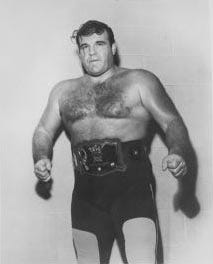
Pictured: Larry Hamilton, The Missouri Mauler
The first major title shift of the evening saw the Missouri Mauler dethrone Big Bad John for the NWA Florida TV Title. Big Bad John, whose real name was William Desmond Goodman, was a towering Texan born in 1943 who embodied the “big man” archetype of the era. Standing over 6 feet tall and weighing in at around 300 pounds, he had debuted in the late 1960s and built a reputation as a rugged brawler across territories like the WWWF (now WWE) and Mid-America. By 1976, John had captured the TV Title, using his size and raw power to dominate opponents with crushing bear hugs and powerful slams. His reign represented stability in the mid-card, but on this night, he faced a formidable challenger in the Missouri Mauler.
The Mauler, born Larry “Rocky” Hamilton in 1931, was a veteran heavyweight at 6’4” and 325 pounds, with a career spanning from the 1950s to the early 1980s. Hailing from St. Joseph, Missouri, he adopted a rough-and-tumble persona, often portraying a masked heel or a no-nonsense enforcer. Hamilton had wrestled under various names, including Thunderbolt and The Black Secret, and was known for his stiff strikes, chain matches, and ability to draw heat from crowds. In CWF, he was a perennial contender, having feuded with top stars like Jack Brisco. The match against Big Bad John was a clash of titans—two behemoths trading heavy blows in a contest that emphasized brute force over finesse. Ultimately, the Mauler’s experience prevailed, pinning John after a devastating series of elbow drops and body slams. This victory marked the Mauler’s first and only reign with the TV Title, a crowning achievement in his later career that solidified his status as a reliable main-event attraction in Florida. For fans, it was a shocking upset, as John’s size had made him seem invincible, but it highlighted how cunning and endurance could topple even the mightiest.
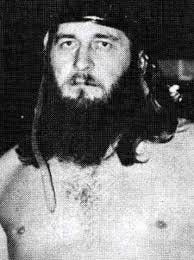
Pictured; Big Bad John
The second title change, arguably the emotional centerpiece of the card, involved the NWA Florida Tag Team Titles. Defending champions Eddie and Mike Graham, a real-life father-son team, were fan favorites whose bond resonated deeply with audiences. Eddie Graham, born Edward Gossett in 1930, was not only a wrestler but the architect of CWF as its promoter and booker. A technical master trained in the old-school style, Eddie had risen to fame in the 1950s and ‘60s as part of tag teams with his “brother” Dr. Jerry Graham and later with partners like Bob Orton Sr. By 1976, he was semi-retired from in-ring action but still competed sporadically, often teaming with his son Mike to defend the family honor. Mike Graham, born in 1951, was a second-generation star who debuted in 1972 and quickly became known for his high-flying maneuvers and fiery spirit. Together, the Grahams had captured the tag titles multiple times, symbolizing legacy and unity in a business full of betrayals.

Pictured: Eddie & Mike Graham
Their challengers, Bob Roop and Bob Orton Jr., were a contrasting pair of athletic heels poised for a breakout. Bob Roop, born in 1942, brought legitimacy from his amateur wrestling background—he had competed in the 1968 Olympics in Greco-Roman wrestling and served in the U.S. Army. Turning pro in the late 1960s, Roop was a versatile performer who wrestled under masks like The Gladiator or Maha Singh, blending technical holds with powerhouse moves. In CWF, he was a rising star, having held singles titles and now eyeing tag gold. His partner, Bob Orton Jr.—born in 1950 and son of wrestling pioneer Bob Orton Sr.—was a young talent trained by Hiro Matsuda, debuting in 1972 as a referee before transitioning to wrestler. Known as “Cowboy” Bob Orton for his rugged, Western-inspired gimmick, he was athletic and charismatic, foreshadowing the family dynasty that would later include his son, Randy Orton. The duo’s match against the Grahams was a storytelling masterpiece: the veterans’ experience versus the challengers’ youth and aggression. After a back-and-forth battle filled with near-falls, double-teams, and crowd-pleasing spots, Roop and Orton emerged victorious, likely via a controversial pin or interference that played into their heel personas. This win marked their first tag title reign together, propelling them into the spotlight and setting up future feuds.
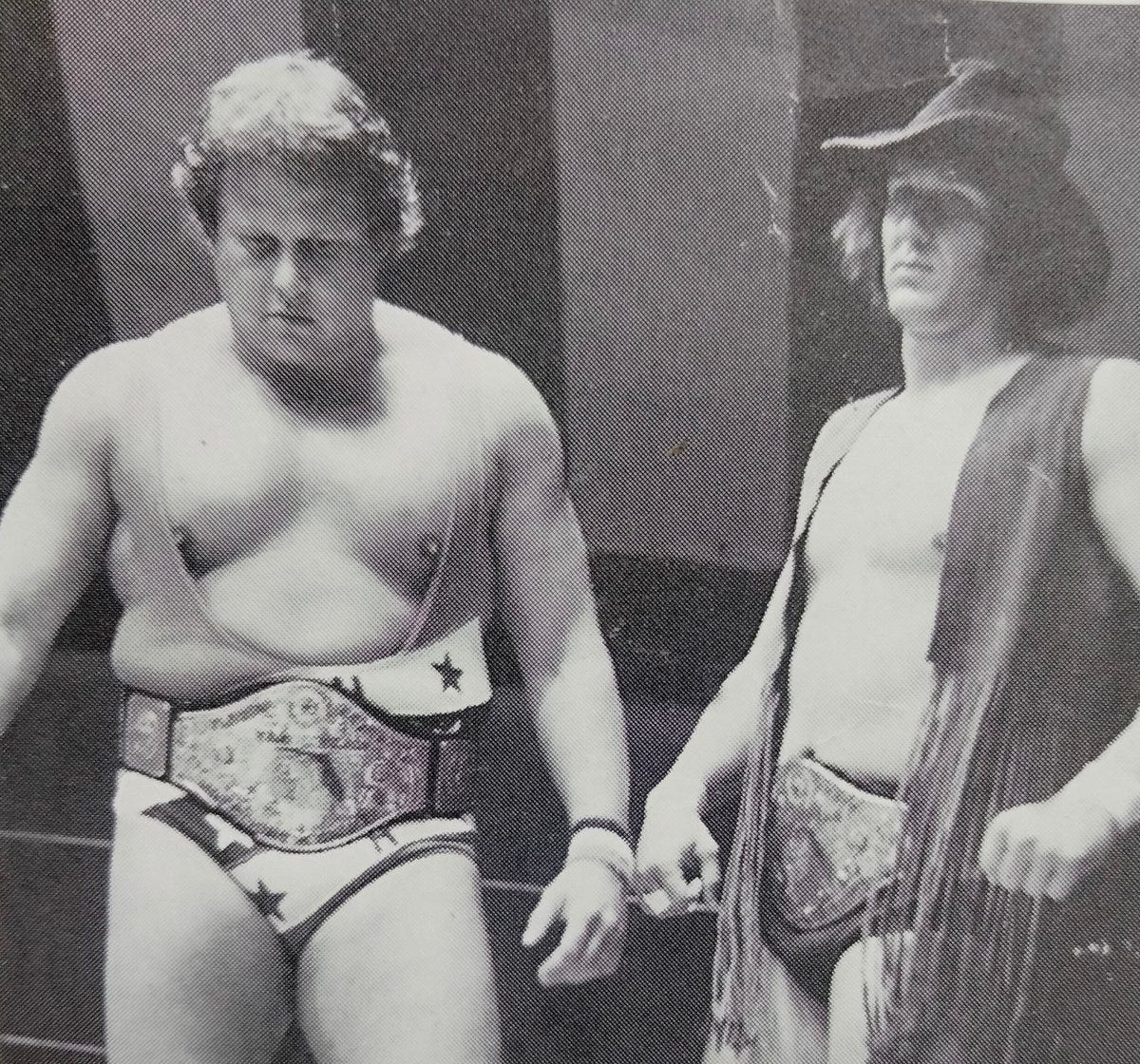
Pictured: Bob Roop & Bob Orton, Jr NWA Florida Tag Team Champions
Thank You for Reading
I’m Tony Richards, Pro Wrestling Historian, Author and Storyteller. I share pro wrestling historical items in each issue of the Time Tunnel Pro Wrestling History Newsletter. Thanks for reading! If you enjoy my information on select events, matches and insights, please share it with folks you think might like to be a subscriber!
Remember, premium investors get access to exclusive and special content such as some special issues including a multi-part deep dives on wrestling territories, wrestler bios and championship title histories, special audio and video interviews on territory pro wrestling and more available in the Pro Wrestling Time Tunnel for Premium Investors.
I enjoy reading your daily chronicle. And big thanks for putting the actual date instead of simply putting “45 years ago today etc“.