


Happy Birthday to those who have passed on and to those great wrestlers still with us:
In Memoriam:
Arnold Skaaland 1925
Jack Tunney 1935
Sandy Barr 1938
Vic Rossitani 1939
Brian Hildebrand 1962
Happy Birthday:
Ivan Putski (85)
Go Shiozaki (44)
Maryse Mizanin (43)
RIP Memorial: We stop & remember those who have passed on this day and gave themselves to the business for us, the fans. We salute you and thank you.
Eddie Graham 1-21-1985 at the age of 55
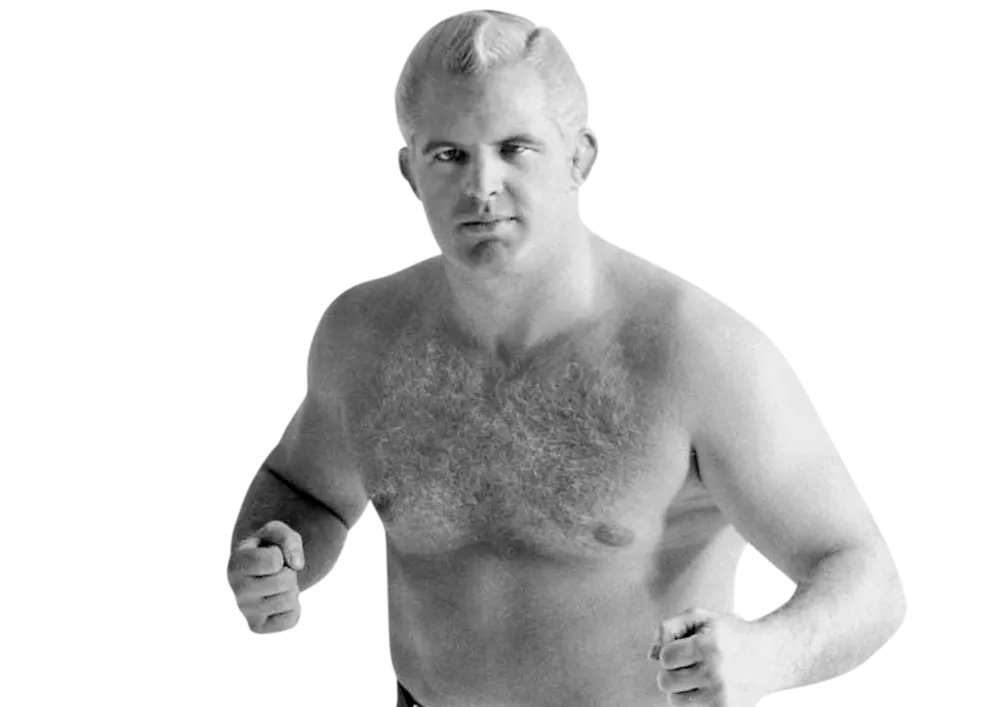
Nick Gulas 1-21-1991 at the age of 76
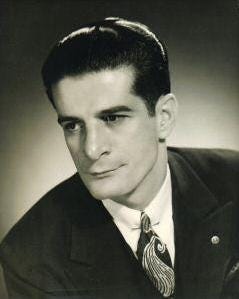
The Life and Career of Eddie Graham
Eddie Graham, born Edward F. Gossett on January 15, 1930, in Dayton, Tennessee, was one of the most remembered multifaceted figures in the history of professional wrestling. Known for his in-ring prowess, innovative booking, and promotional acumen, Graham left an indelible mark on the industry as a wrestler, promoter, and trainer. His career spanned from the post-World War II era to the early 1980s, during which he transitioned from a charismatic performer to a visionary leader who helped shape regional wrestling territories. Despite personal struggles that culminated in tragedy, Graham’s legacy endures through his contributions to Championship Wrestling from Florida (CWF) and his influence on future generations of wrestlers. This essay explores his early life, wrestling career, promotional endeavors, personal challenges, and lasting impact.
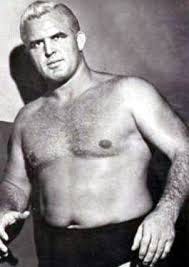
Graham’s childhood was marked by hardship and resilience. Born blind in one eye, he grew up in a tumultuous household where his father, an itinerant laborer, was abusive and often stole his earnings. His mother worked as a clerk to support the family. At age 12, Graham moved to Chattanooga, Tennessee, where he took on jobs as a paperboy and egg deliverer. His efforts earned him a free membership to the local YMCA, which introduced him to physical training and, crucially, professional wrestling.
Graham’s professional debut came in 1947 at just 17 years old, wrestling under his real name in a benefit show against Lucky Gilpin in Chattanooga. He was compensated with a 25-pound turkey, a humble beginning that foreshadowed his gritty determination. Trained by “Cowboy” Bob Luttrall, Graham initially billed himself as Rip Rogers in Texas, adopting a kayfabe brotherhood with “Nature Boy” Buddy Rogers. Under the watchful eye and brilliant booking mind of Karl “Doc” Sarpolis, Graham was in the first “Lights Out” match in Wichita Falls, Texas in the late 1950s. His early career was interrupted by a brief stint in the U.S. Army in 1951, from which he was discharged after his partial blindness was discovered. These formative years honed his skills and set the stage for his rise in the territorial wrestling scene.
Graham’s in-ring career was defined by his technical ability, charisma, and success in tag team wrestling. In the late 1950s, he gained national prominence in the Northeast as part of the “Golden Grahams” or “Graham Brothers” tag team with Dr. Jerry Graham. This villainous duo, portraying riotous siblings, headlined multiple sold-out shows at Madison Square Garden against babyface (heroic) teams like Antonino Rocca and Miguel Pérez. They captured the NWA United States Tag Team Championship (Northeast version) four times between 1958 and 1960, solidifying their status as top heels (villains).
Relocating to Florida in 1960, Graham joined CWF and quickly became a staple. He won the inaugural NWA Southern Heavyweight Championship (Florida version) in 1962 via tournament but vacated it due to injury from a feud with Boris Malenko. This rivalry, marked by brutal angles like Malenko biting off part of Sam Steamboat’s ear (with Graham intervening), led to intense Russian Chain matches. Graham reclaimed the title multiple times and held the NWA World Tag Team Championship (Florida version) seven times from 1961 to 1967 with partners including Ike Eakins, Sam Steamboat, Bob Orton, and José Lothario.
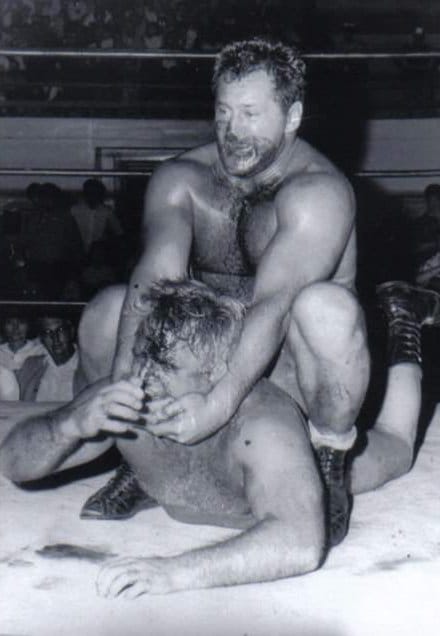
Pictured: Professor Boris Malenko puts “The Russiab Sickle” on Eddie Graham
A severe accident in 1968 sidelined him for 15 months: a 75-pound steel window fell on his head during a match setup, detaching both retinas and requiring over 300 stitches. He was awarded $23,399 in compensation by the Florida Legislature. Upon return, Graham feuded with Malenko again, winning the NWA Brass Knuckles Championship. In the 1970s, he teamed with his son Mike Graham, capturing titles like the NWA Georgia Tag Team Championship in 1972 and the NWA Florida Tag Team Championship in 1976. Graham also ventured internationally, winning the All Asia Tag Team Championship in Japan in 1966 with Killer Karl Kox. His final matches were in 1982, including a victory over Terry Funk. Graham’s style emphasized realism and psychology, blending athleticism with storytelling that drew crowds. His feuds and tag team dominance earned him over 30 championships across various territories.
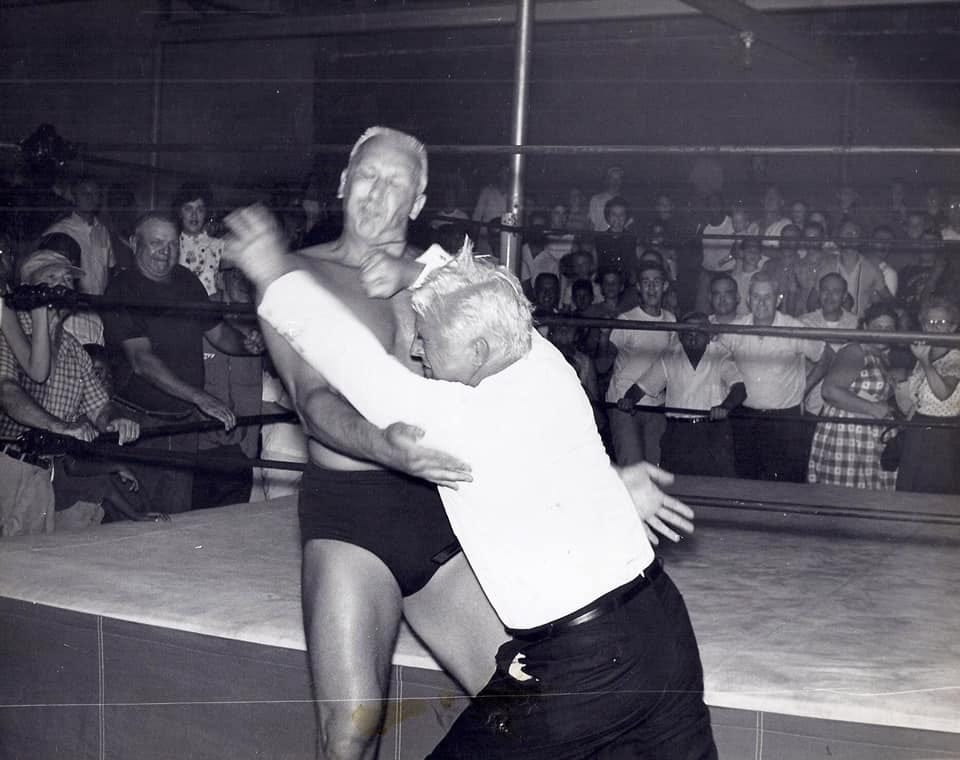
Pictured: Eddie Graham “lays one in” on the jaw of Bob Orton, Sr during a TV Taping at The Sportatorium in Tampa, Florida
By the mid-1960s, Graham shifted focus to behind-the-scenes roles as an ownership partner with Luttrall. He then became majority owner and booker of CWF in 1970, transforming it into one of the NWA’s strongest territories. Known for innovative angles and talent development, he trained stars like Hulk Hogan, Paul Orndorff, Bob Roop, Steve Keirn, and his son Mike. His booking, after being groomed and mentored by Sarpolis in West Texas, emphasized logical storylines, crowd-pleasing finishes, and inter-promotional crossovers.
Elected NWA President from 1976 to 1978, Graham navigated territorial politics and promoted high-profile events, including a 1978 unification match between NWA Champion Harley Race and WWWF Champion “Superstar” Billy Graham. He resigned due to health issues but continued innovating, such as renaming the Orlando Sports Stadium to Eddie Graham Sports Stadium in 1980. Graham’s influence extended to Vince McMahon Sr., fostering relationships that foreshadowed wrestling’s national expansion.
Video: Eddie Graham State of the Union Address as NWA President
Graham married Lucille on December 24, 1950, after meeting her in 1949; they had one son, Mike, born in 1951. An accomplished pilot, Graham learned to fly through self-study during road trips. However, his life included brushes with the law, such as a 1958 arrest for concealed weapons alongside Jerry Graham, though charges were dismissed.
In his business activities, Graham was deeply committed to philanthropy. He co-founded the Florida Sheriff’s Boys Ranch in 1957, directing over $500,000 from CWF events to it and similar causes. He received numerous awards, including the Tampa Police Athletic League Achievement Award in 1963, Tampa Sports Club Sportsman of the Year in 1978, and a White House flag in 1980. n 1977, he donated $10,000 to the University of Florida for a wrestling room named in his honor.
Despite these successes, Graham had an on-going battle with alcoholism, depression, and financial woes from real estate investments, which started to deepen through the early 1980s. These struggles contributed to his tragic end.
On January 21, 1985, at age 55, Graham died by suicide, shooting himself at his Tampa home. He was pronounced dead the following day at St. Joseph’s Hospital. His death was attributed to personal demons, including the pressures of the wrestling business and his real estate investments. Tragically, his son Mike and grandson Stephen later died by suicide as well, highlighting a dark family legacy.
Graham’s contributions were honored posthumously: inducted into the WCW Hall of Fame in 1993 (first posthumous inductee), Wrestling Observer Newsletter Hall of Fame in 1996, NWA Hall of Fame in 2006, WWE Hall of Fame in 2008 (inducted by Dusty Rhodes, accepted by Mike), and Professional Wrestling Hall of Fame and Museum in 2018.
40 Year Flashback
1-21-1986 Tom Zenk defeated Bobby Jaggers (ch) to win the Pacific Northwest Heavyweight Title at the Memorial Coliseum in Portland, Oregon (att. 6,000)
This victory, unfolding at the Portland Memorial Coliseum in Portland, Oregon, as part of the Superstar Extravaganza event, marked a significant milestone in Zenk’s career.
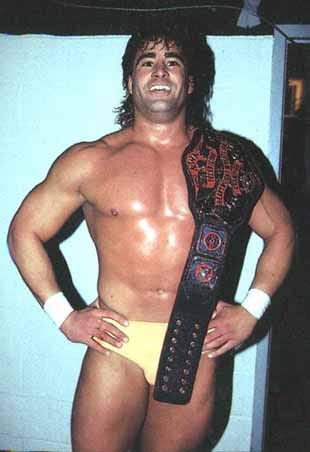
Tom Zenk, born in Robbinsdale, Minnesota, and another of the outstanding wrestlers to come from that town, entered professional wrestling in 1984 after a background in bodybuilding and amateur grappling. By late 1985, he had migrated to the Pacific Northwest territory, where he quickly made an impact. Teaming with Scott Doring, Zenk captured the NWA Pacific Northwest Tag Team Championship on December 21, 1985, defeating Mike Miller and Moondog Moretti. This success propelled him into singles competition, where he maintained an undefeated streak through early 1986, despite targeted attacks from PNW’s top antagonists, including a “bounty” placed on him by heels led by Bobby Jaggers. Zenk’s appeal lay in his “Z-Man” persona— a clean-cut, high-flying babyface who embodied the all-American hero, drawing cheers from audiences weary of the territory’s rough-and-tumble villains.

On the other side of the ring stood Bobby Jaggers, a seasoned grappler with a reputation for hardcore tactics and unyielding aggression. Jaggers, whose real name was Robert Jeaudoin, had been a fixture in PNW since the early 1980s, often portraying a cowboy-inspired heel complete with a signature cowbell as a weapon. He captured the Pacific Northwest Heavyweight Title prior to the event and defended it fiercely, using underhanded methods to retain his dominance. The feud between Zenk and Jaggers had been building for weeks, fueled by Jaggers’ attempts to “cripple” the up-and-comer through ambushes and interference. This rivalry reached its zenith at the Superstar Extravaganza, a stacked card that featured national stars like NWA World Champion Ric Flair defending against Dusty Rhodes, the Road Warriors teaming with Magnum T.A. against the Russians, and other high-profile matches. The event’s atmosphere was electric, with PNW promoter Don Owen pulling out all the stops to draw a massive crowd in the heart of wrestling’s Northwest stronghold.
The match itself was a classic clash of styles: Zenk’s technical finesse and aerial maneuvers against Jaggers’ brawling brutality. Accounts from the era describe a hard-fought contest where Jaggers relied on his trusty cowbell for illicit strikes, a staple of his heel playbook. However, Jaggers’ weapon backfired. During a heated exchange, he swung the cowbell at Zenk but inadvertently struck himself in the head, leaving him dazed. Seizing the opportunity, Zenk executed a quick roll-up pin, securing the three-count at approximately the 17:37 mark. The crowd erupted as referee counted the pin, and Zenk was awarded the championship belt, becoming the new NWA Pacific Northwest Heavyweight Champion. This victory not only ended Jaggers’ reign but also solidified Zenk as a dual titleholder, as he still held the tag team belts with Doring at the time
The win propelled Zenk to greater heights within PNW. He defended the title successfully against challengers like Moondog Moretti the very next day and maintained his undefeated streak for the remainder of 1986. However, his reign was relatively short-lived; Jaggers reclaimed the championship in March 1986, continuing their storied rivalry. For Zenk, this triumph served as a launchpad to national prominence. By 1987, he had joined the World Wrestling Federation (WWF) as part of the Can-Am Connection tag team with Rick Martel, and later achieved fame in World Championship Wrestling (WCW) as “The Z-Man.”
One Thing I Learned About Nick Gulas
He briefly attempted to become a professional wrestler himself in 1937, announcing his intentions but quickly giving up after realizing it wasn’t for him. Working for territory owner Chris Jordan, Gulas found his calling in promoting towns becoming Jordan’s most valuable local promoter.
Thank You for Reading
I’m Tony Richards, Pro Wrestling Historian, Author and Storyteller. I share pro wrestling historical items in each issue of the Time Tunnel Pro Wrestling History Newsletter. Thanks for reading! If you enjoy my information on select events, matches and insights, please share it with folks you think might like to be a subscriber!
Remember, premium investors get access to exclusive and special content such as some special issues including a multi-part deep dives on wrestling territories, wrestler bios and championship title histories, special audio and video interviews on territory pro wrestling and more available in the Pro Wrestling Time Tunnel for Premium Investors.