


Happy Birthday to those who have passed on and to those great wrestlers still with us:
In Memoriam:
John Karney\Ivan Kameroff 1920
Happy Birthday:
Curtis thompson\Firebreaker Chip (63)
Tony DeVito (54)
Joy Giovanni (48)
Karl Anderson (46)
RIP Memorial: We stop & remember those who have passed on this day and gave themselves to the business for us, the fans. We salute you and thank you.
Bobo Brazil 1-20-1998 at the age of 73
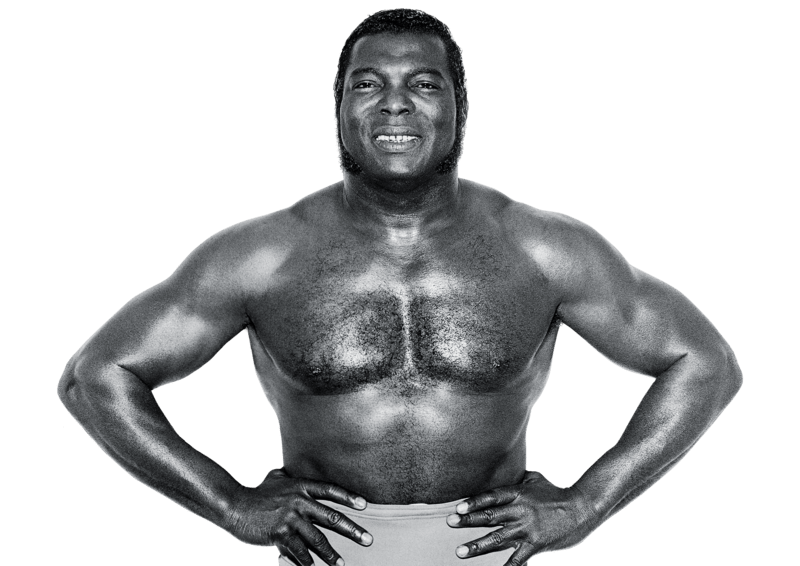
George Scott 1-20-2014 at the age of 84
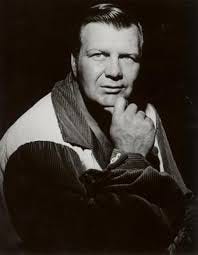
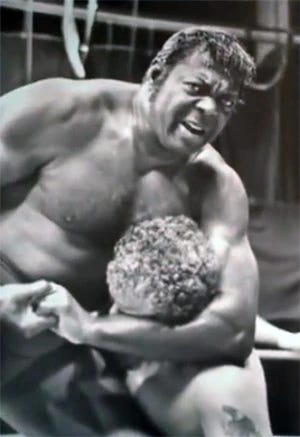
The Life and Career of Bobo Brazil
Credited with shattering racial barriers in a segregated era, Brazil’s career spanned over four decades, from the early 1950s to the 1990s, during which he became a beloved babyface (heroic wrestler) known for his athleticism, charisma, and unyielding dignity. Often compared to Jackie Robinson for his role in integrating the sport, Brazil not only achieved championship success but also paved the way for future African American wrestlers like Ron Simmons, The Rock, and Booker T. His journey from humble beginnings to wrestling icon reflects the broader struggles and triumphs of Black athletes in mid-20th-century America.
Harris’s early years were marked by hardship and relocation. Born in Little Rock, he lost his father at the age of seven, forcing him to take on odd jobs, including picking fruit for meager wages of fifty cents per container. His family moved to East St. Louis, Illinois, and later to Benton Harbor, Michigan, where Harris would spend much of his life. As a young man, he showcased his athletic prowess by playing baseball in the Negro leagues for the House of David team, a barnstorming squad known for its bearded players and religious affiliations. However, his physical build—standing at 6 feet 6 inches and weighing around 270 pounds—caught the eye of wrestling promoters while he worked at a steel mill.
Harris’s entry into professional wrestling came through serendipity. He met trainer Joe Savoldi at matches held at the Naval Armory, and Savoldi took him under his wing. Savoldi emphasized integrity, teaching Harris to be an “honest athlete” and a “friend to the crowd” without relying on shortcuts or underhanded tactics. This foundation would define Brazil’s in-ring persona. His first recorded match was on March 29, 1948, in Benton Harbor, where he wrestled under the name “Houston Harris, The Black Panther” to a 30-minute draw against Armand Myers. However, his official debut as a full-time wrestler is widely recognized as occurring in 1951.
Professional wrestling in the 1950s was deeply entrenched in racial segregation, particularly in the American South, where Black wrestlers were often restricted to facing only other Black opponents. Brazil, however, transcended these limitations through sheer talent and marketability. Promoters, recognizing the financial potential, began booking him against white wrestlers, drawing massive crowds eager to see the “South American Giant” in action. Originally intended to be billed as “BuBu Brasil” (or “Boo-Boo Brazil”), a promoter’s printing error on an advertisement immortalized him as “Bobo Brazil”—a name that stuck, complete with a sequined cape crafted by his wife.
Brazil’s early career was concentrated in the northern United States and Canada, wrestling for promotions like the World Wide Wrestling Federation (WWWF, now WWE), Big Time Wrestling in Detroit, Maple Leaf Wrestling in Toronto, and Dick the Bruiser’s World Wrestling Association (WWA) in Chicago. His modesty, stylish ring gear, and professional demeanor won over both Black and white audiences in Detroit, a city with a growing African American population. Despite facing discrimination—such as segregated seating for fans and bans from hotels and restaurants—Brazil handled adversity with grace, earning him the moniker “the Jackie Robinson of professional wrestling.”
A pivotal moment came on October 18, 1962, when Brazil defeated “Nature Boy” Buddy Rogers to win the NWA World Heavyweight Championship in a match that ended controversially with a groin hit. Although the NWA did not officially recognize the title change (Rogers reclaimed it weeks later under a storyline where he refused to accept it due to the injury), this victory marked Brazil as the first African American to hold a major world heavyweight title—a distinction often debated but historically significant. In 1970, Brazil further broke ground by teaming with El Mongol to win the first racially mixed match in Atlanta, Georgia, a hotbed of segregation.
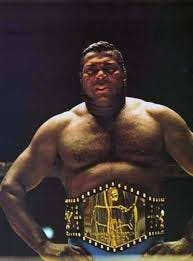
Brazil’s in-ring style was a blend of power and agility, highlighted by his devastating finisher, the “Coco Butt”—a powerful headbutt that could “split coconuts,” as the legend went. Managed by James Dudley, the first African American arena chief, Brazil’s entrances were theatrical: Dudley would wave a towel while running to the ring, with Brazil following behind to thunderous applause. This routine became a fan favorite and added to his larger-than-life persona.His career was defined by epic feuds that spanned years and drew record crowds. Chief among them was his rivalry with The Sheik (Edward Farhat), a brutal heel (villain) known for hardcore matches involving fire and blood. Their encounters in Detroit were legendary, often turning into bloody brawls that captivated audiences. Other notable opponents included Killer Kowalski, Dick the Bruiser, Johnny Valentine, Haystacks Calhoun, Abdullah the Butcher, and Ernie “The Cat” Ladd. Brazil also challenged WWWF Champion Bruno Sammartino and drew with the colossal Andre the Giant, showcasing his versatility against diverse styles.Brazil’s championship resume is extensive, reflecting his dominance across multiple territories:
NWA World Tag Team Championship (Detroit version): 8 times (with partners like Art Thomas, Bill Miller, and Tony Marino).
NWA Florida Tag Team Championship: 2 times (with Sweet Brown Sugar and Dusty Rhodes).
WWWF United States Heavyweight Championship: Multiple reigns, frequently traded in the Midwest and Ontario.
Other titles: Including the NWA International Television Tag Team Championship (4 times), NWA Pacific Coast Heavyweight Championship, and World Negro Heavyweight Championship (2 times).
These accomplishments solidified his status as a top draw, with Brazil headlining events worldwide, including tours in Japan where he held the NWA International Heavyweight Championship.

Pictured: A rare shot of Bobo Brazil and Andre The Giant
As the wrestling landscape evolved in the 1980s, Brazil continued to perform, mentoring younger talents like “Soulman” Rocky Johnson (father of Dwayne “The Rock” Johnson) and even inspiring boxer Joe Frazier. His final match came in 1993 against Kelly Kiniski (son of longtime rival Gene Kiniski) in Chicago, capping a 42-year career at the age of 69. Post-retirement, Brazil remained active in the community. He owned and operated Bobo’s Grill, a popular restaurant in Benton Harbor for over 20 years, which became a local landmark. He also trained wrestler James “Kamala” Harris and served as an advisor to up-and-coming athletes.
Brazil was married and had six children, including son Karl Harris, who wrestled as Bobo Brazil Jr. on the independent circuit. His brother, Hank James, also pursued a wrestling career. Brazil’s family life provided stability amid the grueling travel demands of wrestling.
Tragically, Brazil suffered a series of strokes and was hospitalized on January 14, 1998. He passed away on January 20, 1998, in St. Joseph, Michigan, at the age of 73.
Bobo Brazil’s inductions into the WWE Hall of Fame (1994, presented by Ernie Ladd, whom he inducted in 1995), the NWA Hall of Fame (2013), the Professional Wrestling Hall of Fame (2008), and the Wrestling Observer Newsletter Hall of Fame (1996) underscore his enduring influence. In 1998, he posthumously received the PWI Editor’s Award.
60 Year Flashback
1-19-1966: Ricky Romero defeated Dutch Savage (ch) for the NWA North American Heavyweight Title at the Fair Park Coliseum in Lubbock, Texas

Ricky Romero’s drawing power had become evident since he had relocated to West Texas in 1960 and he had become a key draw for the Western States Promotion of Doc Sarpolis and Dory Funk, Sr, particularly in Lubbock, the promotions’ second most important city. His popularity surged in 1965 when he captured the North American Heavyweight Title for the second time on November 11, holding it for 62 days. During this reign, he defended against top challengers, showcasing his signature moves: rapid arm drags, dropkicks, and a devastating flying headscissors. However, on January 12, 1966, in a heated encounter, Romero lost the belt to the imposing Dutch Savage.
Dutch Savage, a 6’4”, 265-pound powerhouse from Scranton, Pennsylvania, was a classic heel of the era. Known for his roughhouse tactics, Savage had made a name in the Pacific Northwest and Midwest before arriving in Amarillo. With a background in amateur wrestling and a no-nonsense style, he embodied the “foreign menace” archetype, often using illegal chokes and eye rakes to infuriate crowds. His victory over Romero on January 12—likely in Amarillo or a nearby town—set the stage for an immediate rematch. Savage’s brief reign as champion amplified the drama: here was a brutish outsider holding the territory’s top prize, denying the beloved local hero his glory.
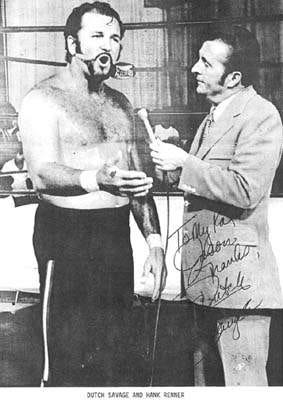
Pictured: Dutch Savage being interviewed by Hank Renner
The build-up to the January 19 rematch was fueled by the territory’s weekly television tapings and newspaper promotions. Booker and matchmaker Sarpolis masterfully hyped the feud, portraying Romero as the underdog fighting for pride and community. In an era without social media, word-of-mouth and local ads in papers like the Lubbock Avalanche-Journal drew fans to the Fair Park Coliseum in Lubbock, Texas—a venue synonymous with high-stakes wrestling events. Lubbock, a hub of cotton farming and college life (home to Texas Tech University), was a key stop on the circuit, often packing 5,000-7,000 spectators into its arena for top cards.
The event on January 19, 1966, at the Fair Park Coliseum was a classic territorial card, featuring undercard bouts to warm up the crowd before the main event. While full results from that night are sparse in surviving records, the show included preliminary matches such as tag team clashes and singles bouts involving local talents like the Funk brothers or Jose Lothario. The atmosphere was electric: smoke-filled air, the clang of the ring bell, and chants echoing for “Super Mex.”
The main event was a two-out-of-three-falls match for the NWA North American Heavyweight Championship, a format that tested wrestlers’ stamina and allowed for dramatic comebacks. Romero, entering to cheers in his signature tights adorned with Mexican motifs, faced off against the defending champion, Dutch Savage, who drew boos with his arrogant strut and pre-match taunts. The contrast was stark: Romero’s speed versus Savage’s power.
In the first fall, Savage dominated with his size advantage, using clubbing blows and suplexes to wear down Romero. Historical accounts suggest Savage secured the pin after a vicious body slam followed by a knee drop, taking a 1-0 lead. The crowd, sensing their hero’s peril, grew restless. Romero, bloodied but unbowed, rallied in the second fall. Drawing on his agility, he evaded Savage’s charges, countering with dropkicks and arm drags that sent the big man reeling. A sunset flip equalized the score at 1-1, igniting the arena.
The decisive third fall encapsulated Romero’s fighting spirit. As fatigue set in, Savage attempted to cheat—perhaps grabbing the ropes for leverage or using a foreign object—but Romero’s technical savvy prevailed. In a climactic sequence, Romero dodged a corner charge, causing Savage to crash into the turnbuckle, then capitalized with a series of strikes and a picture-perfect hurricanrana (a move ahead of its time in American rings). Pinning Savage cleanly, Romero claimed victory and the championship, his third reign with the title. The crowd erupted, storming the ring in celebration as Romero hoisted the belt high.
Romero’s third reign lasted only 35 days, ending on February 23, 1966, when he dropped the title to top heel, “Iron” Mike DiBiase.
One Thing I Learned About George Scott
Ric Flair credits George Scott with the innovator of the reversal of the figure four leg lock. Scott, who was booker for Jim Crockett Promotions suggested that Flair model himself after the iconic “Nature Boy” Buddy Rogers including the finisher of the figure four leg lock and with the twist of the babyface turning Flair over on the hold which reversed the pressure from the victim back on Flair, which gave Flair an opportunity to showcase his great selling skills.
Thank You for Reading
I’m Tony Richards, Pro Wrestling Historian, Author and Storyteller. I share pro wrestling historical items in each issue of the Time Tunnel Pro Wrestling History Newsletter. Thanks for reading! If you enjoy my information on select events, matches and insights, please share it with folks you think might like to be a subscriber!
Remember, premium investors get access to exclusive and special content such as some special issues including a multi-part deep dives on wrestling territories, wrestler bios and championship title histories, special audio and video interviews on territory pro wrestling and more available in the Pro Wrestling Time Tunnel for Premium Investors.
Fantastic historical deep dive. The parallel between Bobo Brazil and Jackie Robinson breaking racial barriers really puts his achievemnts in perspective beyond just wrestling titles. What stands out to me is how the territorial wrestling system created these intense local rivalries like Romero vs Savage, where a single match at teh Fair Park Coliseum could draw thousands. That kind of community investment in storylines feels lost in todays national wrestling landscape.