



Written and Produced by Tony Richards
January 16th in the Time Tunnel:
Happy Birthday to those who have passed on and to those great wrestlers still with us:
In Memoriam:
Kola Kwariani 1903
Oliver Humperdink 1949
Happy Birthday:
Bull Dempsey (38)
RIP Memorial: We stop & remember those who have passed on this day and gave themselves to the business for us, the fans. We salute you and thank you.
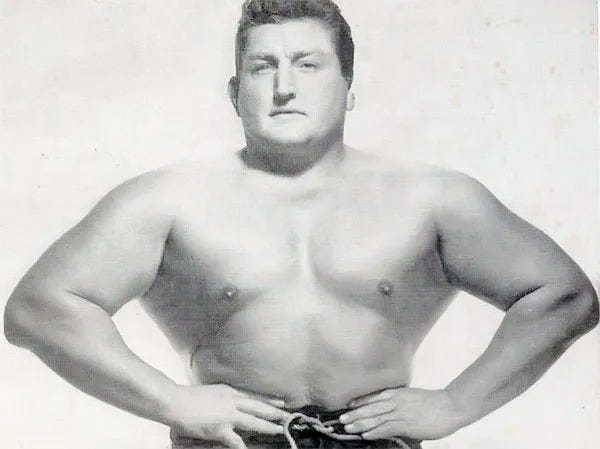
Yukon Eric 1-16-1986 at the age of 48
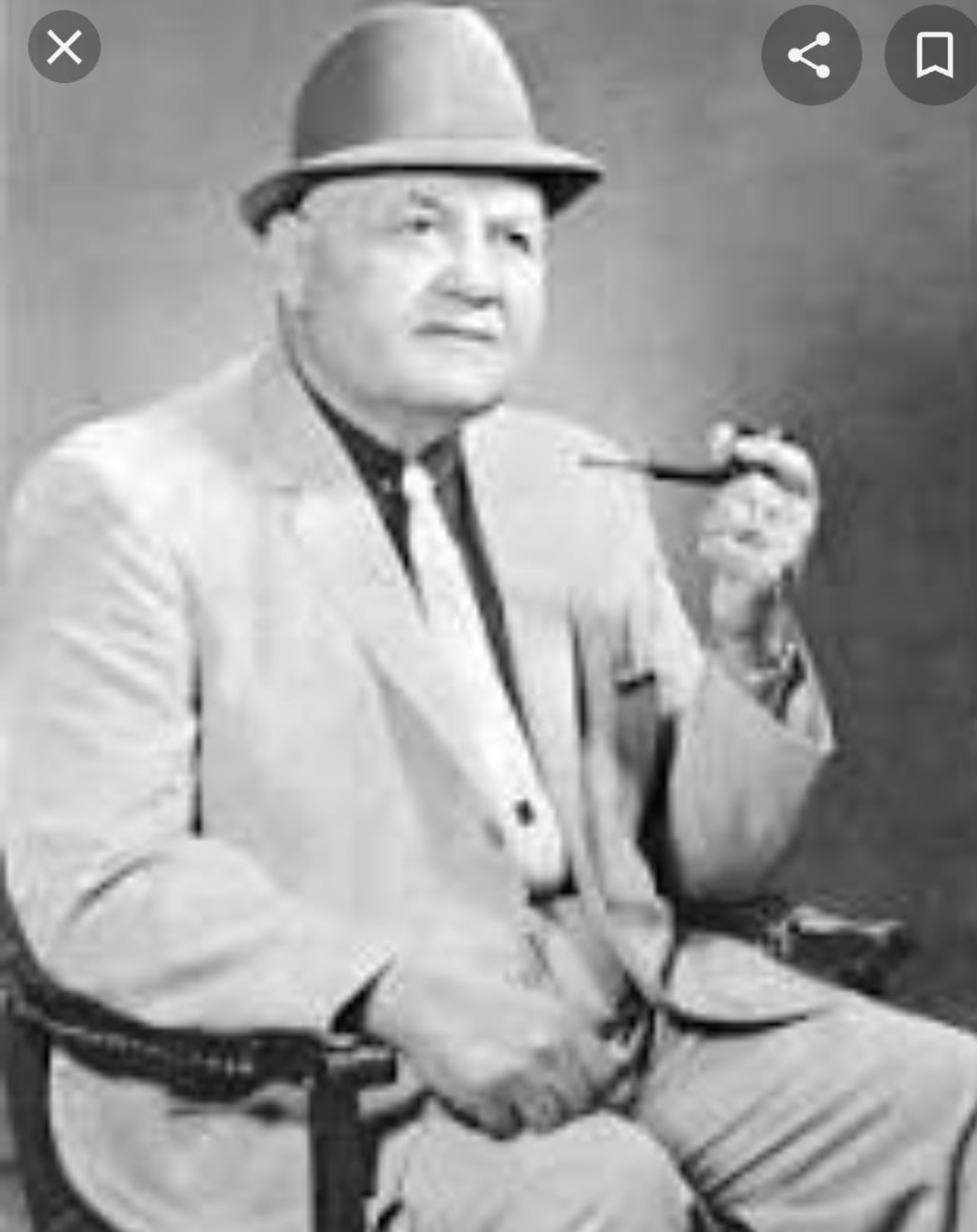
Gust Karras 1-16-1976 t the age of 74
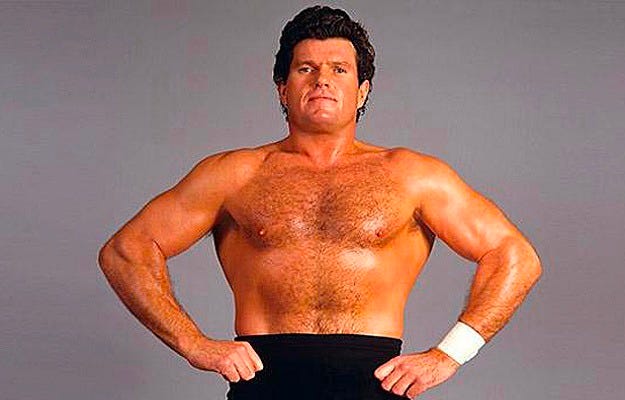
Mike Sharpe 1-16-2016 at the age of 65
The Life and Career of Gust Karras, Central States Territory Pioneer
Over a career spanning nearly six decades, Gust Karavites’ journey from a Greek immigrant to a powerhouse promoter exemplifies the grit and entrepreneurial spirit that defined the early days of the wrestling industry. Over a career spanning nearly six decades, Karras not only elevated wrestling in regions like Northwestern Missouri but also diversified into other entertainment ventures, leaving an indelible mark on sports promotion. Known for his cunning business acumen, loyalty to talent, and ability to navigate the cutthroat world of territorial wrestling, Karras helped shape the careers of legends like Harley Race and Sonny Myers.
Born on April 5, 1902, in Kalamata, Greece, Gust Karras immigrated to the United States in 1916 at the age of 14, seeking opportunity amid the challenges of post-World War I Europe. Settling in the Midwest, he quickly immersed himself in the rough-and-tumble world of carnival and circus life, where he honed his skills as a wrestler. These early experiences in brutally violent matches across Missouri built his understanding of the sport from the performer’s perspective, which would later inform his promotional strategies. In 1924, at the age of 22, Karras married Goldie Fanning, and by the 1930 U.S. Census, the couple was living with her parents in Chillicothe, Livingston County, Missouri. This personal stability provided a foundation as he transitioned from in-ring performer to behind-the-scenes operator.
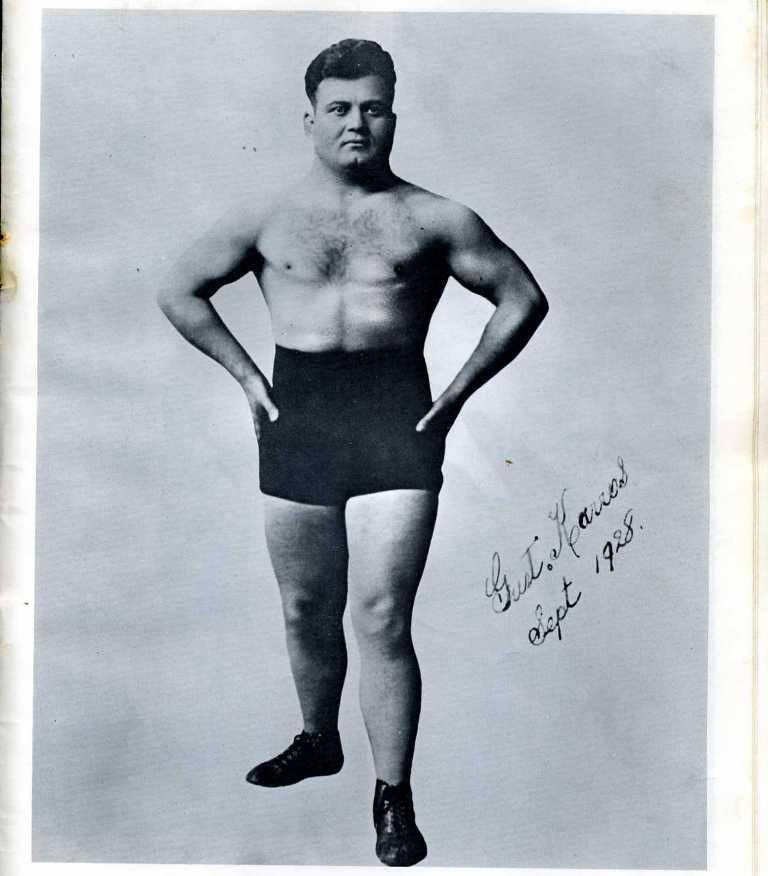
Karras’s wrestling career in the 1920s and early 1930s was marked by seasonal work, often suspending promotions in the summer to travel with the Robbins Brothers circus. His firsthand knowledge of the industry’s hardships—physical tolls, travel demands, and financial uncertainties—made him empathetic toward wrestlers, fostering loyalty that became a hallmark of his promotion. By the 1930s, Karras had shifted focus to promotion, establishing Gust Karras Sports Promotions in 1933, based out of an office at 124 South Eighth Street in St. Joseph, Missouri. This venture, also known as the Midland Empire Sports Headquarters and Heart of America Booking Office, expanded beyond wrestling to include events like the Harlem Globetrotters basketball exhibitions, Golden Gloves boxing, annual horse shows, amusement rides, and baseball tournaments.
Karras’s promotional career truly flourished in the post-World War II era, as professional wrestling boomed under the National Wrestling Alliance (NWA) umbrella. In 1949, he transitioned his operation into NWA Central States, a territory covering Kansas, Missouri, Nebraska, Iowa, and parts of Illinois. As a director of the Central States Booking Office alongside Orville Brown and George Simpson in 1961, Karras played a central role in coordinating talent and events across the region. His St. Joseph territory became a powerhouse, drawing crowds with a mix of local flavor and national stars.
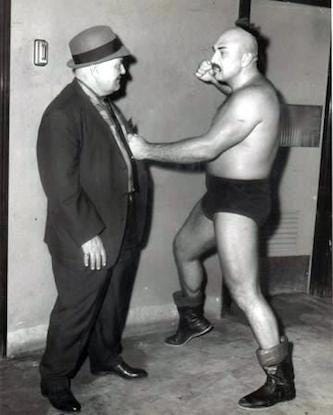
Pictured: Gust Karras and The Mongolian Stomper (Archie Gouldie)
A defining moment came in 1958 when Karras partnered with Bob Geigel and Pat O’Connor to take over the Midwest Wrestling Association, rebranding it as Heart of America Sports Attractions under the NWA banner. This alliance aimed to expand the territory’s reach and prestige, with Karras’s experience proving instrumental in its growth.
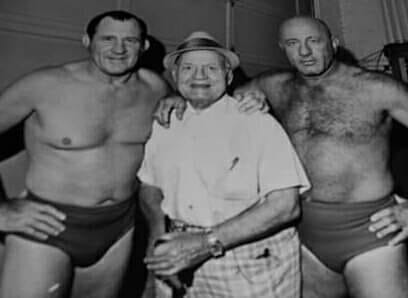
Pictured: Heart of America Sports Attractions Partners Pat O’Connor, Gust Karras and Bob Geigel
Karras was known for his shrewd dealings, as evidenced by a 1962 letter to promoter Jack Pfefer, where he vowed retaliation against Chicago’s Fred Kohler for encroaching on his television slots.
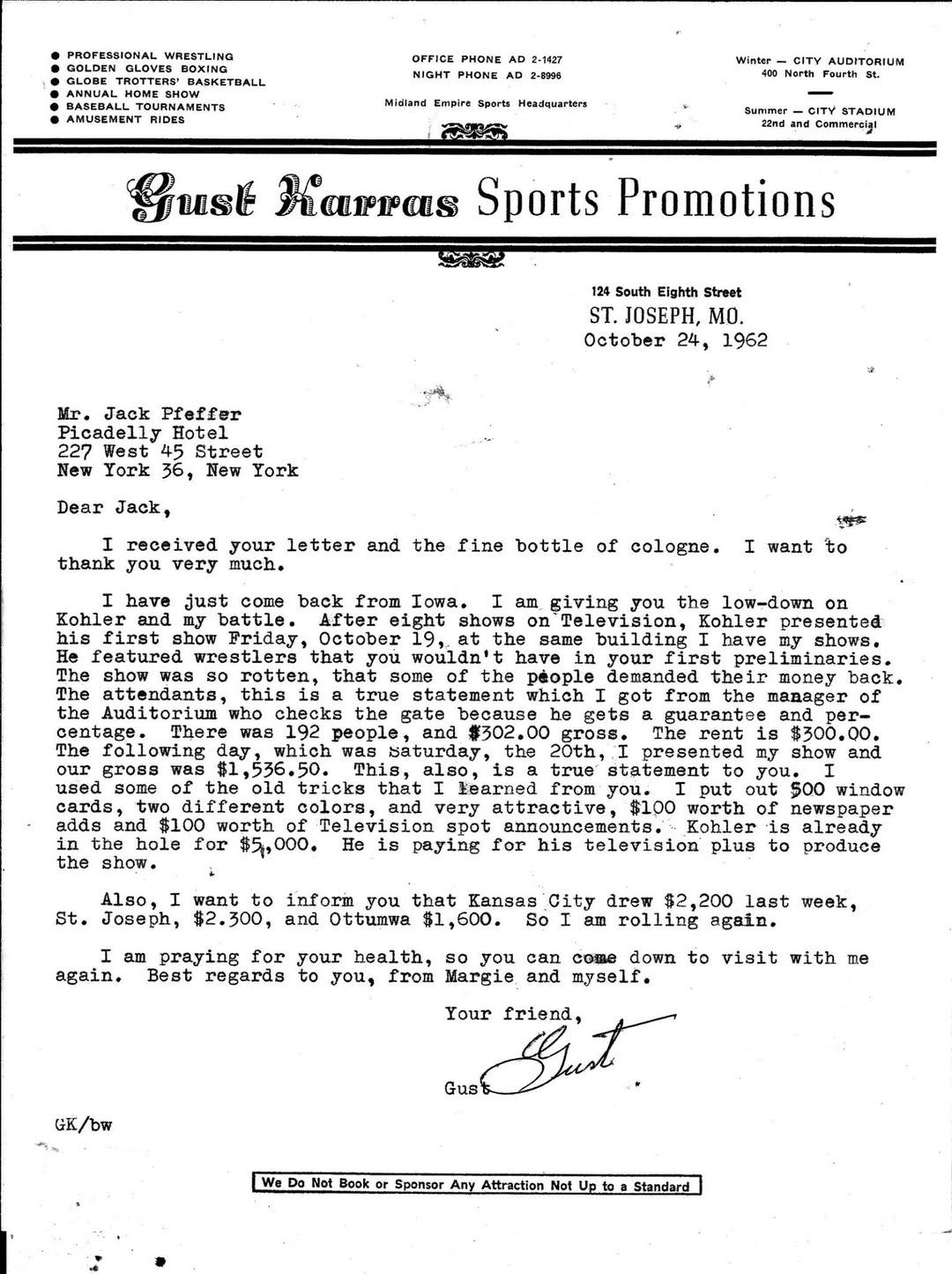
Despite such rivalries, Karras maintained strong friendships, including with Pfefer, and his secretary, Marjorie “Margie” Eckelbery, who handled much of the day-to-day operations. Karras’s talent scouting was legendary. In 1944, he spotted Sonny Myers playing basketball at a YMCA and trained him, leading to Myers’s debut six months later and a successful career in the territory. He also trained Ron Etchison before a personal health setback—losing his leg to diabetes—limited his direct involvement in training.
Longtime wrestlers like Joseph Franklin Howe worked under Karras for over 20 years, underscoring his ability to build enduring relationships. Perhaps his most famous protégé was Harley Race, whom Karras hired as a teenager for odd jobs, including chauffeuring the 600-pound wrestler Happy Humphrey. In a dramatic turn, after Race’s severe car accident that threatened amputation of his leg, Karras rushed to the hospital and intervened, declaring “Over my dead body,” ultimately saving Race’s limb and career. As Race himself noted, “Without a Gust Karras, there isn’t a Harley Race.”
Karras also discovered Jody Hamilton, one of the original masked Assassins. Noticed by Karras as a teen athlete; debuted at 16 on Karras’ shows after Golden Gloves boxing and carnival work. Karras broke him in via “AT shows”; became a masked heel legend in tag teams like The Assassins, wrestling globally for 40+ years and later training WCW talent. Ed Woskowski, a local football star, Karras encouraged him to try wrestling after high school; arranged training with Ronnie Etchison, Harley Race, and others. Debuted in 1972; infamous as a villainous apartheid-era character in AWA, Colonel DeBeers.
Betty Niccoli was one of the best female workers of the late 1960s and throughout the 1970s. At age 15, she attended her first professional wrestling match there in 1958, where Karras spotted her and suggested she could become a good female wrestler. He later arranged for her training in 1963, leading to her debut in a battle royal in Sedalia, Missouri.
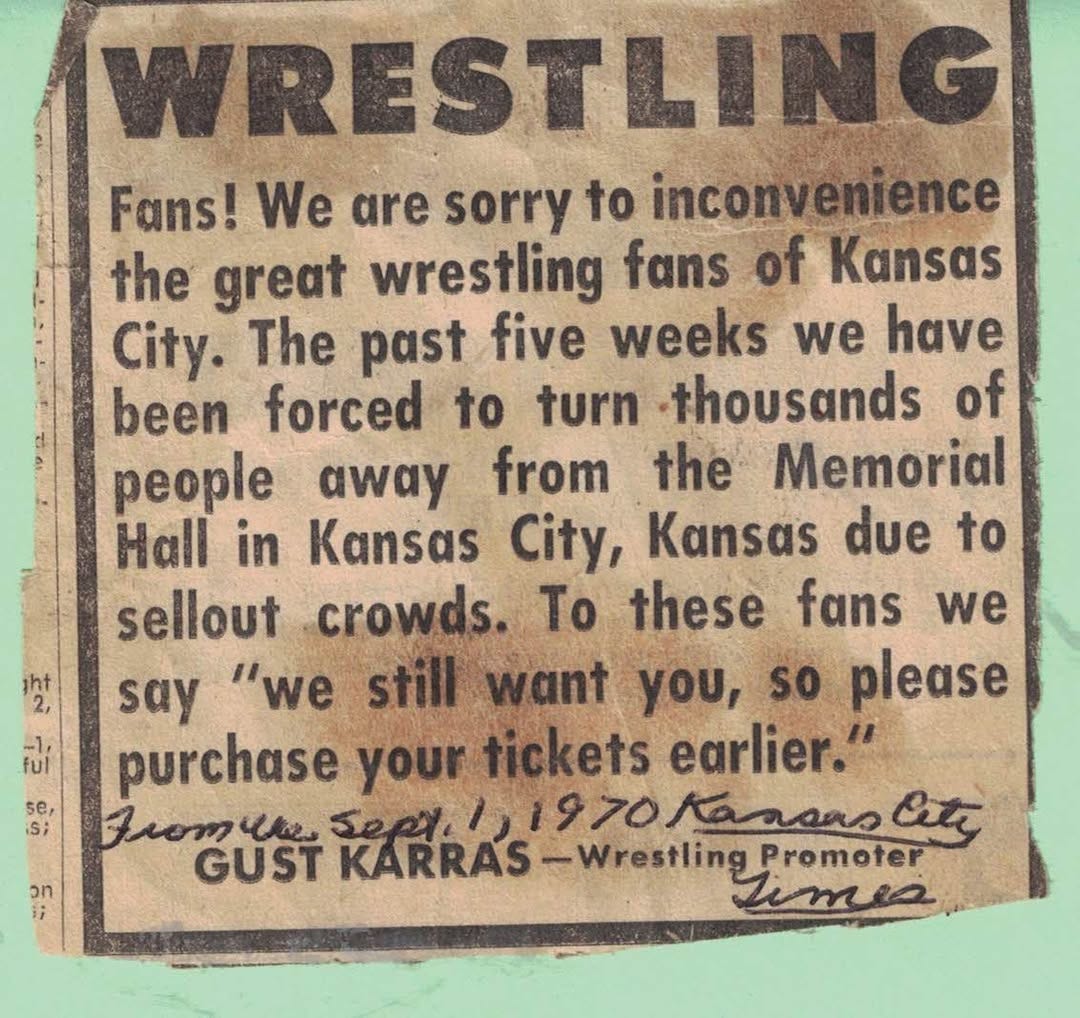
Karras’s influence extended beyond individual careers; he was a trailblazer who boosted professional wrestling nationally through his NWA involvement and innovative promotions. Operating for 50 years in St. Joseph, he became an ambassador for the city, blending wrestling with community events that drew diverse audiences. His death in 1976 marked the end of an era, but his contributions lived on through the wrestlers he mentored and the territory he built.
In recognition of his pioneering work, Karras was posthumously inducted into the St. Joseph Sports Commission Hall of Fame in 2022, cementing his status as a territorial popneer and legendary promoter.
One Thing I Learned About Mike Sharpe
He exhibited strong obsessive-compulsive tendencies backstage, earning him the nickname “Mr. Clean” from colleagues due to his habits of spending hours showering, washing his hands, and meticulously folding his clothes.
Thank You for Reading
I’m Tony Richards, Pro Wrestling Historian, Author and Storyteller. I share pro wrestling historical items in each issue of the Time Tunnel Pro Wrestling History Newsletter. Thanks for reading! If you enjoy my information on select events, matches and insights, please share it with folks you think might like to be a subscriber!
Remember, premium investors get access to exclusive and special content such as some special issues including a multi-part deep dives on wrestling territories, wrestler bios and championship title histories, special audio and video interviews on territory pro wrestling and more available in the Pro Wrestling Time Tunnel for Premium Investors.