


May 12 in the Tunnel:
Happy Birthday to those who have passed on and to those great wrestlers still with us:
In Memoriam:
James Dudley 1910
Doug Dillinger 1946
Happy Birthday:
Doug Basham (54)
Ricky Ortiz (50)
Yujiro Kushida (42)
RIP Memorial: We stop & remember those who have passed on this day and gave themselves to the business for us, the fans. We salute you and thank you.
Tor Johnson 5-12-1971 at the age of 67

Steve Kovacs\Danny Little Bear 5-12-1991 at the age of 53

Lenny Montana\The Zebra Kid 5-12-1992 at the age of 66

Johnny Eagles 5-12-1999 at the age of 65

Eric Kulas\Mass Transit 5-12-2002 at the age of 22
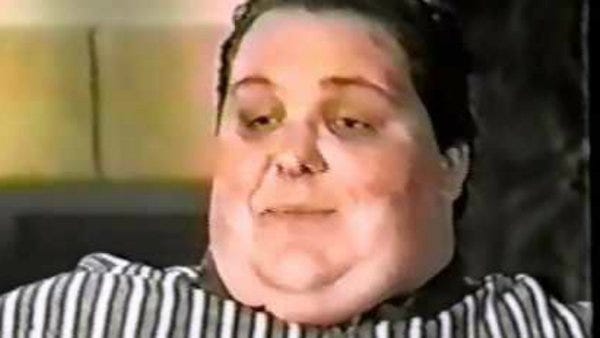
Penny Banner 5-12-2009 at the age of 73
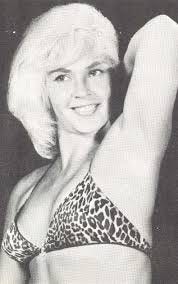
Leo Garibaldi 5-12-2008 at the age of 78

Gorgeous George, Jr 5-12-2012 at the age of 75

50-Year Flashback to the Western End of the Tennessee Territory:
No Lawler in Memphis in the Spring of 1975
According to Bill Dundee, Jerry found himself in Georgia during this time because he had bucked Jerry Jarrett on being booked in some of the smaller towns in the Tennessee Territory and Jarrett's response was if you can't make the smaller towns to help the business, you don't need to make the bigger ones either. Jarrett had established a relationship with Jim Barnett in Atlanta by being his first booker in Georgia when Barnett came back to the United States after having the highly successful World Championship Wrestling promotion in Australia for the previous decade. Through the Jarrett and Barnett connection and due to Lawler's "star-stubborn" attitude, Lawler found himself working in Georgia. Now, to be fair, Lawler had been brought to Georgia before during Jarrett's booking run and also the year prior in 1974 to some success. Lawler also did not go alone, Don Greene went as well and they won the Macon City Tag Team Titles in Macon, Georgia.
This opened up a spot on top in Memphis and in the Western end of the Tennessee empire and as I wrote in last Wednesday's issue, "The Big 4" babyfaces on top were Tojo Yamamoto, Jackie Fargo, George Gulas and Jerry Jarrett. Before anyone objects to George's name being included in that list, I'm only talking in terms of booking and push. It only takes a cursory look at the booking sheets and results of the time in 1975 to see these four were being used interchangeably in both ends of the Territory and also ancillary places talent was being sent like Knoxville and Johnson City. The other two babyfaces included in this large territory were Eddie Marlin and Tommy Gilbert as well. Most professional wrestling offices had anywhere from 2 to 3, perhaps 4 babyfaces that could be used on top in the big weekly towns, in the Spring of 1975, Tennessee had 6 to run two A-Shows a night every week, with a few B-Shows and spot shows thrown in and that didn't include Jerry Lawler. In addition to this embarrassment of riches on the face side, they had Tennessee wrestling royalty to use in Memphis.
The Three Fullers (Welch Family)

Pictured: Roy Welch
The Welch Family dynasty in wrestling is complicated to explain and this will be a simple cursory thumbnail sketch to set the stage for the scene in 1975. Roy Welch was an oil field worker in Borger, Texas in the 1920s when he met the original Dutch Mantell around Amarillo and Mantell took a liking to the young oil roughneck from Oklahoma. Mantell took Welch under his wing, and he trained him to wrestle, which would have been considered "shooting" in those days. In other words, he taught him to legitimately hurt his opponents through rough tactics and submission holds. The two maintained a close relationship in Texas and Welch migrated to the Midwest in the State of Ohio and began working in the surrounding states. Roy Welch then brought his brothers Ed and Herb into the business and while they may not have been the first to demonstrate and practice tag team wrestling, they were closely associated with it through the 1930s and 1940s. Eventually, younger brother Lester entered the business as well. Roy was an enterprising individual, who quickly understood from Mantell in Amarillo that money in wrestling was in the ownership and promotion part of the business, so Roy and his brothers set about "owning and promoting towns" down their journeys into Indiana, Kentucky, Missouri and Tennessee. Having a wide scope of vision, Roy determined, as the Generals of the Civil War had almost one hundred years before, that being centrally located, Tennessee could be the central key to the South geographically. That led to the establishment of the booking office for wrestlers in Dyersburg, Tennessee.
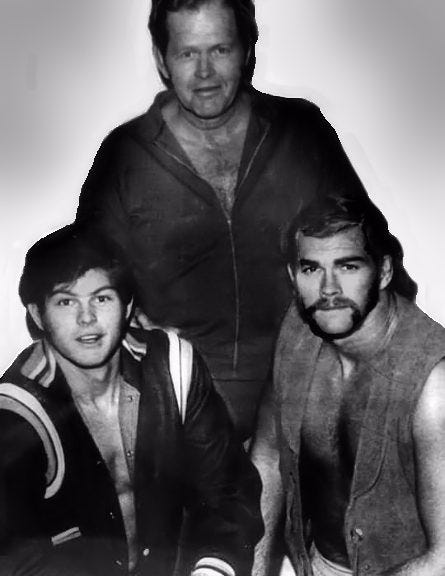
Pictured: Buddy, Ronald, Robert Fuller (Welch)
Roy's son Edward, nicknamed Buddy entered the wrestling business in 1951 and was trained by his dad and Uncles. Not wanting anyone to know he was part of the Welch family for obvious reasons, most obvious being taking ribbing from other wrestlers for being the Promoter's kid. He picked up the name from another wrestler in the locker room using the name "Fuller", so he appropriated the name as his own. Buddy ended up having a long and successful career both in the ring and in the promotion end of the business, taking much of the things his father before him had employed to successfully fun towns and develop territories. One of his biggest successes was the town of Memphis. Fuller had a great mind for the business, and Memphis, under his leadership had one of its biggest drawing periods in its long history. Utilizing the new advent of television in 1959, Fuller leveraged the new media delivery device to bring the hard-hitting action of southern style wrestling into people's living rooms. He coupled that with his own strong personality and presence with an amazing heel performer built for the new television era, Sputnik Munroe. In December of 1958, the crowds in Memphis averaged around 300 fans, by the Summer of 1959, they were drawing around 5,000. Buddy Fuller cut out the extreme gimmicks on shows like oversized wrestlers or the little people (called midgets at the time) and focused strictly on storylines, personal issues and hard-hitting matches. Fueling that also was utilizing another legitimate babyface shooter, Billy Wicks. Fuller was drawing gates on average of $6,500 with ticket prices at Ellis Auditorium of 1.00 for general admission and $2.40 for ringside.
Fast forward in the Time Tunnel 15 years into the future to 1975 and Buddy has two, young fiery sons, Ron and Robert Fuller (Welch), the grandsons of Roy Welch. Primarily raised on a farm near their grandfather, Roy in Dyersburg and then later on Buddy's ranch in Loxley, Alabama, these two boys know the professional wrestling business from birth, being trained by their grandfather, father and close friends of the family in the business. It reminds me of a parallel in the music business, when Hank Williams, the great country music star, had a son in Nashville, Hank Williams, Junior. Every major star and musician in the business came by Williams' house and they were all too happy to show young Hank how to play instruments and write songs. The same could be said for Ron and Robert Fuller. Their father ran a wrestling territory that included Memphis, Mobile, Alabama, Jackson, Mississippi and Pensacola, Florida. Many, many stars visited the farm in Loxley and were happy to get in the backyard ring with the boys.
Ron got his start in the business in a few towns in the Tennessee circuit in 1968 but really got going in Florida in 1970. He had a few runs with the Florida Title and the Southern Title and after briefly quitting the business to pursue real estate, ended up doing what the family was always skilled at, becoming the local promoter in West Palm Beach for Eddie Graham's Tampa office. West Palm was the B-Show, weekly Monday night town, with the longtime Orlando being the A-Show. But, with persistence and hard work, Ron got West Palm up and on fire, drawing great crowds before approaching the Knoxville, Tennessee promoter about buying his promotion. Ron completed that transaction in early Fall of 1974, the Nashville office putting the NWA Southern Heavyweight Title on him around that time. So, he was trying to build his new promotion in Knoxville, while traveling his grandfather's Tennessee Territory defending the Southern Belt. Robert broke in having his first match in 1969, at the famous Farm Center in Dothan, Alabama. Robert worked around Alabama, Georgia and Florida, as well as Tennessee in the first few years of the 1970s, having a very strong run in Tennessee in the Summer of 1974.

Pictured: Bill Dundee & George Barnes
The stage was set on the babyface side for these three legacy performers in the Welch Family to keep the Memphis business strong with the hot, young heel, Jerry Lawler gone to Georgia. They just needed big time heels to work with. Enter the Australian team of George Barnes and Bill Dundee in February of 1975, when they made their first appearance on Birmingham, Alabama television, February 1st, 1975, at WMBG-TV. Their first house show appearance was in Nashville at the Fairgrounds Arena on February 5th vs Dennis Condrey and Jim Gagne. They got over as hated foreign, arrogant and brash to the Southern crowds. Jerry Jarrett had been offered a job booking Australia for Jim Barnett a year or two earlier and when he refused the job, he recommended Bobby Shane for the position. Shane took the job and when he got there, Dundee was a low mid-card to opening match guy and Shane suggested he go to the United States and work for Jarrett. Dundee took a chance and did it, taking Barnes with him. Jarrett immediately liked them and saw potential by juxtaposing them against the Southern family Welch\Fuller royalty. What could sell more tickets than the hometown born and bred Father and Sons against these funny-talking, Australians who thought they walked on water? By the way, I'm a Southerner and yes, I'm aware we are the ones who talk funny. The first thing Jarrett did was to have Barnes and Dundee win the NWA Southern tag Titles from Eddie Marlin and Tojo Yamamoto in their first few weeks in the Territory, putting the heels over strong from the beginning, slowly working toward the Fuller program.
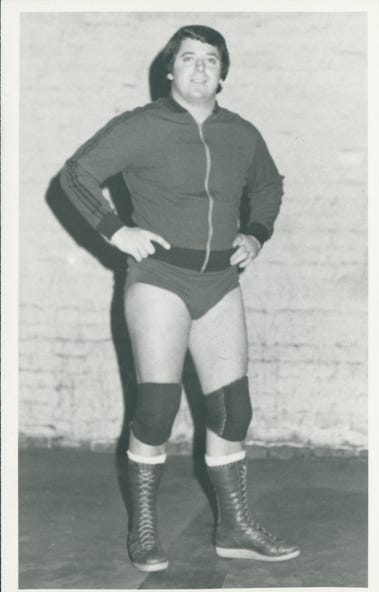
Pictured: Johnny Gray
Jarrett also had an Englishman on the roster named Johnny Gray that he paired with Barnes and Dundee as well for 6-man tags and add to the foreign, arrogance and superiority to the hometown boys. Gray started calling Buddy Fuller an "old man" on interviews, further adding wood to the already burning fire. Intertwined with this program on top, Jarrett also got two bookings on Jack Brisco in April for NWA World Title Matches for Ron, being the Southern Champion, top singles champion in the area. All of the six guys worked very stiff and snug in the matches, which even increased the believability, the fans bought it and came to all the towns and buildings to see it.
Here's a look at the program, Jerry Jarrett booked in the Mid-South Coliseum in Memphis for this run:
50-Year Flashback to 8-weeks of the Barnes& Dundee vs Fuller Family Program in Memphis, Tennessee:
Monday, 3-24-1975: George Barnes and Bill Dundee (CH) defeated Robert Fuller and Phil Hickerson by DQ for the NWA Southern tag Titles attendance: 5,989
Monday, 3-31-1975: George Barnes & Bill Dundee (CH) defeated Buddy Fuller and Robert Fuller by DQ for the NWA Southern Tag Team Titles attendance: 9,582
Monday, 4-7-1975: George Barnes and Bill Dundee (CH) defeated Buddy Fuller & Robert Fuller for the NWA Southern Tag Team Titles, attendance: 8,335
Monday, 4-14-1975: Buddy Fuller & Robert Fuller defeated Bill Dundee & Johnny Gray in a Mississippi Chain Match (non-Title Match), attendance: 11,300 **Also on top Fuller vs Jack Brisco, NWA World Championship Match
Monday, 4-21-1975: George Barnes & Bill Dundee (CH) vs Ron & Robert Fuller ended in a no contest for the NWA Southern tag Team Titles, attendance: 9,286
Monday, 4-28-1975: George Barnes & Bill Dundee (CH) defeated Robert Fuller & Jimmy Golden (cousin) for the NWA Southern Tag Team Titles, attendance: 9,324 *Also on top Ron Fuller vs Jack Brisco, NWA World Championship Match
Monday 5-5-1975: Ron & Robert Fuller defeated Bill Dundee & George Barnes (non-title), attendance: 5,396
Monday 5-12-1975: Buddy, Ron & Robert Fuller defeated George Barnes, Bill Dundee & Johnny Gray, attendance: 5,149
How The Television Worked in 1975 for the Western End of Tennessee
This gives you an idea of how wrestling bookers and producers would pencil out an 8-to-12-week strategy for a specific town in the Territory travel loop. Memphis was the largest city population wise in the geography, had the largest capacity building for shows and was one on the towns where they had a studio-produced television show, which was live. The way Jarrett arranged the schedule for his Western end of the Territory was the Memphis television show should be done live on Saturday morning at WHBQ-TV and recorded live to tape with commercial break left open for local interview inserts to be used for interview segments to localize the events for the town. The television show would be focused on selling tickets for Monday's night's Memphis show, so, for example on television on March 22nd, they promoted and did angles for the show Monday night on March 24th with Barnes and Dundee vs Fuller & Hickerson. Then tape would be sent around to the other towns Jarrett had, which were Louisville, Kentucky, Evansville, Indiana and Lexington, Kentucky. Those tapes would air on Saturday March 29th in those markets and Barnes & Dundee vs Fuller & Hickerson would headline Louisville, Evansville and Lexington on April 1st through the 3rd. The Memphis show on March 29th would be pushing the Monday night, March 31st card, that tape went around the horn and so on. The other markets were always one week behind Memphis. Jarrett would adjust the matchups, interviews and angles somewhat, as they were not always exactly duplicated, but very close. This was just one section of the vast Gulas-Welch Territory as similar things were happening with Nashville, Chattanooga, Huntsville and Birmingham television, as well as Ron Fuller having his own television and events to juggle in and around in Knoxville.
One Thing I Learned Today About Pro Wrestling History:
Allen Coage, known to wrestling fans as Bad News Allen won a bronze medal at the 1976 Montreal Olympic Games in judo.
Thank You for Reading
I'm Tony Richards, Pro Wrestling Historian, Author and Storyteller. I share pro wrestling historical items in each issue of the Time Tunnel Pro Wrestling History Newsletter. Thanks for reading! If you enjoy my information on select events, matches and insights, please share it with folks you think might like to be a subscriber!
Remember, paid subscribers get access to exclusive and special content such as to commemorate his induction to the WWE Hall of Fame, I'll be publishing some special issues including a multi-part flashback on the Georgia Championship Wrestling Territory in May 1975 including all the recorded cards for the month, some special audio and video interviews on territory pro wrestling and more.