



Written and Produced by Tony Richards
January 6th in the Time Tunnel:
Happy Birthday to those who have passed on and to those great wrestlers still with us:
In Memoriam:
Fred Kohler 1903
Gladys “Killem” Gillem 1920
Harold Watanabe\Tojo Yamamoto 1927
Professor Toru Tanaka 1930
Tony Halme\Ludvig Borga 1963
Happy Birthday:
Jackie Moore (63)
Charles Ashenoff\Konnan (63)
RIP Memorial: We stop & remember those who have passed on this day and gave themselves to the business for us, the fans. We salute you and thank you.
Mario Galento 1-6-1989 at the age of 73
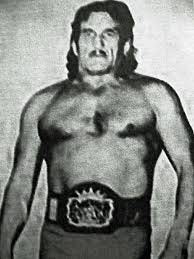
Dick Lane 1-6-1992 at the age of 60

Bobby Davis 1-6-2021 at the age of 84

Significant Debuts:
Jose Avellano\Dos Caras (18) 1970
Miguel Diaz\Rey Misterio (21) 1976
Konnan (23) 1987
40 Year Flashback: 1-5-1986: The Jumping Bomb Angels (Itzuki Yamazaki and Noriyo Taateno) defeated The Atrocious Alliance (Bull Nakano and Condor Saito) two falls out of three falls to win the WWWA World Tag Team Titles
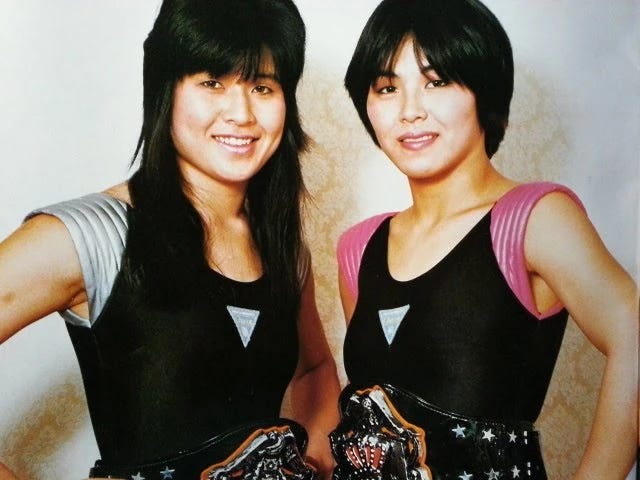
The Jumping Bomb Angels formed in late 1984, emerging from AJW’s rigorous training dojo as part of the 1981 rookie class. Noriyo Tateno, with her sturdy build and crowd-pleasing spots, and Itsuki Yamazaki, known for her slender frame and lightning-quick agility, complemented each other perfectly. Their style, often dubbed “Angel Style,” revolutionized tag team wrestling with breakneck speed, synchronized aerial attacks, and innovative maneuvers.Moves like missile dropkicks, top-rope armdrags, butterfly suplexes, and flying cross-bodies set them apart from their peers, emphasizing fluid transitions and double-team sequences that left audiences breathless. Before teaming up, both had successful singles runs: Tateno captured the AJW Junior Championship in 1982 by defeating Chigusa Nagayo, holding it until 1984, while Yamazaki won the vacant AJW Championship that same year and defended it for over a year. As a unit, they finished second in the inaugural AJW Tag League The Best in 1985, trailing only the iconic Crush Gals (Lioness Asuka and Chigusa Nagayo), who were cultural icons in Japan, drawing massive crowds and inspiring a generation. The Angels represented the future of joshi—technical prowess blended with high-risk athleticism—yet they often played second fiddle to the Crush Gals’ star power.

On the opposite side stood Bull Nakano and Condor Saito, members of the notorious Atrocious Alliance (Gokuaku Domei), a heel faction led by the infamous Dump Matsumoto. This group epitomized villainy in AJW, employing brutal, street-fight tactics that contrasted sharply with the Angels’ finesse. Bull Nakano, just 17 years old at the time, was already a rising star with her intimidating presence: half her head shaved and dyed blue, she wielded nunchucks during entrances and incorporated martial arts poses into her persona. Nakano’s style was aggressive and power-based, relying on chokes, strikes, and weapon-assisted chaos to dominate opponents. Her partner, Condor Saito, who was active from 1985 to 1987, brought a similar edge with her striped singlet, heavy makeup, and dyed blonde hair with brown tips. Saito had recently claimed the AJW Junior Championship, adding legitimacy to her role as a mid-card threat. Together, they embodied the Atrocious Alliance’s ethos of unbridled aggression, often using foreign objects and outside interference to tip the scales. The titles were vacant heading into the match, likely due to storyline developments or injuries, setting the stage for a high-stakes clash between innovation and brutality.
From the opening bell, the Angels showcased their superior speed and teamwork. Tateno and Yamazaki darted around the ring, executing high knees, dropkicks, and butterfly suplexes that kept Nakano and Saito on the defensive. The Atrocious Alliance, true to form, resorted to brawling tactics: chokes, stomps, and even nunchuck-assisted attacks outside the ring. The crowd at Korakuen Hall, a storied venue known for its passionate fans, erupted as the Angels bridged out of slams and countered with aerial assaults. However, the villains’ relentless aggression led to chaotic sequences, including brawls spilling to the floor. In a surprising twist, the match ended via count-out when Nakano and Saito failed to return to the ring after their outside onslaught, awarding the victory—and the championships—to the Angels. While the bout was rated modestly at around two-and-a-half stars due to the Alliance’s more basic offense clashing with the Angels’ advanced maneuvers, it was a testament to the Angels’ resilience and adaptability. The win came at a time when AJW was booming, with joshi wrestling drawing record crowds and influencing global perceptions of women’s athleticism in the sport.
The significance of this victory extended far beyond the immediate triumph. For the Jumping Bomb Angels, capturing the WWWA World Tag Team Championship on January 5, 1986, solidified their status as top contenders in AJW, a promotion dominated by factions like the Crush Gals and the Atrocious Alliance. They held the titles for 74 days until March 20, 1986, when they dropped them to Asuka and Nagayo in a highly anticipated rematch. This reign served as a springboard for international success; by 1987, the Angels toured the WWF (now WWE), where they dazzled American audiences with their futuristic style, winning the WWF Women’s Tag Team Championship from the Glamour Girls at the inaugural Royal Rumble in 1988. Their influence rippled through joshi history—Manami Toyota, a future legend, credited the Angels as her inspiration, adopting their long-haired, feminine aesthetic and moves like the Walk-Up Armbar Takeover from Yamazaki, who mentored her. For Nakano and Saito, the loss was a chapter in their villainous arcs; Nakano would go on to become a global icon, headlining in WCW and WWF, while Saito’s career was shorter but memorable for her role in the Alliance’s terror.
In retrospect, the Jumping Bomb Angels’ defeat of Bull Nakano and Condor Saito on that winter day in Tokyo was more than a title change—it was a symbol of joshi’s golden age, where athletic innovation triumphed over brute force. This match, preserved in grainy footage and fan recollections, reminds us of the era’s raw energy and the women who pushed boundaries in a male-dominated industry.
Thank You for Reading
I’m Tony Richards, Pro Wrestling Historian, Author and Storyteller. I share pro wrestling historical items in each issue of the Time Tunnel Pro Wrestling History Newsletter. Thanks for reading! If you enjoy my information on select events, matches and insights, please share it with folks you think might like to be a subscriber!
Remember, premium investors get access to exclusive and special content such as some special issues including a multi-part deep dives on wrestling territories, wrestler bios and championship title histories, special audio and video interviews on territory pro wrestling and more available in the Pro Wrestling Time Tunnel for Premium Investors.