



Written and Produced by Tony Richards
January 2nd in the Time Tunnel:
Happy Birthday to those who have passed on and to those great wrestlers still with us:
In Memoriam:
Jim Londos 1894
Dennis Stecher 1917
Benny Ramirez\The Mummy 1932
Alberto Torres 1934
Jerry Monti 1940
Happy Birthday:
(none)
RIP Memorial: We stop & remember those who have passed on this day and gave themselves to the business for us, the fans. We salute you and thank you.
Nell Stewart 1-2-2001 at the age of 74

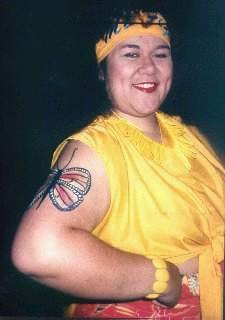
Emily Dole\Mountain Fuji 1-2-2018 at the age of 60
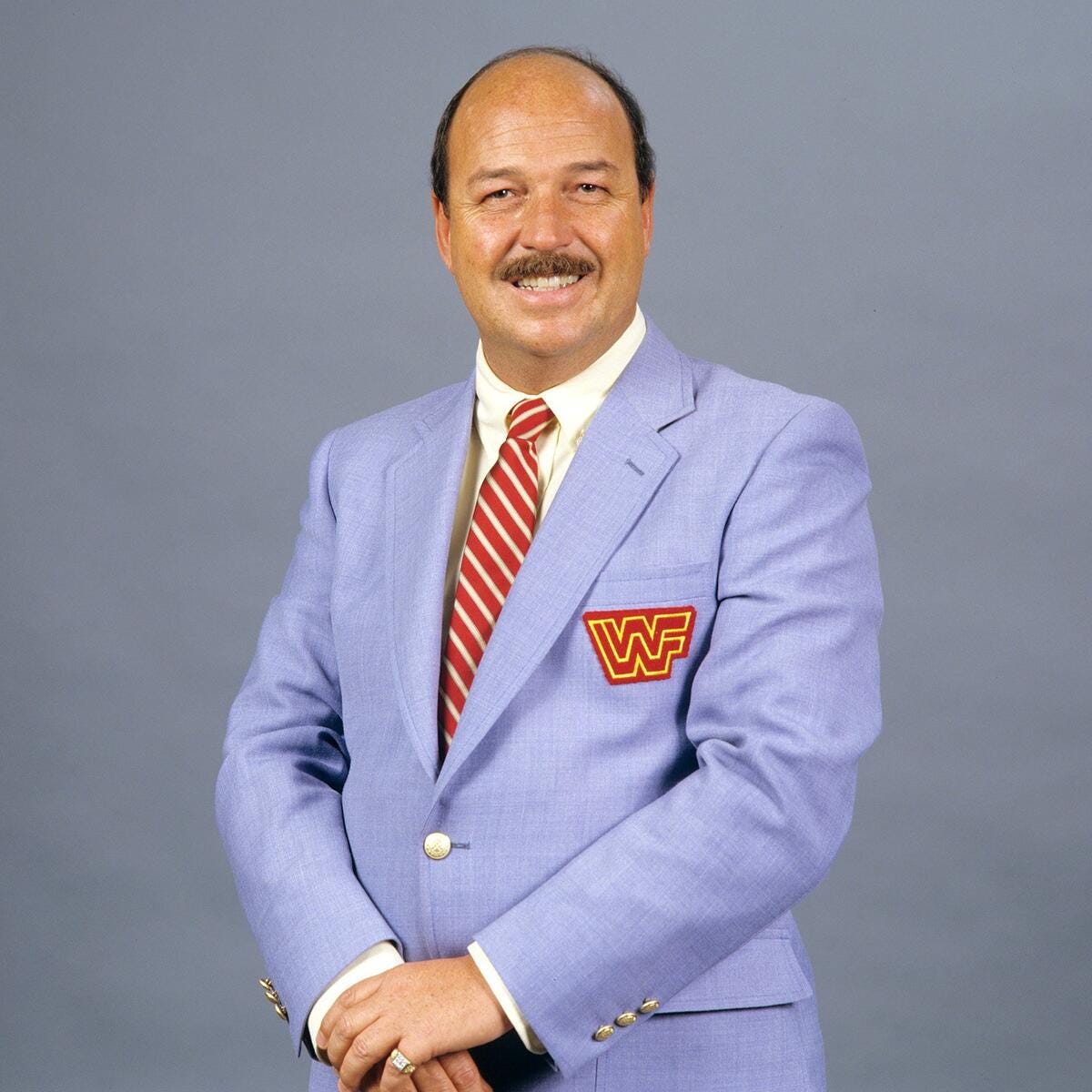
Gene Okurlund 1-2-2019 at the age of 76
Jack Curtis, Jr 1-2-2021 at the age of 86

Significant Debuts
Ed Farhat, Jr\Captain Ed George (27) 1977
Akira Taue (27) 1988 tagged with Giant Baba to defeat Buddy Landel & Paul Harris at Korakuen Hall in Tokyo, Japan
The Life and Career of Nell Stewart
Often billed as the “Alabama Assassin” or “Blonde Bombshell,” she rose from humble beginnings in the American South to become a top-tier competitor in a male-dominated sport, navigating personal controversies, fierce rivalries, and the exploitative dynamics of the wrestling industry. Her career spanned over two decades, marked by championship wins, high-profile feuds, and a lasting legacy as one of the era’s most enduring female athletes, despite never capturing the world title.
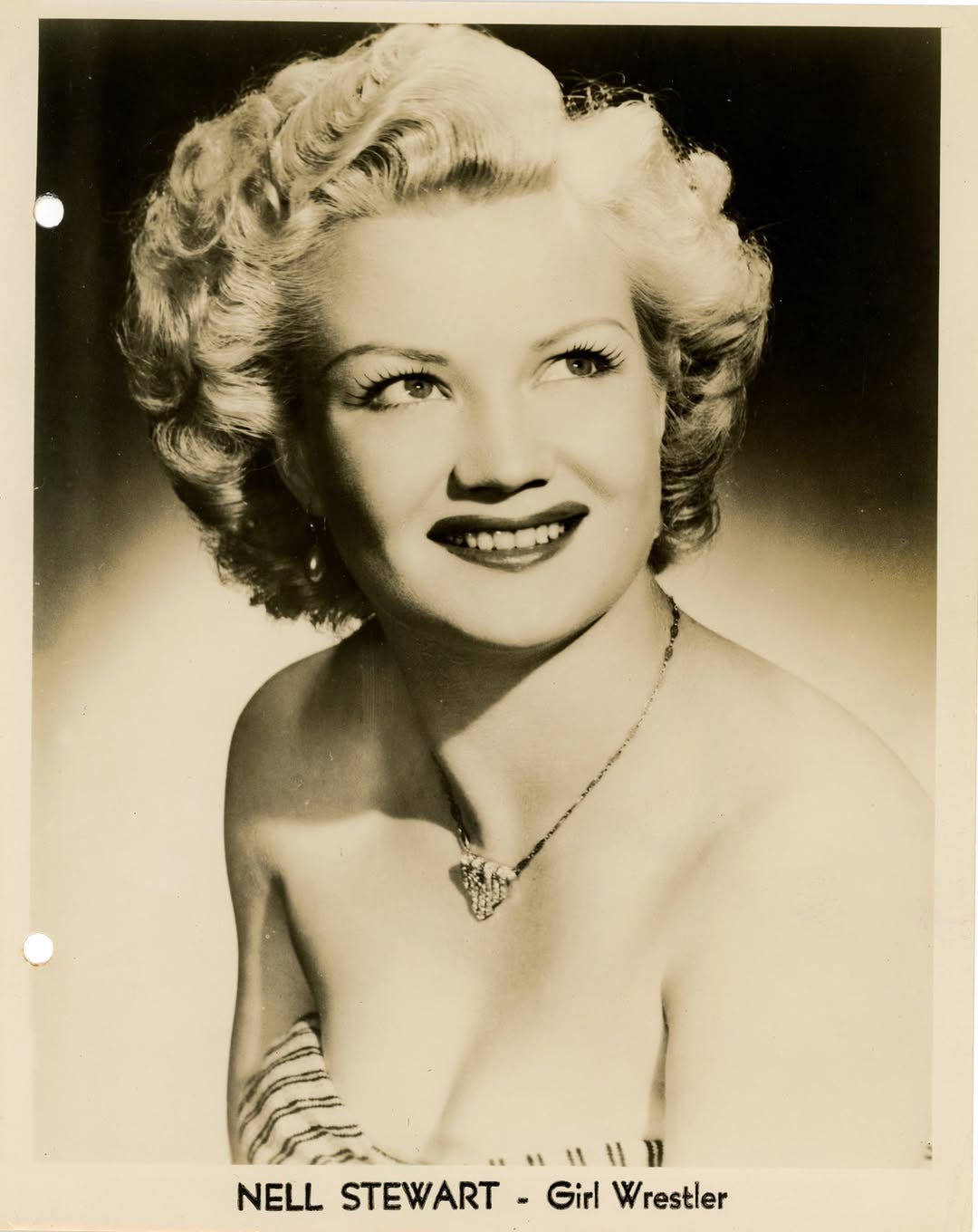
Verdie Nell Stewart was born on September 20, 1927, in Birmingham, Alabama, into a family struggling with poverty during the Great Depression era. Growing up in a challenging environment, she attended Mortimer Jordan High School, where she displayed early athletic talent by reportedly playing baseball on the boys’ team—a bold move that foreshadowed her boundary-pushing career. However, economic hardships forced her to drop out of school early to support her family, taking on full-time work as a teenager. By age 15, in 1943, Stewart was employed as a waitress in a Birmingham restaurant, a mundane job that would unexpectedly launch her into the business of being a female performer in the male-dominated business of pro wrestling.
Inspired by the glamour and strength of Mildred Burke, the reigning women’s wrestling champion at the time, Stewart harbored dreams of a more exciting life beyond her daily grind. Her enthusiasm caught the eye of fellow wrestler Johnnie Mae Young, who spotted her potential while dining at the restaurant and introduced her to promoter Billy Wolfe, Burke’s husband and a powerful figure in women’s wrestling. This encounter marked the beginning of Stewart’s transformation from an ordinary Southern girl to a wrestling sensation.
At just 15 years old, Stewart entered Wolfe’s wrestling troupe, a decision that thrust her into a rigorous and often unforgiving world. Wolfe, who managed a stable of female wrestlers, took her under his wing as both mentor and manager. Her primary trainer was Gladys “Killem” Gillem, a pioneering wrestler herself, though their relationship was strained from the start. Gillem resented Stewart for seemingly replacing her as Wolfe’s favored companion, leading to tension that spilled over into their professional interactions. Despite this, Gillem provided essential training, and Stewart debuted in Mexico City before turning 16 in 1944. Her first match was a quick loss to a local competitor, but she soon turned the tide, winning bouts against seasoned opponents like Gillem herself.
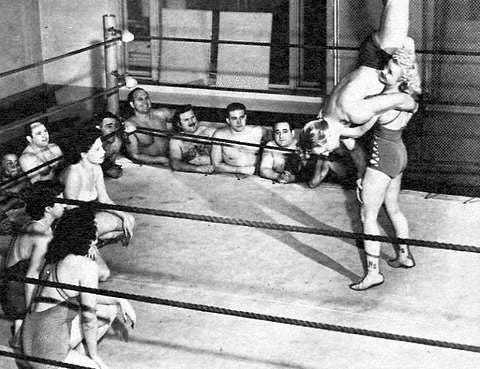
Pictured: Nell Stewart performing a bodyslam in training
Wolfe orchestrated a dramatic physical makeover for Stewart, enforcing a strict diet of steak, salads, fresh fruit, whole wheat bread, and honey, combined with intense exercise regimens. Standing 5 feet 4 inches tall and weighing around 140 pounds, the brunette teenager was transformed into a blonde bombshell resembling 1940s Hollywood star Betty Grable, complete with a focus on her 38-inch bust to enhance her marketability as a sex symbol. Wolfe promoted this change aggressively, distributing “before and after” photos to newspapers, which helped establish her as a glamorous yet formidable figure in the ring.
Stewart quickly established herself as a villainous “heel” in the wrestling circuit, employing dirty tactics such as hair-pulling, finger-biting, and other underhanded moves that drew boos from crowds but solidified her notoriety. Billed under monikers like the “Alabama Assassin,” “Alabama Bombshell,” or “Betty Grable of the Mat,” she favored moves like the Sleeper Hold, Body Scissors, and Head Scissors. Her career peaked in the 1950s, where she captured several regional titles, including the National TV Championship (also known as the WLW Television Women’s title, won in a 1953 tournament by defeating Ida Mae Martinez two falls to one), the Texas Championship, and the Ohio Championship.
A highlight was her 1952 60-minute draw against Mildred Burke, showcasing her ability to compete at the highest level. Stewart was involved in notable feuds with wrestlers like The Lady Bolo, Violet Valentine, Mattie Bell, Joan Blevins, and especially Burke, fueled by rumors of Stewart’s affair with Wolfe during his marriage to Burke. Wolfe hyped her for a world title tournament, but Burke’s intervention exposed the plan, leading to Stewart’s loss to June Byers in the finals. Beyond competing, Stewart contributed to the industry by training newcomers and serving as secretary for Wolfe’s Girl Wrestling Enterprises Inc. after his divorce from Burke.
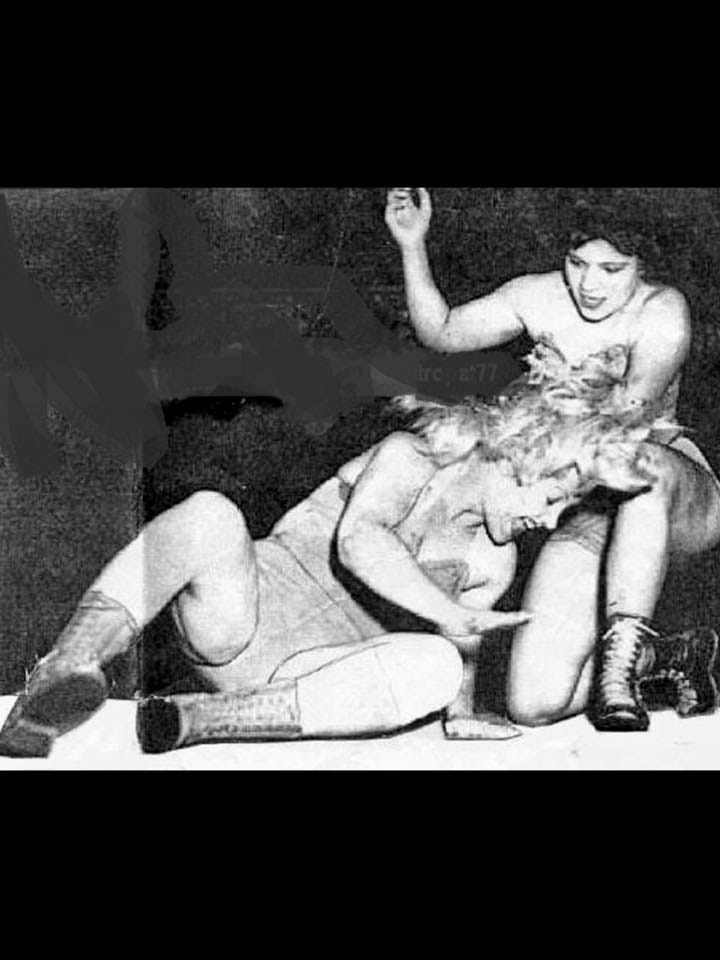
Pictured: Nell Stewart’s hair being pulled in a match with Gloria Barattini in Los Angeles, 1957
Stewart’s personal life was intertwined with her career, often marked by controversy. In 1953, she married Billy Wolfe in what was described as a marriage of convenience, shortly after his divorce from Burke. However, reports suggest her true affections lay with NWA board member Joe Gunther, with whom she lived after retiring. She left Wolfe in 1954 but returned briefly in 1957 to lead a faction against Byers’ group. These relationships highlighted the exploitative power dynamics in women’s wrestling, where promoters like Wolfe wielded significant control over athletes’ lives.
Stewart retired from active wrestling in the mid-1960s, having maintained her status as a top competitor until near the end. Post-retirement, she settled in New Orleans and later became reclusive, struggling with a drinking problem and living in isolation in the mountains until rediscovered by peer Ida Mae Martinez. She battled cancer in her final years, passing away on January 3, 2001, at age 73 in Birmingham, where she was buried at Friendship United Methodist Church Cemetery in Gardendale. Her wrestling peers, including Martinez and Penny Banner, rallied to cover her medical expenses, reflecting the camaraderie among the era’s female wrestlers. In 2002, Stewart was honored posthumously by the Cauliflower Alley Club, cementing her place in wrestling history.
Thank You for Reading
I’m Tony Richards, Pro Wrestling Historian, Author and Storyteller. I share pro wrestling historical items in each issue of the Time Tunnel Pro Wrestling History Newsletter. Thanks for reading! If you enjoy my information on select events, matches and insights, please share it with folks you think might like to be a subscriber!
Remember, premium investors get access to exclusive and special content such as some special issues including a multi-part deep dives on wrestling territories, wrestler bios and championship title histories, special audio and video interviews on territory pro wrestling and more available in the Pro Wrestling Time Tunnel for Premium Investors.