


May 11 in the Tunnel:
Happy Birthday to those who have passed on and to those great wrestlers still with us:
In Memoriam:
Mark Hussey\Rocco\Black Tiger 1951
Happy Birthday:
Jesus Andrade Salas\Espanto Jr\Pentagon (69)
Robert Rancourt\Sunny War Cloud (69)
Thomas Boric\Paul Diamond (64)
Billy Kidman (51)
Bobby Roode (49)
Jose Cordero\Lince Dorado (38)
RIP Memorial: We stop & remember those who have passed on this day and gave themselves to the business for us, the fans. We salute you and thank you.
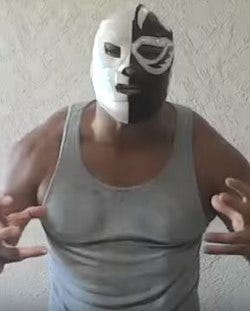
Cesar Gonzalez Barron\Silver King 5-11-2019 at the age of 51
Origins of the Super Card Flashback:
We started the week off this past week discussing the expansion thoughts being executed by the Amarillo West Texas Office business leadership in April and May of 1975 by talking about their re-entry to Arizona, specifically Phoenix, with a nice card on Monday May 6th. The cooperation of the National Wrestling Alliance with the World Champion's schedule, along with one of the owners of Amarillo, Dory Funk Jr, as the take the biggest money match of the decade literally from one end of the Country to the other. Following Monday's 60-minute time limit draw in Phoenix, Champion Brisco and Challenger, Funk Jr board an airplane and head for Miami, Florida, where they do another long match ending in disqualification on Tuesday night. Brisco gets back on a plane for West Texas where the regular Wednesday night town in the Amarillo Office schedule was the "old reliable" Fair Park Coliseum in Lubbock, Texas where Brisco squared off with perhaps the biggest draw of all time in West Texas, and absolutely the biggest ticket-seller in Lubbock, Ricky Romero. Romero, besides being the father of 1980s wrestling stars, Jay and Mark Youngblood, was also one of the minority partners in the Amarillo office. The interesting thing about this match on May 7th in Lubbock is the ingenuity in the thinking of the Amarillo booking team. Romero had been so popular in the Western States, a couple years prior they had created a championship just for him, the Rocky Mountain Heavyweight Championship. If it gives you any idea how over Romero was, they made the match for Romero's Rocky Mountain title and a non-title match for Brisco's NWA World belt. Romero pinned Brisco to defend his title and obviously setting up another ticket selling event for the NWA World Title in Lubbock down the road. The semi-main this night in Lubbock was an NWA international Heavyweight Title match with the Champion, Ciclon Negro defending against Moose Morowski, a big bruiser and brawler of 276 pounds from British Columbia, who won the match, but not the title due to DQ.
This brings us to Thursday night, the regular weekly night for wrestling in Amarillo at the Sports Arena in the city Fairgrounds and the focus of today's 50-year flashback. By the Mid-1970s, wrestling promoters were having what were considered "Supercards" for their fans at the time and Thanksgiving typically had "Supershows" booked for that evening going back into the 1960s. While in 1975, we would still be 8 years away from the first Starrcade by Jim Crockett Promotions, the seeds of such an event had already been planted years ago. Bill Watts would run his first supercard in New Orleans at the Superdome just a year later. Atlanta's office had hosted the first "Omni Spectacular" two years prior as a show of force against the rival All South Promotion in the NWA's offensive force multiplier strike to win the Battle for Atlanta wrestling war. Eddie Graham would host a "Super Bowl of Wrestling" in 1978 and a "Last Tango in Tampa" named to duplicate some of the big Don King boxing events of the early 1970s. Vince McMahon, Sr would host a huge Shea Stadium event to kick off the next decade in professional wrestling. I'm not taking anything away from Starrcade or its significance, I'm simply pointing out what those of us who study wrestling history continually discover, there are not many original concepts in wrestling and certainly none that didn't evolve over time. The "Supercard" concept certainly evolved.
We can push the joystick on the Time Tunnel back approximately another ten years in Texas to discover the original "Parade of Champions" Supercard had its origins in the Dallas Big Time Wrestling Office, but in the 1960s, not the well-known 1984 version, affectionately named the David Von Erich Memorial. Fritz Von Erich carried the "Parade of Champions" brand forward for the event to honor his deceased son, which had originally been used to create an event on January 31st, 1961 at the Sportatorium in Dallas which had a main event of the then-current NWA World Champion, Pat O'Connor defending his championship against Dory Dixon in a match that went to a ninety-minute broadway. You read that right, 90-minutes, two out of three falls, and they went to a draw. This was followed by two events in 1963. They resumed the Parade of Champions with an event at Texas Stadium in Dallas on June 24, 1972, and Dory Funk Jr defending his NWA World Championship on top against Fritz Von Erich, again going broadway in the main event for an hour. They had two such events in 1974 and then one in 1976, before putting the Parade of Champions on pause until the notable event for David's memory in 1984.
50-Year Flashback, 5-8-1975, The Parade of Champions Show at the Sports Arena in Amarillo, Texas
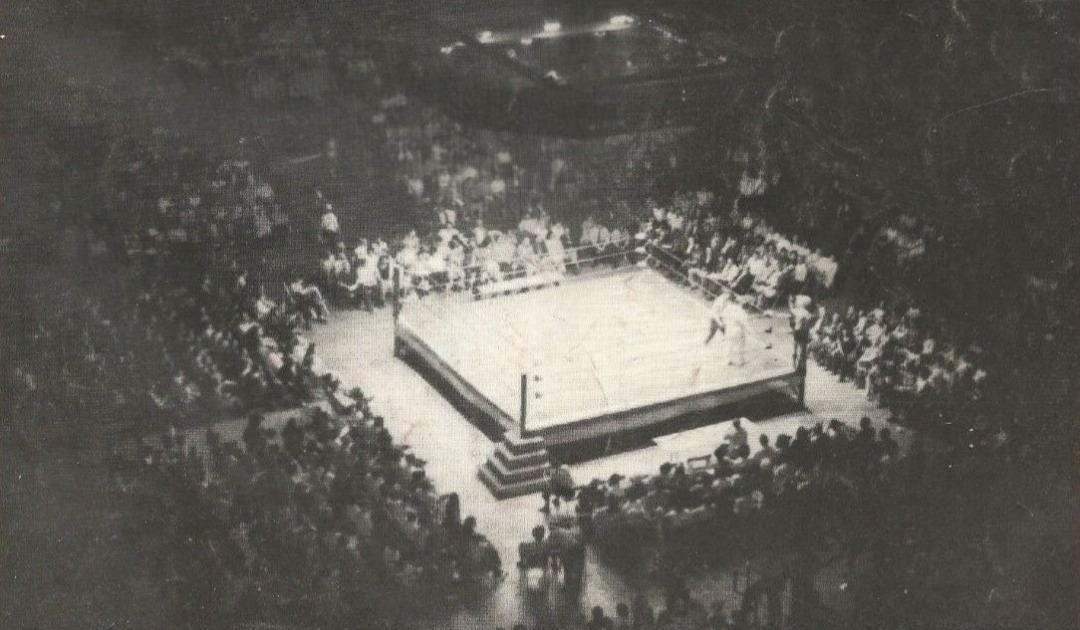
The Amarillo office had been having their own "Supershow" type of show for several years with annual Thanksgiving shows, Christmas shows, Anniversary shows, and "Parade of Champions" shows, one of which we are featuring in today's flashback piece. Amarillo's Parade of Champions show for 1975 happened on May 8th, 1975.
Match Line-Up, Results and *Tony Notes:
Really this is pretty standard for a card in Amarillo with the exception of the match on top, which I will outline with some detail when we get there.
Nick Kozak vs Salvadore Dominguez ended as a 10-minute time limit draw
The Kozak brothers had been wrestling in the Southwest for over a decade by this point, and Nick's brother, Jerry was handing promotion for the local Amarillo matches in the booking office. The Kozaks were originally from Vancouver but had long-since adopted Houston as their hometown. Nick had a fabulous dropkick he executed flawlessly in his matches and was a particularly close friend of the Funk Family in Amarillo. Dominguez also wrestled as "Art Dominguez", he was fairly notable on the West Coast, and he made a few tours of the Southern part of the United States in the late 1960s and mid-70s. This was one of those visits. This was probably a standard NWA-type opening match with good fundamental wrestling to kick off the show, no rule breaking or high spots, just solid mat work and fundamental moves to 10-minutes through. More than likely a strong house show match.
Moose Morowski defeated Frank Dalton in 8 minutes
Dalton was a regular running mate with Don Fargo, who is now working for the Amarillo office and in this night's tag team match. Dalton had a great run in both Louisiana and Alabama in the 1960s and with Fargo wrestled as The Dalton Brothers, Fargo being Jack Dalton. They also had a run as a masked team known as the "Black Hands". Dalton would finish his career as one of the masked Kim-Chee handlers of Kamala, the Ugandan Giant. Morowski, I mentioned earlier as a Canadian wrestler who debuted in Winnipeg in the early 1950s, had a few runs in the AWA starting in 1965, worked internationally in Japan, among almost every territory. He had his last notable run in the Vancouver Territory in the early 1980s before retiring in 1988. His style was a great match for West Texas-style wrestling. Dalton tried to body slam Morowski with Dalton collapsing and Morowski on top of him to win the match.
Ray Stevens defeated Prince Tapu
Tapu was a Samoan wrestler, and I saw him and The Great Tio in Kentucky many times in the early 1980s working for Angelo Poffo and the ICW Promotion. They were sort of the secondary noted team behind the obvious Samoan team of Afa and Sika. Stevens was and is a legend and during this time had bought points the Amarillo office at the end of 1974, as he was also living in Amarillo at the time. He was also doing double duty as one of the AWA World Tag Team Champions with Nick Bockwinkel. Stevens utilized a brain buster on Tapu for the victory.
Bobby Jaggers defeated Scott Casey to win the Amarillo Brass Knuckles Championship in 17:05

The office probably felt they couldn't build up this card as a Parade of Champions type event without at least one title change and this was it. Casey debuted at the beginning of the decade in 1970 and wrestled in Dallas for Von Erich, in the Carolinas for Jim Crockett and a few other promotions. Casey also had a tour in Japan for Baba and All Japan Pro Wrestling being booked by the Funks who were placing American wrestlers in Japan for Baba. Casey, just five years into his career, was a young and energetic and always put a lot into his matches. Another pro wrestler who was initiated to the business in the West Texas "snug type" of working a match. Jaggers is often associated with Amarillo Wrestling, but like Morowski, he was from Vancouver and grew up idolizing Moondog Mayne, a superstar up and down the West Coast. Jaggers re-located to Kansas City in 1973, where he met Dory Funk, Jr while both were wrestling there. Funk Jr convinced Jaggers to split his time between Kansas City and Amarillo and Jaggers developed his "Kansas-Cowboy" gimmick. It would be a couple more years before Jaggers finds his stride, but he gains an early title win as the office uses this long-time Championship to try to get two, young bulls over to the West Texas fans. They had already been around the loop with these two in Texas Bullrope Matches and this was a continuation of this brutal program. The Brass Knuckles match was what became known later as the "taped-fist match" with both wrestlers wrapping their hands in athletic tape and having a combination wrestling match and fight. In the finish, the two collided into each other knocking both to the mat stunned, Jaggers managed to roll over to top Casey for the win.
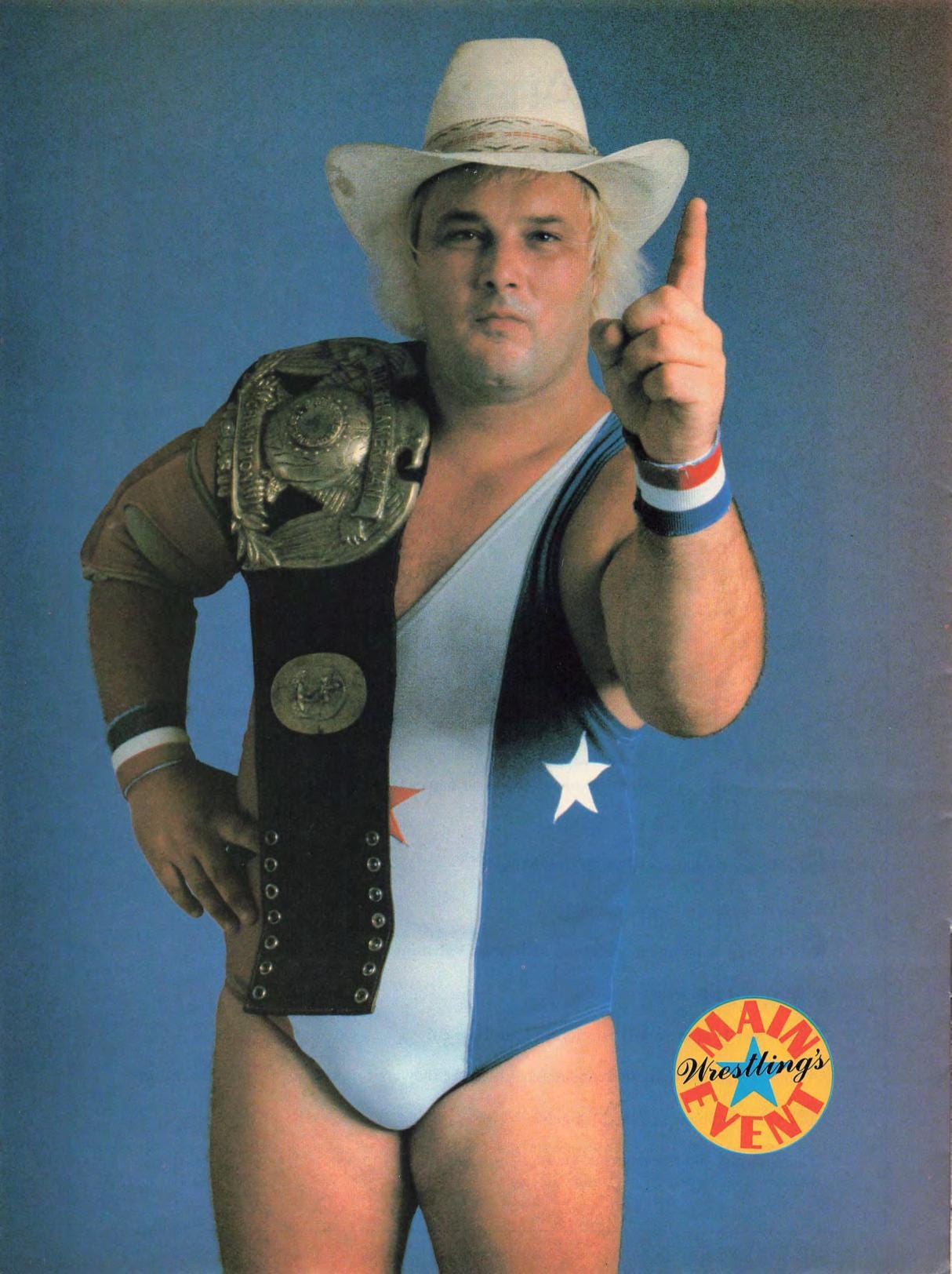
Dory Funk, Jr and Ricky Romero (CH) defeated Black Gordman and Don Fargo by DQ to retain the NWA Western States Tag Team Titles in 12:35
It's probably a close race as far as the most popular tag team of all time in Amarillo, while one would generally give the nod to the Funk Brothers, especially from modern fans who might not know, but running right there in the race are two other teams. Dory Funk Sr and Ricky Romero is probably the answer, with Junior taking his famous father's place in the team as a candidate as well. Junior and Romero were perennial Western States Tag Champs and their big program in the 1970s was with Black Gordman and Great Goliath. Not sure what the explanation for Goliath's absence from this match was, but Gordman and Fargo were DQ'd in the match with Funk Jr and Romero keeping their tag straps.
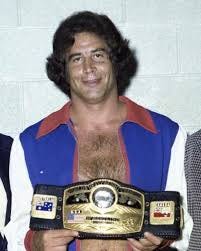
Red Bastien defeated Jack Brisco (CH) by DQ by 2 falls to 1 for the NWA World Heavyweight Title in 20:53
It pains me greatly to not have video tape of this match. Two really outstanding professional wrestlers who were technically excellent going just over twenty minutes. Brisco at just about two years into the NWA world Championship schedule, which was incredibly brutal in itself, probably at the height of his wrestling powers here at the prime age of the era for a world champion at thirty-four. Bastien, who had been a professional a bit longer and nine years older than Brisco, while probably starting to slide from what he once was, he still had wily veteran skills to deliver an outstanding match for a hot crowd. Great workers do great work and with age and experience they learn how to deliver in the ring using their minds and psychology, rather in their younger years, using strictly physical attributes. Brisco was disqualified in the match when longtime referee Ken Farber stopped the match in the third fall penalizing Brisco for using illegal tactics. Bastien won the first fall putting Brisco out with a sleeper hold at eleven minutes and three seconds. Jack won the second fall getting a submission of his own using his finisher, the figure-four leg lock in a quick recovery after recovering from being out from the sleeper.
The Amarillo brain trust did a great job setting up this main event in making this card special. The tone of the match was set with the idea being put over on television that Brisco was unhappy about being forced by the National Wrestling Alliance to come to Amarillo and defend his title. This was a major overall theme continually played up in West Texas based on the Funk and Brisco family feud going back to the late 1960s. Back on a Thursday night card in Amarillo on March 27th, Dory Funk Jr and Red Bastien clashed in a match to determine who would get the World Title shot. Dory Jr won the match and beat Red, but Bastien filed a protest on the match with Sam Muchnick, President of the National Wrestling Alliance, who upheld the protest and even though Funk won the match, Muchnick ordered the World Championship match be given to Bastien. This obviously created a ton of heat in town and sold tickets for the Parade of Champions card to see if Bastien could win the title from Brisco, obviously believing that if he could, Funk Jr would then get a shot at Bastien, who he already had proven he could beat. Even so, if Brisco retains the World title (which he did) another re-match with Funk was already scheduled with Dory Funk Jr in just a few weeks on May 22nd at the Sports Arena and after the show, fans were encouraged to get tickets now! Regardless of the outcome, either Brisco or Bastien would be back to face Dory Funk Jr. Once it was clear it would be Brisco after the show, fans flooded the ticket office.
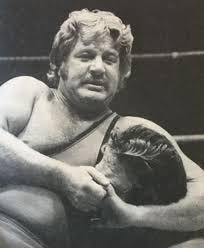
This just another example of how the regional booking offices had to be three steps ahead on the booking sheets, calendars and building schedules to keep fans interested and purchasing tickets to shows, since that was the singular source of revenue for the company and the employees. There was no television revenue and very little merchandising, just mainly ticket sales, which for this show were the "Championship Prices" model. That was 4.00 for ringside, 3.50 for center bleachers, 3.00 for general admission. Children under 12 in center bleachers would be 2.50 and 2.00 general admission. So, a family of four could get great seats in center bleachers to see a high-quality card and the NWA World Title defended for 12.00. Twenty bucks would get everyone a soft drink and popcorn and a program plus keep 14 to 20 guys working a regular schedule.
One Thing I Learned Today About Pro Wrestling History:
Captain Lou Albano's first client as a manager was Crusher Verdu, an immigrant from Spain who hardly spoke English. Albano, who was more than competent as a talker was the perfect match for the monster heel.
Thank You for Reading
I'm Tony Richards, Pro Wrestling Historian, Author and Storyteller. I share pro wrestling historical items in each issue of the Time Tunnel Pro Wrestling History Newsletter. Thanks for reading! If you enjoy my information on select events, matches and insights, please share it with folks you think might like to be a subscriber!
Remember, paid subscribers get access to exclusive and special content such as to commemorate his induction to the WWE Hall of Fame, I'll be publishing some special issues including a multi-part flashback on the Georgia Championship Wrestling Territory in May 1975 including all the recorded cards for the month, some special audio and video interviews on territory pro wrestling and more.