



Written and Produced by Tony Richards
December 20th in the Time Tunnel:
Happy Birthday to those who have passed on and to those great wrestlers still with us:
In Memoriam:
Don McIntyre 1911
Danny Plechas 1916
Happy Birthday:
Junji Hirata\Super Strong Machine (69)
Armando Estraqda\Hazem Ali (49)
RIP Memorial: We stop & remember those who have passed on this day and gave themselves to the business for us, the fans. We salute you and thank you.
“Bulldog” Danny Plechas 12-20-1983 at the age of 67

Benny Ramirez\The Mummy 12-20-1995 at the age of 63

Betty Ann Spencer 12-20-2002 at the age of 65
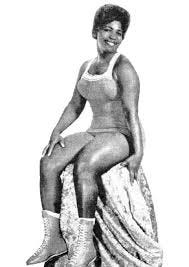
Suzanne Miller\Vivian St. John 12-20-2013 at the age of 63

Raul Mata 12-20-2018 at the age of 71

Miguel Angel Lopez Diaz\Rey Misterio 12-20-2024 at the age of 69

The Life and Career of Bulldog Danny Plechas
“Bulldog” Danny Plechas, a California-born grappler whose career spanned decades and evolved from in-ring brawler to influential booker and referee. Born on December 20, 1916, in California, Plechas became a fixture in the sport, known for his heel antics, unselfish booking style, and contributions to the success of key wrestling territories.
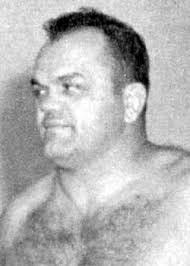
Little is known about Plechas’ early life before entering the wrestling world, but his origins in California placed him in a hotbed for the sport’s West Coast scene. Professional wrestling in the 1940s was booming in the region, with promotions like those affiliated with the National Wrestling Alliance (NWA) drawing crowds to venues in Los Angeles and San Francisco. Plechas made his debut on September 25, 1946, at the age of 29, adopting a brawling, powerhouse style that emphasized physicality and crowd heat. His “Bulldog” moniker reflected a tenacious, dog-like persona, complete with a signature gimmick of barking during matches—often while locked in holds like headlocks—to rile up audiences. This antics-driven approach made him a memorable heel, even as he typically occupied mid-card or undercard roles rather than headlining.
Plechas’ early career in the late 1940s and 1950s saw him traveling across various NWA territories, building a reputation as a reliable worker. He wrestled extensively in the Central States region (covering areas like Kansas and Missouri) from 1949 to 1952, with additional stints in 1955–1956, 1958, and 1962–1966. During this period, he competed in notable matches, such as a 1952 bout against Ronnie Etchison, showcasing his ability to deliver hard-hitting, crowd-engaging performances. One of his key partnerships formed in West Texas in Amatillo in the 1950s with “Iron” Mike DiBiase, the adoptive father of future WWE Hall of Famer Ted DiBiase. Together, they captured tag team gold, holding the NWA World Tag Team Championship (a version recognized in certain territories) in 1958. This achievement highlighted Plechas’ teamwork skills and his role in elevating tag team wrestling during an era when such titles were prestigious but regionally fragmented. He also used aliases like Dan Plechas and Golden Terror at times, adding variety to his character across promotions.
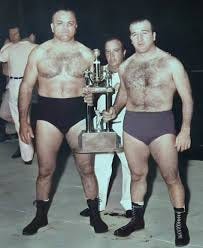
Pictured: Bulldog Danny Plechas and Iron Mike DiBiase with the NWA World Tag Team Trophy
By the 1960s, Plechas had transitioned to Texas, a wrestling stronghold under the NWA umbrella. He had wrestled there earlier alongside DiBiase but returned prominently to Fort Worth on September 12, 1966. This coincided with a pivotal split: Fritz Von Erich and promoter Ed McLemore broke away from the Houston booking office, paving the way for the rise of Big Time Wrestling, which would later become World Class Championship Wrestling (WCCW). Plechas stepped into the role of booker for the Dallas office, a position he held through the 1960s and 1970s, contributing significantly to its success. As booker, he was instrumental in bringing in talents like Gary Hart, Al Costello, and Karl Von Brauner, and he focused on storytelling and talent development rather than self-promotion. Unlike many bookers who pushed themselves into main events, Plechas remained unselfish, often jobbing (losing) to put over emerging stars. For instance, Dusty Rhodes’ first match in Fort Worth was against Plechas, providing the young wrestler with valuable experience.
In the ring during this Texas phase, Plechas continued as a heel, drawing heat by using concealed weapons from his trunks and inciting crowds with his barking routine. Ring announcers like Boyd Pierce would plead with fans not to bark at him, which only amplified the reaction. Though primarily an undercard performer, he occasionally featured in higher-profile bouts, such as teaming with Waldo Von Erich against Von Brauner and Hart. His overall record reflects a workhorse mentality: across a documented 954 matches, he secured 284 wins (about 29.8%), with 543 losses, underscoring his role in elevating others. By the 1970s, his wrestling schedule reduced, with appearances in NWA Big Time Wrestling as late as 1975.
As his in-ring days wound down, Plechas adapted seamlessly to other roles. He became a referee in the late 1960s and 1970s, officiating matches in cities like Lubbock, Austin, and San Antonio and working as an assistant to booker Gary Hart, during the World Class Championship Wrestling period.
One Thing I Learned About Raul Mata
Later in his career, while living in Florida, he promoted his own wrestling shows out of his auto body garage in the Tampa region.
Thank You for Reading
I’m Tony Richards, Pro Wrestling Historian, Author and Storyteller. I share pro wrestling historical items in each issue of the Time Tunnel Pro Wrestling History Newsletter. Thanks for reading! If you enjoy my information on select events, matches and insights, please share it with folks you think might like to be a subscriber!
Remember, premium investirs get access to exclusive and special content such as some special issues including a multi-part deep dives on wrestling territories, wrestler bios and championship title histories, special audio and video interviews on territory pro wrestling and more available in the Pro Wrestling Time Tunnel for Premium Investors.