


Written and Produced by Tony Richards
December 18th in the Time Tunnel:
Happy Birthday to those who have passed on and to those great wrestlers still with us:
In Memoriam:
Sputnik Monroe 1928
King Kong Kirk 1935
Motoshi Okuma 1941
Juan Banos\Lizmark 1950
Pat Hutchinson 1956
Happy Birthday:
Stone Cold Steve Austin (61)
Rob Van Dam (55)
Trish Stratus (50)
Anthony Bowens (35)
Kelly Kincaid\Quinn McKay (34)
RIP Memorial: We stop & remember those who have passed on this day and gave themselves to the business for us, the fans. We salute you and thank you.
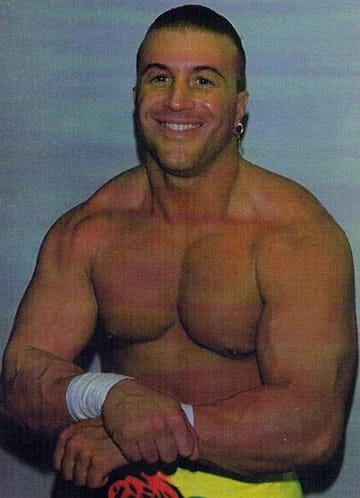
Mike Lozansky 12-18-2003 at the age of 35
Donn Lewin 12-18-2010 at the age of 84

Gordon Nelson 12-18-2012 at the age of 82
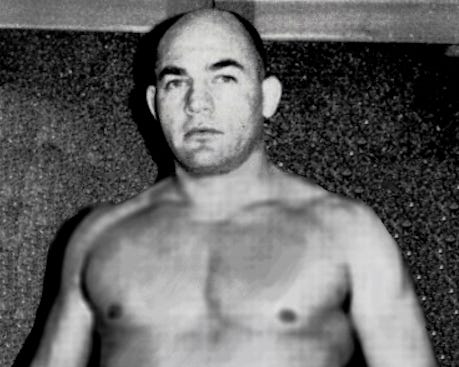
The Life and Career of Donn Lewin
Donn Lewin, a remarkable figure whose life spanned the realms of military heroism, professional wrestling, and exotic animal breeding, exemplified resilience and versatility. Born on April 1, 1926, in Buffalo, New York, Lewin rose from humble beginnings to become a decorated Marine, a seasoned wrestler known as “The Executioner,” and later a successful tropical fish breeder.
Lewin’s early years were rooted in Buffalo, where he was born to parents Sid and Berenece “Dutch” Lewin as the eldest of three brothers who would all enter the world of wrestling. He attended Lafayette High School but left at the age of 15, forging his birth certificate with his father’s permission to enlist in the United States Marine Corps shortly after the attack on Pearl Harbor in 1941.This decision thrust him into the heart of World War II’s Pacific Theater, where he served with distinction in some of the war’s most grueling battles.
As a Marine, Lewin fought at Iwo Jima, Guadalcanal, and Guam, attaining the rank of sergeant and serving as an admiral’s orderly. He earned three Purple Hearts for wounds sustained in combat, including during the intense invasion of Iwo Jima, where he was part of the third or fourth wave and witnessed the iconic flag-raising. At Guam, his unit of approximately 250 men was reduced to 147 by noon on the first day, highlighting the brutal toll of the conflict. Lewin later reflected on these experiences with a mix of humility and pride, stating in a 2004 interview with Greg Oliver, “I got pretty banged up at Iwo, but I was in the third or fourth wave there.” After four years of service, he was discharged amid post-war force reductions, but his bond with the Marines remained lifelong.
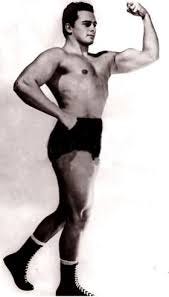
Upon returning to civilian life, Lewin channeled his discipline into bodybuilding, bulking up to 230 pounds through rigorous workouts on his family’s sun porch. He placed second in the Mr. Niagara Frontier Contest, which caught the attention of promoter Ed Don George. George introduced him to trainer Jim “Goon” Henry, marking the start of Lewin’s wrestling career in 1951. Standing at 6 feet tall and weighing 229 pounds, Lewin debuted in Buffalo and quickly expanded to territories like Ontario and Columbus, Ohio, under promoter Al Haft. Lewin’s career flourished during wrestling’s Golden Era, where he blended raw athleticism with showmanship. He often teamed with his brother Mark Lewin as the Lewin Brothers, capturing the American Tag Team Championship twice in Capitol Wrestling (Maryland) and the NWA International Tag Team Championship (Georgia version) once.
His circuits included California, Ohio, and Georgia, where he faced legends like “Nature Boy” Buddy Rogers, whom he described as “a great showman” but “a little hard to stomach at times.” In 1969, Lewin adopted the masked persona of “The Executioner” for the National Wrestling Federation, complete with a signature sleeper hold, which he credited as “the best thing that could have happened to me” for providing anonymity and extending his career. He also formed a tag team with friend “Handsome” Johnny Barend and later helped train future star Greg Valentine. Over 33 years, Lewin endured the physical demands of the sport, undergoing more than 30 operations, including multiple hip replacements.
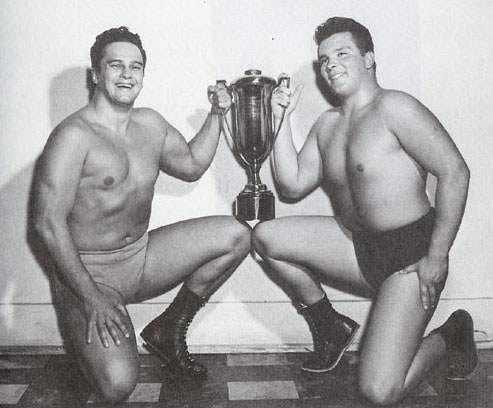
Pictured: Donn & Ted Lewin
Lewin’s family was deeply intertwined with wrestling. His brothers, Mark and Ted Lewin, followed him into the ring, with Ted recalling how Donn imposed a “boot-camp regimen” on them during their bodybuilding days. His sister, Sallee Lewin, married wrestler Danny McShain after McShain broke Donn’s nose in a match; they remained together until McShain’s death in 1992. Lewin himself was married to Hattie, with whom he had children, and later to Judy for 36 years, whom he met at a wrestling event while masked as The Executioner. The couple often traveled for matches, managing their tropical fish business alongside his career.
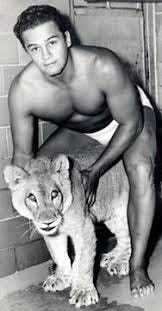
Retiring from wrestling to focus on family and pets, Lewin became an ichthyologist, breeding rare tropical fish in over 200 tanks after successfully hatching angel fish eggs as a “lark.” His exotic menagerie included an ocelot, boa constrictor, iguana, chimpanzee named Jago, and a lioness named Little Sheba.
In 1984, he and his wife moved to Hawaii, where he remained deeply connected to the Marine Corps, visiting the base weekly for coffee with Marines, attending events like birthday balls, and even pinning chevrons during promotions. He set up a home gym for neighborhood boys and described his life at 80 as living “in paradise” with “no complaints.”
50 Year Flashback
12-18-1975: The Finals of The All Japan Open League Tournament at City Gymnasium in Kanagawa, Japan, Winner Shohei “Giant” Baba
Shohei “Giant” Baba founded All Japan Pro Wrestling in 1972 and sought to establish itself as a premier promotion in Japan, distinct from its rival, New Japan Pro-Wrestling. The Open Championship League, held from December 6 to December 18, 1975, was a grueling round-robin tournament designed to showcase top talent from both Japan and abroad. Spanning 12 cards across various cities, the league featured a points-based system where wrestlers accumulated scores through victories (typically 2 points), draws (1 point), and losses (0 points), with matches often ending in pinfalls, submissions, disqualifications, count-outs, or time-limit draws. This format emphasized endurance and strategy, as competitors faced multiple high-stakes bouts over the two-week period.
The 1975 edition drew an impressive roster of participants, blending AJPW’s homegrown stars with renowned foreign “gaijin” wrestlers to create a global spectacle. Key Japanese competitors included Giant Baba himself, the towering founder and PWF Heavyweight Champion; Jumbo Tsuruta, a rising star and former amateur wrestling standout; The Destroyer (Dick Beyer), a masked legend who had become a fixture in Japan; Rusher Kimura, known for his brawling style; Mighty Inoue, a junior heavyweight ace; and others like Hiro Matsuda, Great Kusatsu, and Rusher Kimura. The international contingent added star power, featuring American and Western wrestlers such as Dory Funk Jr., a former NWA World Heavyweight Champion; Abdullah the Butcher, the hardcore Sudanese-Canadian icon infamous for his fork-wielding antics; Harley Race, another NWA titleholder; Dick Murdoch, a rugged Texan; Dusty Rhodes, the charismatic “American Dream”; Don Leo Jonathan, the Mormon Giant; Horst Hoffman, a German powerhouse; Baron Von Raschke, the claw-master; Pat O’Connor, a technical veteran; Ken Mantell, an up-and-comer; and even judo legend Anton Geesink. This mix not only heightened the tournament’s prestige but also reflected AJPW’s philosophy of “King’s Road” wrestling—strong-style matches emphasizing realism, stamina, and crowd engagement.
Throughout the league, the competition was fierce, with matches often pushing the 30-minute time limit and resulting in dramatic finishes. Early highlights included Abdullah the Butcher’s disqualification victory over Dory Funk Jr. on December 6, showcasing his brutal tactics, and Giant Baba’s dominant pin over Baron Von Raschke on the same day. As the tournament progressed, rivalries intensified: Jumbo Tsuruta’s pinfall win over Horst Hoffman on December 9 demonstrated his technical edge, while time-limit draws, such as Baba’s stalemate with Harley Race, kept the points race tight. The December 11 card, dubbed the Rikidozan Memorial Show at Tokyo’s Nippon Budokan, added emotional weight, honoring the father of Japanese pro-wrestling with a battle royal and title defenses, including Hiro Matsuda retaining the NWA World Junior Heavyweight Title against Mighty Inoue in a best-of-three-falls match. By mid-tournament, the leaderboard was crowded, with Baba, Funk Jr., and Abdullah emerging as frontrunners, their paths marked by hard-fought draws and upsets like Rusher Kimura’s pin over Don Leo Jonathan on December 10.
Video: Dory Funk. Jr vs Jumbo Tsuruta,, December 18th, 1975, Kanagawa, Japan
The tournament culminated on December 18, 1975, at the Kawasaki City Gymnasium in Kanagawa, Japan, before an enthusiastic crowd of approximately 4,800 fans. Broadcast as a taped TV show on Nippon TV, this final card—billed as “Tag 12”—featured a mix of undercard bouts and decisive league matches that would determine the champion. The night opened with preliminary action: Kazuo Sakurada pinned Masao Ito in 13:29, followed by a 30-minute time-limit draw in a tag team match between Great Kojika & Motoshi Okuma and Akihisa Takachiho & Samson Kutsuwada. A tag team victory for Don Leo Jonathan & Pat O’Connor over Great Kusatsu & Mighty Inoue in 12:37 set the stage for the high-stakes league contests.
The league-deciding matches delivered tension and athleticism. Rusher Kimura (entering with 6 points) and Dick Murdoch (8 points) battled to a double count-out at 7:45, each earning a point in a gritty brawl that highlighted their resilience. Hiro Matsuda (6 points) quickly dispatched Ken Mantell (3 points) with an abdominal stretch submission at 7:32, securing 2 points. Dory Funk Jr. (11 points) and Jumbo Tsuruta (7 points) went the full 30 minutes to a draw, a technical masterpiece that added 1 point to each, showcasing Tsuruta’s potential against the seasoned Funk. In a crucial bout, Giant Baba (11 points) faced Horst Hoffman (6 points), overpowering the German with his signature chops and size advantage to win by pinfall at 10:05, boosting his tally by 2 points. Finally, Abdullah the Butcher (10 points) defeated The Destroyer (6 points) via count-out at 8:50, using his infamous hardcore style to earn 2 points, but it wasn’t enough to overtake the leader.
Video: Giant Baba vs Horst Hoffman, December 18th, 1975, Kanagawa, Japan
With the dust settled, Giant Baba emerged victorious with a final tally of 13 points, clinching the Open Championship League title. His win was emblematic of AJPW’s ethos, as Baba’s undefeated streak in key matches solidified his status as the promotion’s cornerstone. Dory Funk Jr. and Abdullah the Butcher tied for second with 12 points each, while others like Dick Murdoch (9 points) and Jumbo Tsuruta (8 points) showed promise for future rivalries. The tournament not only boosted AJPW’s popularity but also set the stage for enduring storylines, such as Baba’s defenses of the PWF title.
Thank You for Reading
I’m Tony Richards, Pro Wrestling Historian, Author and Storyteller. I share pro wrestling historical items in each issue of the Time Tunnel Pro Wrestling History Newsletter. Thanks for reading! If you enjoy my information on select events, matches and insights, please share it with folks you think might like to be a subscriber!
Remember, paid subscribers get access to exclusive and special content such as some special issues including a multi-part deep dives on wrestling territories, wrestler bios and championship title histories, special audio and video interviews on territory pro wrestling and more available in the Pro Wrestling Time Tunnel for Premium Subscribers.