



Written and Produced by Tony Richards
December 17th in the Time Tunnel:
Happy Birthday to those who have passed on and to those great wrestlers still with us:
In Memoriam:
Roy Shire 1921
Frank Valois 1921
Buddy Hack 1930
Happy Birthday:
Nick Dinsmore\Eugene (50)
RIP Memorial: We stop & remember those who have passed on this day and gave themselves to the business for us, the fans. We salute you and thank you.
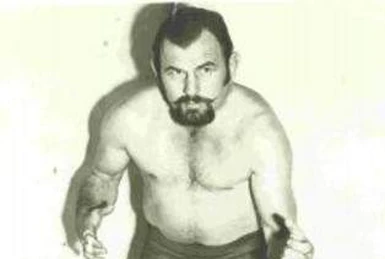
Frank Murdoch 12-17-1969 at the age of 60
The Great Togo 12-17-1973 at the age 62

Paul Morton 12-17-2010 at the age of 89
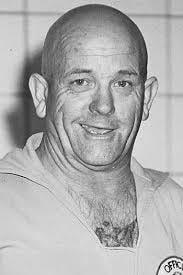
The Life and Career of The Great Togo
The Great Togo, whose real name was George Kazuo Okamura, stands as a significant figure in the annals of professional wrestling history. Born in the early 20th century to Japanese immigrant parents in the United States, he carved out a niche as one of the earliest and most notorious “heel” characters in the sport—villainous wrestlers designed to draw ire from audiences. His career spanned three decades, from the late 1930s to the late 1960s, during which he embodied the archetype of the foreign menace, blending martial arts flair with theatrical antagonism. Togo’s influence extended beyond the ring, impacting tag team dynamics and even crossing into film, all while navigating the cultural tensions of post-World War II America. His legacy as a trailblazer for ethnic gimmicks in wrestling remains noteworthy, even as the industry evolved toward more diverse representations.
George Kazuo Okamura was born on October 11, 1911, in Hood River, Oregon, a rural area known for its fruit orchards and immigrant communities. As the child of Japanese parents, he grew up in a time of significant anti-Asian sentiment in the United States, including the restrictions of the Immigration Act of 1924 and the looming shadow of World War II internment camps for Japanese Americans. Despite these challenges, Okamura pursued higher education, studying philosophy at the University of Oregon. This intellectual background contrasted sharply with his future in the physically demanding world of professional wrestling, suggesting a multifaceted personality that valued both mind and body.
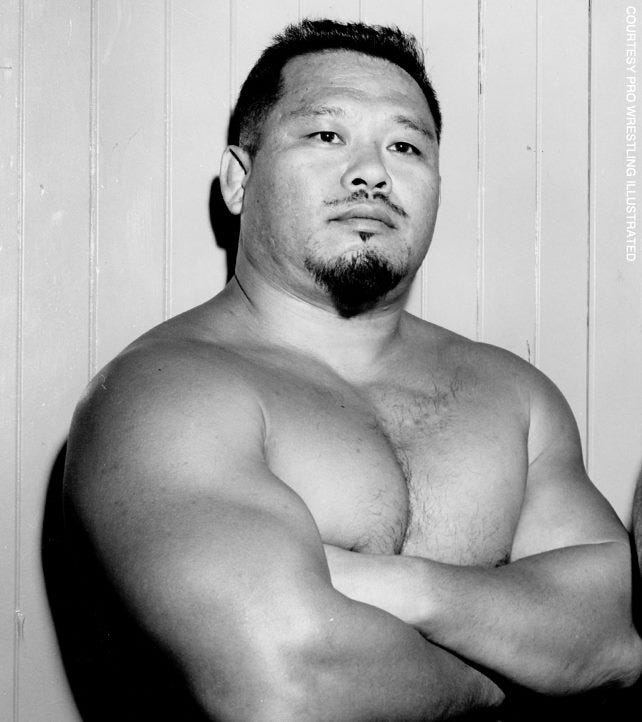
His entry into wrestling came relatively late, at age 27, in 1938. He trained under Tsutao Higami, a fellow Japanese-American wrestler who helped him hone the technical skills necessary for the ring. This mentorship was crucial, as wrestling in the pre-television era relied heavily on live performances and regional circuits, where performers needed to master both athleticism and showmanship to survive.
Adopting the ring name “The Great Togo” and billed as hailing from Japan (despite his American birth), Okamura debuted as a heel, capitalizing on prevailing stereotypes to provoke audiences. His gimmick portrayed him as a stoic martial artist proficient in karate, complete with pre-match rituals that included praying at a small Buddhist altar in the ring. Accompanied by a valet named Hata, who would burn incense to enhance the exotic atmosphere, Togo’s entrances were designed to heighten tension and cultural otherness. This persona made him one of the most despised figures in wrestling, often leading to matches ending in disqualifications to protect the “face” (heroic) opponents’ reputations while maintaining Togo’s villainous aura.
Throughout the 1950s, Togo engaged in a high-profile feud with Antonino Rocca, known as “Argentine Rocca,” a popular high-flying wrestler. Their rivalry drew massive crowds, exemplifying the era’s emphasis on international-themed storylines that mirrored Cold War geopolitics. Togo expanded his act by introducing a kayfabe (scripted) family dynamic, teaming up with his “brother” Tosh Togo—actually Harold Sakata, a Hawaiian-born weightlifter and future actor famous for playing Oddjob in the James Bond film Goldfinger. This tag team partnership proved innovative, as they incorporated synchronized moves and martial arts strikes that set them apart from traditional brawlers.
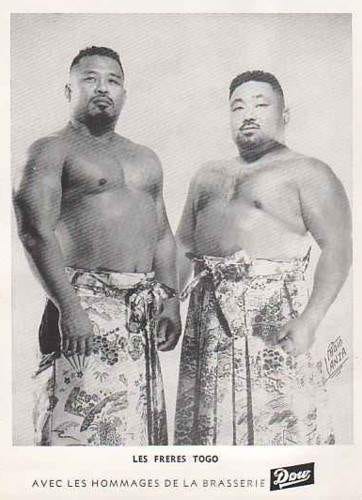
The “Togo Brothers” gimmick grew further with the addition of Mas Togo (Masutatsu Oyama, the founder of Kyokushin karate) and Ko Endo (judoka Kokichi Endo), forming a formidable stable that toured North America. From the 1950s into the 1960s, Okamura also served as the manager for Rikidozan, a legendary Japanese wrestler, in the Pacific Coast wrestling territories. This role allowed him to transition from active competitor to behind-the-scenes influencer, helping to bridge Japanese and American wrestling scenes during a period of cultural exchange.
Togo’s style was characterized by stiff chops, submission holds, and a deliberate pace that built suspense. He competed in promotions like the National Wrestling Alliance (NWA) affiliates, including Maple Leaf Wrestling in Canada and NWA Hollywood Wrestling in California. His career included tours across the U.S., where he faced off against icons of the time, such as in a notable 1950s match against Zack Malkov in Chicago’s International Amphitheater, showcasing his ability to deliver wild, crowd-inciting bouts.
While not a prolific titleholder by modern standards, Togo’s championships highlighted his tag team prowess. He captured the NWA Canadian Open Tag Team Championship once with Tosh Togo in Maple Leaf Wrestling and the NWA International Television Tag Team Championship once with the same partner in NWA Hollywood Wrestling. These victories underscored the effectiveness of his family-based storyline and contributed to the popularity of tag team wrestling in the territorial era. Beyond the ring, Togo ventured into Hollywood, appearing as himself in the 1957 comedy film The Delicate Delinquent, starring Jerry Lewis. This cameo reflected wrestling’s growing intersection with entertainment media, predating the crossover success of later stars like Hulk Hogan. His on-screen presence reinforced his heel image, appealing to audiences familiar with his wrestling antics.
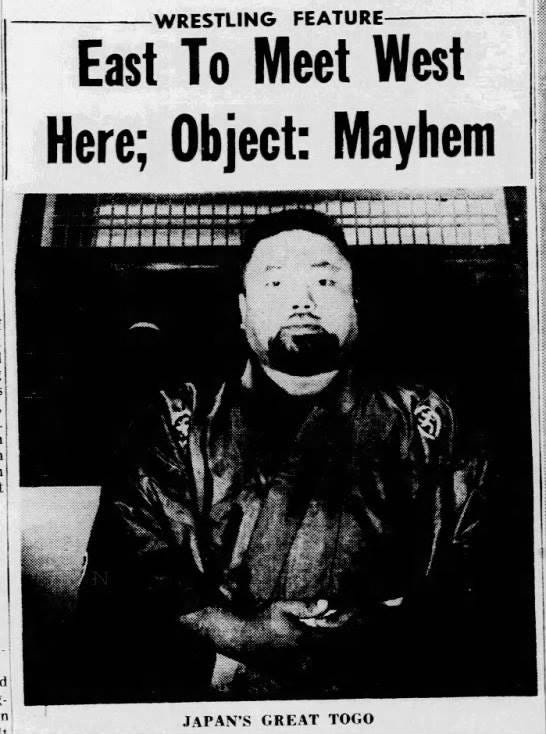
Okamura maintained a private personal life, marrying and eventually settling in Los Angeles after retiring from wrestling in 1968 at age 57. Tragically, his post-retirement years were brief; he passed away on December 17, 1973, from gastric carcinoma at the age of 62. His death marked the end of an era for pioneering ethnic wrestlers who used cultural identities to fuel their careers, often at the cost of perpetuating stereotypes.
The Great Togo was a foundational heel whose gimmick influenced subsequent “foreign menace” characters, from The Iron Sheik to Yokozuna. He helped popularize martial arts elements in wrestling, paving the way for the high-impact styles seen today in promotions like WWE and AEW. While modern critiques highlight the problematic racial undertones of his persona, Togo’s contributions to the sport’s theatrical evolution cannot be understated.
One Thing I Learned About Buddy Hack
He worked as an iron worker in Paducah, Kentucky and served as a U.S. Air Force veteran—balancing a demanding blue-collar job and military background with his in-ring career.
Thank You for Reading
I’m Tony Richards, Pro Wrestling Historian, Author and Storyteller. I share pro wrestling historical items in each issue of the Time Tunnel Pro Wrestling History Newsletter. Thanks for reading! If you enjoy my information on select events, matches and insights, please share it with folks you think might like to be a subscriber!
Remember, paid subscribers get access to exclusive and special content such as some special issues including a multi-part deep dives on wrestling territories, wrestler bios and championship title histories, special audio and video interviews on territory pro wrestling and more available in the Pro Wrestling Time Tunnel for Premium Subscribers.