



Written and Produced by Tony Richards
December 14th in the Time Tunnel:
Happy Birthday to those who have passed on and to those great wrestlers still with us:
In Memoriam:
Al Costello 1919
Roger Kirby 1939
Jeff Smith\Izzy Slapowitz 1948
Happy Birthday:
Katsuya Kitamura (37)
RIP Memorial: We stop & remember those who have passed on this day and gave themselves to the business for us, the fans. We salute you and thank you.
Eddie Quinn 12-14-1964 at the age of 58
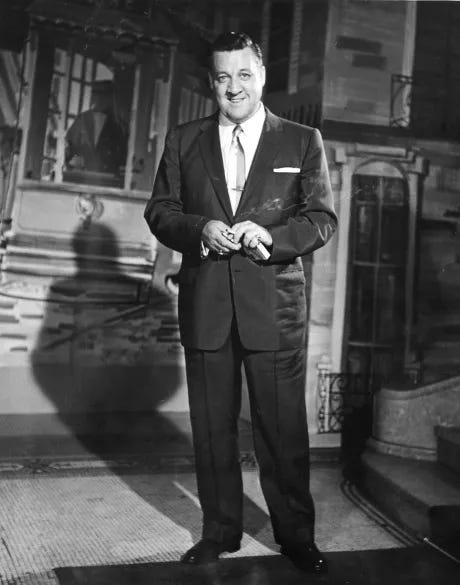
Billy Thom 12-14-1973 at the age of 64

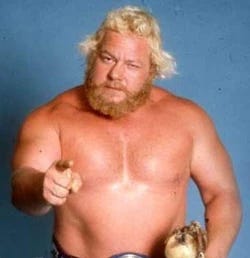
Randy Colley 12-14-2019 at the age of 69
The Life and Career of Billy Thom
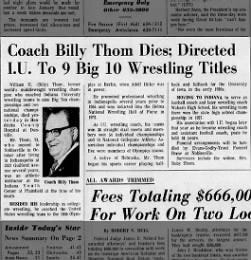
Legendary wrestler and wrestling coach at the University of Indiana, Billy Thom’s journey from a self-taught athlete to a legendary coach and competitor exemplifies dedication, innovation, and a passion for developing young talent.
Thom’s early life was rooted in athletic versatility. As a student at the University of Iowa, he excelled in multiple sports, serving as a halfback on the 1922 national champion football team, while also starring in basketball and track. Remarkably, Thom learned wrestling not through formal training but via the Farmer Burns correspondence course, a mail-order program that taught grappling techniques to aspiring wrestlers across the country. This unconventional education laid the foundation for his future success in the sport. After college, Thom began his coaching career at Wabash High School in Indiana, where he spent four years building an undefeated dual meet record. His teams placed third, second, and first (twice) in state tournaments, showcasing his early prowess as a mentor.

In 1927, Thom transitioned to Indiana University (IU), where he took on dual roles as head wrestling and football coach, a position he held for 18 years until 1945. Under his leadership, the IU wrestling program transformed into a national powerhouse. His teams amassed an impressive dual meet record of 95-25-4 (or 110-21-3 by some accounts), including seven undefeated seasons and a remarkable streak of 45 consecutive victories. Thom’s squads secured eight Big Ten team trophies and 35 individual conference titles. On the national stage, 13 of his wrestlers claimed 15 NCAA and NAAU championships, with the pinnacle achievement being the 1932 NCAA team title—the only time during the first 22 NCAA tournaments that the championship escaped Oklahoma or Iowa.
Thom’s coaching philosophy emphasized character and resilience. He once stated, “I like a clean-cut boy. Give me the good ol’ country boy and I’ll make a wrestler out of him ... the good Lord willing.” This approach yielded exceptional athletes, including five Olympians. Notable protégés included Dick Voliva, who won NCAA and NAAU titles, earned a silver medal at the 1936 Berlin Olympics, and later became a distinguished coach himself; Edwin Belshaw, an NCAA champion and standout wrestler; and Charlie McDaniel, who captured NCAA heavyweight titles as a freshman and senior.
Thom himself coached the U.S. Olympic wrestling team in 1936, a highlight of his career where three of his IU students participated, with Voliva’s silver medal providing Thom’s “greatest thrill.” His Olympic success also aided recruiting, attracting talents like Dory Funk Sr., a state champion from Hammond, Indiana, who went on to professional fame. In an amazing few degrees of separation, Funk, Sr would go on to become perhaps the biggest star in Amarillo, Texas wrestling history and his collegiate coach Thom would hold a victory over one of Amarillo’s first pioneers of the sport, the original Dutch Mantell when the two met in a match in Evansville, Indiana in 1925. Mantell was not a man that many men defeated in a wrestling match, but Thom did, and in Indiana no less.

To supplement his income during the Great Depression, Thom ventured into professional wrestling, where he remained unbeaten at 150 pounds and once held world titles in three weight divisions simultaneously. Known for his signature long, bright red tights, Thom became a fixture in Midwest promotions, particularly with the Allen Athletic Club in Louisville from 1935 to 1940. He faced notable opponents like Blacksmith Pedigo, Lord Patrick Lansdowne, and Billy Love, and even returned to the ring in 1945 and 1946 after leaving IU. In 1951, he served as a special guest referee for a match featuring Lou Thesz and the Green Dragon, with Ed “Strangler” Lewis at ringside. Beyond the mat, Thom promoted professional wrestling in Indianapolis and pursued interests in horse and dog breeding, earning recognition for his work with leader dogs for the blind.
Billy Thom’s impact on wrestling endures through his inductions into the National Wrestling Hall of Fame as a Distinguished Member (1993), the Indiana University Athletics Hall of Fame, and the Indiana Wrestling Hall of Fame. The Indiana Wrestling Hall of Fame honors his memory annually with the Billy Thom Award, given to individuals who have made significant contributions to amateur wrestling in the state. His mentees, like Voliva, carried forward his legacy, achieving their own hall-of-fame statuses.
One Thing I Learned About Eddie Quinn
He once owned a popular nightclub called El Morocco where he personally booked major entertainers like Jackie Gleason, Dean Martin, Jerry Lewis, and Eartha Kitt.
Thank You for Reading
I’m Tony Richards, Pro Wrestling Historian, Author and Storyteller. I share pro wrestling historical items in each issue of the Time Tunnel Pro Wrestling History Newsletter. Thanks for reading! If you enjoy my information on select events, matches and insights, please share it with folks you think might like to be a subscriber!
Remember, paid subscribers get access to exclusive and special content such as some special issues including a multi-part deep dives on wrestling territories, wrestler bios and championship title histories, special audio and video interviews on territory pro wrestling and more available in the Pro Wrestling Time Tunnel for Premium Subscribers.
Hey, great read as always. It's so cool how Billy Thom learned wrestling via that correspondence course. Makes you wonder, what if he had today's online learning platforms? He probaly would have been an even bigger pioneer, creating a global digital wrestling academy. Highlights the power of self-education.