



Written and Produced by Tony Richards
December 12th in the Time Tunnel:
Happy Birthday to those who have passed on and to those great wrestlers still with us:
In Memoriam:
LeRoy McGuirk 1910
Archie Moore 1916
Randy Tyler 1951
Sylvester Ritter\Junkyard Dog 1953
Emory Hale 1969
Happy Birthday:
Brad Rheingans (72)
James Harrell\Boris Zhukov (67)
Antonio Thomas (47)
Michael Elgin (39)
RIP Memorial: We stop & remember those who have passed on this day and gave themselves to the business for us, the fans. We salute you and thank you.
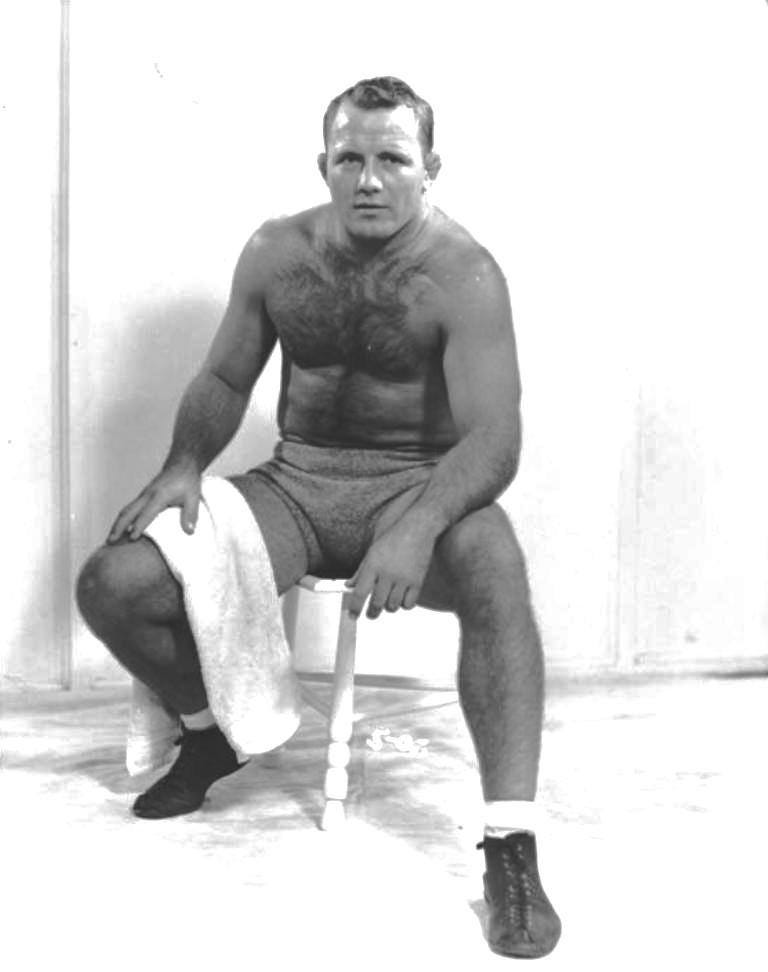
Charlie Carr 12-13-1969 at the age of 60
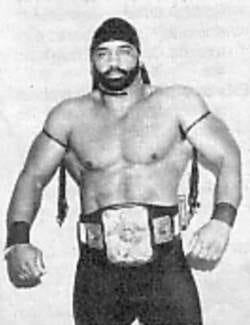
Larry Cameron 12-13-1993 at the age of 41
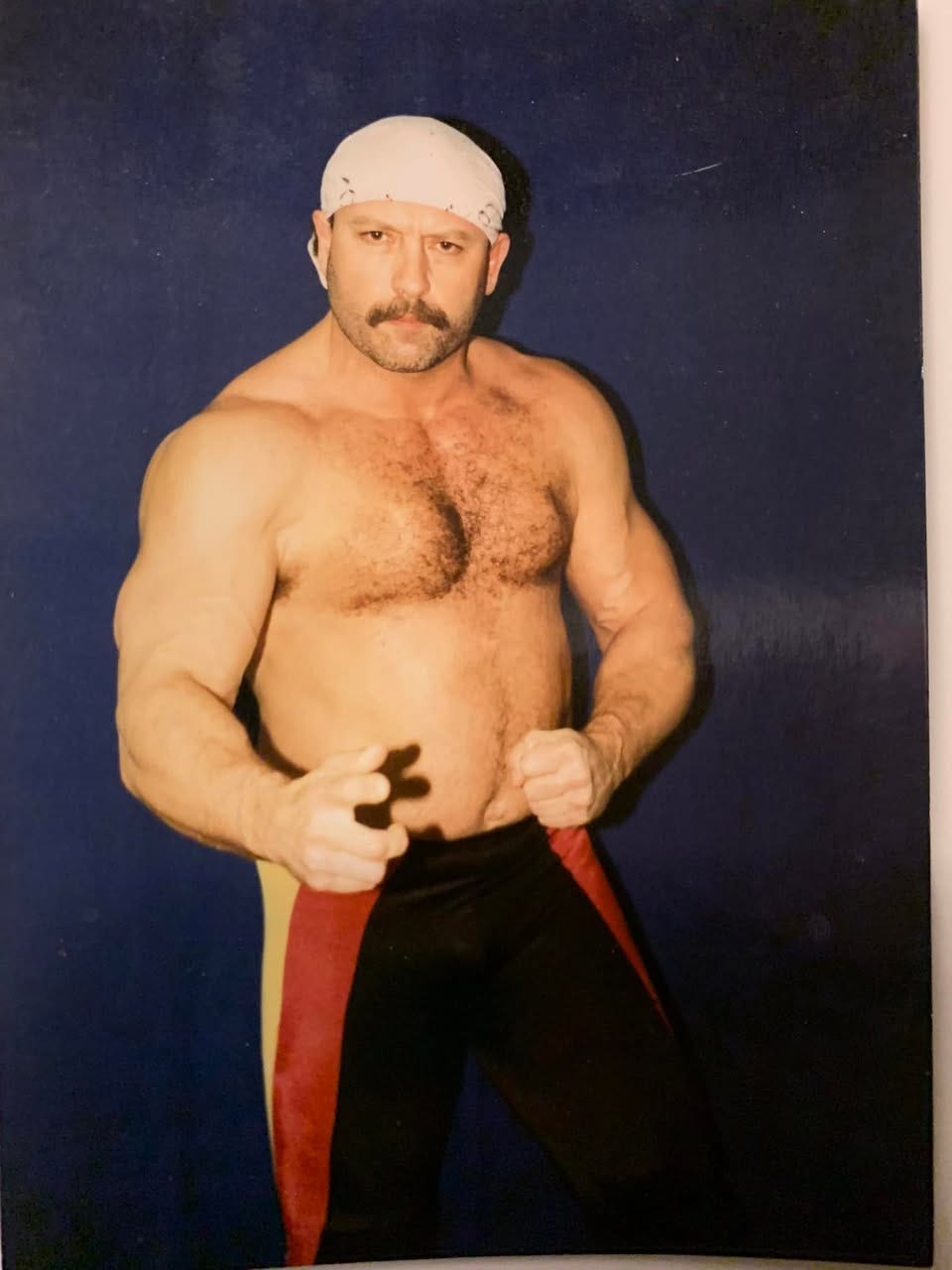
Mike Doggendorff 12-13-2023 at the age of 73
The Life and Career of Charlie Carr
Charles Steward Carr, better known in the wrestling world as Charlie Carr, was a resilient figure in professional wrestling during the mid-20th century. Born on September 8, 1909, in Shreveport, Louisiana, Carr grew up in a region where physical sports and entertainment often intertwined with the local culture.Standing at 5 feet 6 inches tall and weighing around 180 pounds, he was not the largest competitor in the ring, but his background in boxing provided him with the technical skills and toughness needed to thrive in the rough-and-tumble world of pro wrestling. Carr’s life and career reflect the era’s wrestling landscape— a time when performers traveled extensively, performed in small arenas, and often balanced in-ring action with behind-the-scenes roles. Though not a household name like some of his contemporaries, Carr’s longevity, versatility, and contributions as a trainer left a lasting mark on the sport, particularly in the Gulf Coast area.

His birthplace in Shreveport places him in the heart of the American South, where wrestling promotions were beginning to flourish in the early 20th century. Shreveport itself would become a hub for matches, and Carr’s roots there likely influenced his entry into the business.With a foundation in boxing—a sport that emphasized footwork, precision, and endurance—Carr transitioned into wrestling around the early 1930s. His alias, “Black Panther,” hinted at a persona that played on agility and ferocity, though he primarily competed under his real name. This period marked the tail end of wrestling’s carnival roots, evolving into more structured promotions, and Carr embodied the journeyman wrestler: reliable, hardworking, and willing to put over emerging talents.
Carr’s in-ring career spanned from the 1930s through the 1950s, a remarkable duration in an industry known for its physical toll. His debut matches appear in records as early as 1931, when he competed in Shreveport, defeating Speedy Schaeffer in a 2-out-of-3 falls match at the Coliseum. Over the decades, Carr wrestled across various territories, including Louisiana, Alabama, Indiana, and beyond. In 1935, he faced LeRoy McGuirk in Fort Wayne, Indiana, losing in a 2-falls-to-0 contest that lasted 35 minutes, showcasing his ability to endure grueling bouts.
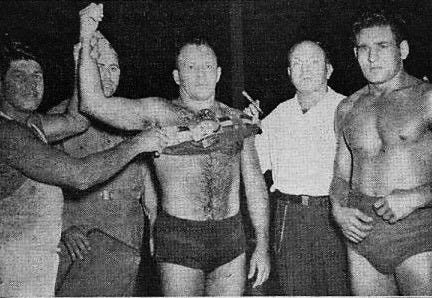
Pictured: October 12th, 1943, Charlie Carr is crowned the first Hawaii Champion in Honolulu with Promoter Al Karasick
In 1943, Carr won a tournament to crown the first Hawaii State Wrestling Champion. By the 1950s, he was still active, participating in cards in places like Gadsden, Alabama, where he defeated Ed Farmer in 1956, and even engaging in specialty matches like a boxing-rules contest against Big Boy King. Another notable match from that year in Shreveport saw him teaming with Phil Brummett against George Curtis and Al Massey, though he was disqualified in a singles bout against Massey earlier in the card.
His overall record reflects the life of a mid-card performer: 109 wins, 178 losses, and 61 draws over his career. While not a title-laden superstar, Carr’s role was crucial in building matches and entertaining crowds. He competed in promotions tied to the National Wrestling Alliance (NWA) territories, particularly in the Gulf Coast region, where wrestling was a staple of local entertainment. His matches often featured classic stipulations like 2-out-of-3 falls, emphasizing storytelling and athleticism over the high-flying antics of later eras. Carr’s boxing background likely influenced his style, focusing on strikes and grapples rather than aerial maneuvers.
Beyond the ring, Carr briefly crossed into Hollywood, appearing in the 1937 Three Stooges short film “Grips, Grunts and Groans.” In the comedy, he played the role of the second wrestler (referred to as a “pug”) in a gym scene alongside Moe, Larry, and Curly Howard. The film, which satirized the wrestling world, featured Carr in a chaotic brawl, highlighting how pro wrestlers were often recruited for such roles due to their physical prowess and familiarity with staged combat. His appearance was later reused as archive footage in the 2015 documentary series “Hey Moe! Hey Dad!” This foray into entertainment underscored wrestling’s cultural reach during the Great Depression era, when films like those of the Three Stooges provided escapism.
As Carr’s in-ring days wound down in the late 1950s, he transitioned into a mentorship role, particularly in Mobile, Alabama re-locating there with Buddy Fuller to reside with him, his wife and sons on the family ranch and farm in Loxley, Alabama. There, he worked alongside promoter Fuller anad his successor, Lee Fields to train up-and-coming wrestlers, helping shape the next generation, including Fuller’s sons, Ronald and Robert. Other notable trainees included Bob Kelly, a prominent figure in Gulf Coast wrestling who credited Carr with honing his skills after an initial stint in Canada, Kelly went on to become a booker and champion in multiple territories, illustrating Carr’s indirect impact on the industry. Ron Fuller, as mentioned, who also trained under Carr, adopted techniques like the inside toe hold leglock that became part of his arsenal and known as the “Fuller Leg-Lock.” Fuller’s career in the NWA and his management of talents like Arn Anderson further extended Carr’s legacy. In an era without formal wrestling schools, such hands-on training was vital, and Carr’s experience made him a respected figure in Southern wrestling circles.
The very few details about Carr’s personal life we have include a tragic car accident at some point in his life which took the life of his wife, which haunted Carr for the remainder of his life, which also led to heavy drinking. Carr spent spent his later years in Louisiana, passing away on December 12 (or 13), 1969, in Keithville, at the age of 60. His death marked the end of an era for old-school wrestlers who bridged the gap between wrestling’s carnival origins and its televised boom. While he never achieved the fame of stars like Lou Thesz or Buddy Rogers, Carr’s contributions as a performer, actor, and trainer highlight the unsung heroes of pro wrestling.
Gerry, John and I mention Charlie Carr’s life and contribution to the Welch Gulf Coast Territory in Episode 4 of “The Roy Welch Family Legacy” Series on the “Stories with Brisco & Bradshaw” Show.
One Thing I Learned About Mike Doggendorf
After his football career was derailed by injuries, he became a champion powerlifter who set national records in his weight class and even competed in the Highland Games, where he set world records in two events—all while wearing a traditional kilt.
Thank You for Reading
I’m Tony Richards, Pro Wrestling Historian, Author and Storyteller. I share pro wrestling historical items in each issue of the Time Tunnel Pro Wrestling History Newsletter. Thanks for reading! If you enjoy my information on select events, matches and insights, please share it with folks you think might like to be a subscriber!
Remember, paid subscribers get access to exclusive and special content such as some special issues including a multi-part deep dives on wrestling territories, wrestler bios and championship title histories, special audio and video interviews on territory pro wrestling and more available in the Pro Wrestling Time Tunnel for Premium Subscribers.