


Written and Produced by Tony Richards
December 6th in the Time Tunnel:
Happy Birthday to those who have passed on and to those great wrestlers still with us:
In Memoriam:
Hugh Nichols 1898
Tarzan White 1915
Stanley Blackburn 1916
Nick Bockwinkel 1934
Dennis Stamp 1946
Happy Birthday:
(none)
RIP Memorial: We stop & remember those who have passed on this day and gave themselves to the business for us, the fans. We salute you and thank you.
Jerry Tuite\The Wall\Sgt. AWOL 12-6-2003 at the age of 36

Jim Backlund\Jimmy Del Rey 12-6-2014 at the age of 52.

Larry “The Axe” Hennig 12-6-2018 at the age of 82
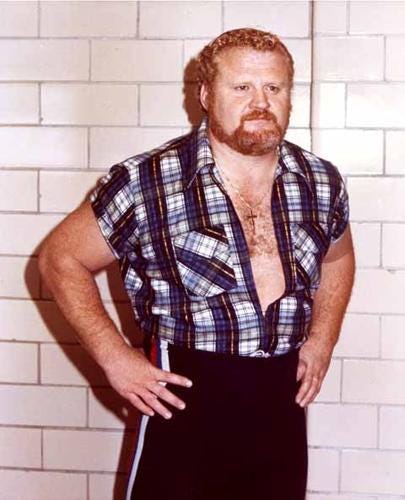
The Life and Career of Larry Hennig
Larry Hennig, famously known as “The Axe” in professional wrestling circles was born on June 18, 1936, in Minneapolis, Minnesota, Hennig rose from a high school athletic star to a multi-time world tag team champion, leaving an indelible mark on the industry through his brute strength, technical prowess, and memorable partnerships. His career spanned over three decades, during which he competed in major promotions like the American Wrestling Association (AWA), National Wrestling Alliance (NWA), and World Wide Wrestling Federation (WWWF, now WWE). Beyond the ring, Hennig was a devoted family man, successful businessman, and patriarch of a wrestling dynasty that included his son Curt Hennig (”Mr. Perfect”) and grandchildren Curtis Axel and Amy Hennig.
Larry Hennig’s journey began in Robbinsdale, Minnesota, where he excelled as a multi-sport athlete in high school. He captured the Minnesota State High School Heavyweight Wrestling Championship in 1954, showcasing the amateur skills that would later define his professional style. His talents earned him a scholarship to the University of Minnesota, where he wrestled and played football. However, family responsibilities forced him to leave after one year; he had married his wife, Irene, in 1955, and they soon started a family. To support them, Hennig entered the workforce, selling real estate beginning in 1957 and later working as an auctioneer. These early experiences instilled in him a strong work ethic and business acumen that complemented his athletic pursuits. Even outside wrestling, Hennig demonstrated endurance by completing the grueling 500-mile I-500 snowmobile races in 1966 and 1967, including an infamous incident where he drove through a chicken coop but still finished.

He transitioned to professional wrestling in 1956, training under the legendary Verne Gagne in the AWA. Making his debut in 1961 as a local hero in Minnesota, quickly climbing the ranks due to his imposing 6’1”, 275-pound frame and legitimate wrestling background. Early on, he was nicknamed “Pretty Boy” Larry Hennig, a moniker that contrasted his rugged style but highlighted his charisma. In 1962, he won his first major title, the AWA World Tag Team Championship, alongside Duke Hoffman after triumphing in a tournament.
By 1963, seeking new challenges, Hennig ventured to the Texas territories, where he adopted a more brutal, heel persona. There, he befriended Harley Race, and the duo formed one of wrestling’s most formidable teams: “Handsome” Harley Race and “Pretty Boy” Larry Hennig. Their villainous antics and physicality made them fan favorites to hate, and on January 30, 1965, they captured the AWA World Tag Team Championship by defeating Dick the Bruiser and The Crusher, becoming the youngest team to hold the belts at the time. They held the titles in three reigns, feuding intensely with Bruiser, Crusher, and Verne Gagne’s recruits.

Hennig’s partnership with Race was the pinnacle of his career, yielding multiple AWA World Tag Team Championship reigns, including victories on August 7, 1965, and January 6, 1967. heir feuds were legendary, often involving bloody brawls that drew massive crowds. A severe knee injury on November 1, 1967, during a match in Winnipeg against Johnny Powers sidelined Hennig for months; he famously refused immediate medical care and drove 500 miles home with Race. Upon returning in 1968, he continued teaming with Race briefly before partnering with Lars Anderson (winning the AWA Midwest Tag Team Championship) and “Dirty” Dusty Rhodes.
As a singles competitor, Hennig challenged top champions like Pedro Morales and Bruno Sammartino in the WWWF during 1973-1974, headlining at Madison Square Garden multiple times. He lost a notable lumberjack death match to Morales on December 10, 1973, via submission. His finishing move, a full-weight elbow drop dubbed “The Axe,” became synonymous with his hard-hitting style. Hennig also secured titles in other promotions, including the IWA World Tag Team Championship in Japan with Bob Windham (Blackjack Mulligan) in 1970, and the NWA Pacific Northwest Tag Team Championship with his son Curt in 1982. In total, he amassed four AWA World Tag Team Championships, among other regional belts like the Texas Brass Knuckles and Amarillo North American Tag Team titles.
Hennig’s career extended beyond North America. He toured Japan a dozen times, competing for promotions like International Wrestling Enterprise, where he and Windham won and lost the IWA World Tag Team titles in quick succession. In Australia and New Zealand, he and Race became the inaugural Tag Team Champions for World Championship Wrestling in June 1966, before dropping them to Mark Lewin and Dominic DeNucci. These international stints solidified his reputation as a versatile performer capable of adapting to different styles. Outside the ring, Hennig balanced wrestling with business. He co-owned a real estate company in St. Cloud, Minnesota, with Irene, and ventured into commodity futures trading, focusing on dairy at the Chicago Mercantile Exchange. He even appeared in the 1974 independent film The Wrestler, facing Verne Gagne in a match filmed at the Cow Palace.

In 1974, Hennig returned to the AWA as a face, saving the High Flyers from Nick Bockwinkel and Ray Stevens, leading to new alliances.The highlight of his later years was teaming with his son Curt in the early 1980s, feuding with The Road Warriors and winning the NWA Pacific Northwest Tag Team Championship. Hennig described this as the peak of his career. He retired in 1986 after a storied run.
Personally, Hennig was married to Irene for over 60 years, raising five children and boasting 28 grandchildren. His family extended into wrestling: Curt became a WWE Hall of Famer, while grandson Joe (Curtis Axel) and granddaughter Amy carried on the legacy. The tragic death of Curt in 2003 from acute cocaine intoxication deeply affected Hennig, who later spoke out on the wrestling industry’s toll on performers.
Hennig’s contributions were honored posthumously and during his lifetime. He was inducted into the George Tragos/Lou Thesz Professional Wrestling Hall of Fame in 2006, received the Lou Thesz Award in 2013, and entered the Professional Wrestling Hall of Fame in 2017 as part of his tag team with Harley Race. He also earned the Cauliflower Alley Club’s Iron Mike Mazurki Award in 2015. Peers remembered him as tough yet charismatic, with Race once praising their unbeatable synergy. Larry Hennig passed away on December 6, 2018, at age 82 in St. Cloud, Minnesota, due to kidney failure after years of health struggles. His grandson Curtis Axel paid tribute, noting, “No one had a bigger impact on my wrestling career than my Papa Axe... The Hennig name will live on forever.”
Significant Pro Debut
60 Years Ago
Terry Funk
12-6-1965: Terry Funk vs Red Osbourne at the Civic Center in Brownfield, Texas
Imagine a crisp December evening in 1965, the kind where the West Texas wind whips dust across the flatlands, carrying the faint scent of oil rigs and cattle. In the unassuming town of Brownfield, Texas—population barely scraping 5,000—the local Civic Center buzzes with anticipation. This multipurpose hall, usually home to community dances and livestock shows, transforms into a battleground for grapplers. Fluorescent lights flicker overhead, casting long shadows on the makeshift ring, while a crowd of a few hundred hardy locals—ranchers in worn boots, families clutching popcorn—stamp their feet on the concrete floor, eager for the night’s action. It’s here, on December 6, that a wide-eyed 21-year-old named Terry Funk steps through the ropes for the very first time, his heart pounding like a jackhammer, facing off against the grizzled veteran Red Osborne in what would become the spark of a legendary career.
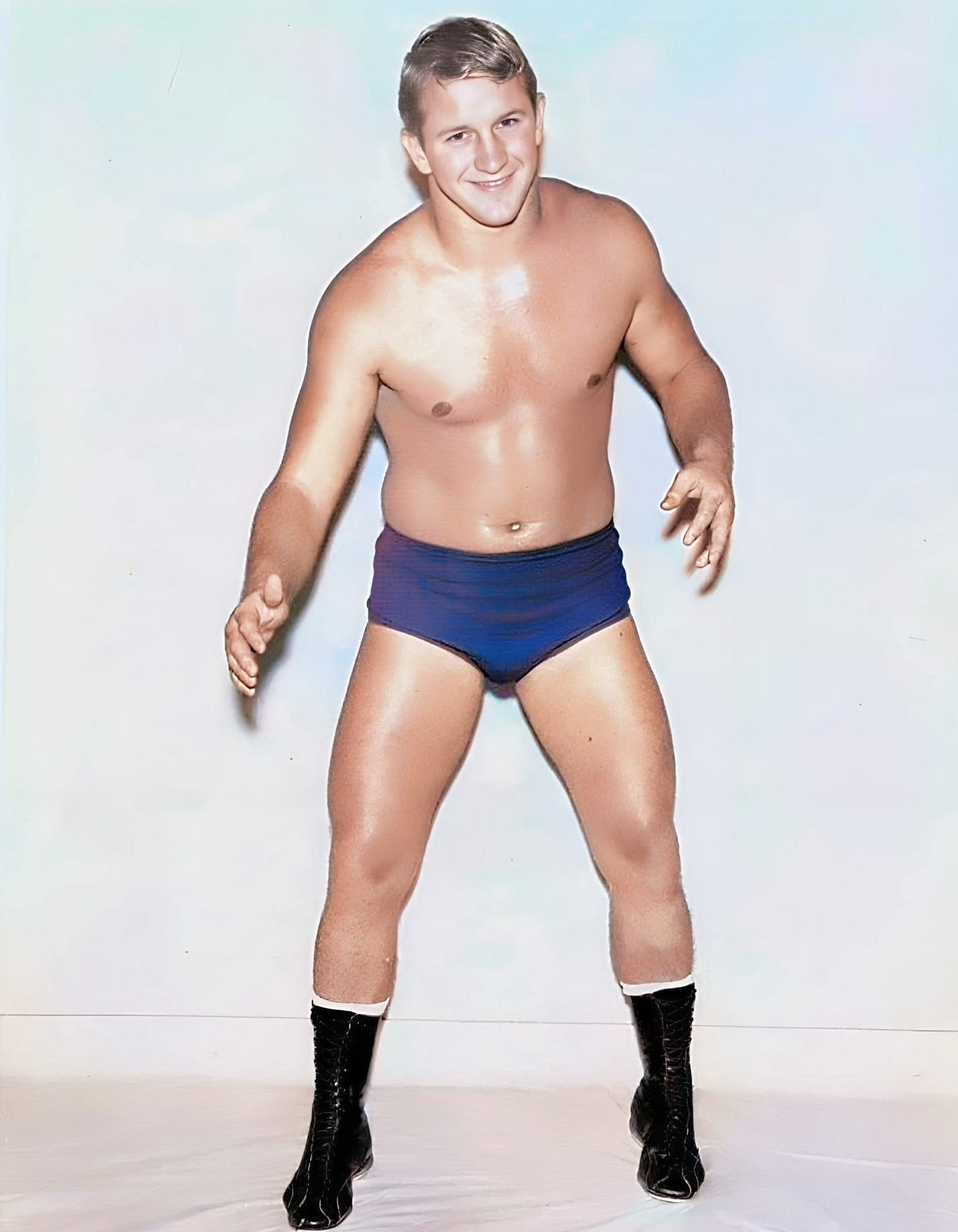
As the son of Dory Funk Sr., a legendary promoter and wrestler who ran the Western States Sports promotion out of Amarillo, Texas, Terry was immersed in the world of squared circles from a young age. His family legacy— including his older brother Dory Funk Jr., who would later become an NWA World Heavyweight Champion—set the stage for what would become one of the most enduring careers in wrestling history. However, every legend has a beginning, and for Terry Funk, that humble start came on December 6, 1965, in a small-town civic center against a seasoned opponent named Red Osbourne.
The Western States Sports territory, centered in Amarillo, was no exception. It featured a mix of local talent, traveling stars, and up-and-comers eager to prove themselves. Brownfield, Texas—a modest town about 40 miles southwest of Lubbock with a population hovering around 5,000 at the time—was an unlikely stage for a debut, but it embodied the grassroots nature of the era’s wrestling scene. The Civic Center, a multipurpose venue typically used for local events, dances, and gatherings, hosted the card that night.
Terry Funk, at just 21 years old, entered the ring under the moniker “Terrible Terry,” a nod to his emerging heel persona that would later evolve into the chaotic, unpredictable style fans came to love. Funk, drawing on his amateur wrestling background from West Texas State University (where he played football and wrestled collegiately), would have relied on basic holds, takedowns, and perhaps some family-taught maneuvers. Osbourne, with his brawling style, probably played the aggressor, testing the young Funk’s resilience. The outcome? Sources suggest Funk emerged victorious, pinning Osbourne after a spirited exchange, though this is unconfirmed and may vary in retellings. Regardless, the match served its purpose: to give Terry a taste of professional action without the pressure of the home town crowd.
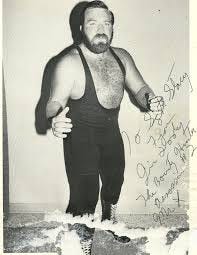
Pictured: Jim “Red” Osbourne
This match holds particular significance in wrestling lore due to a lingering debate over what constitutes Funk’s “true” debut. Just three days later, on December 9, 1965, Funk wrestled in his hometown of Amarillo against Sputnik Monroe, a flamboyant and controversial veteran known for his civil rights advocacy and in-ring antics. In that match, Funk secured a quick pin in 10 seconds after Monroe was distracted, followed by a time-limit draw in an extension— a dramatic booking that cemented it as a memorable “official” debut in the promotion’s hub.Funk himself has occasionally referred to the Monroe bout as his first, perhaps viewing the Brownfield match as a trial run or dark match equivalent. However, numerous wrestling historians and databases, including fan compilations and sites like puroresu.com, recognize the December 6 clash with Osbourne as his absolute first professional outing—a low-key test in a satellite town to build confidence before the brighter lights of Amarillo.
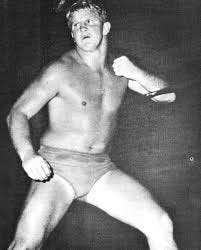
The Brownfield match was more than a footnote; it symbolized the Funk family’s influence on Texas wrestling. Dory Sr. strategically placed his son in a safe, controlled setting to hone his skills, a common practice in family-run territories. It also foreshadowed Terry’s career trajectory—from territorial workhorse to global icon. Following this bout, Funk quickly rose through the ranks, teaming with his brother to capture tag team gold and eventually winning the NWA World Heavyweight Championship in 1975.
One Thing I Learned About Hugh Nichols
Hugh Nichols, a wrestler active from 1919 to 1938, was the inaugural World Light Heavyweight Champion recognized by the National Wrestling Association, claiming the title on April 4, 1940.
Thank You for Reading
I’m Tony Richards, Pro Wrestling Historian, Author and Storyteller. I share pro wrestling historical items in each issue of the Time Tunnel Pro Wrestling History Newsletter. Thanks for reading! If you enjoy my information on select events, matches and insights, please share it with folks you think might like to be a subscriber!
Remember, paid subscribers get access to exclusive and special content such as some special issues including a multi-part deep dives on wrestling territories, wrestler bios and championship title histories, special audio and video interviews on territory pro wrestling and more available in the Pro Wrestling Time Tunnel for Premium Subscribers.