


Written and Produced by Tony Richards
December 4th in the Time Tunnel:
Happy Birthday to those who have passed on and to those great wrestlers still with us:
In Memoriam:
Steve Casey 1908
Julius John Woronick\The Original Great Mephisto 1910
Tarzan Tyler 1927
Joe Turner 1939
Happy Birthday:
Wendy Barlow\Fifi The Maid (58)
Sylvester Terkay (55)
Eric Thompson\Viktor (45)
Brooke Adams\Brooke Tessmacher (41)
Hiromu Takahashi (36)
RIP Memorial: We stop & remember those who have passed on this day and gave themselves to the business for us, the fans. We salute you and thank you.
George Cazana 12-4-1978 at the age of 72
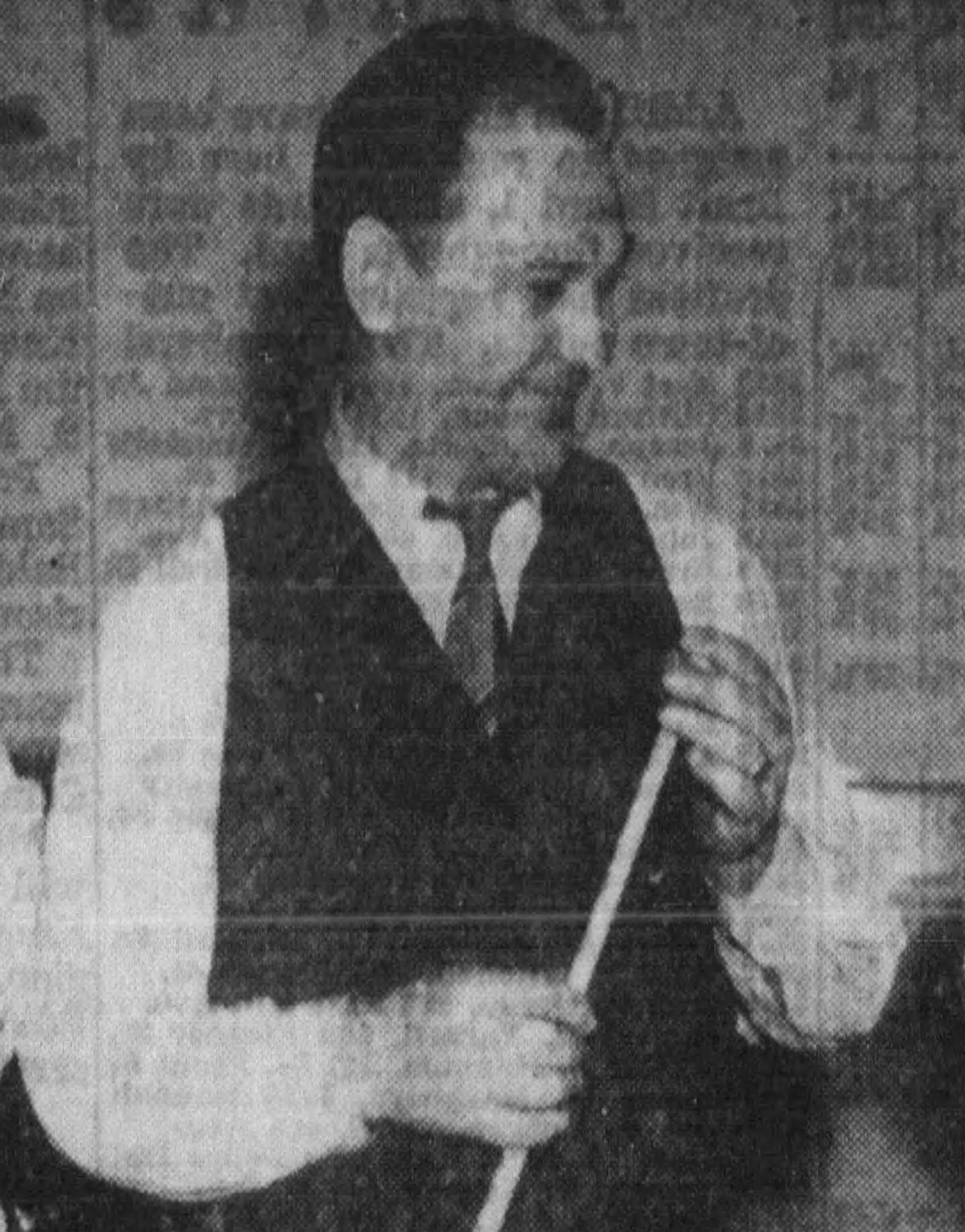
Lionel Giroux\Little Beaver 12-4-1995 at the age of 61

Elizabeth Floyd\Betty Jo Hawkins 12-4-1987 at the age of 57

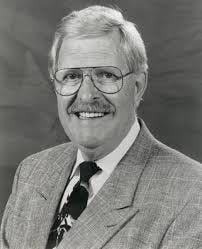
Ed Whalen 12-4-2001 at the age of 74
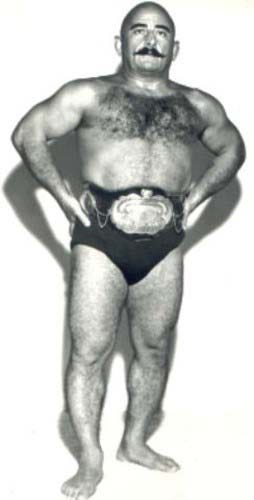
Ali Bey 12-4-2001 at the age of 89
Jack Witzig 12-4-2001 at the age of 74

Edward Fatu\Umaga 12-4-2009 at the age of 36

King Curtis Iaukea 12-4-2010 at the age of 78
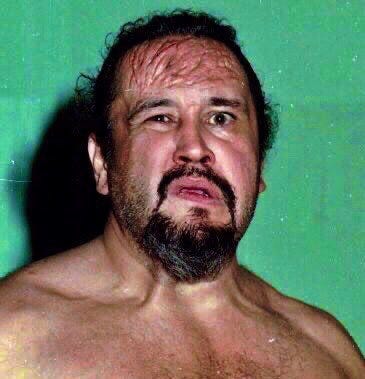
The Life and Career of King Curtis Iaukea
Born on September 15, 1937, in Honolulu, Hawaii, Iaukea rose from a prestigious family lineage to become one of the most memorable “wild man” heels of the 1960s and 1970s, before transitioning into influential managerial roles. His career spanned over two decades, encompassing championships across multiple promotions, international tours, and a lasting impact on the industry. Iaukea passed away on December 4, 2010, at the age of 73, leaving behind a legacy as both a fierce competitor and a beloved family man who lit up every room he entered.
Iaukea’s story begins with a rich Hawaiian heritage that intertwined royalty, public service, and athleticism. He was the great-grandson of Colonel Curtis P. Iaukea, a prominent royal chamberlain and diplomat who served King Kalākaua and Queen Liliʻuokalani during Hawaii’s monarchy era. His father, Curtis Iaukea II, was an inspector in the Honolulu Police Department, instilling in young Curtis a sense of discipline and community. Growing up in Honolulu, Iaukea attended the prestigious Punahou School, where he excelled in academics and sports. He later pursued higher education at the University of California, Berkeley, majoring in economics while playing as a lineman on the football team. Described by family as athletic, eloquent, and erudite, Iaukea possessed a distinctive forehead and a magnetic personality that drew people to him. His early years were marked by a love for exploration and human connection, traits that would define his life regardless of his chosen path—whether in wrestling, real estate, farming, or politics.
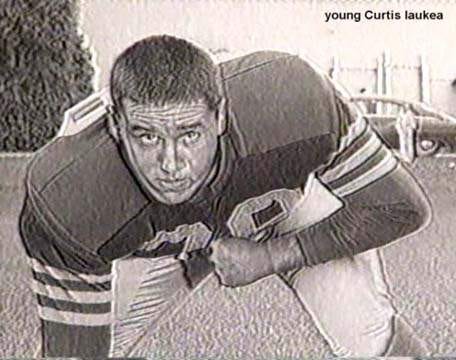
Football became Iaukea’s initial gateway to professional athletics. After lettering at Berkeley for two years, he ventured into the Canadian Football League (CFL), playing as a tackle for the BC Lions from 1958 to 1959 and briefly for the Montreal Alouettes in 1959. He also spent time in training camp with the Oakland Raiders in 1960, showcasing his physical dominance at 6 feet 3 inches and 290 pounds. However, injuries and the grueling nature of the sport led him to seek a new arena where his size, charisma, and storytelling ability could shine—professional wrestling.
Transition Into Pro Wrestling
Iaukea’s entry into wrestling was a natural evolution from his football days. He debuted in 1955 but fully committed after his gridiron career ended, starting in Don Owen’s Pacific Northwest territory (Portland Wrestling) in 1961 under the ring name Prince Kuhio, a nod to his Hawaiian nobility. This persona allowed him to leverage his heritage, presenting himself as a regal yet fierce competitor. His early success came quickly: on January 19, 1962, he teamed with Haru Sasaki to capture the NWA Pacific Northwest Tag Team Championship, holding it for two months. By September 5, 1963, he had claimed the NWA Pacific Northwest Heavyweight Title, solidifying his status as a top draw while splitting time between Oregon and Hawaii.
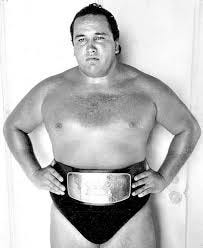
Iaukea’s career truly expanded internationally in the mid-1960s. In Australia, during his 1964–1965 run with Jim Barnett’s World Championship Wrestling, he debuted as a heel under the name Curtis Iaukea before evolving into King Curtis. Teaming with Skull Murphy, he engaged in brutal feuds, notably with Mark Lewin. This period highlighted his ability to embody a “wild man” character—brawling, bleeding, and captivating audiences with his intensity. Fans loved and hated him in equal measure, a testament to his skill as a performer. He returned to Australia in the 1970s as a fan favorite, joining the People’s Army tag team with Lewin and Spiros Arion, and clashing with villains like Tiger Jeet Singh and The Tojo Brothers (Hiro “The Great” Tojo and Hito Tojo).
Throughout the 1960s and 1970s, Iaukea amassed an impressive array of championships. In Australia, he won the IWA World Tag Team Championship three times—once with Buddy Austin and twice with Mark Lewin—and the NWA British Empire/Commonwealth Heavyweight Championship. His tours extended to Japan and North America, where he became a mainstay for Ed Francis’ 50th State Big Time Wrestling in Hawaii. A highlight was his stint in the World Wrestling Federation (WWF), where he captured the WWF Tag Team Championship alongside Baron Scicluna. Iaukea’s feuds were legendary, often pitting his larger-than-life persona against equally charismatic opponents. His rivalry with Lewin in Australia evolved from enmity to alliance, while his battles with Singh and the Tojos showcased his versatility as both heel and hero.
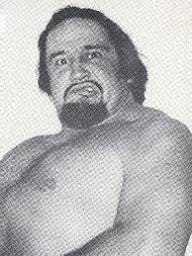
Beyond the ring, Iaukea’s influence extended to inspiring future stars. As a tremendous talker, he shaped the promo styles of Dusty Rhodes and Superstar Billy Graham; as a brawler, he impacted Abdullah the Butcher and Bruiser Brody. A personal anecdote from his career includes a four-month hiatus from September 1968 to February 1969, during which he embarked on a world-tour honeymoon with his wife Liane—a rare, non-working vacation in an otherwise relentless schedule. He also appeared in the film The Three Stooges Go Around the World in a Daze, where Moe Howard quipped about his imposing presence: “That’s not a man! That’s a committee!”
Moving Into Managing
Iaukea retired from in-ring competition in 1980 but remained active as a manager, leveraging his charisma in new ways. In International Championship Wrestling (ICW), he portrayed a crazed cult leader managing Kevin Sullivan and Mark Lewin, feuding with Joe Savoldi and Austin Idol. He helped reinvent Lewin as “The Purple Haze,” infusing psychedelic elements inspired by LSD, and played a pivotal role in shaping Sullivan’s early career in Florida as “The Chairman of the Board.”
His managerial highlights included a 1986 WWF return as The Wizard, managing Kamala and claiming to channel the spirit of the late Grand Wizard (Ernie Roth). He later teamed Kamala with Sika before selling their contracts to Mr. Fuji in 1987. In 1995, Iaukea joined World Championship Wrestling (WCW) as The Master of the Dungeon of Doom, reuniting with Sullivan and Kamala in a supernatural stable feuding with Hulk Hogan. This role, where Sullivan addressed him as “father,” underscored his enduring mystique.
Iaukea’s Family Life and Legacy
Despite his globetrotting career, Iaukea’s heart remained in Hawaii. He married Liane, with whom he had two daughters; their family life is chronicled in Liane’s book As The Sun Rises Over Diamond Head, a poignant blend of memoir and photo album. One daughter, Sydney Lehua Iaukea, became a Native Hawaiian educator focusing on Hawaiian politics, reflecting on her father’s complex legacy in scholarly articles—she noted his absence in support but cherished his larger-than-life wrestling image. Iaukea also had a son, Rocky Iaukea. Family and friends remembered him as a local legend who lived on his own terms, fostering deep connections and exploring the world with unbridled curiosity.
Iaukea’s contributions to wrestling were recognized posthumously with his 2020 induction into the Professional Wrestling Hall of Fame and Museum. He embodied the era’s showmanship, influencing generations through his characters and mentorship. King Curtis Iaukea was more than a wrestler; he was a bridge between Hawaiian tradition and global entertainment, a man whose presence—both in the ring and in life—left an indelible mark.
One Thing I Learned About Wendy Barlow
She had a prior career as a professional tennis player, where she competed at Wimbledon in 1978 and achieved All-American ranking status.
Thank You for Reading
I’m Tony Richards, Pro Wrestling Historian, Author and Storyteller. I share pro wrestling historical items in each issue of the Time Tunnel Pro Wrestling History Newsletter. Thanks for reading! If you enjoy my information on select events, matches and insights, please share it with folks you think might like to be a subscriber!
Remember, paid subscribers get access to exclusive and special content such as some special issues including a multi-part deep dives on wrestling territories, wrestler bios and championship title histories, special audio and video interviews on territory pro wrestling and more available in the Pro Wrestling Time Tunnel for Premium Subscribers.