



December 3rd in the Time Tunnel:
Happy Birthday to those who have passed on and to those great wrestlers still with us:
In Memoriam:
Darling Dagmar 1942
Ray Candy 1951
Happy Birthday:
Riki Chishu (74)
Steve Simpson (62)
Francisco Islas Rueda\Super Crazy (52)
Barry Young\Wolfgang (39)
RIP Memorial: We stop & remember those who have passed on this day and gave themselves to the business for us, the fans. We salute you and thank you.
Dick Shikat 12-3-1968 at the age of 71
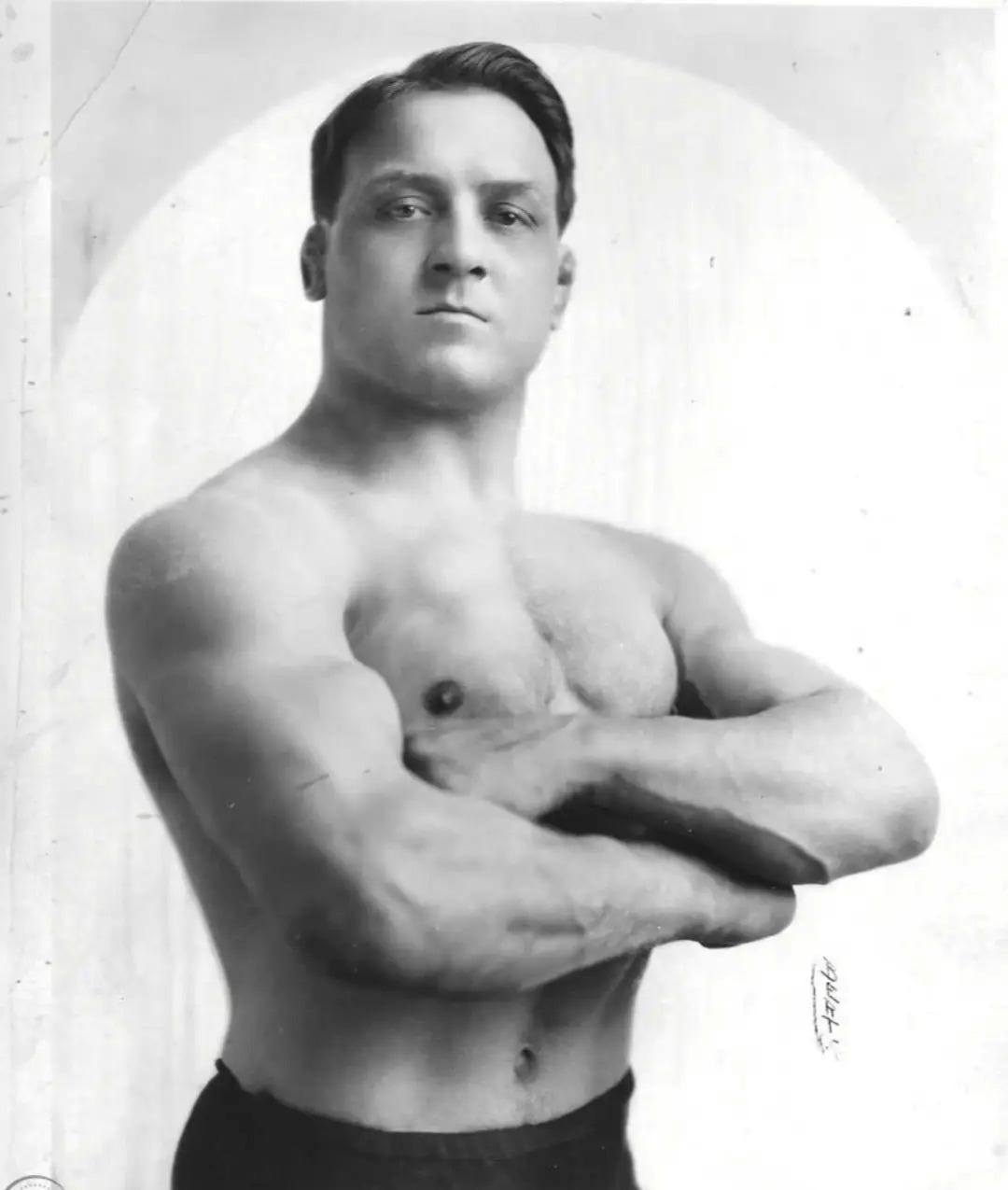
Jack Thornton\Jack Cain 12-3-1978 (age unknown)
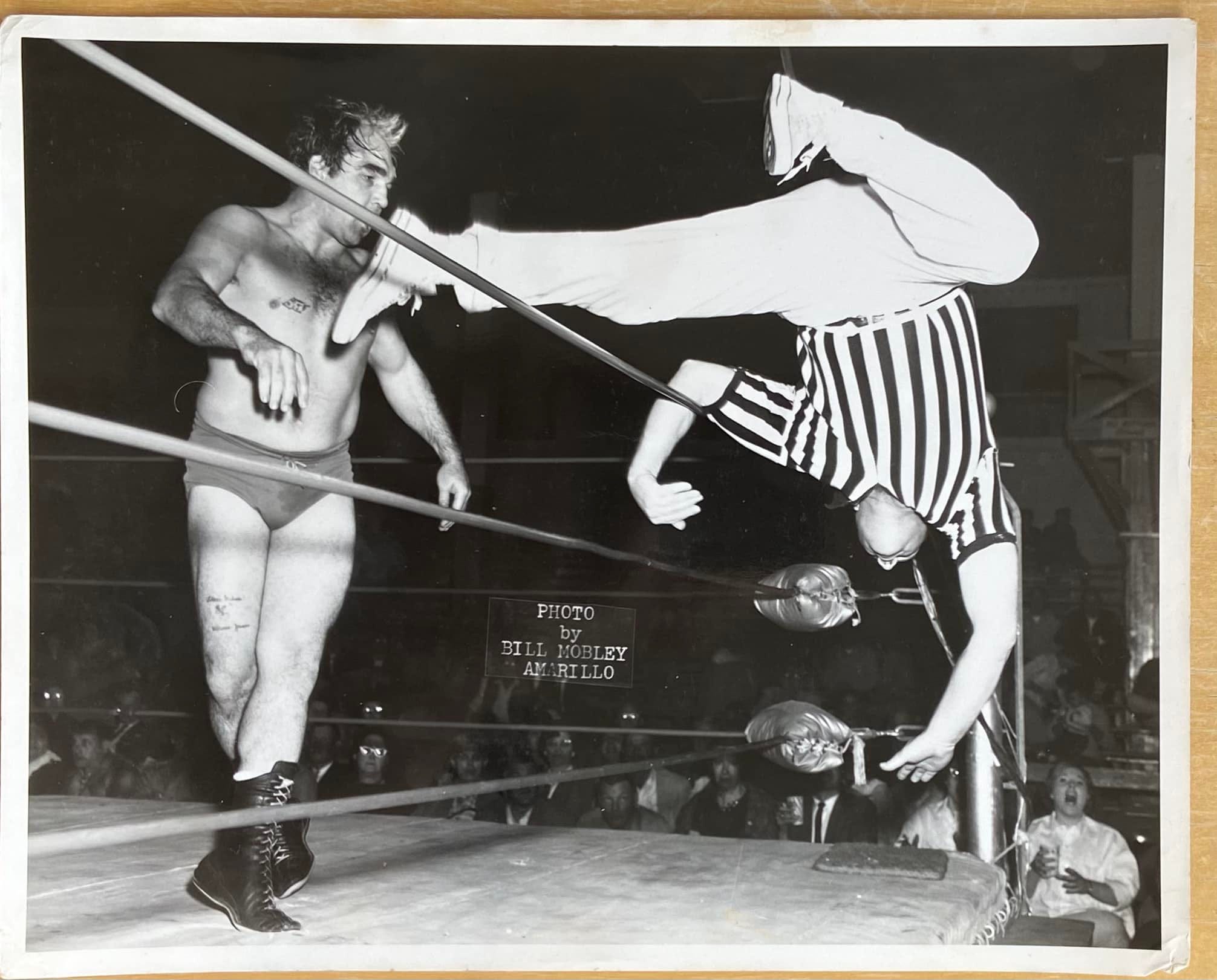
*Tony note: This is the only photo I could find of Jack Cain, which is a real shame because he was the lead heel manager in Amarillo and West Texas for many years and was Dory Funk, Sr’s favorite heel manager opponent. In this photo, he is a referee being thrown from the ring by Sputnik Monroe in Amarillo, Texas. Jack served as one of the pallbearers at Dory Funk, Sr’s funeral.
Rip Tyler 12-3-1997 at the age of 57

**Correction to Issue 231 of The Daily Chronicle: Yesterday I mistakenly listed Pat Patterson’s age at 68 at his time of passing, it was actually 79.
Significant Pro Debut
Glen Detton
12-3-1948: Pat O’Dowdy defeated Glen Detton in 2 out of 3 falls at the Sportatorium in Pampa, Texas
Glen Johnson Detton, born on April 28, 1921, in Salt Lake City, Utah, came from a storied wrestling family. As the younger brother of Dean Detton—a former World Heavyweight Champion—and siblings like Dory, Reed, and Joe, who all made their marks in professional wrestling, Glen carried the weight of a legacy when he stepped into the ring for the first time. The Detton brothers hailed from the rugged Western states of Utah and Idaho, where athleticism and grit were family traits. Glen’s path, however, diverged initially; before turning pro, he honed his skills in amateur wrestling and later served in law enforcement roles. But the call of the mat proved irresistible, leading to his professional debut at the age of 27.

Pictured: Glen Detton
On December 3, 1948—a crisp Friday evening in post-World War II Texas—Glen Detton made his pro wrestling debut at the Sportatorium in Pampa, Texas. This modest venue, nestled in the oil-rich Panhandle region, was a hub for regional wrestling promotions, often drawing crowds eager for hard-hitting action. The Sportatorium hosted events under promoters like Pat O’Dowdy, who was not only a behind-the-scenes figure but also an active wrestler with a reputation for rowdy, no-nonsense bouts. O’Dowdy, an Irish-American grappler known for his tough style and extensive career across the Midwest and Southwest circuits, had been competing throughout 1948, racking up dozens of matches in promotions like the Midwest Wrestling Association.
In this debut match, Detton faced off against O’Dowdy himself. The contest was a classic David-versus-Goliath scenario, with the newcomer Detton pitting his amateur background against the seasoned veteran’s experience. Despite showing promise with his technical holds and family-taught maneuvers, Detton was ultimately defeated. The loss, while disappointing, was a rite of passage in the wrestling world, where debuts often served as learning experiences rather than triumphs. Details of the match remain sparse in historical records, reflecting the era’s spotty documentation of regional cards, but it marked Detton’s entry into a profession dominated by larger-than-life personalities and physical demands.
The Detton family stands as one of professional wrestling’s lesser-known dynasties, emerging from Utah in the early 20th century and leaving a mark on the sport through wrestling, promotion, and athletic prowess. Rooted in a Mormon upbringing, the brothers—Dean, Dory, Gene, Glen, and Reed—embodied the rugged, pioneering spirit of the era’s mat game, transitioning from amateur athletics to the gritty world of pro wrestling during the Great Depression and beyond. Longtime readers of my work know that brother Dory Detton is particularly a subject of my research as I have called him one of the “Fathers of West Texas Wrestling,” Dory organized promotions across 18 towns, reviving the scene in areas like Amarillo after World War II and founding Western States Sports in the town of Amarillo in 1946. Brother Dean Detton achieved global acclaim by capturing the World Heavyweight Championship in the late 1930s, a title he held amid the sport’s territorial boom. So, you can see how this family is an overlooked but intregal cog in the pro wrestling historical account.
Pat O’Dowdy is an interesting character himself. I’ve done as much research as I can into O’Dowdy’s life and career. He was a product of the original Dutch Mantell’s training in Amarillo, which means he was a tough old-style shooter. Known for his rowdy, hard-nosed style that embodied the era’s rough-and-tumble regional wrestling scene, O’Dowdy competed in an astonishing 1,345 documented matches, amassing 399 wins, 621 losses, and numerous draws or no-contests. . He wrestled under aliases like Patrick O’Shaughnessy and Jack Dowdy, often portraying a villainous heel in promotions across the Southwest, Midwest, and Pacific Northwest. His matches were typically best two out of three falls affairs, emphasizing endurance and brawling over technical finesse. O’Dowdy’s close friendship with Gorgeous George helped shape wrestling’s shift toward showmanship, as the duo traveled together early in their careers, drawing crowds with their antics.
The 1940s was Pat’s busiest decade as a wrestler, he did wrestle into the 1950s becoming on eof Doc Sarpolis’ most trusted guys traveling to towns, running locker rooms and bringing back the night’s ticket revenue to the Amarillo office and giving a report on the shows. This trusted position saw him transition from wrestler to a promoter and referee, influencing talents like the Funks and Wahoo McDaniel in the Amarillo territory, giving advice and calling spots for guys in the ring at times, especially if the two wrestlers were early in their careers. He eventually moved into the position of being the town promoter of the weekly Tuesday night shows in Odessa, Texas at the Ector County Coliseum.
This debut set the stage for Glen Detton’s career as a light heavyweight, wrestling primarily in the Southwest and Northwest territories. He competed into the 1950s, facing notable opponents like Dick Cardinal in legitimate “shoot” matches that tested true grappling skills. After retiring, Detton transitioned to public service, becoming chief of police in towns like Enumclaw, Washington, and Cascade Locks, Oregon, before passing away on July 11, 1997, at age 76.
One Thing I Learned About Ray Candy
He actually performed under the ring name “Super Mario Man” during a 1986 tour with New Japan Pro-Wrestling.
Thank You for Reading
I’m Tony Richards, Pro Wrestling Historian, Author and Storyteller. I share pro wrestling historical items in each issue of the Time Tunnel Pro Wrestling History Newsletter. Thanks for reading! If you enjoy my information on select events, matches and insights, please share it with folks you think might like to be a subscriber!
Remember, paid subscribers get access to exclusive and special content such as some special issues including a multi-part deep dives on wrestling territories, wrestler bios and championship title histories, special audio and video interviews on territory pro wrestling and more available in the Pro Wrestling Time Tunnel for Premium Subscribers.