


Written and Produced by Tony Richards
December 2nd in the Time Tunnel:
Happy Birthday to those who have passed on and to those great wrestlers still with us:
In Memoriam:
Ann LaVerne 1921
Ella Waldek 1929
Beverly Lehmer 1932
Gilberto Melendez\Gypsy Joe 1933
Gordon Ivey 1942
Happy Birthday:
(none)
RIP Memorial: We stop & remember those who have passed on this day and gave themselves to the business for us, the fans. We salute you and thank you.
Joe Padanzak 12-2-1982 at the age of 79
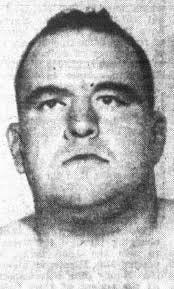
Joe Gunther 12-2-1996 at the age of 84

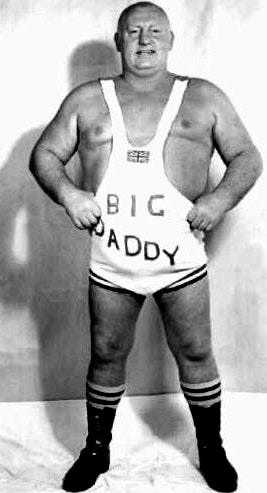
Shirley Crabtree\Big Daddy 12-2-1997 at the age of 67
Pierre Clemont\Pat Patterson 12-2-2020 at the age of 68

Significant Pro Debut
12-2-1931: Jules Strongbow
Ray Richards defeated Jule Stongbow at the Auditorium in Columbus, Oho in 18 minutes.
During the Great Depression, wrestling provided affordable escapism for working-class audiences, drawing crowds to local arenas for displays of athleticism, drama, and raw physicality. Promoters like Jack Pfefer and the emerging National Wrestling Alliance precursors organized cards featuring a mix of journeymen, rising stars, and international talents. It was in this era of transition—from the carnival roots of the sport to more structured promotions—that Jules Strongbow made his professional debut. On December 2, 1931, at the Columbus Auditorium in Columbus, Ohio, Strongbow faced Ray Richards in a match that marked the beginning of a storied career for one of wrestling’s enduring figures.

Jules Strongbow, born John Ralph Bilbo on October 26, 1906, in Bilbo, Mississippi, was not a newcomer to physical pursuits when he stepped into the ring that winter evening. Growing up in the rural South, Bilbo had honed his strength through manual labor and amateur athletics, eventually gravitating toward the world of professional wrestling. Adopting the persona of Jules Strongbow—a gimmick that evoked Native American imagery, complete with feathered headdress and war paint—he embodied the era’s penchant for colorful characters designed to captivate audiences. This was a common trope in 1930s wrestling, where ethnic or exotic personas helped wrestlers stand out in a crowded field. Strongbow’s choice of gimmick would define much of his in-ring identity, though it should be noted that he was not of Native American descent, reflecting the performative nature of the sport at the time.
The venue for this debut was the Columbus Auditorium, a multipurpose hall that frequently hosted sporting events, concerts, and community gatherings. On that December night, an impressive crowd of 4,000 spectators filled the seats, drawn by a four-match card that promised excitement amid the economic hardships of the era. Wrestling in Ohio was particularly vibrant in the 1930s, with Columbus serving as a key stop on the Midwestern circuit. Promoters capitalized on the state’s industrial workforce, offering tickets at low prices to pack venues like the Auditorium. The event on December 2 was no exception, featuring a lineup that blended established names with up-and-comers.
Strongbow’s match against Ray Richards was the third bout of the evening, positioned as a mid-card attraction. Richards, an experienced wrestler active in the 1930s, was known for his technical prowess and had competed in various territories, including international promotions like New Zealand’s Dominion Wrestling Union. Though biographical details on Richards are sparse—typical for many journeyman wrestlers of the period—he represented the kind of seasoned opponent often matched against debuting talent to test their mettle. The bout lasted 18 minutes, a respectable duration that allowed both men to showcase their skills. In the end, Richards emerged victorious, defeating Strongbow cleanly. This loss was not uncommon for a rookie’s first outing; in fact, it served as a learning experience, helping Strongbow adapt to the professional style’s demands for pacing, crowd engagement, and in-ring psychology.
The full card that night underscored the diversity of 1930s wrestling. The opener saw Henry Jones defeat Jack Domar in 24:45, followed by Everett Marshall’s victory over Glenn Wade in 31:22. The main event featured “Jumping” Joe Savoldi, a charismatic Italian-American star known for his aerial maneuvers, pinning Charlie Santon in 15:13. Savoldi, who would later become a world champion contender, drew significant attention, but Strongbow’s debut quietly planted the seeds for his own ascent. The event’s attendance of 4,000 was a testament to wrestling’s popularity, even as the Depression raged on, with fans seeking heroes and villains to cheer and boo.
While the match itself may seem unremarkable in the annals of wrestling history—lacking the high drama of title bouts or infamous scandals—it held profound significance for Strongbow’s trajectory. Following his debut loss, he quickly built momentum. By September 1932, he was headlining matches, such as his bout against Dutch Heffner at the Hollywood Legion Stadium in California. Over the next four decades, Strongbow wrestled across the United States and Canada, amassing over 1,200 documented matches. He competed in major territories, including Los Angeles under promoter Lou Daro, and faced legends like Jim Londos and Ray Steele. His resilience shone through; despite early setbacks, he developed a reputation for toughness and charisma, often portraying a heroic Native American warrior.

Pictured: Jules Strongbow being interviewed about a card by Dick Lane
Strongbow’s career extended beyond the ring. In the 1940s and 1950s, he transitioned into promotion and matchmaking, notably at the Olympic Auditorium in Los Angeles, where he influenced the careers of future stars like Freddie Blassie and Rikidōzan. He also appeared in films and television, leveraging his wrestling fame for cameo roles. Importantly, this Jules Strongbow should not be confused with the later tag team wrestler of the same name (Frank Hill), who achieved fame in the WWF during the 1970s and 1980s. Bilbo’s version was a pioneer, helping shape the West Coast wrestling scene until his retirement in the 1960s. He passed away on May 13, 1975, leaving a legacy as both a performer and a behind-the-scenes architect of the sport.
40 Year Flashback
12-2-1985: Roberto Soto defeated The Flame (Jody Hamilton) to win the Continental Heavyweight Championship at Boutwell Auditorium in Birmingham, Alabama
By mid-1985, amid shifting alliances within the National Wrestling Alliance (NWA), Fuller rebranded the company as CCW to emphasize its focus on Birmingham as a central hub, while maintaining ties to the NWA for national credibility. This rebranding coincided with a surge in popularity, driven by charismatic performers, heated rivalries, and weekly television broadcasts that reached households across the Southeast. CCW’s programming, often taped at venues like the Boutwell Auditorium, featured a mix of technical wrestling, hardcore brawls, and larger-than-life personas, appealing to blue-collar fans in Alabama, Tennessee, and beyond.
At the heart of CCW’s was the NWA Continental Heavyweight Championship, introduced in 1984 as the promotion’s premier singles title. It symbolized dominance in the region and was contested under NWA rules, allowing for cross-promotional defenses that added prestige. The belt changed hands through grueling matches, often involving legends like Bob Armstrong, Tommy Rich, and Ron Fuller himself. By late 1985, the title had seen multiple reigns, reflecting the volatile nature of the territory. The Flame, a masked enforcer known for his ruthless tactics, had captured the championship for the fourth time on September 23, 1985, in Birmingham, defeating Tommy “Wildfire” Rich. His 70-day reign was marked by controversial defenses and alliances, solidifying him as a hated heel in the eyes of the fans.
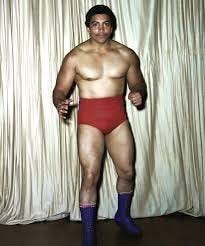
Roberto Soto, born in Puerto Rico in 1950, was a seasoned veteran whose career spanned multiple territories, including the World Wrestling Council (WWC) where he teamed with his brother José González (Invader #1) as part of the masked tag team Los Invaders. Soto, often billed as Invader #2 in some promotions, brought a technical, high-flying style influenced by his Caribbean roots, combined with a resilient underdog persona that resonated with audiences. By 1985, he had ventured to the U.S. mainland, seeking opportunities in regional circuits. In CCW, Soto quickly established himself as a fan favorite, known for his crisp suplexes, submission holds, and ability to rally crowds during comebacks. His arrival in the promotion was timely, as he sought to prove himself against established stars while chasing gold.
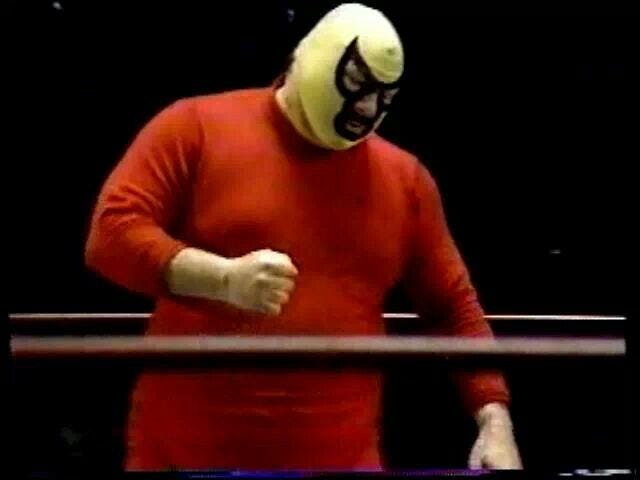
Opposing him was The Flame, the ring name of Jody Hamilton, a wrestling icon born in 1938 who had terrorized rings across North America since the 1960s. Hamilton was best known as one-half of The Assassins tag team, but as The Flame, he adopted a fiery, demonic gimmick complete with a red mask and robe, evoking fear through his brawling style and use of illegal objects. In CCW, The Flame was a multi-time champion, often aligned with heel factions and managed by figures like Ron Fuller. His reigns were defined by brutality—chokes, eye rakes, and power moves like the piledriver—making him a perfect antagonist. The Flame’s fourth Continental title run in 1985 was particularly dominant, as he fended off challengers with underhanded tactics, building heat that set the stage for a heroic overthrow.
The path to the December 2 match was paved by a heated rivalry that began earlier in the fall. Soto and The Flame first clashed prominently in September 1985, when Soto defeated The Flame in the finals of a tournament for the vacant NWA Alabama Heavyweight Championship on September 20 in Mobile, Alabama. This victory, Soto’s first major singles title in the territory, was a tournament final that showcased their contrasting styles: Soto’s agility versus The Flame’s power. The match, aired on CCW television, featured intense back-and-forth action, with Soto securing the pin after a series of dropkicks and a bridging suplex. This loss infuriated The Flame, who viewed it as a humiliation, especially since it came just days before he reclaimed the Continental title from Tommy Rich on September 23.
Over the ensuing weeks, the feud escalated through promos and skirmishes on CCW’s weekly shows. The Flame, seething from his Alabama title defeat, targeted Soto in vignettes, vowing revenge and claiming the Puerto Rican upstart was unworthy of Southern gold. Soto, meanwhile, positioned himself as the people’s champion, defending his Alabama belt while eyeing the more prestigious Continental strap. Television episodes in October and November built tension with run-ins and tag matches involving allies like Bob Armstrong for Soto and Lord Humongous for The Flame. A notable confrontation occurred in late November, where The Flame ambushed Soto after a defense, leading to a brawl that spilled into the crowd. This set up the December 2 house show in Birmingham as a climactic rematch, with the Continental title on the line. Promoters hyped it as a battle for regional supremacy, drawing a fervent crowd eager to see if Soto could topple the veteran once more.
On the chilly evening of December 2, 1985, the Boutwell Auditorium buzzed with anticipation as Roberto Soto challenged The Flame for the NWA Continental Heavyweight Championship. The match, headlining a stacked card, was a classic heel-versus-face showdown typical of the era. From the opening bell, The Flame asserted dominance with clubbing blows and stomps, using his size advantage to ground Soto early. He targeted Soto’s back with knee drops and bear hugs, slowing the pace and drawing boos from the audience.
Soto, however, showcased his resilience, countering with quick arm drags and dropkicks that sent The Flame reeling. Midway through, The Flame resorted to dirty tactics, raking Soto’s eyes and choking him on the ropes, prompting referee warnings. A turning point came when The Flame attempted his signature piledriver, but Soto reversed it into a backdrop, igniting the crowd. The final sequence was electric: After exchanging near-falls, Soto dodged a charging Flame, causing him to crash into the turnbuckle. Seizing the moment, Soto delivered a flying crossbody for the three-count, pinning The Flame cleanly in approximately 15 minutes. The arena erupted as Soto was awarded the belt, marking his first—and only—reign as Continental champion.
Thank You for Reading
I’m Tony Richards, Pro Wrestling Historian, Author and Storyteller. I share pro wrestling historical items in each issue of the Time Tunnel Pro Wrestling History Newsletter. Thanks for reading! If you enjoy my information on select events, matches and insights, please share it with folks you think might like to be a subscriber!
Remember, paid subscribers get access to exclusive and special content such as some special issues including a multi-part deep dives on wrestling territories, wrestler bios and championship title histories, special audio and video interviews on territory pro wrestling and more available in the Pro Wrestling Time Tunnel for Premium Subscribers.