


November 22nd in the Time Tunnel:
Happy Birthday to those who have passed on and to those great wrestlers still with us:
In Memoriam:
Tony Baillargeon 1928
Archie Gouldie\The Mongolian Stomper 1936
Happy Birthday:
George Weingeroff (73)
Ron Powers (58)
Jeffrey Sciello\Elias\Ezekiel (38)
Sierra Brandy\B-Fab (35)
RIP Memorial: We stop & remember those who have passed on this day and gave themselves to the business for us, the fans. We salute you and thank you.
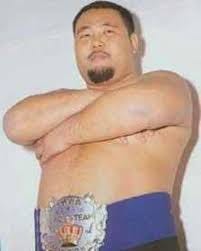
Thunder Sugiyama 11-22-2002 at the age of 62
Gary K Mize\Billy Joe Travis 11-22-2002 at the age of 41

Judy Glover 11-22-2016 at the age of 84

The Life and Career of George Weingeroff
Born on November 22, 1952, in Augusta, Georgia, Weingeroff was the son of “Gentleman” Saul Weingeroff, a prominent wrestling manager known for guiding NWA World Tag Team Champions like The Von Brauners and The Islanders during the 1960s. From an early age, George was immersed in the wrestling industry, but his path was uniquely shaped by personal challenges and a family legacy that propelled him toward the ring.

Pictured: Father and Son, Saul & George Weingeroff
Weingeroff’s childhood was influenced by his father’s career, but it was also defined by his congenital legal blindness—a condition that affected him since birth and would remain a secret throughout much of his professional life. To nurture his potential, Saul encouraged George to attend the Tennessee School for the Blind in Nashville, where he first honed his wrestling skills under rigorous coaching. There, he achieved an impressive 57-9 record and contributed to a program that produced fourteen state champions in the 1960s. His debut match at the school, performed in front of 1,500 spectators including legends like Lou Thesz, marked the beginning of his competitive journey. By 1971, Saul proudly shared in a news article that George had eclipsed his own accomplishments, with fans referring to him as “George’s old man.”
Transitioning to collegiate wrestling, Weingeroff competed at the University of Tennessee at Chattanooga (UTC) from 1972 to 1975. He placed fourth in the 190-pound division at the 1975 Southeastern Intercollegiate Wrestling Association (SEIWA) tournament, showcasing his technical ability despite his visual limitations. After graduation, he briefly taught and coached at the Indiana School for the Blind, giving back to the community that had supported his development. A highlight of his amateur career came in 1976 when he won a gold medal in an exhibition wrestling match at the Paralympic Games in Toronto, pitting U.S. athletes against Canadians to advocate for the inclusion of disabled competitors in the sport. This achievement underscored his resilience and set the stage for his professional transition.
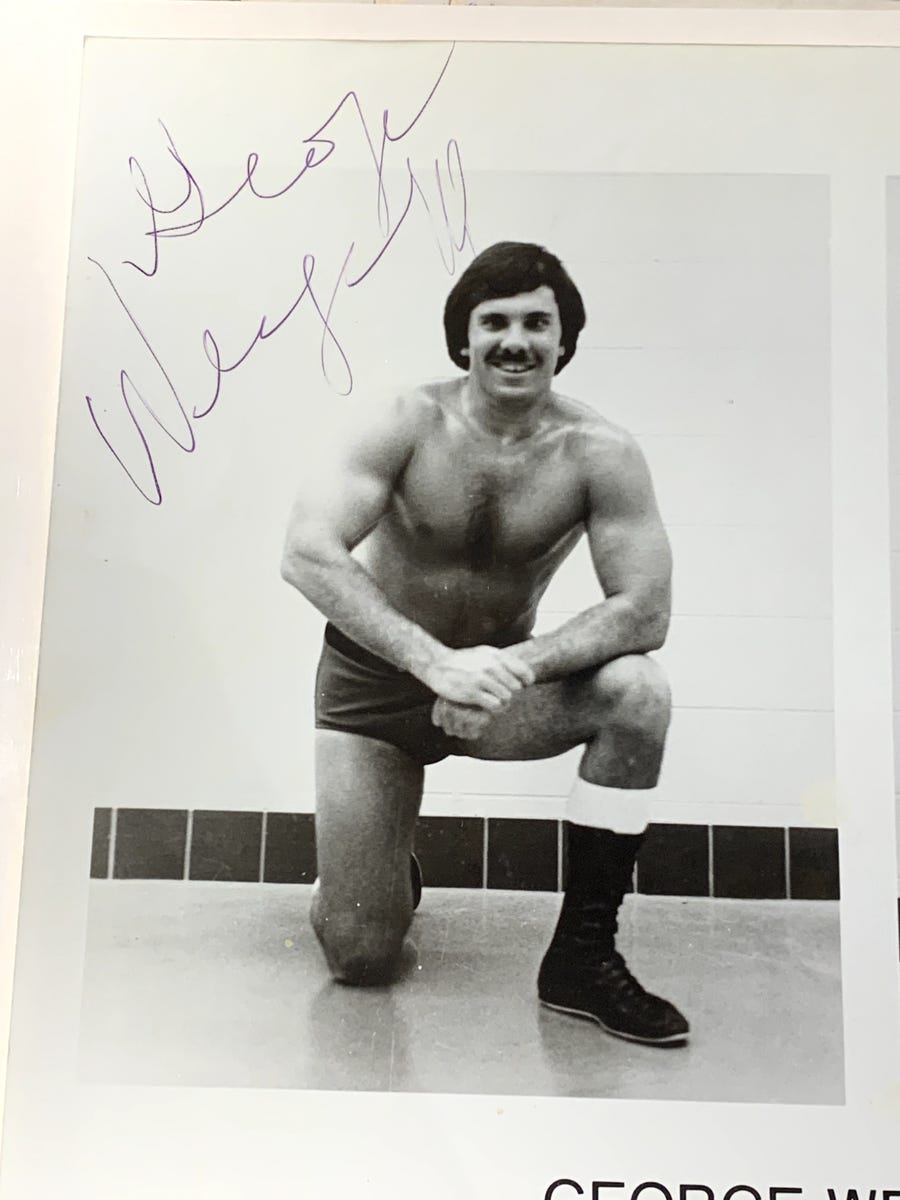
Pictured: George Weingeroff in 1978
Weingeroff’s entry into professional wrestling was unorthodox and daring. At just fifteen, he wrestled an unofficial match against Paul Morton, earning $10 but risking his amateur eligibility—complete with the mishap of wearing his boots on the wrong feet. His official pro debut occurred in 1975 in Tampa, Florida, where he faced Doug Sommers on a card headlined by NWA World Heavyweight Champion Jack Brisco defending against Cyclone Negro. Standing at 6’1” and weighing 233 pounds, the Nashville, Tennessee-based wrestler quickly adapted to the demands of the ring, drawing on his amateur background.
By 1977, he joined NWA Mid-America in Nashville, teaming with notables like Tojo Yamamoto, Danny Little Bear, Norvell Austin, and a young Junkyard Dog. His career paralleled that of Pez Whatley, a fellow UTC alum, as they navigated similar territories. In 1978, Weingeroff spent the summer in Toledo, Ohio, working for The Sheik and forming a friendship with Randy Poffo (later “Macho Man” Randy Savage). A standout moment was their one-hour time-limit draw at Detroit’s Cobo Hall, highlighting his endurance and skill.
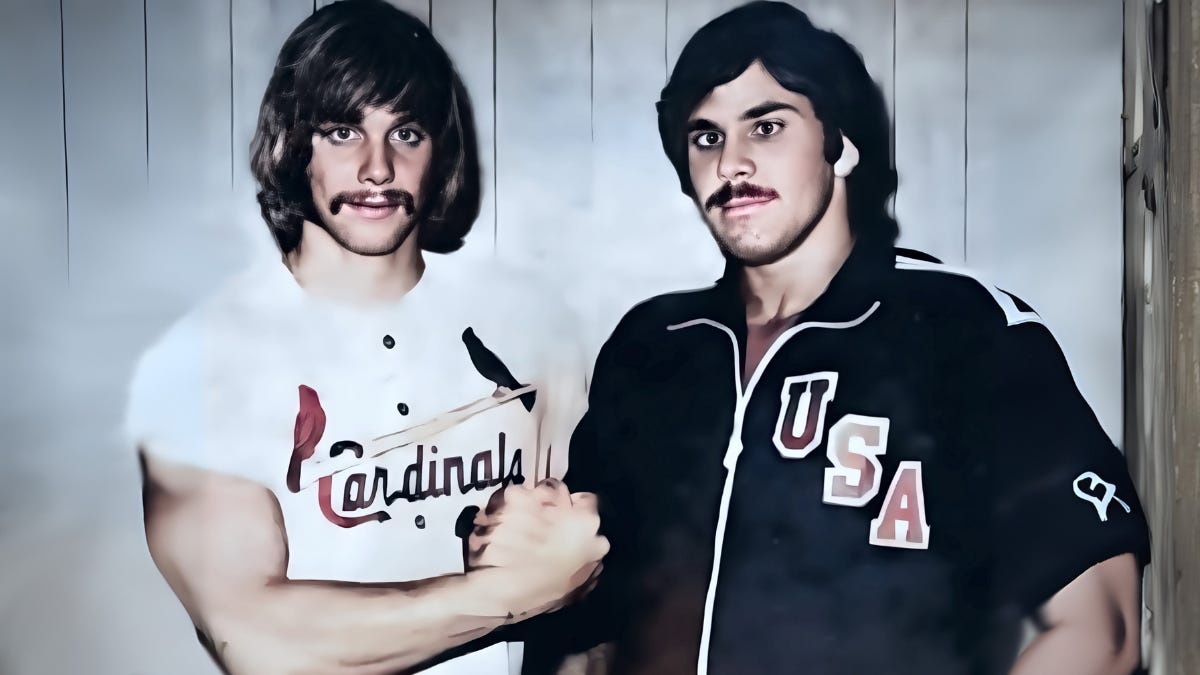
Pictured: Randy Poffo and George Weingeroff
Weingeroff’s career gained momentum in 1979 when he joined Angelo Poffo’s International Championship Wrestling (ICW) in Louisville, Kentucky—an outlaw promotion that operated outside traditional NWA boundaries. Teaming with Lanny Poffo, he captured the ICW United States Tag Team Championship four times, solidifying his reputation as a reliable tag team specialist. However, tensions arose when he recommended talent to other promotions, straining his relationship with Randy Savage, though he maintained a close bond with Lanny until the latter’s death in 2023. After ICW folded in 1983—sold to Jerry Jarrett for integration into the Continental Wrestling Association—Weingeroff moved to Mid-South Wrestling under Bill Watts, where he acted as an enforcer, “stretching” overconfident trainees.
From 1983 to 1985, he wrestled in World Class Championship Wrestling (WCCW) in Texas and Championship Wrestling from Florida (CWF), sharing locker rooms with the Von Erich family and witnessing the territory’s highs and lows, including Eddie Graham’s tragic suicide. He briefly appeared in Watts’ Universal Wrestling Federation (UWF), facing a young Sting, whom he later praised for his professionalism. n 1987, Weingeroff expanded internationally, joining All Japan Pro Wrestling (AJPW). He adapted his style to the hard-hitting Japanese approach, earning respect from stars like Genichiro Tenryu, Toshiaki Kawada, Jumbo Tsuruta, and Tiger Mask (Mitsuharu Misawa). That year, he also won the Mid-Continental Wrestling Association (MCWA) Tag Team Championship with Danny Fargo. In the early 1990s, adopting heel personas like Sheik Hussein, King Cobra, and Abdul Hassan, he worked for Smoky Mountain Wrestling, World Championship Wrestling (WCW), and Tennessee independents such as Mid-South Wrestling Association (MSWA) and Hardcore Championship Wrestling (HCW). His accolades included four MSWA Tennessee Championships, one HCW Championship, and one ICW Championship.
One of the most remarkable aspects of Weingeroff’s career was his ability to compete at a high level while legally blind—a fact he concealed so effectively that opponents often dismissed it as a ruse. During a 1984 WCCW match against “Wild” Bill Irwin in Dallas, Irwin famously shouted to the crowd that Weingeroff “ain’t blind” after a clever reversal. Wrestlers and referees alike debated its authenticity, but Weingeroff’s precision and adaptability proved his skill transcended his impairment. Later in life, surgery restored most of his vision, allowing him to reflect on a career built on secrecy and determination.
Weingeroff retired from full-time wrestling in 1993 but made sporadic independent appearances as “The Sheik.” That same year, at age 41, he ventured into mixed martial arts, debuting in Japan’s Pancrase promotion at the urging of Ken Shamrock. After intense dojo training, he faced Kazuo Takahashi but lost by knockout in his only bout. In 1996, he was recognized as the inaugural heavyweight champion for Independent Championship Wrestling in Mt. Vernon, Illinois, though the title was later held up and lost in a rematch.
Post-retirement, Weingeroff trained wrestlers like Demolition Smash, Lodi, Mike Samples, and The California Kid, passing on his knowledge. His legacy endures as a symbol of overcoming adversity, having shared rings with icons like Randy Savage, Sting, and Lou Thesz across major territories. Weingeroff’s story, blending family heritage, athletic achievement, and quiet heroism, continues to inspire in wrestling lore, proving that true champions thrive beyond visible limitations.
Significant Pro Debut
40 Year Flashback
11-22-1985: Chris Benoit & Rick Patterson defeated Butch Moffat & Mike Hammer at the Victoria Pavillion in Calgary, Alberta, Canada
Leading up to his debut, Benoit’s journey was one of relentless pursuit. As a teenager, he was captivated by the explosive energy of the Dynamite Kid, adopting elements of his style such as the snap suplex and the risky diving headbutt. Benoit even paid homage by initially billing himself as “Dynamite” Chris Benoit, signaling his intent to carry forward that high-impact legacy. His entry into Stu Hart’s Stampede Wrestling promotion was a natural fit, given the promotion’s reputation for fostering tough, no-nonsense wrestlers in the heart of Western Canada. Stampede Wrestling, founded by Stu Hart in 1948, was a regional powerhouse that emphasized realistic, athletic bouts over spectacle, and it provided the perfect platform for a young talent like Benoit to cut his teeth. By the fall of 1985, at just 18 years old, Benoit was ready to step out from the shadows of training and into the spotlight.
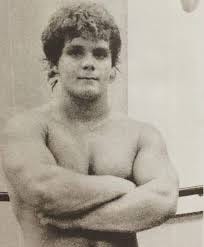
The debut itself unfolded on November 22, 1985, at a Stampede Wrestling event in Calgary, Alberta—a city synonymous with the Hart family’s wrestling empire. It was a tag team match, a common format for newcomers to gain experience while sharing the load with a veteran partner. Benoit teamed up with “The Remarkable” Rick Patterson, a seasoned performer known for his charisma and reliability in the ring. Their opponents were Butch Moffat and Mike Hammer, a formidable duo that represented the gritty, hard-knock style typical of Stampede’s roster. Mike Hammer, in particular, had been one of Benoit’s trainers, adding a layer of personal significance to the matchup. The bout was a classic display of technical wrestling, with chain grapples, quick tags, and high-energy exchanges that kept the Calgary crowd engaged.
From the opening bell, Benoit showcased the fundamentals he’d absorbed in the Dungeon, blending amateur wrestling holds with innovative maneuvers. However, the match wasn’t without its mishaps—a testament to the raw nerves of a debutant. In a bold attempt to emulate his idol, Benoit executed a diving headbutt early on, but he landed incorrectly, knocking the wind out of himself and momentarily stunning the audience. Reflecting on it later, Benoit admitted he vowed never to attempt the move again at that point, though it would ironically become one of his signature finishers in later years. Despite the setback, Benoit recovered with poise, demonstrating the resilience that would define his career. The match culminated in a thrilling finish: Benoit secured the victory for his team by pinning Butch Moffat with a perfectly timed sunset flip, a counter that highlighted his agility and ring awareness. The pinfall not only won the bout but also earned Benoit his first taste of crowd approval, setting the tone for what would become a storied path in the industry.

This debut was more than just a single match; it was a launchpad that propelled Benoit into the wrestling stratosphere. In the months and years following, he remained with Stampede Wrestling, capturing his first championship—the Stampede British Commonwealth Mid-Heavyweight Title—on March 18, 1988, by defeating Gama Singh. He went on to win four Stampede International Tag Team Championships and three additional British Commonwealth titles, engaging in memorable feuds, such as a year-long rivalry with Johnny Smith where they traded the mid-heavyweight belt multiple times. Stampede’s closure in 1989 marked the end of this chapter, but it opened doors to international opportunities, including a recommendation from Bad News Allen to join New Japan Pro-Wrestling, where Benoit further refined his craft under a masked persona as Pegasus Kid.
One Thing I Learned About Tony Baillargeon
Tony Baillargeon (also known as Antonio Baillargeon), the youngest of the famed Baillargeon Brothers who were dubbed “the six strongest brothers in the world” for their legendary strongman feats, wrestled professionally for 27 years starting in 1949, competing in roughly 3,000 matches across 45 U.S. states and holding multiple tag team championships
Thank You for Reading
I’m Tony Richards, Pro Wrestling Historian, Author and Storyteller. I share pro wrestling historical items in each issue of the Time Tunnel Pro Wrestling History Newsletter. Thanks for reading! If you enjoy my information on select events, matches and insights, please share it with folks you think might like to be a subscriber!
Remember, paid subscribers get access to exclusive and special content such as some special issues including a multi-part deep dives on wrestling territories, wrestler bios and championship title histories, special audio and video interviews on territory pro wrestling and more available in the Pro Wrestling Time Tunnel for Premium Subscribers.