


November 19th in the Time Tunnel:
Happy Birthday to those who have passed on and to those great wrestlers still with us:
In Memoriam:
Dara Singh 1928
Ricky Gibson 1952
Miss Elizabeth Huelette
Happy Birthday:
Ted Turner (87)
Wayne Hart (72)
RIP Memorial: We stop & remember those who have passed on this day and gave themselves to the business for us, the fans. We salute you and thank you.
(none)
The Life and Career of Ricky Gibson
Ricky Gibson, born Richard Earl Cain on November 19, 1952, in Pensacola, Florida, was a pioneering figure in professional wrestling, particularly in the Southern territories of the United States. His journey from a young fan to a respected in-ring performer exemplified the grit and determination required in the wrestling business during the 1970s and 1980s. As the older brother of Robert Gibson—half of the legendary Rock ‘n’ Roll Express tag team—Ricky carved out his own legacy through innovative high-flying maneuvers, numerous championship reigns, and a deep connection to the regional promotions that formed the backbone of American wrestling at the time. Though his career was cut short by injury, Gibson’s influence endured, inspiring generations of wrestlers in the Gulf Coast and beyond.
Growing up in Pensacola, Ricky Gibson was immersed in the world of professional wrestling from a young age. His father worked hauling rings for local promotions, which gave young Ricky an insider’s view of the business. The family later moved to nearby Milton, Florida, but Pensacola remained the hub of his early experiences. As a teenager, Gibson began working behind the scenes, selling Cokes and programs at events, and eventually joining the ring crew. This hands-on involvement led to his first official role as a referee, a common stepping stone for aspiring wrestlers to “earn their stripes” in the territory era.
Gibson’s in-ring debut came around 1970 in Alabama, under the guidance of promoter Lee Fields. Early on, he adopted the ring name Ricky Gibson, though he would later compete occasionally as Ricky Lee Jones in promotions like Mid-Atlantic Championship Wrestling (MACW). His initial matches were often on television, where he served as enhancement talent—frequently losing to established heels like Don Fargo. These repeated defeats, however, showcased Gibson’s resilience and gradual improvement, building fan sympathy and turning him into a beloved babyface. Michael Hayes, a fellow wrestler and future WWE Hall of Famer, recalled watching these matches as a child and rooting for Gibson, noting how his perseverance captivated audiences in the Pensacola Auditorium.
Biggest Run
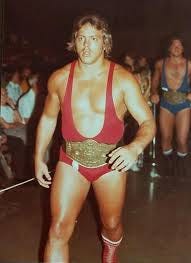
By the early 1970s, Gibson had transitioned from jobber to contender, wrestling primarily in Southern territories such as Alabama, Tennessee, Texas, and California. He was known for his athleticism and agility, pioneering moves that would become staples in modern wrestling. Credited as one of the first American wrestlers to execute a dropkick from the top rope and to walk along the top rope during matches, Gibson brought a high-flying style to an era dominated by brawling and technical grappling. These innovations set him apart and earned him recognition as a trailblazer in the National Wrestling Alliance (NWA) circuits.
Gibson’s singles career was marked by several prestigious title wins. In 1972, he captured the NWA Gulf Coast Alabama Heavyweight Championship by defeating Wrestling Pro, the first of seven reigns with that title. He repeated this success in 1976 against Duke Miller and again in 1983 against The Flame. Other notable singles accolades included the NWA Tennessee Southern Junior Heavyweight title (defeating Jerry Lawler in 1974), the NWA Gulf Coast Heavyweight title (1976), the NWA Central States Heavyweight title (1976), and the NWA Southeastern United States Junior Heavyweight title (1983). Feuds with stars like Lawler and Billy Spears highlighted his technical prowess and ability to draw crowds in heated rivalries.
The Gibson Brothers
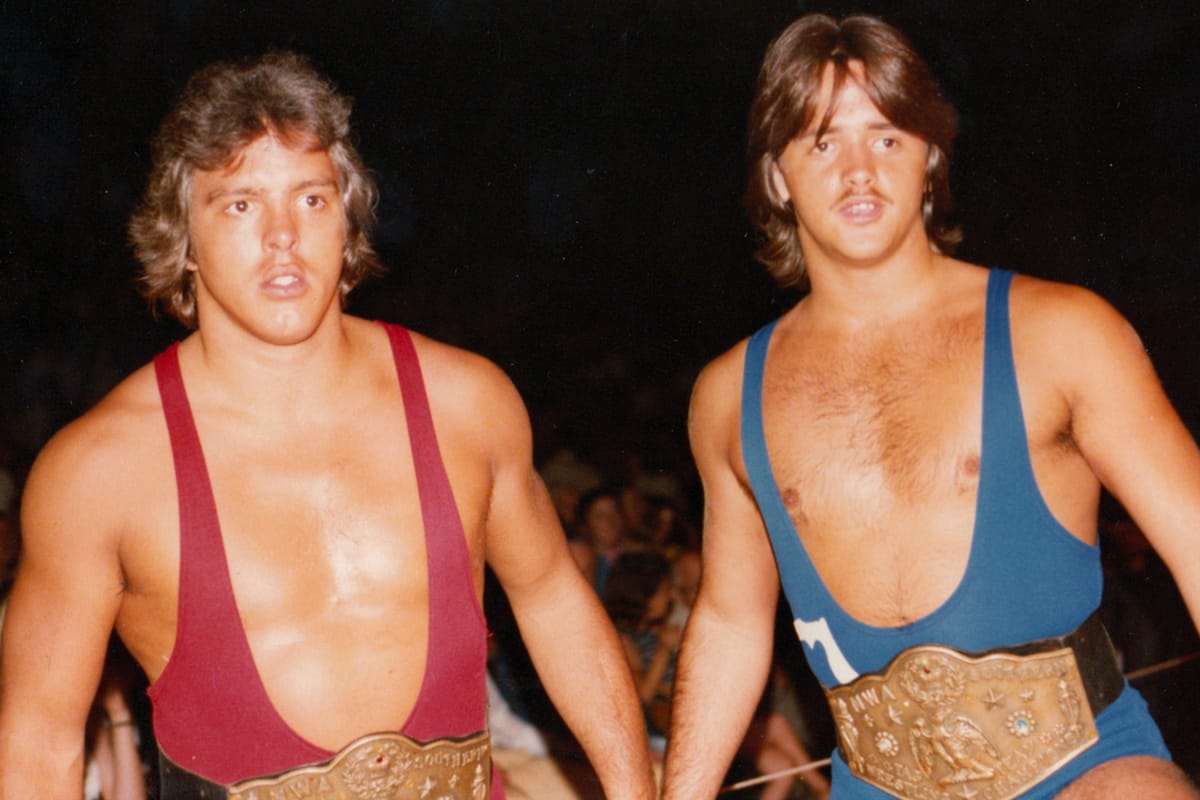
Pictured: Ricky & Robert Gibson, NWA Southern Tag Team Champions
While Gibson achieved much as a solo competitor, his tag team work defined much of his legacy. He frequently teamed with his younger brother Robert as “The Gibson Brothers,” a babyface duo that emphasized speed and coordination. Together, they held multiple championships, including the NWA Americas Tag Team titles (1979, defeating the Twin Devils), the AWA Southern Tag Team titles (three times between 1980 and 1981), and the NWA Mid-America Southern Tag Team titles (1977). Their partnership was a natural extension of their real-life bond, and it helped launch Robert’s career before he paired with Ricky Morton to form the Rock ‘n’ Roll Express.
Beyond family, Gibson excelled with other partners. In 1972, he won the SCW Western States Tag Team titles with Bobby Shane. He teamed with Steve Keirn for the NWA Gulf Coast United States Tag Team titles (1973), Tommy Gilbert for the NWA Mid-America Southern Tag Team and World Six-Man Tag Team titles (1974-1975), and Jimmy Golden for the NWA Tennessee Tag Team and Southeastern Tag Team titles (1975-1978). Later pairings included Bill Dundee for additional Mid-America and Southern Tag Team reigns (1976-1977). These alliances took him across promotions like Gulf Coast, Mid-America, Southeastern, and Central States, where he became a staple in Georgia, Louisiana, Mississippi, and Tennessee.
Car Accident and Injury
Gibson’s career peaked in the late 1970s and early 1980s, but tragedy struck in 1982 when a severe car accident forced him into retirement. The injury derailed his momentum, though he made sporadic appearances afterward, including in MACW under the Ricky Lee Jones moniker (e.g., victories over Tony Zane in 1986 and Thunderfoot #1 in 1987. He also surfaced in events like Smoky Mountain Wrestling in 1994 and Southern States Wrestling in 2001, showing his enduring passion for the sport. In his post-retirement life, Gibson remained connected to wrestling through his brother’s success and occasional independent shows. Hayes fondly remembered Gibson’s role in mentoring young talents, including helping Hayes himself break into the business via Robert. A humorous anecdote from Hayes illustrates Gibson’s larger-than-life persona: as kids, Hayes and a friend staged a fake beach wrestling match to impress Gibson, who was lounging with friends, only for it to end in comedic failure.
Ricky Gibson passed away on September 15, 2006, at the age of 53, after more than 25 years in Pro Wrestling. His death was mourned across the wrestling community, with tributes including a 10-bell salute at NWA Wrestle Birmingham shortly after. Hayes lamented the loss of the “old-school” exclusivity that Gibson represented, emphasizing how his friend’s journey—from ring crew to innovator—inspired Gulf Coast wrestlers.
Today, Ricky Gibson is remembered as a Southern wrestling legend whose high-flying style predated the aerial revolutions of later eras. His championships, family ties, and perseverance embody the territorial wrestling spirit. While his brother Robert achieved national fame, Ricky’s contributions laid the groundwork, proving that true impact often comes from the regional rings where stars are forged. In an industry built on spectacle, Gibson’s story is one of quiet innovation and unbreakable family bonds.
Thank You for Reading
I’m Tony Richards, Pro Wrestling Historian, Author and Storyteller. I share pro wrestling historical items in each issue of the Time Tunnel Pro Wrestling History Newsletter. Thanks for reading! If you enjoy my information on select events, matches and insights, please share it with folks you think might like to be a subscriber!
Remember, paid subscribers get access to exclusive and special content such as some special issues including a multi-part deep dives on wrestling territories, wrestler bios and championship title histories, special audio and video interviews on territory pro wrestling and more available in the Pro Wrestling Time Tunnel for Premium Subscribers.