



November 11th in the Time Tunnel:
Happy Birthday to those who have passed on and to those great wrestlers still with us:
In Memoriam:
Alex Perez 1929
Happy Birthday:
Mike Jackson (76)
Mark Ty Hildreth\Van Hammer (67)
Dump Matsumoto (65)
Lionel Green\Lio Rush (31)
RIP Memorial: We stop & remember those who have passed on this day and gave themselves to the business for us, the fans. We salute you and thank you.
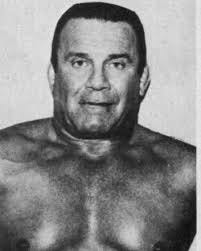
Pedro Godoy 11-11-1981 at the age of 61
Significant Pro Debut
11-11-1976 Genichiro Tenryu defeated Kazuo Sakarada at the Sports Arena in Amarillo, Texas in a Sumo Demonstration Match
Tenryu’s journey began not in the squared circle but in the dohyo of sumo wrestling. His transition from sumo to pro wrestling culminated in a unique debut event on November 11, 1976, in Amarillo, Texas—a sumo demonstration match against fellow former sumo wrestler Kazuo Sakurada. This event, held in the heart of the NWA Western States territory, marked Tenryu’s first public appearance in the pro wrestling world, blending his sumo roots with the American-style spectacle that would define his early career. While not his official in-ring pro wrestling debut (which came two days later against Ted DiBiase), this demonstration served as a symbolic bridge between traditions, introducing Tenryu to Western audiences and setting the stage for his legendary path.

Pictured: Genichiro Tenryu sumo wrestler
To understand the significance of this November 11 match, one must first appreciate Tenryu’s sumo heritage. At the age of 13, Shimada entered the Nishonoseki stable in January 1964, adopting the shikona (sumo ring name) “Tenryū Genichiro.” Over the next 12 years, he built a respectable career, competing in 393 wins against 355 losses, with no absences. He reached the sekitori ranks (the top two divisions) for 27 tournaments, including 16 in the elite makuuchi division, peaking at maegashira 1 in January 1974. Tenryu secured one jūryō championship and one makushita championship, showcasing his power and technique. However, internal conflicts arose after the death of his stablemaster in 1976. Frustrated with the new leadership and the rigid politics of sumo (which he later likened to the “worked” nature of pro wrestling), Tenryu retired in September 1976 at age 26.
Scouted by All Japan Pro Wrestling (AJPW) founder Giant Baba, Tenryu was sent to Amarillo, Texas, for training under the legendary Funk brothers—Dory Funk Jr. and Terry Funk. The Amarillo territory, part of the National Wrestling Alliance (NWA), was a proving ground for international talents, known for its tough, no-nonsense style that emphasized athleticism and storytelling. Tenryu’s arrival coincided with a wave of Japanese wrestlers crossing over, including Kazuo Sakurada, who had already debuted in pro wrestling in 1971 and was working in North America by 1976 under the name “Mr. Sakurada.” Both men shared sumo backgrounds—Sakurada had competed in sumo from 1964 to 1971 in the Tatsunami stable, where he first met Tenryu. This shared history made them ideal for a demonstration that highlighted sumo’s cultural appeal while teasing Tenryu’s wrestling potential.
The match pitted Tenryu against Sakurada in a sumo-style contest, billed as a demonstration to showcase the raw power and ritual of sumo. Unlike standard pro wrestling matches, sumo bouts emphasize quick, explosive confrontations where the goal is to force the opponent out of the ring (dohyo) or make them touch the ground with anything other than their feet. This format allowed Tenryu, fresh from retirement, to display his authentic skills without fully committing to pro wrestling maneuvers. Sakurada, already acclimated to the American scene, served as the perfect foil—experienced yet respectful of their shared origins. The bout was not for a title or part of a storyline but functioned as Tenryu’s soft introduction, generating buzz for his impending full debut. In later years, Sakurada would become the character Kendo Nagasaki.
Details of the match are preserved in territorial records, confirming it as a sumo demonstration where Tenryu emerged victorious. Lasting only a few minutes—as sumo bouts often do—the contest highlighted the physicality that would become Tenryu’s trademark. Both men, weighing around 235-260 pounds, charged with the traditional tachi-ai (initial clash), grappling in yotsu-zumo style (belt grips) to maneuver for position. Tenryu’s superior sumo pedigree shone through; his higher ranking and recent activity gave him an edge in technique and endurance. He reportedly won by yorikiri (force out), pushing Sakurada out of the makeshift dohyo amid cheers from the Texas crowd, who were captivated by the exotic ritual.
While not a high-stakes affair, the demonstration was pivotal. It allowed Tenryu to test the waters in front of a live audience, adapting to the brighter lights and rowdier fans of American wrestling. Sakurada, playing the role of veteran, helped elevate Tenryu without overshadowing him. Post-match, the two reportedly received polite applause, with promoters using the moment to hype Tenryu’s upcoming pro debut. This event also underscored the cultural exchange in wrestling during the era, as Japanese talents like Tenryu and Sakurada bridged Eastern traditions with Western entertainment.
Two days later, on November 13, 1976, Tenryu made his official pro wrestling debut in Amarillo against Ted DiBiase, resulting in a 15-minute time-limit draw that solidified his place in the territory. Sakurada continued wrestling in the area as Mr. Sakurada, appearing on subsequent cards (e.g., drawing with Alex Perez on November 16). Tenryu returned to Japan in 1977, rising through AJPW ranks to become a multi-time champion, founder of promotions like SWS and WAR, and a WWE Hall of Famer (inducted in 2015). His career highlights include pinning Hulk Hogan and Antonio Inoki and pioneering inter-promotional warfare in Japan.
One Thing I Learned Today About Genichiro Tenryu
He holds the unique distinction of being the only wrestler to score pinfall victories over both Antonio Inoki and Giant Baba, two of Japan’s most legendary figures in the sport. Tenryu maintained an incredibly long active career, wrestling at least one match every year from his debut in 1976 until his retirement in 2015—a span of nearly 40 years.
Thank You for Reading
I’m Tony Richards, Pro Wrestling Historian, Author and Storyteller. I share pro wrestling historical items in each issue of the Time Tunnel Pro Wrestling History Newsletter. Thanks for reading! If you enjoy my information on select events, matches and insights, please share it with folks you think might like to be a subscriber!
Remember, paid subscribers get access to exclusive and special content such as some special issues including a multi-part deep dives on wrestling territories, wrestler bios and championship title histories, special audio and video interviews on territory pro wrestling and more available in the Pro Wrestling Time Tunnel for Premium Subscribers.