



November 10th in the Time Tunnel:
Happy Birthday to those who have passed on and to those great wrestlers still with us:
In Memoriam:
(none)
Happy Birthday:
Bob Orton, Jr (75)
Mareva Malania\Chief Tapu (74)
Bill DeMott\Hugh Morrus\Crash The Terminator (59)
Josh Barnett (48)
Katie Lee Burchill\Katarina (45)
Ryan Allan Reeves\Ryback (44)
Dave Crist (43)
Peyton Royce (33)
Marshall Von Erich (33)
RIP Memorial: We stop & remember those who have passed on this day and gave themselves to the business for us, the fans. We salute you and thank you.
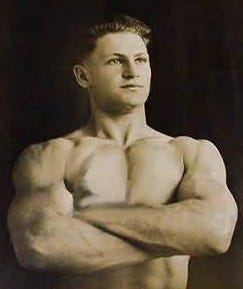
Ad Santel 11-10-1966 at the age of 79
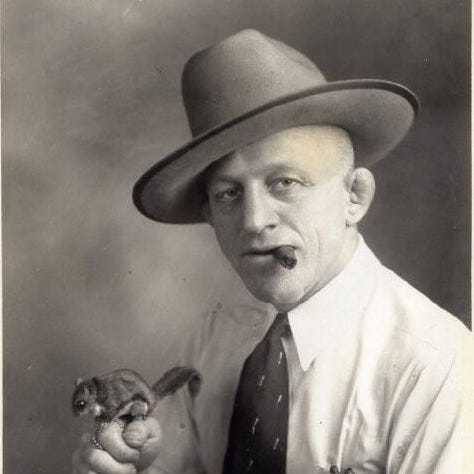
Al Haft 11-10-1976 at the age of 89
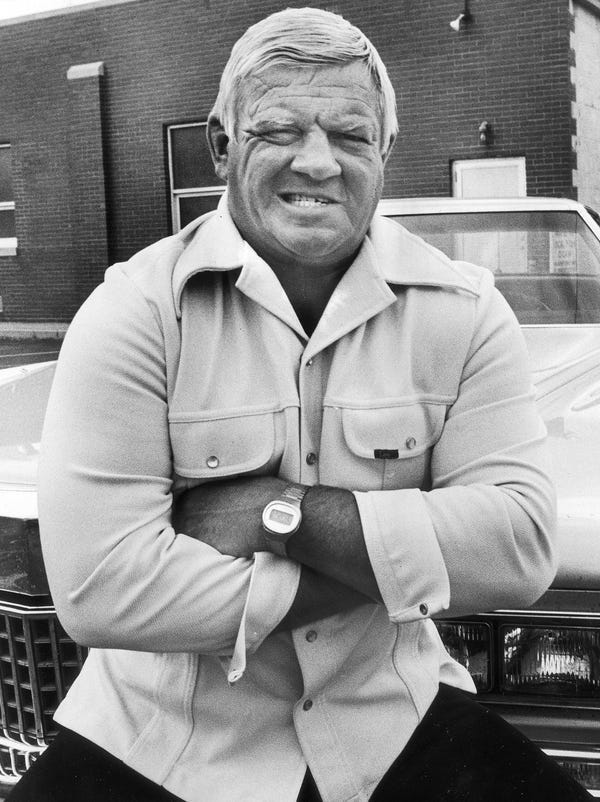
Dick Afflis\Dick The Bruiser 11-10-1991 at the age of 62
Herbert Gerwig\Killer Karl Kox 11-10-2011 at the age of 80

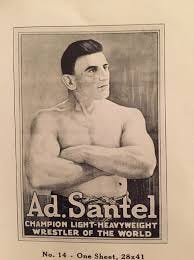
The Life and Career of Ad Santel
Emigrating to the United States as a young man, Santel became renowned for his mastery of catch-as-catch-can wrestling, a style emphasizing submissions, holds, and grappling techniques that laid the groundwork for modern mixed martial arts (MMA). Billed at 5 feet 9 inches and 185 pounds, he was not the largest wrestler of his era, but his technical prowess and innovative approach to inter-style competitions made him a legend. Santel’s career, spanning from 1907 to 1933, included claims to the World Light Heavyweight Championship and high-profile challenges against judo practitioners, bridging Western wrestling with Eastern martial arts. His influence extended beyond the ring, shaping the evolution of combat sports and inspiring future generations of grapplers.
His German heritage and immigration to America played a crucial role in his development as a wrestler. Born in a period of significant European migration to the United States, Ernst adopted the ring name Ad Santel to appeal to American audiences, occasionally using aliases like Otto Carpenter or Mysterious Carpenter. Settling in San Francisco, a hub for early professional wrestling, Santel honed his skills in the rough-and-tumble world of catch wrestling, a discipline rooted in English and American folk styles that prioritized real combat effectiveness over theatrical performance.
Santel’s entry into professional wrestling in 1907 came at a time when the sport was transitioning from carnival sideshows to organized promotions. He quickly gained a reputation for his legitimate grappling abilities, training under and competing against some of the era’s toughest competitors. Unlike many wrestlers who relied on size and strength, Santel excelled through technique, leveraging holds like the half nelson, headlock, and biceps slicer to dominate opponents. His early matches took him across the United States and eventually internationally, setting the stage for a career that would see him face off against legends such as Joe Stecher, Ed “Strangler” Lewis, and Gus Sonnenberg.
By the 1910s, Santel had established himself as a top-tier wrestler, claiming the World Light Heavyweight Championship—a title he held for several years. This accolade was not merely promotional hype; Santel defended it against formidable challengers worldwide, including in high-stakes bouts that drew large crowds. One notable match in 1921 saw him face the massive Gobar Guha in San Francisco for what was billed as the “World Wrestling Championship.” Although Santel lost after over an hour of grueling action, the contest underscored his willingness to take on larger opponents and his endurance in the ring.
Santel’s career was marked by extensive travel, competing in Europe, Asia, and Australia. His matches against American heavyweights like John Pesek and Dick Daviscourt further solidified his status. However, it was his forays into cross-style challenges that truly distinguished him. As a catch wrestling specialist, Santel represented the Western grappling tradition in encounters that pitted him against practitioners of other disciplines, foreshadowing the inter-disciplinary rivalries that would define MMA decades later.
Santel’s most enduring legacy stems from his rivalry with the Kodokan judo school, founded by Jigoro Kano in Japan. In the early 20th century, judo was gaining global recognition, and Santel sought to prove the superiority of catch wrestling through a series of challenge matches. These bouts, often conducted under modified rules allowing judogi jackets but permitting all holds, were among the first documented clash-of-styles competitions.

Key victories included his 1915 defeat of Senryuken Noguchi and his 1916 knockout of Tokugoro Ito in San Francisco, after which Santel boldly proclaimed himself the World Judo Champion. Although Ito avenged the loss later that year with a chokehold submission—the only time a judoka bested Santel—these matches ignited a feud that extended to Japan. In 1921, Santel traveled to Tokyo with a team of wrestlers, facing Kodokan members like Reijiro Nagata (whom he defeated via TKO) and Hikoo Shoji (resulting in a draw). Despite Kano’s disapproval and threats of expulsion for participating judoka, these events drew massive crowds, including 10,000 spectators at the Yasukuni Shrine.
Santel’s triumphs continued with wins over Taro Miyake, Daisuke Sakai, and Hitoshi Shimizu, employing signature moves like the half nelson slam and biceps slicer. Later draws with Tsutao Higami in 1925 and Setsuzo Ota in 1926 highlighted the mutual respect and skill exchange between styles. These challenges not only boosted Santel’s fame but also influenced Japanese martial artists, who became enamored with catch wrestling’s submissions. Several judokas, including Shoji, followed Santel to the U.S. for training, contributing to the hybridization of grappling arts in Japan.
Santel’s career was not without controversy. Years after the infamous 1911 rematch between Frank Gotch and Georg Hackenschmidt, Santel confided to fellow wrestler Lou Thesz that he had been paid $5,000 by Gotch’s backers to injure Hackenschmidt during training, disguising it as an accident. Hackenschmidt, a European wrestling icon, suffered a knee injury that hampered his performance in the bout, leading to his defeat. However, contemporary accounts from Hackenschmidt and his trainer Dr. Benjamin Roller attribute the injury to an accidental sparring mishap, with no mention of Santel (then using his real name, Adolph Ernst). Santel had indeed served as Hackenschmidt’s head trainer for about a year prior but was replaced by Roller. This discrepancy has led historians to speculate that Hackenschmidt may have altered the narrative to avoid implicating promoters, casting a shadow over Santel’s otherwise celebrated career.
Santel retired from active competition in 1933, after losses to Ed “Strangler” Lewis and draws with Oki Shikina. Post-retirement, he transitioned into a training role, mentoring young wrestlers in California. Notably, he imparted catch wrestling techniques to Lou Thesz, a future world champion who described the experience as an “incredible gift.” Thesz trained intensively with Santel for six months and continued sessions throughout his career, crediting him with refining his grappling expertise.
Santel’s impact on wrestling and martial arts is profound. As one of the greatest catch wrestlers, alongside figures like George Tragos and Ray Steele, he helped preserve and evolve the style. His Japanese expeditions inspired a generation of fighters to study Western submissions, influencing the development of professional wrestling (puroresu) and even early MMA in Japan. Judoka who trained under him, like Hikoo Shoji, became pioneers in freestyle wrestling back home. Santel’s bold challenges demonstrated the value of cross-training, a principle central to today’s combat sports.
Ad Santel’s life encapsulates the grit and innovation of early professional wrestling. From his immigrant roots to his global exploits, he transcended borders and styles, leaving an indelible mark on the sport. Dying on November 10, 1966, at age 79, Santel is remembered not just as a champion, but as a bridge between traditions, whose legacy continues to resonate in rings and dojos worldwide.
One Thing I Learned Today About Dick The Bruiser
In 1963, Dick The Bruiser participated in a staged bar brawl with Detroit Lions player Alex Karras to hype a wrestling match, but it spiraled out of control—resulting in injuries to multiple patrons and police officers, extensive property damage, and Afflis facing aggravated assault charges.
Thank You for Reading
I’m Tony Richards, Pro Wrestling Historian, Author and Storyteller. I share pro wrestling historical items in each issue of the Time Tunnel Pro Wrestling History Newsletter. Thanks for reading! If you enjoy my information on select events, matches and insights, please share it with folks you think might like to be a subscriber!
Remember, paid subscribers get access to exclusive and special content such as some special issues including a multi-part deep dives on wrestling territories, wrestler bios and championship title histories, special audio and video interviews on territory pro wrestling and more available in the Pro Wrestling Time Tunnel for Premium Subscribers.