


November 4th in the Time Tunnel:
Happy Birthday to those who have passed on and to those great wrestlers still with us:
In Memoriam:
Everett Marshall 1905
Tom Renesto\Assassin #2 1927
Pak Song 1943
Buzz Tyler 1948
“Lethal” Larry Cameron 1952
Happy Birthday:
(none)
RIP Memorial: We stop & remember those who have passed on this day and gave themselves to the business for us, the fans. We salute you and thank you.
Charlie Rentrop 11-4-1965 at the age of 77
Danno O’Mahoney 11-4-1950 at the age of 38
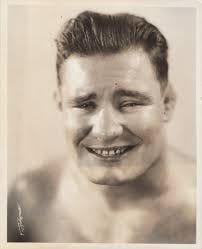
Doug Lindsay 11-4-2013 at the age of 76

The Tragic Loss of Danno O’Mahoney
A former Irish Army hammer thrower and strongman, O’Mahoney transitioned into wrestling after being discovered by promoter Paul Bowser, quickly becoming a sensation in the United States. O’Mahoney’s career peaked in 1935 when he defeated Jim Londos to claim the National Wrestling Association World Heavyweight Championship, and he later unified multiple titles, earning the moniker “Champion of the World.” Known for innovating the “Irish Whip” maneuver—a move still iconic in wrestling today—he drew massive crowds and symbolized Irish pride during a time when the sport was gaining mainstream popularity.
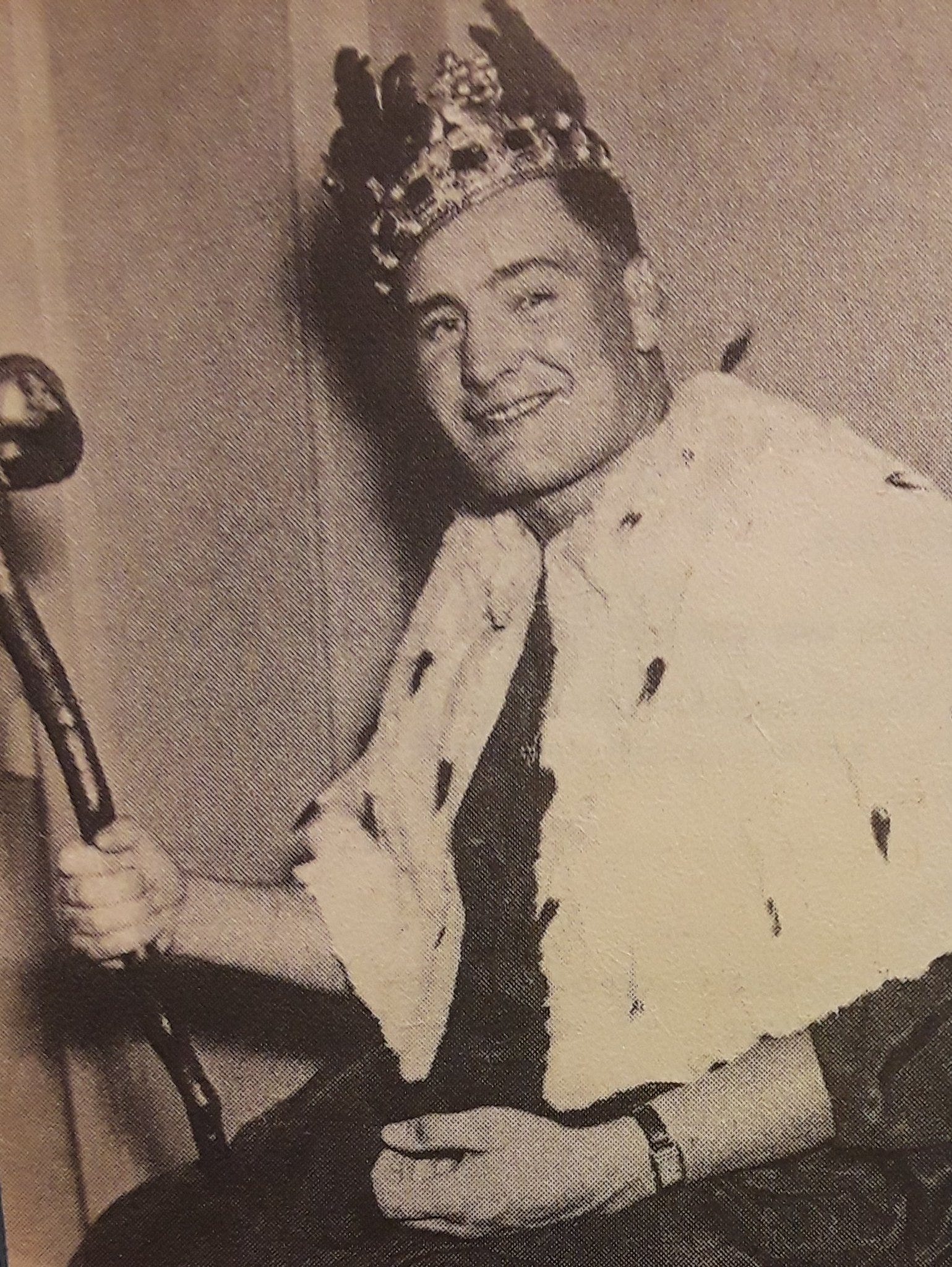
Pictured: Danno O’Mahoney, The King of Wrestling
However, O’Mahoney’s stardom was short-lived. By the late 1930s, controversies over fixed matches and title disputes tarnished his reputation, leading to a decline in his wrestling career. He retired in 1937, briefly attempted comebacks, and even ventured into politics and business back in Ireland. After serving in the Irish military during World War II, he emigrated to the U.S. but returned home in 1950, seeking a quieter life. Tragically, this homecoming was cut short. On the night of November 3, 1950, while traveling near Port Laoise in County Laois, O’Mahoney was involved in a severe car accident. He suffered multiple injuries, including broken legs and fractured ribs, and succumbed to them the following day at the age of 38.
While his wrestling exploits exposed him to injuries, it was a mundane road collision—common in an era of less advanced vehicle safety—that claimed him. Some accounts note he appeared to age rapidly post-retirement, possibly due to the rigors of his profession, but no underlying health issues were linked to his fatal crash. His passing shocked the wrestling world, as reported in outlets like The New York Times, highlighting the loss of a pioneer who bridged Irish heritage with American entertainment. O’Mahoney’s early death at 38 robbed the world of potential later contributions, whether in mentoring wrestlers or public life.
The Life and Career of Charlie Rentrop
Charlie Rentrop, born Carl August Rentrop, stands as a notable figure in the early history of professional wrestling in the United States. Emerging from humble beginnings in Germany, Rentrop transitioned from a competitive wrestler to an influential promoter, shaping the landscape of the sport in the American South during the interwar and postwar periods. His career spanned decades, marked by claims to world championships, strategic business maneuvers, and a lasting impact on regional wrestling promotions.
Carl August Rentrop was born on August 15, 1888, in Hagen, Nordrhein-Westfalen, Germany. Little is documented about his childhood, but it is known that he served three years in the German Navy, an experience that likely instilled discipline and resilience—qualities that would serve him well in the physically demanding world of professional wrestling. Following his naval service, Rentrop immigrated to the United States, though the exact date of his arrival remains unclear. By the early 20th century, he had adopted the anglicized name “Charlie” or “Charles” Rentrop and began establishing himself in the American Midwest and South.
Rentrop’s personal life intertwined with his professional pursuits. He married Christina, a 17-year-old from Indiana, and the couple had three sons: Charles Jr., Walter, and William. The family resided in various cities, including Minneapolis, Little Rock, and eventually Memphis, Tennessee, where Rentrop would make his most significant mark. Beyond wrestling, Rentrop had interests in breeding Doberman Pinschers, a hobby that even intersected with his professional network—legendary wrestler Lou Thesz once purchased a puppy from him in 1939.
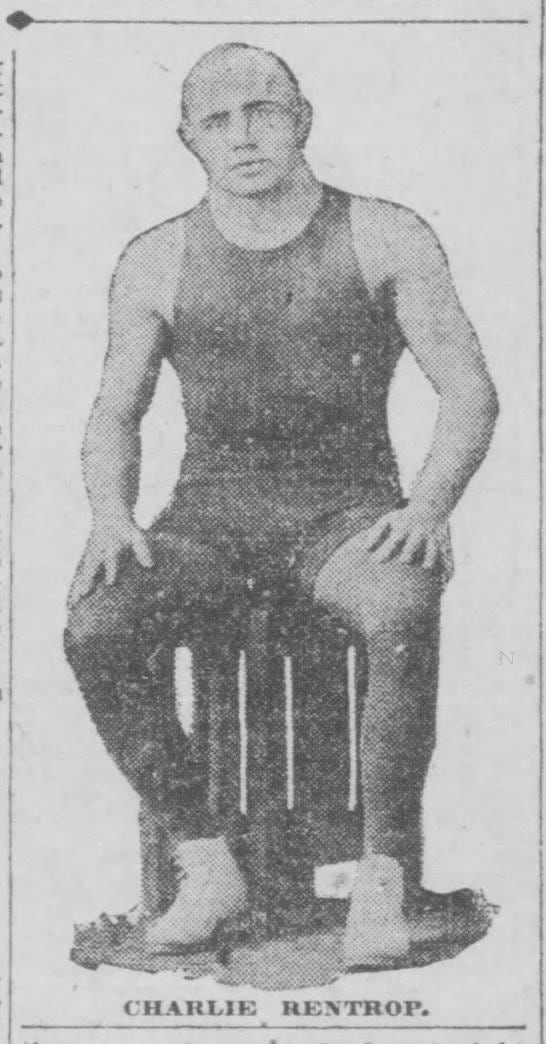
Rentrop entered the world of professional wrestling in the early 1910s, a time when the sport was evolving from carnival attractions into organized spectacles. Wrestling under the name Charles Rentrop, he competed primarily in the middleweight and light heavyweight divisions. Records indicate he participated in at least 181 documented matches, showcasing his skills across the United States. One notable bout occurred in Houston, Texas, where he battled Pet Brown to a two-and-a-half-hour draw, drawing one of the largest crowds for a wrestling event in the area at the time.
Rentrop’s career highlights include claims to the World Middleweight Championship and the World Light Heavyweight Championship at various points. These titles, often disputed in the era’s fragmented wrestling scene, underscored his prowess and helped build his reputation. He also trained emerging talents, such as Bill Lee and Cy Williams, contributing to the next generation of wrestlers. His wrestling style and endurance earned him respect, though like many performers of the time, he operated in a loosely regulated industry where outcomes were sometimes predetermined to entertain audiences
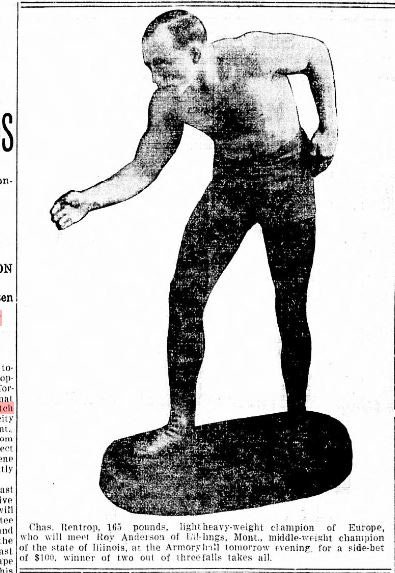
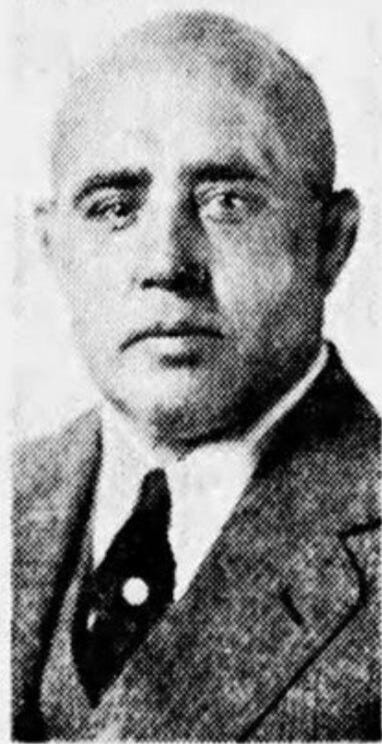
Pictured: Charlie Rentrop, European Champion
By the mid-1920s, Rentrop began shifting away from active competition. His residencies in cities like Minneapolis and Little Rock provided opportunities to network with promoters and wrestlers, setting the stage for his next chapter of his career becoming involved in one of the United States most legendary cities for pro wrestling.
After retiring from the ring, Rentrop leveraged his experience to become a promoter, a role that demanded savvy business skills amid the competitive and often cutthroat world of pro wrestling. He secured an exclusive promotion deal in Memphis, Tennessee, possibly in collaboration with figures like Doc Hottum, which granted him control over local events. This monopoly allowed him to dominate the Western Tennessee wrestling scene from January 1926 until June 1948, preceding the National Wrestling Alliance (NWA) era.
As promoter, Rentrop organized cards featuring top talents and filled venues like the Memphis Auditorium. He had ties to St. Louis and other regions, enabling him to book interstate matches and expand his influence as he often functioned in the role of booker for the Mississippi Valley Sports Club, the booking office in St. Louis owned by Lou Thesz and his father, Martin. Occasionally, he stepped in to manage operations for other promoters, such as filling in for European trips by colleagues like Weber. His tenure in Memphis spanned the Great Depression and World War II, periods when wrestling provided affordable entertainment for the masses. Rentrop’s ability to navigate economic challenges and maintain audience interest solidified his status as a “veteran promoter.”
In 1948, Rentrop handed over the reins to Les Wolfe, marking the end of his active promoting career. His era predated the television boom that transformed wrestling, but his foundational work helped establish Memphis as a wrestling hotbed, preparing it for its transformation into a wrestling powerhouse after being purchased by the Gulas-Welch Booking Office in Nashville in the mid-1950s.
Charlie Rentrop’s legacy lies in his dual roles as a performer and promoter, bridging the sport’s carnival roots with its more structured mid-century form. He exemplified the immigrant success story in American sports entertainment, rising from naval service in Germany to controlling a key regional territory. Rentrop passed away on November 4, 1965, at the age of 77. His wife, Christina, outlived him by nearly three decades, dying in Memphis on January 30, 1992.
40 Year Flashback
11-4-1985: Jumbo Tsuruta and Riki Choshu faced each other in a match for the first time going to a 60-minute time limit draw in a No Countout and NO DQ Match at the Castle Hall in Osaka, Japan
Video: November 4th, 1985, Tsuruta vs Choshu in a 5 minute edited condensed version of the one hour draw
In 1985, AJPW was experiencing a boom thanks to the Choshu JPW alliance. Choshu, known for his stiff strikes, lariats, and submission holds, brought a rebellious edge that contrasted with Tsuruta’s technical, powerhouse style—rooted in his amateur wrestling background and signature moves like the backdrop suplex and jumping knee. The feud helped elevate AJPW’s native talent rivalries and drew strong crowds. Despite mixed modern reviews (more on that below), the match was highly acclaimed at the time. It won Match of the Year for 1985 from Tokyo Sports, a prestigious Japanese wrestling award, highlighting its cultural impact in Japan. This bout is often cited as a turning point in AJPW’s booking, influencing future storylines and matches.
This match is a good example of the evolution of pro wrestling from a great territorial type wrestling match versus the more extreme high spot type of modern wrestling match. Fans who watch this match today have had their psychological programs tuned to the faster high-spot laden match, so when they watch this sixty-minute more wrestling-hold based match, their Broca (an area of the brain that needs stimulation to avoid boredom) is looking for the quicker pace style, so they are bored. If you really want to enjoy this match, you have to discipline your mind to take it in with the context of the time clearly in your thinking, which is not easy for most to do who are simply looking to be entertained.
Here is the full one hour match:
11-4-1985 Rick Rude defeated Iceman King Parsons (ch) to win the WCCW American Heavyweight Championship in a 2 out of 3 falls match in Fort Worth, Texas
Video: November 4th: Rick Rude defeats Iceman King Parsons for the American Heavyweight Championship in Fort Worth, Texas
The match unfolded with intensity from the opening bell. In the first fall, Rude showcased his strength by breaking out of Parsons’ Full Nelson twice, but the action quickly turned tactical. Rude employed chickenshit antics, with Pringle interfering to distract the referee, while Parsons focused on wearing down his opponent with an armbar. Despite Rude’s attempts to target Parsons’ back via a bearhug and abdominal stretch, the champion mounted a comeback and secured the fall with his signature butt bump, putting him ahead 1-0. I remember at the time “marking out” for Sam Menacker being on the color call for this match because of his WWA days and his history being associated with wrestling in Texas.
Undeterred, Rude regrouped for the second fall, immediately zeroing in on Parsons’ back once more. He locked in a camel clutch chin lock, aided by Pringle’s distractions and some cheating. Parsons fought back valiantly, escaping with an electric chair drop and trading blows in a back-and-forth exchange. However, Rude capitalized on a mistake, catching Parsons and dropping him throat-first onto the top rope in a devastating move reminiscent of Jumbo Tsuruta’s style, evening the score at 1-1.
The decisive third fall was a whirlwind of aggression. Both wrestlers exchanged punishing offense, with Parsons briefly gaining the upper hand. But Pringle’s microphone distraction proved pivotal, allowing Rude to ram Parsons into the corner and deliver a thunderous DDT. The referee’s count sealed the victory, making Rude the new champion in a hard-fought 2-1 triumph. This win was more than a title change; it marked Rude’s first major singles championship and solidified his “Ravishing” persona as a force in WCCW. Rude would hold the belt until July 1986, defending it against top talents like Parsons in rematches, before ascending to greater fame in WWF. For Parsons, the loss added fuel to his enduring popularity in the Texas territory. In an era of larger-than-life characters and regional rivalries, this Fort Worth showdown exemplified the grit and drama that defined 1980s wrestling, leaving an indelible mark on fans and the sport’s history.
Thank You for Reading
I’m Tony Richards, Pro Wrestling Historian, Author and Storyteller. I share pro wrestling historical items in each issue of the Time Tunnel Pro Wrestling History Newsletter. Thanks for reading! If you enjoy my information on select events, matches and insights, please share it with folks you think might like to be a subscriber!
Remember, paid subscribers get access to exclusive and special content such as some special issues including a multi-part deep dives on wrestling territories, wrestler bios and championship title histories, special audio and video interviews on territory pro wrestling and more available in the Pro Wrestling Time Tunnel for Premium Subscribers.