


November 3rd in the Time Tunnel:
Happy Birthday to those who have passed on and to those great wrestlers still with us:
In Memoriam:
Bronko Nagurski 1938
Yvon Cormier\The Beast 1938
Happy Birthday:
Nick Kozak (93)
Kim Anthony\Dirty White Girl (57)
Dawn Marie (55)
Jackie Gayda (44)
Cameron\Ariane Andrew (38)
Andrade (36)
RIP Memorial: We stop & remember those who have passed on this day and gave themselves to the business for us, the fans. We salute you and thank you.
Evan “Strangler” Lewis 11-3-1919 at the age of 59

Sputnik Monroe 11-3-2006 at the age of 77
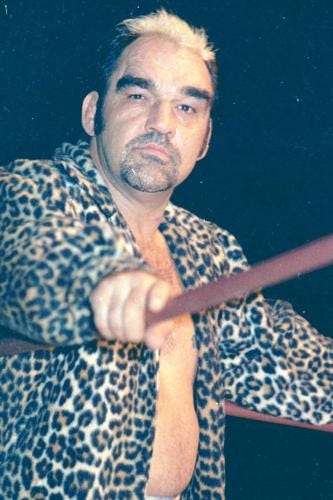
*There will be an Evolution of Pro Wrestling Article coming out today from me in support of Monroe’s election into the Wrestling Observer Hall of Fame. It’s titled Sputnik Monroe: Pro Wrestling’s Barrier Buster.
Significant Pro Debut
11-3-1938 Andre Drapp
Professional wrestling, or “Catch” as it became known in France, had evolved from its roots in Greco-Roman exhibitions popular in circuses since the 1830s. By the 1930s, the sport was undergoing a dramatic shift, influenced by American-style catch-as-catch-can wrestling, which emphasized flashy holds, submissions, and crowd-pleasing drama over strict amateur rules. In 1933, wrestling legends Raoul Paoli and Henri Deglane founded the Fédération Française de Catch Professionnel (FFCP), the first organized body to promote professional wrestling in the country. This organization affiliated with the Fédération Française de Lutte and hosted events at iconic venues like the Velodrome d’Hiver in Paris, featuring stars such as Charles Rigoulot, a former Olympic weightlifter, and Julien Duvivier. The FFCP’s efforts culminated in international exhibitions, including a groundbreaking show in Barcelona on October 25, 1933, headlined by Deglane. By 1938, French wrestling was booming, blending athletic competition with entertainment, drawing crowds eager for heroes amid rising geopolitical tensions in Europe.
It was in this context of wrestling history that Andre Drapp made his professional debut on November 3, 1938. Details of the exact match—such as the venue, opponent, and outcome—remain scarce in historical records, a common challenge when documenting early European wrestling events, which often lacked the comprehensive archiving seen in later decades. However, some sources pinpoint this date as his entry into the pro ranks, suggesting it likely occurred in a local or regional promotion in France, possibly in Paris or his home region of Lorraine. At 18, Drapp was already a promising athlete, having begun competing in bodybuilding contests around the same time, which honed his muscular physique and prepared him for the rigors of the ring. His style, described as that of a “powerhouse,” relied on strength-based moves like bulldogs and piledrivers, earning him admiration for his ability to blend raw power with technical skill. This debut represented not just a personal milestone but a reflection of the era’s wrestling scene: young talents emerging in a sport that was modernizing yet still rooted in France’s strong tradition of combat sports.
Unfortunately, Drapp’s nascent wrestling career was soon derailed by the outbreak of World War II in 1939. As a patriotic Frenchman, he joined the French Resistance, where he played a courageous role in combating Nazi occupation. Historical accounts note that Drapp personally killed several Nazi soldiers during his time in the underground movement, showcasing the same tenacity that would define his in-ring persona. The war halted professional wrestling activities across much of Europe, with many athletes either enlisting or going into hiding. For Drapp, this period of heroism likely delayed his full ascent in the sport, but it also forged his character, adding a layer of real-world valor to his later wrestling exploits.
Post-war, Drapp resumed his dual pursuits in bodybuilding and wrestling with renewed vigor. He won the prestigious Mr. France bodybuilding title in 1947 and placed as runner-up in the 1948 Mr. Universe contest, solidifying his reputation as a physical specimen. His wrestling career flourished in the 1950s and 1960s, expanding beyond France to include stints in the United States and other parts of Europe. Notable achievements included capturing the NWA Pacific Northwest Tag Team Titles with Red Bastien on September 25, 1956, a testament to his adaptability in American promotions. Drapp’s matches often highlighted his strength, as seen in preserved footage from bouts against opponents like Yves Amor, Jimmy Dula, and Jack Laskin, where he executed powerful holds and dramatic finishes.
Here is footage of a partial match Drapp had in Los Angeles with Ace Freeman at The Municipal Auditorium in Long Beach, California on July 26, 1951 on Wrestling from Hollywood with the iconic Dick Lane as the announcer:
He wrestled until 1972, amassing over 25 years of in-ring experience, and even ventured into tag team wrestling, such as his partnership with Bernard Vignal against Rocco Lamban and Dr. Adolf Kaiser.
Andre Drapp’s debut on November 3, 1938, though shrouded in some mystery due to limited documentation, symbolizes the dawn of a remarkable life. From a young debutant in pre-war France to a Resistance fighter and eventual international wrestling star, Drapp’s story transcends the squared circle. He passed away on November 14, 2009, at the age of 89, leaving behind a legacy as both a grappler and a symbol of French resilience. Drapp’s entry point reminds us of the sport’s ability to produce heroes who battle not only in the ring but also in the face of history’s greatest challenges.
11-1-1975: Don Kent defeated Mark Lewin (ch) for the NWA United States Heavyweight Championship (Detroit) at Cobo Arena in Detroit, Michigan
Headed toward the end of 1975, Big Time Wrestling, the Detroit-based territory office owned by Ed Farhat, The Original Sheik was at its business apex or was already on the downside of its apex. It featured weekly television shows that built anticipation for live events. The NWA United States Heavyweight Championship (Detroit version) was the crown jewel of the territory, a title with roots tracing back to the 1950s when it was contested in Chicago before shifting focus to Michigan. This belt was defended almost exclusively in Detroit and surrounding areas, making it a symbol of regional pride and a stepping stone for wrestlers aiming for national recognition.
Mark Lewin, the defending champion entering the November 1 bout, was a seasoned veteran whose career spanned continents and decades. Born in Buffalo, New York, in 1937, Lewin began wrestling in the late 1950s and quickly established himself as a versatile performer. Known for his athletic build, technical prowess, and ability to adapt gimmicks, Lewin had toured Australia, Japan, and various U.S. territories. By 1975, he was in his prime, often portraying a heroic figure with a no-nonsense style that emphasized chain wrestling and high-impact moves like the sleeper hold and figure-four leglock. Lewin captured the Detroit US Title on September 27, 1975, by defeating The Sheik in a grueling match at Cobo Arena, ending The Sheik’s eighth reign. This victory positioned Lewin as a fan favorite, a beacon of justice against the villainous forces that dominated BTW. His reign, though brief, was marked by intense defenses that showcased his resilience, drawing cheers from Detroit’s working-class audience who saw in him a relatable underdog fighting against the odds.
Even though during this run, Lewin was the heel, here is an example of Lewin as a babyface working against The Original Sheik. Take note of his amazing work in this short clip:
Video: The Original Sheik abuses Mark Lewin
Opposing Lewin was “Bulldog” Don Kent, a rugged enforcer whose career was built on tag team dominance and heel tactics. Born Donald E. Groat in 1933 in Michigan, Kent broke into wrestling in the 1950s and gained fame as part of The Fabulous Kangaroos alongside Al Costello. The duo, with their Australian-themed gimmick complete with boomerangs and bush hats, terrorized territories across North America, winning multiple tag titles and earning a reputation for stiff, punishing matches. By the 1970s, Kent had transitioned to singles competition while still dabbling in tags, often aligning with heels like The Sheik in BTW. Nicknamed “Bulldog” for his tenacious, biting style—literally, as he was known to chomp on opponents—Kent embodied the gritty, no-frills wrestling of the era. His move set included powerful suplexes, stomps, and foreign objects hidden in his tights, making him a perfect antagonist. Leading into November 1, Kent had been feuding with top faces in Detroit, including tag matches against Lewin and partners like Hank James earlier in the year. His challenge for the title was framed as a clash of styles: Lewin’s technical finesse versus Kent’s brawling brutality.
The build-up to the November 1 event at Cobo Arena was classic territorial storytelling, amplified by Big Time Wrestling’s television programming. In the weeks prior, vignettes and promos aired showing Kent ambushing Lewin during non-title bouts, often with interference from allies like Al Costello or The Sheik’s entourage. Lewin, in response, cut fiery interviews vowing to defend the honor of the title and the fans. Cobo Arena, a multi-purpose venue opened in 1960 and famous for hosting concerts, sports, and wrestling supercards, was the perfect stage. On that crisp autumn evening, the arena buzzed with energy as fans filed in, many clad in flannel and work boots, eager for a night of escapism. While full card details from that specific show are scarce in surviving records, typical BTW events featured a mix of undercard matches to warm up the crowd—perhaps including local talents like Bobo Brazil in a semi-main event or international imports like Abdullah the Butcher. The main event, however, was the undisputed highlight: Lewin versus Kent for the Detroit US Title.
The aftermath of Kent’s win rippled through the territory. His reign was short-lived; Lewin regained the title in December 1975, suggesting the November 1 match was part of a broader feud that extended into house shows and TV tapings. For Kent, the championship added to his legacy as a reliable mid-card to main-event heel, paving the way for further runs in other territories like Mid-South and Florida. Lewin, undeterred, continued his illustrious career, later adopting edgier personas like “The Purple Haze” in the 1980s. The title itself endured until 1980, when BTW folded amid competition from emerging national promotions like the WWF. In retrospect, this match exemplified the territorial system’s strengths: local heroes, heated rivalries, and live-event magic that built lifelong fans.
Thank You for Reading
I’m Tony Richards, Pro Wrestling Historian, Author and Storyteller. I share pro wrestling historical items in each issue of the Time Tunnel Pro Wrestling History Newsletter. Thanks for reading! If you enjoy my information on select events, matches and insights, please share it with folks you think might like to be a subscriber!
Remember, paid subscribers get access to exclusive and special content such as some special issues including a multi-part deep dives on wrestling territories, wrestler bios and championship title histories, special audio and video interviews on territory pro wrestling and more available in the Pro Wrestling Time Tunnel for Premium Subscribers.