


November 1st in the Time Tunnel:
Happy Birthday to those who have passed on and to those great wrestlers still with us:
In Memoriam:
Frank Sexton 1910
Sandy Parker 1944
Bobby Heenan 1944
Happy Birthday:
Bugsy McGraw (81)
Billy Gunn (62)
Shaun Ricker\L.A. Knight (43)
RIP Memorial: We stop & remember those who have passed on this day and gave themselves to the business for us, the fans. We salute you and thank you.
Rick McGraw 11-1-1985 at the age of 30

Pinkie George 11-1-1993 at the age of 88

Hurracan Ramirez 11-1-2006 at the age of 80

Brad Armstrong 11-1-2012 at the age of 50
Significant Pro Debuts
The Debut of Dave Levin
11-1-1934 Dave Levin defeated Sammy Gold in 24 seconds at the Jamaica Arena in New York City, New York
Dave Levin would go on to become a prominent figure in the sport, earning nicknames like the “Butcher Boy” and “Jamaica Butcher Boy” for his aggressive, no-nonsense style. Trained at Bothner’s Gym under mentors Herb Freeman and Bobby Managoff Sr., Levin entered the ring as a light-heavyweight contender, blending speed, technique, and raw power. His professional debut on November 1, 1934, at the Jamaica Arena in Queens, New York City, marked the beginning of an undefeated streak and a career that would see him claim world heavyweight titles at a remarkably young age. This event, held just a day after what some sources mistakenly cite as his 21st birthday (though records confirm an earlier birthdate), symbolized the rise of a local prodigy in a sport hungry for new talent.

The Jamaica Arena, located in Jamaica, Queens, served as a key venue in this landscape. Opened in the early 20th century, it hosted a mix of boxing, wrestling, and other events, becoming a hub for combat sports in the borough. By the 1930s, promoters like Eddie Lawson and Lou Rose regularly packed the arena with fans, selling tickets for affordable thrills and even contributing to wartime efforts in later years through bond sales. Wrestling cards at the Jamaica Arena often featured a blend of local grapplers and rising stars, with matches refereed by figures like Arthur Donovan, emphasizing athleticism over the more theatrical elements that would dominate later decades. The November 1, 1934, show exemplified this era’s straightforward, endurance-testing format, with bouts ranging from quick finishes to grueling time-limit draws.
The card that night was a typical midweek affair, drawing a crowd to witness six matches that showcased the diversity of wrestling talent in the region. The opener pitted Joe Banaski against Leo Wallick, ending in a rare double count-out after an exhausting 1 hour and 42 minutes, setting a tone of intense physicality. Eddie Pope followed with a decisive victory over Axel Madsen in 8 minutes and 4 seconds, while Joe Carlin earned a 20-minute decision over Patsy Falletti. Then came the moment that would etch Levin’s name into wrestling lore: his debut against Sammy Gold, who was substituting for the originally scheduled Dick Griffin. Billed as a “wrestling prodigy” by the Brooklyn Times Union, the 21-year-old Levin dismantled Gold in a mere 24 seconds, pinning him after a swift takedown and hold. This lightning-fast win not only thrilled the audience but also highlighted Levin’s reckless aggression—a trait that would define his early style, though it occasionally led to injuries, such as a cut above his eye in a later match. The evening concluded with two 20-minute draws: Max Martin versus Carl Von Zuppe, and Tony Morelli against Hans Schnabel, leaving fans with a sense of unfinished business typical of the time.

Levin’s debut was no fluke; it ignited an impressive run where he remained undefeated through his first 28 matches, facing a gauntlet of opponents in New York venues like Ridgewood Grove and the Jamaica Arena itself. In the months following November 1934, he racked up victories over wrestlers such as Joe Gubiski, Antonio Giglo, and Maurice LaChappelle, often in under a minute, while enduring his first losses and draws against veterans like Leo Wallick. By 1935, Levin was challenging for titles, including the World Light Heavyweight Championship, and even claimed a disputed Jewish Light-Heavyweight belt. His rapid ascent culminated in 1936 when, at age 23, he captured a version of the World Heavyweight Championship from Ali Baba, becoming the youngest recognized champion at the time and unifying titles in front of massive crowds. Defending the belt across North America against stars like Joe Savoldi and Chief Little Wolf, Levin solidified his status as a top draw before retiring in 1954.
Ultimately, Dave Levin’s debut at the Jamaica Arena on November 1, 1934, was more than a quick victory—it was the spark that propelled a local New Yorker into wrestling immortality. In an era when the sport balanced athletic legitimacy with emerging showmanship, Levin’s explosive entry embodied the raw potential that fans craved. His journey from that 24-second triumph to world champion status underscores how a single night in a modest Queens arena could launch a legacy that endured for decades, until his passing on August 25, 2004.
The Debut of Jimmy Garvin
11-1-1968 Jimmy Garvin debuted as the manager for Terry Garvin at Madison Square Garden in Phoenix, Arizona
A teenage Jimmy Garvin made his debut as a manager for his “brother” Terry Garvin at the historic Phoenix Madison Square Garden in Phoenix, Arizona. This event marked the beginning of Jimmy’s long and illustrious career in the squared circle, blending youthful enthusiasm with the gritty realities of the territorial wrestling era. At just 16 years old, Jimmy stepped into a role that would set the stage for his future as “Gorgeous” Jimmy Garvin, a flamboyant heel known for his charisma and in-ring prowess.
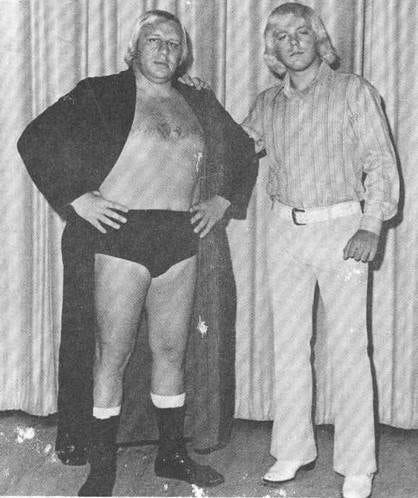
To understand the significance of this debut, it’s essential to contextualize the players involved. Terry Garvin, born Terrence Joyal in 1937, was already an established wrestler by the late 1960s, known for his technical skills and villainous antics in various territories. He often portrayed a tough, no-nonsense competitor, and his “family” dynamic with other Garvins added layers of intrigue to his matches. Jimmy Garvin, born James Williams on September 25, 1952, in Tampa, Florida, was an amateur wrestling standout before entering the pro ranks. Though not biologically related to Terry (the Garvin “brothers” were a kayfabe creation, with Ron Garvin later joining as another “sibling”), Jimmy’s entry into wrestling was influenced by these fabricated familial bonds. Some accounts even suggest Ron Garvin was Jimmy’s stepfather in real life, further blurring the lines between reality and performance. Jimmy initially performed under the ring name Beau James, a moniker that reflected his early, unpolished persona before he evolved into the preening “Gorgeous” character fans would come to love (or hate).
The venue itself added a layer of local flavor and historical weight to the occasion. Phoenix Madison Square Garden, often simply called “Madison Square Garden” to evoke the prestige of its New York City namesake, was a staple of Arizona’s wrestling scene from the 1920s through the 1970s. Located in downtown Phoenix, this open-air arena (which could seat around 5,000 fans) hosted countless boxing matches, rodeos, and wrestling cards promoted by regional outfits like the Arizona Wrestling Alliance. By 1968, it was a hotbed for territorial wrestling, drawing diverse crowds that included passionate Mexican American fans who brought an electric atmosphere to the events. The garden’s rustic setup—complete with dust, heat, and rowdy spectators—made it an intimidating place for a debutant like Jimmy, who later recounted fears of crowd violence in similar environments. Tragically, the venue would be destroyed by fire in 1972, making Jimmy’s debut one of the many memorable moments lost to time but preserved in wrestling lore.
Details of the November 1, 1968, card remain somewhat sparse in historical records, as wrestling results from that era were often documented through newspapers, fan recollections, and promoter logs rather than comprehensive databases. However, accounts indicate that Jimmy’s role was to manage Terry Garvin in a match against Ernie Mohammed, a rugged competitor known for his brawling style and Middle Eastern gimmick. As a manager, Jimmy’s responsibilities likely included ringside interference, trash-talking the opponent, and hyping the crowd—tactics that were hallmarks of heel managers in the territory era. This debut was not an in-ring wrestling performance for Jimmy but a strategic introduction to the business, allowing him to learn the ropes (literally and figuratively) without the immediate physical demands of competing. Some sources note a slight discrepancy in the year, with Jimmy himself recalling the date as November 1, 1969, in later interviews, possibly due to memory lapses or promotional embellishments. Nonetheless, multiple wrestling databases and biographies align with the 1968 timeline, emphasizing it as the true starting point of his professional journey.
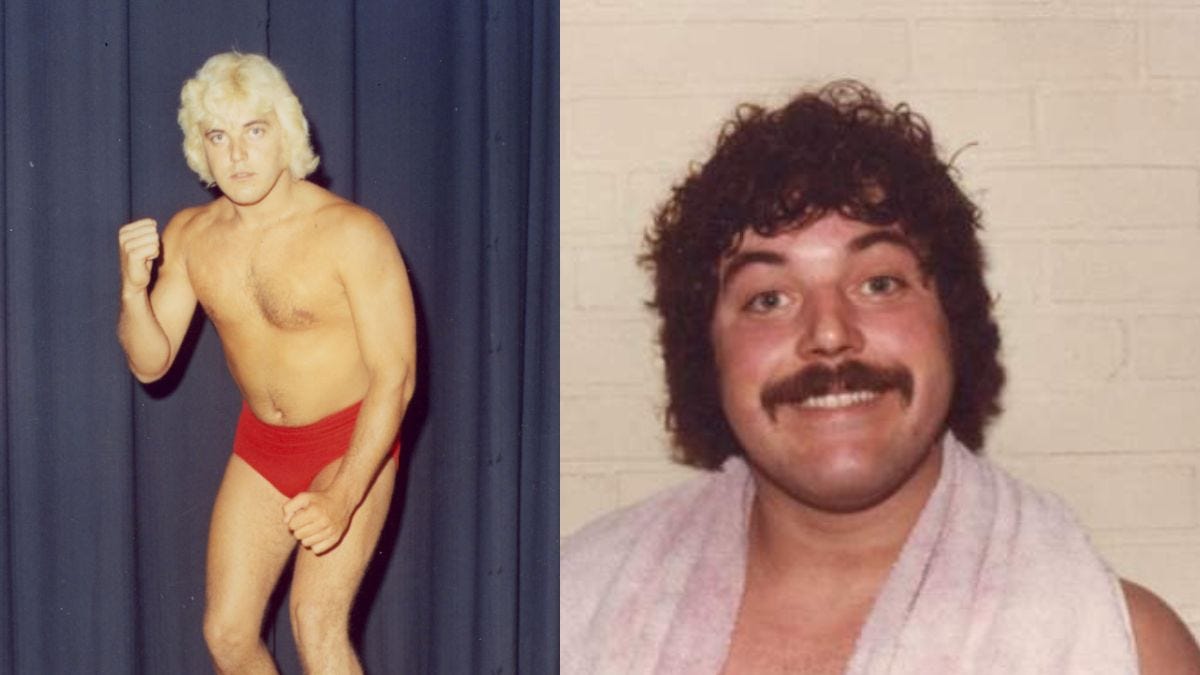
The debut’s impact extended beyond that single night. It launched Jimmy Garvin into a career that spanned decades, including stints in promotions like World Class Championship Wrestling, the American Wrestling Association, and the National Wrestling Alliance. He would go on to form iconic tag teams, such as the Fabulous Freebirds with Michael Hayes, and engage in legendary feuds that captivated audiences. Managing Terry in Phoenix was a humble beginning, but it instilled in Jimmy the showmanship and resilience needed to thrive in an industry built on larger-than-life personas. For wrestling historians, this event exemplifies the territorial system’s role in nurturing talent, where young performers like Jimmy could cut their teeth in front of fervent local crowds.
In retrospect, Jimmy Garvin’s managerial debut on November 1, 1968, at Phoenix Madison Square Garden represents more than just a footnote in wrestling history. It was a gateway moment that highlighted the blend of athleticism, theatrics, and family drama that defined the sport. As Jimmy evolved from a nervous teenager ringside to a Hall of Fame-caliber star, this Arizona night remained a foundational story in his legacy, reminding fans of the grassroots origins of professional wrestling’s golden age.
Thank You for Reading
I’m Tony Richards, Pro Wrestling Historian, Author and Storyteller. I share pro wrestling historical items in each issue of the Time Tunnel Pro Wrestling History Newsletter. Thanks for reading! If you enjoy my information on select events, matches and insights, please share it with folks you think might like to be a subscriber!
Remember, paid subscribers get access to exclusive and special content such as some special issues including a multi-part deep dives on wrestling territories, wrestler bios and championship title histories, special audio and video interviews on territory pro wrestling and more available in the Pro Wrestling Time Tunnel for Premium Subscribers.