


October 31st in the Time Tunnel:
Happy Birthday to those who have passed on and to those great wrestlers still with us:
In Memoriam:
Morris Sigel 1898
Nanjo Singh 1908
Dick Lever 1910
Dave Levin 1913
Bill Fralic 1962
Happy Birthday:
(none)
RIP Memorial: We stop & remember those who have passed on this day and gave themselves to the business for us, the fans. We salute you and thank you.
Gene Anderson 10-31-1991 at the age of 52
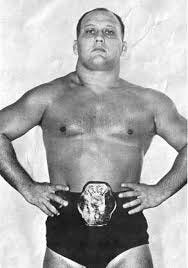
Joe Dusek 10-31-1992 at the age of 81
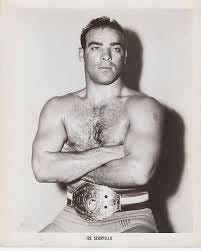
Moose Cholak 10-31-2002 at the age of 72
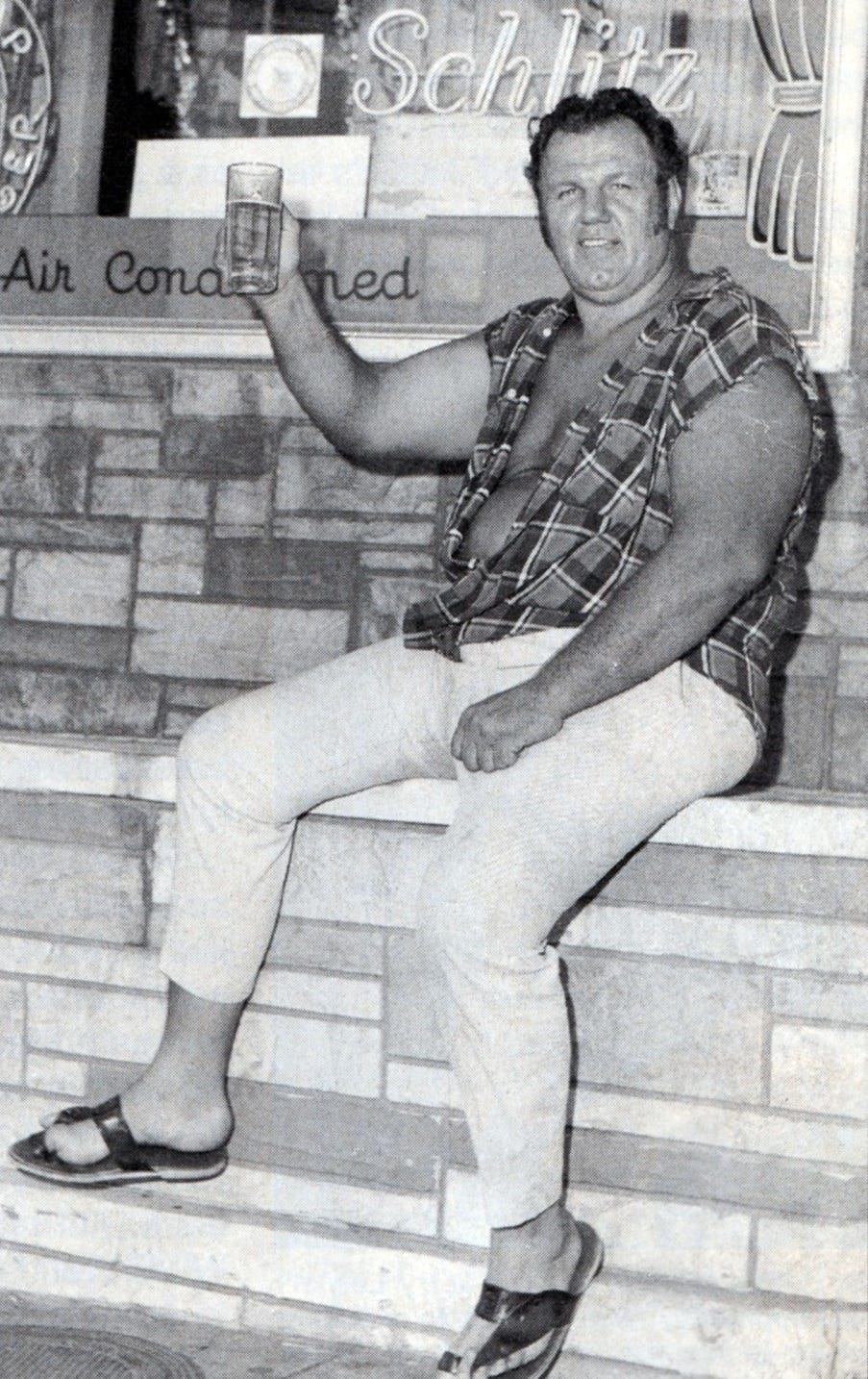
Jim Osborn\Dr. X\Double X 10-31-2016 at the age of 80
Significant Wrestler Debut
10-31-1964 Akhisa Mera (The Great Kabuki) was defeated by Kotetsu Yamamoto at the JWA “Siege of the Autumn” Series in Ishinomaki, Miyagi, Japan
In the vibrant world of professional wrestling during the mid-20th century, Japan was emerging as a powerhouse, thanks to pioneers like Rikidozan who had popularized the sport in the post-war era. On October 31, 1964, a young 16-year-old named Akhisa Mera stepped into the ring for his professional debut, marking the beginning of a storied career that would span over five decades. Better known later as The Great Kabuki, Mera’s entry into the Japanese Wrestling Association (JWA) represented not just a personal milestone but a continuation of Japan’s wrestling legacy.
The early 1960s in Japanese professional wrestling were dominated by the JWA, founded by Rikidozan in 1953. By 1964, the promotion was at its peak, featuring international talent and homegrown stars like Giant Baba and Antonio Inoki. Rikidozan’s untimely death in 1963 had left a void, but the JWA continued to thrive, focusing on training young athletes to carry the torch. Akhisa Mera, born on September 8, 1948, in Nobeoka, Japan, was one such prospect. At just 16 years old, he had already undergone rigorous training under the guidance of Giant Baba and Umanosuke Ueda, two influential figures in the industry. Mera’s youth and determination embodied the JWA’s commitment to developing the next generation, as the promotion sought to blend athleticism with dramatic storytelling to captivate audiences.
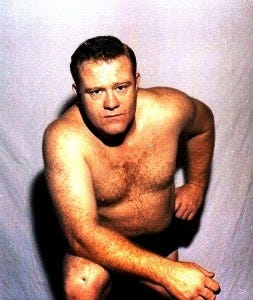
Pictured: Akhisa Mera
Mera made his debut under the ring name Akihisa Takachiho, a moniker he would use in his early years before adopting more exotic personas. The match took place on October 31, 1964, within the JWA circuit, though specific details such as the exact location, opponent, and result remain elusive in historical records. Wrestling archives from that era, particularly for preliminary matches involving rookies, are often incomplete, especially in English-language sources. What is clear is that this debut occurred in Japan, likely at one of the JWA’s regional events, where young wrestlers were tested in front of live crowds to gauge their potential. Debuts like Mera’s were typically short, straightforward bouts designed to introduce newcomers without overwhelming them, often against more experienced jobbers or fellow trainees. The lack of documented specifics underscores the humble beginnings of many wrestling icons; Mera’s first match was not a headline-grabbing spectacle but a foundational step in a grueling apprenticeship.

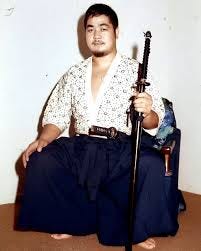
Pictured: Akhisa Mera as The Great kabuki
The significance of this debut extends beyond the ring itself. In 1964, Japanese wrestling was still recovering from Rikidozan’s shadow, with the JWA emphasizing national pride and international exchanges. Mera’s entry coincided with a period of growth, where wrestlers like him were groomed for excursions abroad to hone their skills. Indeed, after his debut, Mera would spend time in the United States and other regions, adopting the “The Great Kabuki” gimmick in 1981, complete with face paint, nunchaku, and the infamous Asian mist—a innovation that would influence generations of performers. His early JWA years under Takachiho saw him climb the ranks, eventually capturing titles like the NWA United National Championship in 1972. The debut match, while modest, planted the seeds for this evolution, teaching Mera the resilience needed for a career that included stints in All Japan Pro Wrestling, New Japan Pro-Wrestling, and American promotions like World Class Championship Wrestling. Mera retired in 2017 after 53 years in the business, leaving a legacy that began with that fateful debut.
46 Year Flashback
10-31-1979 Giant Baba defeated Harley Race (ch) to win the NWA World Heavyweight Championship for the 2nd time in Nagoya, Japan
Shohei “Giant” Baba, a towering figure at 6’10” and a foundational pillar of Japanese pro wrestling, faced off against Harley Race, the rugged American champion known for his brutal style and multiple reigns with the prestigious NWA title. The National Wrestling Alliance (NWA) World Heavyweight Championship was the crown jewel of the era, symbolizing supremacy across a network of promotions worldwide. For Japanese fans, Baba’s quest to reclaim the belt was a matter of national pride, especially as All Japan Pro Wrestling (AJPW), which Baba co-founded in 1972, sought to establish itself as a powerhouse against rivals like New Japan Pro-Wrestling. This Halloween night encounter in Aichi-Ken Taiikukan would etch itself into history as a testament to resilience, strategy, and the raw intensity of the squared circle.
Giant Baba’s journey to this moment was rooted in his remarkable career. Born in 1938, Baba transitioned from a professional baseball player to a wrestling icon under the mentorship of Rikidōzan, the father of Japanese puroresu. By 1974, Baba had made history by defeating Jack Brisco to become the first Japanese wrestler to hold the NWA World Heavyweight Championship, albeit for a brief week before dropping it back—a common practice to boost local promotions without disrupting the title’s North American lineage. Five years later, Baba was determined to recapture that glory, leveraging his immense size, technical prowess, and signature moves like the Running Neck Breaker Drop to dominate opponents.
Harley Race, on the other hand, embodied the gritty, no-nonsense ethos of American wrestling. A seven-time NWA champion by the end of his career, Race had reclaimed the title from Dusty Rhodes in August 1979 and was embarking on a grueling international defense tour. Known for his headbutts, knee drops, and unyielding toughness, Race arrived in Japan amid physical wear and tear but with a point to prove. His recent narrow victory over Jumbo Tsuruta in Matsumoto highlighted his vulnerability, yet also his championship mettle. The NWA title’s prestige meant defenses were often political, with short “borrowed” reigns like Baba’s previous one tolerated to enhance regional appeal without board approval. For this bout, special rules were implemented: the title could change hands via disqualification or count-out, adding an extra layer of tension. The anticipation for the October 31 match was electric, part of AJPW’s Giant Series tour. Race’s family, including his wife and son, sat ringside, heightening the personal stakes for the champion who aimed to showcase his dominance abroad. This wasn’t just a title match; it was a cultural showdown, with Japanese fans rallying behind their homegrown hero against the invading American kingpin.
From the opening bell, the contest exploded into action. Baba, unusually aggressive, launched a preemptive kick to Race’s chest, catching the champion off guard and setting a frantic pace. He followed with a Kawazu Otoshi (Russian Leg Sweep) and a devastating Pile Driver, nearly securing a pin as referee Joe Higuchi slapped the mat twice before Race kicked out, eliciting screams from the electrified spectators. Race, bloodied but resilient, retaliated with a vicious Head Butt to Baba’s stomach and a cruel Knee Drop to his forehead, drawing blood from the giant and forcing him to tumble outside the ring.
Video: October 31, 1979, Giant Baba defeated Harley Race (ch) for 2nd NWA World Title
The brawl spilled to the floor, where Baba turned the tide by slamming Race’s face into an iron post, causing blood to spout from the champion’s wound. Back in the ring, Race attempted a high-risk Diving Head Butt from the corner post, but Baba countered masterfully with his Deadly Drive—a powerful throw that shook the arena. Seizing the moment, Baba executed his finisher, the Running Neck Breaker Drop, crashing down on Race for the decisive three-count. As young wrestlers rushed the ring and the crowd erupted in uproar, Baba was declared the new NWA World Heavyweight Champion, marking his second reign with the belt. The match, a symphony of blood, power moves, and reversals, showcased both men’s endurance and tactical brilliance.
Baba’s triumph was short-lived, as was typical for such international title swaps. Just seven days later, on November 7, 1979, in Amagasaki, Race reclaimed the championship in a rematch, reversing Baba’s Flying Body Press into a pinfall victory. This quick exchange boosted AJPW’s attendance and TV ratings, solidifying Baba’s promotion as a viable force in global wrestling. For Race, the loss and regain underscored his legendary toughness, while for Baba, it added to his legacy as a three-time NWA champion (with a third brief reign in 1980 against Stan Hansen). The event highlighted the NWA’s flexible booking to accommodate international partnerships, influencing how titles were handled in the territory era.
One Thing About Pro Wrestling History
Gene and Lars Anderson teamed together to win the NWA southern Tag Team Championship in January of 1967 winning a tag team tournament to crown new champions in Atlanta, Georgia. The had a subsequent feud with Enrique and Ramon Torres, another outstanding brother combination, losing the titles to the Torres Brothers on April 11, 1967. The regained the titles a couple of weeks later only to lose them to the Torres Brothers again in May. The Anderson Brothers vs Torres Brothers program was one of the hottest tag team programs ever in the Georgia Territory running the length of the first six months of 1967.
Thank You for Reading
I’m Tony Richards, Pro Wrestling Historian, Author and Storyteller. I share pro wrestling historical items in each issue of the Time Tunnel Pro Wrestling History Newsletter. Thanks for reading! If you enjoy my information on select events, matches and insights, please share it with folks you think might like to be a subscriber!
Remember, paid subscribers get access to exclusive and special content such as some special issues including a multi-part deep dives on wrestling territories, wrestler bios and championship title histories, special audio and video interviews on territory pro wrestling and more available in the Pro Wrestling Time Tunnel for Premium Subscribers.