


October 28th in the Time Tunnel:
Happy Birthday to those who have passed on and to those great wrestlers still with us:
In Memoriam:
Iron Mike Sharpe 1940
Happy Birthday:
Les Thatcher (85)
Montel Vontvious Porter\MVP (52)
Christy Hemme (45)
Rocky Romero (43)
Mansoor (30)
RIP Memorial: We stop & remember those who have passed on this day and gave themselves to the business for us, the fans. We salute you and thank you.
Art Nelson 10-28-1983 at the age of 56

Morris Shapiro\Mighty Atlas 10-28-1999 at the age of 85

Mitsu Hirai 10-28-2003 at the age of 60
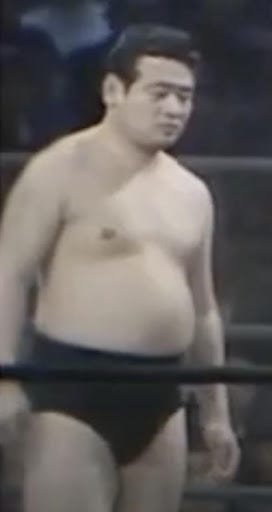
Tracy Smothers 10-28-2020 at the age of 58

Significant Pro Wrestler Debut
10-28-1951 Rikidozan vs Bobby Bruns ended without a winner in 10 minutes at the Ryogoku Memorial Hall in Tokyo, Japan
In the shadow of post-World War II reconstruction, Japan in 1951 was a nation grappling with economic hardship, cultural upheaval, and the lingering sting of defeat at the hands of American forces. Entertainment was scarce, and professional wrestling—introduced by U.S. servicemen and promoters—remained a novelty, viewed with curiosity but little enthusiasm by the local populace. It was against this backdrop that Mitsuhiro Momota, better known by his ring name Rikidozan, stepped into the ring for the first time on October 28, 1951, at Tokyo’s Ryogoku Memorial Hall. This debut match against American wrestler Bobby Bruns was more than a sporting event; it was the spark that ignited puroresu (Japanese professional wrestling) as a national phenomenon and catapulted Rikidozan to mythic status.

Pictured: Rikidozan
Rikidozan’s path to the squared circle was unconventional and fraught with adversity. Born Kim Sin-rak in 1924 in what is now North Korea, he had immigrated to Japan as a teenager and risen through the ranks of sumo wrestling, reaching the elite makuuchi division by 1946. Yet, discrimination against his Korean heritage—coupled with a bitter financial dispute with his stablemaster—forced him to retire from sumo in 1950. At 27, weighing around 220 pounds after shedding sumo bulk through karate training, Rikidozan sought a new outlet for his athletic prowess. Opportunity arrived via Bobby Bruns, a Mid-Pacific promoter and wrestler scouting talent for a U.S.-organized tour headlined by boxing legend Joe Louis. Bruns, recognizing the promotional value of Japanese participants, invited Rikidozan—alongside judokas Kokichi Endo and Yasuyuki Sakabe—to train for the shows. With just one month of preparation under Bruns’ guidance, Rikidozan was thrust into the unfamiliar world of pro wrestling.
The venue, Ryogoku Memorial Hall (now the iconic sumo arena), was a fitting stage: a cavernous space steeped in martial tradition, packed with a modest crowd of spectators drawn by the exotic allure of American grapplers like Bruns and Harold Sakata. The match was billed as a 10-minute time-limit bout, a cautious format for a debutant. Bruns, an experienced Iowan with a rugged, no-nonsense style honed in U.S. territories, entered as the seasoned veteran, representing the occupying power’s athletic might. Rikidozan, clad in simple trunks and radiating quiet intensity, embodied Japan’s resilient underdog. From the opening bell, the contrast was stark: Bruns relied on technical holds and power moves, while Rikidozan fused sumo slaps (harite) with judo throws, foreshadowing his signature “karate chop” that would later become a cultural icon.
Eyewitness accounts describe a fiercely competitive affair, with Rikidozan holding his own against Bruns’ aggression. The Japanese challenger absorbed punishment, countered with explosive takedowns, and even drew gasps with a proto-chop that staggered his opponent. As the clock ticked down, neither man yielded ground, culminating in the referee’s call for a time-limit draw. The bell rang at exactly 10 minutes, leaving the audience on edge—neither a humiliating loss for the newcomer nor a premature victory, but a statement of parity. Bruns himself later praised Rikidozan’s raw talent, dubbing him the “founder of Japan pro wrestling” and noting the electric atmosphere that turned away crowds at subsequent tour stops.
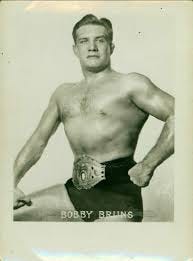
Pictured: Bobby Bruns
This unassuming draw was a watershed moment. For Rikidozan, it validated his pivot from sumo and opened doors to further training in Hawaii under Bruns and others, where he refined his skills and began dismantling American foes to fuel nationalistic fervor. Within years, he would establish the Japanese Wrestling Association, draw millions via early television broadcasts, and symbolize Japan’s postwar resurgence—defeating “gaijin” (foreign) heels to restore pride in a humbled populace. Tragically, Rikidozan’s life ended in 1963 from a yakuza-related stabbing, but his legacy endures as the father of puroresu, influencing global stars from Antonio Inoki to modern icons.
Seventy-four years later, as wrestling enthusiasts and historians reflect on October 28, 1951, Rikidozan’s debut stands as a testament to reinvention. In a 10-minute stalemate with Bobby Bruns, a Korean-Japanese outsider didn’t just wrestle; he wrested hope from obscurity, forging an empire from a single, defiant draw.
90 Year Flashback
10-28-1935 Lon Cheney defeated Black Dragon in a 2 out of three falls match at the Armory in Blytheville, Arkansas.
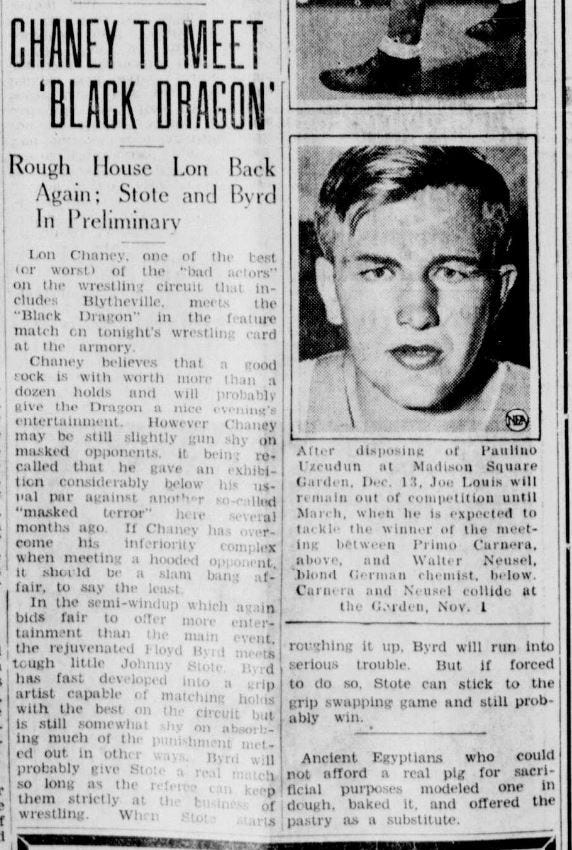
Pictured: October 28th, 1935 The Courier-News, Blytheville, Arkansas
The Black Dragon was revealed to be Paul Bazzell. Bazzell was from Clinton, Kentucky and also wrestled as The Black Terror, The Blank, The Cloud, The Dragon, Paul Banaski and Paul Bozzell.
Lon Cheney was a wrestler named Carl Cheney who also wrestled as Al West, The Ghost, The Red Devil, The Red Shadow and The Spook. Carl Cheney was trained by the famous Indiana University wrestling coach and wrestler, Billy Thom. Billy Thom recruited Dory Funk, Sr to Indiana and coached him as an amateur and also as aa professional shooter.
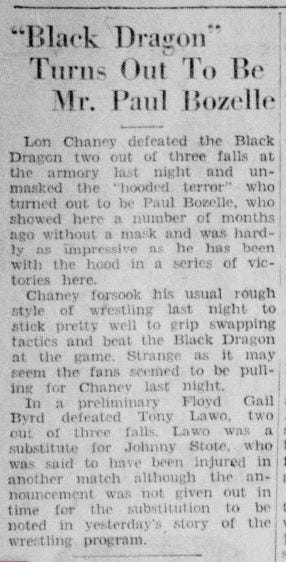
Pictured: October 29th, 1935 The Courier-News, Blytheville, Arkansas
Both Bazzell and Cheney worked almost 1,500 matches each in their careers, which was a lot in the 30s and 40s. This was a gimmick match in the early days of the Roy Welch family circuit and territory booked from the Dyersburg, Tennessee office. Herb Welch would later take over the promotion of this town for many years.
*Some research provided by Jason Presley
10-28-1935 Madison Square Garden Card in New York City
Danno O’Mahoney (ch) defeated Ed Don George in 5:08 to retain the AWA World Heavyweight Title (Boston Version)
Chief Little Wolf defeated Dirty Dick Raines in 12:24
Dean Detton vs Ray Steele ended as a 30 min time limit draw
Sergei Kalmikoff defeated Harry Fields in 4:23
Ralph Garibaldi defeated Jim McMillen by DQ in 16:51
Kimon Kudo defeated Joe Beaver in 6:22
Jack Donovan defeated Matros Kirilenko in 20:00
The October 28, 1935, show at Madison Square Garden (the third iteration of the arena, located at 50th Street and Eighth Avenue in New York City) was promoted by legendary matchmaker Jack Curley. This show took place during the height of the Great Depression, when wrestling was surging in popularity as an affordable, high-energy spectacle that drew diverse crowds of immigrants and working-class New Yorkers. It was part of a monthly series of cards at MSG, which by the mid-1930s regularly attracted thousands to see international talent clash in a mix of legitimate holds and theatrical drama. Attendance figures for this specific event are not well-documented in surviving records, but similar MSG shows around this time (like the October 7 card) drew about 7,000–8,000 fans, reflecting wrestling’s growing appeal amid economic hardship.
O’Mahoney was portrayed as an undefeated “shooting” wrestler, a Paul Bowser creation designed to appeal to ethnic pride in New York’s Irish communities. As promoter, Jack Curley was a pioneer in booking ethnic rivalries (e.g., Irish vs. Russian) to pack MSG. His cards helped transition wrestling from carnival sideshows to mainstream entertainment, paving the way for the McMahon family’s Capitol Wrestling Corporation in the 1950s. In 1935, wrestling at MSG was a melting pot event, with fans from Italian, Irish, and Eastern European backgrounds cheering (or booing) based on national pride. No women or midgets appeared on this card, but the undercard featured a mix of “exotics” like Kalmikoff to build heat.
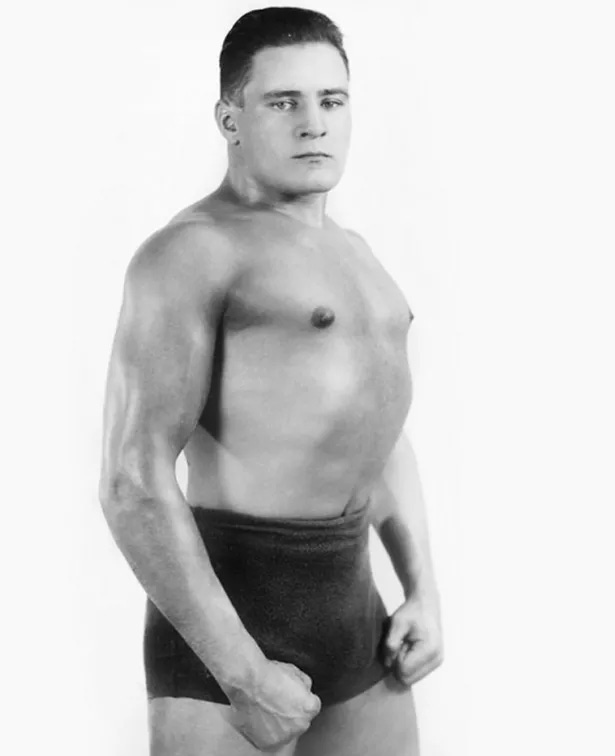
Pictured: Danno O’Mahoney
The next day after this show at the Garden, Henry McLemore put out a scathing wire service article dressing down O’Mahoney as the champion. First of all, saying that a champion was only as good as the tickets he sells for his title defenses, McLemore stated O’Mahoney only drew a “handful” to the Garden and that Jack Curley would not tolerate that for long. McLemore went on to be critical of Danno’s body and strength, saying that there was no way that O’Mahoney could throw a man like Ed Don George without George’s full cooperation. He made the remark that O’Mahoney doesn’t know as much as about wrestling “as John Quincy Adams did at three years old.”
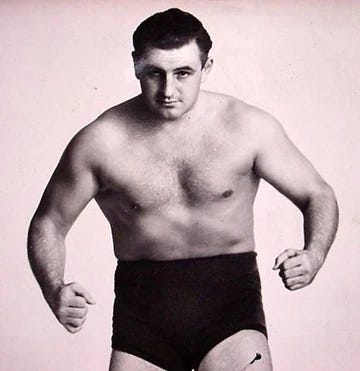
Pictured: Ed Don George
McLemore predicted that Chief Little Wolf would be the next champion, as people seemed to react and accept him as the Cherokee Chief. He also made the observation that Sergei Kalmikoff was the future star in the making calling him a “squat little man” and fat as a Poland China pig. Henry McLemore did Jack Curley no favors as far as putting over the business for him, actually he magnified the holes and even punched a few new ones with this review of the matches on October 28th. He did see a champion in the making as Detton (a former world champion and forthcoming one as well) and Steele, but McLemore didn’t mention either man in his review.
*Some of this research was provided by Wrestling At The Garden, The Battle For New York by Scott Teal & J. Michael Kenyon.
Thank You for Reading
I’m Tony Richards, Pro Wrestling Historian, Author and Storyteller. I share pro wrestling historical items in each issue of the Time Tunnel Pro Wrestling History Newsletter. Thanks for reading! If you enjoy my information on select events, matches and insights, please share it with folks you think might like to be a subscriber!
Remember, paid subscribers get access to exclusive and special content such as some special issues including a multi-part deep dives on wrestling territories, wrestler bios and championship title histories, special audio and video interviews on territory pro wrestling and more available in the Pro Wrestling Time Tunnel for Premium Subscribers.
Hi. I ran across this post while trying to figure out how much of this comic I'm annotating on my own Substack is true:
https://classickoreanmanwha.substack.com/p/introductory-arc
This depiction of Rikidozan's fight with Bruns is a historical document in and of itself at this point. As a pro wrestling historian, I hope you find it of interest!