


October 24th in the Time Tunnel:
Happy Birthday to those who have passed on and to those great wrestlers still with us:
In Memoriam:
Willie Gilzenburg 1901
Juanita Wright\Sapphire 1934
Robert Grimley\Hurricane Smith 1934
Maurice Grimley\Cyclone Smith 1934
Happy Birthday:
Paul Diamond (90)
Bill Dundee (82)
Gary Sabaugh\The Italian Stallion (68)
Dave Meltzer (66)
Dave Sahadi (64)
Dale Torborg (54)
Kalley Lattimer\Kamille (33)
Bronson Rechsteiner\Bron Breakker (28)
RIP Memorial: We stop & remember those who have passed on this day and gave themselves to the business for us, the fans. We salute you and thank you.
(none)
Significant Pro Wrestler Debut
10-24-1977 Allen Coage defeated Seiji Sakaguchi at the New Japan Dojo in Tokyo, Japan for Coage (Bad News Brown)’s pro debut match
In the annals of professional wrestling, few transitions from amateur athleticism to the theatrical brutality of the ring are as compelling as that of Allen James Coage. Born on October 22, 1943, in the gritty streets of Harlem, New York City, and raised in the challenging neighborhoods of Queens, Coage embodied resilience from an early age. As a teenager, he stumbled upon a local judo dojo, igniting a passion that would propel him to international acclaim. By his early twenties, Coage had earned a black belt in just two and a half years—a testament to his raw talent and unyielding discipline.

He specialized in classical judo techniques, favoring throws like the Ōuchi gari and Tai otoshi, which relied on precision and leverage rather than brute force. His competitive prowess earned him gold medals at the Pan American Games in 1967 and 1975, culminating in a historic bronze medal in the heavyweight division at the 1976 Summer Olympics in Montreal. In doing so, Coage became the first African American to win an individual Olympic medal in a sport outside of boxing or track and field, a milestone that resonated deeply in an era still grappling with racial barriers in athletics.
Yet, triumph was bittersweet. Frustrated by the internal politics and bureaucratic entanglements of Olympic judo, Coage retired from competition mere months after his Montreal glory. At 33, with a family to support and a body bearing the scars of relentless training, he sought new horizons. Odd jobs followed—a brief tenure as a bodyguard for soul legend Aretha Franklin, among others—but none captured his competitive fire. Wrestling, however, loomed on the periphery. Coage had trained in Japan during his judo heyday, living in near poverty while honing his craft under masters.
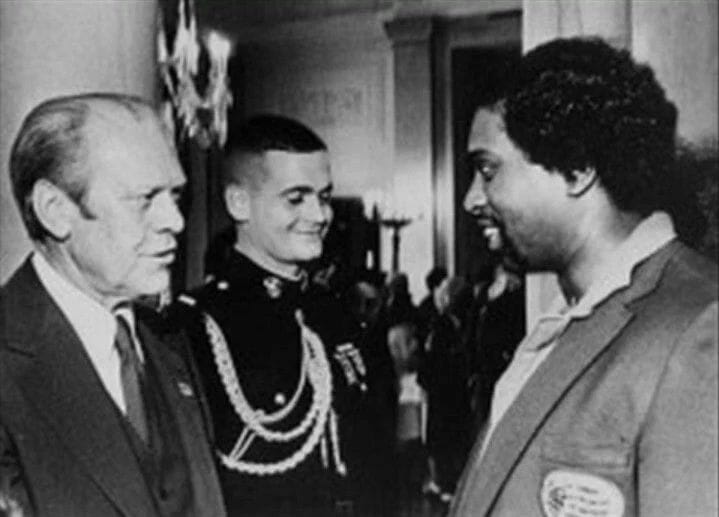
Pictured: Allen Coage and President Gerald Ford
It was a connection to that world that would bridge his past and future. His judo coach, aware of a Japanese sports publication scouting talent for professional wrestling, urged Coage to consider the ring. Though never a fan of the spectacle, the allure of returning to Japan and channeling his martial arts expertise proved irresistible. In early 1977, Coage packed his bags for Tokyo, stepping into the dojo of New Japan Pro-Wrestling (NJPW), the revolutionary promotion founded by the charismatic Antonio Inoki.
Inoki, a pioneer who blurred the lines between professional wrestling and legitimate combat sports, saw untapped potential in the towering, 6-foot-3, 260-pound American. Coage’s judo background aligned perfectly with NJPW’s shoot-style ethos, which emphasized realistic strikes, submissions, and athleticism over scripted drama. Under Inoki’s rigorous tutelage, Coage trained alongside a roster of hardened grapplers, adapting his throws into high-impact suplexes and learning the nuances of kayfabe—the wrestling code of illusion. The transition was grueling; judo’s emphasis on mutual respect clashed with wrestling’s performative aggression. But Coage thrived, his imposing physique and technical prowess marking him as a natural. By mid-1977, he was ready. NJPW, eager to showcase international talent, slotted him into their bustling tour schedule. His ring name evolved quickly: a brief nod to his real identity gave way to “Buffalo Allen,” a moniker evoking his adopted hometown of Buffalo, New York, and his rugged, no-nonsense persona.
The stage was set for October 24, 1977—a date that, while not etched in neon lights like WrestleMania spectacles, marked a quiet revolution in the career of a man destined to become one of wrestling’s most feared heels. The venue was a modest arena in Japan, part of NJPW’s relentless house show circuit, where the air hummed with the anticipation of purists drawn to Inoki’s vision of hybrid combat. Coage’s opponent: Seiji Sakaguchi, a judo black belt turned wrestling icon, known as the “Beast” for his explosive power and unyielding submissions. At 38, Sakaguchi was a cornerstone of NJPW, a former amateur wrestling champion whose legitimacy in the ring was unquestioned. The stipulation—a Judo Jacket match—added poetic symmetry. Clad in traditional judogi tops, the competitors would grapple in a format that stripped away wrestling’s flash, forcing a raw test of martial roots. It was no coincidence; NJPW billed it as a clash of judo titans, pitting the Olympic medalist against one of Japan’s homegrown legends.
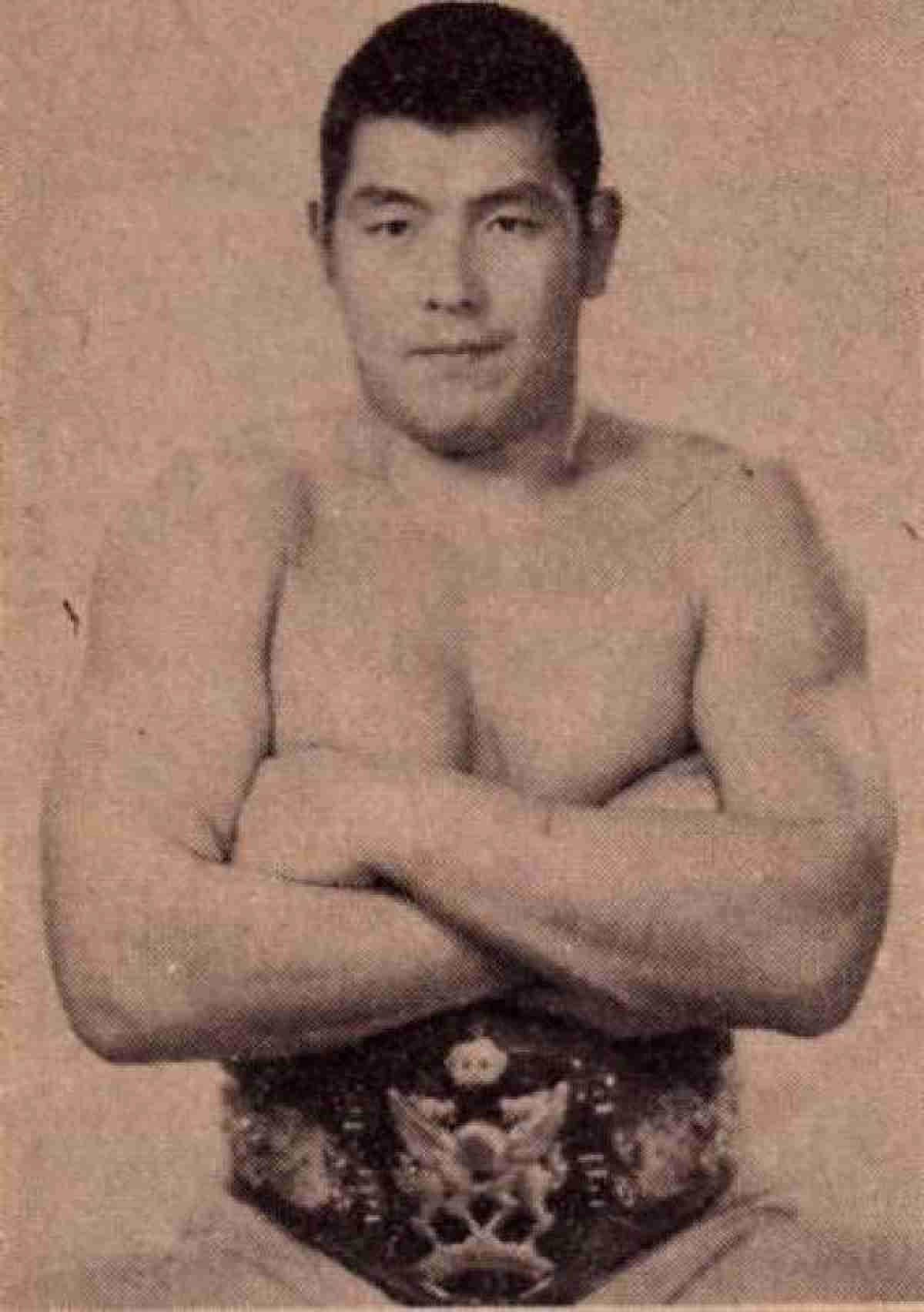
Pictured: Seiji Sakaguchi
As the bell rang, the crowd— a mix of salarymen, judo enthusiasts, and hardcore fans—leaned in. Coage, billed simply as “Allen Coage” for this debut, circled Sakaguchi with the measured poise of a predator. The judo jackets, stiff and unyielding, amplified every tug and twist, turning the bout into a symphony of grips and counters. Sakaguchi struck first, lunging with a signature harai goshi hip throw that sent Coage crashing to the mat, eliciting a roar from the partisan audience. But Coage, undeterred, absorbed the impact—his Olympic-honed resilience shining through. He retaliated with a blistering Tai otoshi, hoisting Sakaguchi overhead and slamming him down with authority. The exchange escalated: Sakaguchi locked in an armbar, testing Coage’s pain threshold, only for the American to bridge out and transition into a punishing ground-and-pound sequence, his fists thudding like thunderclaps.
The match, lasting a reported 12 minutes, was a masterclass in stiff, believable action. Coage’s amateur pedigree lent authenticity; his throws weren’t the exaggerated flips of American wrestling but grounded, bone-jarring maneuvers that echoed his judo past. Sakaguchi, ever the technician, targeted Coage’s legs with sweeps and takedowns, foreshadowing the knee issues that would plague the rookie in later years. Yet Coage’s power prevailed. In the climax, he reversed a Sakaguchi charge into a bridging German suplex, pinning the Beast for the three-count. Victory secured, Coage raised his fist in quiet defiance, the crowd’s applause a blend of respect and surprise. It was a debut win, clean and decisive, signaling that the judoka was no flash-in-the-pan but a force to be reckoned with.
Beyond the ropes, this match was a watershed. For Coage, it validated his pivot from Olympics to entertainment, earning him a spot on NJPW’s roster for the remainder of 1977 and all of 1978. He toured relentlessly, facing luminaries like Riki Choshu and Strong Kobayashi, refining his style into the hard-edged brawling that defined “Bad News Allen.” The persona—gruff, street-smart, and intolerant of fools—crystallized here, born from Coage’s real-life toughness. Stories from the era paint him as a locker-room enforcer: he once halted a bus tour to confront André the Giant over a racial slur, and another time dispatched the Guerrero brothers single-handedly after a stiff-work dispute. These incidents, whether apocryphal or not, underscored his authenticity in a business often accused of fakery.
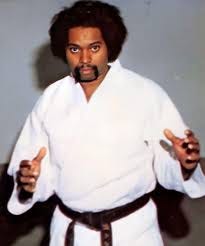
Coage’s October 24 debut rippled outward, influencing wrestling’s global tapestry. NJPW’s integration of martial artists like Coage helped legitimize the promotion’s “strong style,” paving the way for icons like Brock Lesnar and Daniel Cormier. In North America, his early WWWF appearances in 1978—as Bad News Allen—introduced American audiences to this hybrid athlete, though his true stardom bloomed later in Stampede Wrestling and WWF, where he feuded with the likes of Bret Hart and Hulk Hogan. Yet, it all traced back to that humid Japanese night in 1977, when a bronze medalist shed his gi for glory.
Allen Coage passed away on March 6, 2007, at 63, succumbing to a heart attack in Calgary, the city he called home with his wife Helen and their nine children. His legacy endures not as a champion of gold belts—though he claimed four Stampede North American Heavyweight titles—but as a pioneer who bridged worlds. On October 24, 1977, in a judo jacket soaked with sweat and ambition, Bad News Brown was born. In the squared circle, he delivered not just throws and pins, but a message: toughness knows no borders, and legends are forged in the fall.
One Thing I Learned Today About Pro Wrestling History
In 1975, Bill Dundee’s first full year in American pro wrestling, he and tag partner George Barnes won the NWA Mid-America Southern Tag Team Championship just three months after their U.S. debut by defeating veteran babyfaces Eddie Marlin and Tojo Yamamoto on March 10 in Chattanooga, Tennessee—a quick upset that helped establish the Australian duo as credible heels in the territory. George Barnes went back to Australia in mid-75, while Dundee never left the Tennessee Territory until late 1983 to become the booker for Bill Watts’ Mid-South Wrestling company.
Thank You for Reading
I’m Tony Richards, Pro Wrestling Historian, Author and Storyteller. I share pro wrestling historical items in each issue of the Time Tunnel Pro Wrestling History Newsletter. Thanks for reading! If you enjoy my information on select events, matches and insights, please share it with folks you think might like to be a subscriber!
Remember, paid subscribers get access to exclusive and special content such as some special issues including a multi-part deep dives on wrestling territories, wrestler bios and championship title histories, special audio and video interviews on territory pro wrestling and more available in the Pro Wrestling Time Tunnel for Premium Subscribers.
It's fascinating to see the connection you draw between a precise athletic discipine like judo and the theatrics of professional wrestling. How do you think the core principles of one discipline are adapted for the entirely different 'algorithms' of another?