


October 23rd in the Time Tunnel:
Happy Birthday to those who have passed on and to those great wrestlers still with us:
In Memoriam:
Maurice Tillet\The French Angel 1903
Joe Pazandak 1914
Bobby Davis 1937
Happy Birthday:
Don Harris (65)
Ron Harris (65)
Roxy Astor (63)
Jasmine St Claire (55)
Leah Van Dale\Carmella (38)
RIP Memorial: We stop & remember those who have passed on this day and gave themselves to the business for us, the fans. We salute you and thank you.
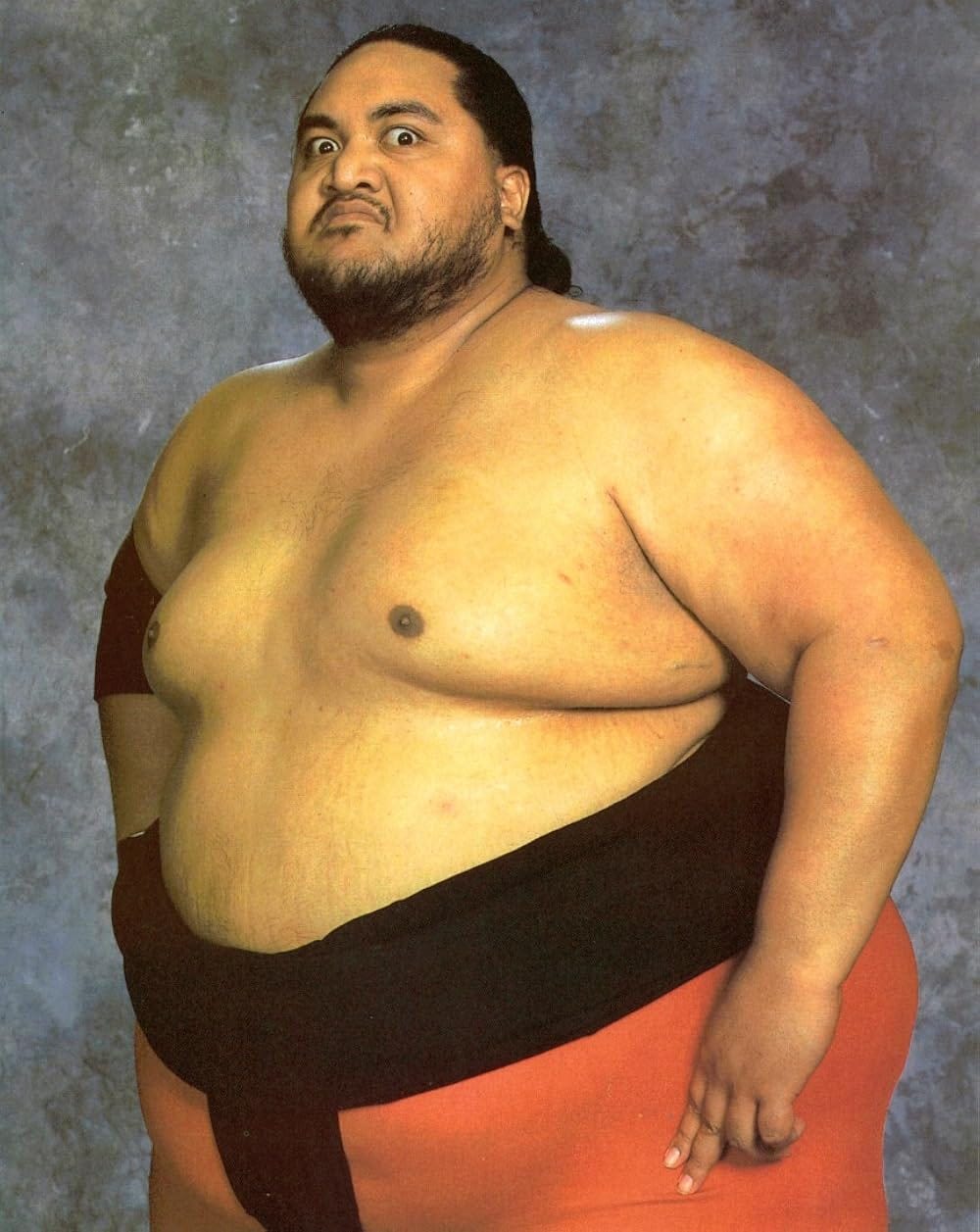
Rodney Anoa’i\Yokozuna 10-23-2000 at the age of 34
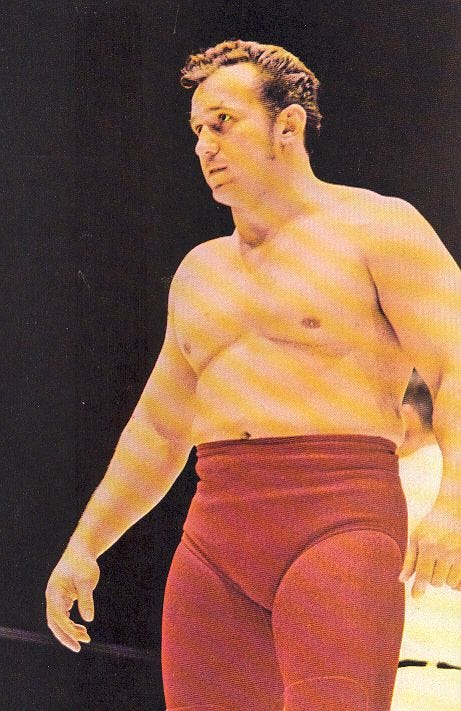
Ben Justice 10-23-2018 at the age of 81
42 Year Flashback
10-23-1983 The Last Battle of Atlanta took place with Tommy Rich defeating Mad Dog Buzz Sawyer in a cage match at The Omni in Atlanta, Georgia
In the annals of professional wrestling, few spectacles have etched themselves into the collective memory with the raw ferocity of “The Last Battle of Atlanta.” On October 23, 1983, inside the sold-out Omni Coliseum in Atlanta, Georgia, two titans of the ring—Tommy “Wildfire” Rich and “Mad Dog” Buzz Sawyer—collided in a steel cage match that transcended the scripted boundaries of sports entertainment. Billed as the culmination of a nearly two-year blood feud, this encounter was no mere athletic contest; it was a visceral catharsis, a primal scream echoing through the Georgia Championship Wrestling territory. With the ring fully enclosed by chain-link fencing topped by a cyclone mesh roof, the match not only settled a personal vendetta but also foreshadowed one of wrestling’s most iconic stipulations: the Hell in a Cell. This essay explores the origins of the Rich-Sawyer rivalry, the chaotic buildup to that fateful night, the brutal mechanics of the bout itself, and its enduring legacy as a cornerstone of territorial wrestling’s golden age.
The seeds of this legendary feud were sown in the fertile ground of GCW, a National Wrestling Alliance (NWA) affiliate that thrived on the Superstation TBS broadcasts, turning regional stars into household names across the American South. Tommy Rich, born Thomas Richardson in 1956, embodied the archetype of the all-American babyface. With his chiseled good looks, blonde locks, and infectious charisma, Rich was the “Wildfire”—a blaze of hope for fans weary of the grind. He had already tasted world championship glory, capturing the NWA World Heavyweight Title from Harley Race in 1981, albeit for a brief four days that ignited his star power. Rich’s appeal lay in his duality: the charming showman who could morph into a relentless warrior when provoked, his promos crackling with the fire of a man fighting for his honor.
Enter Buzz Sawyer, the polar opposite and perfect foil. Born Bruce Woyan in 1959, Sawyer was rechristened “Mad Dog” for his unhinged ferocity, a moniker that captured his prematurely balding, wild-eyed persona. Debuting in Jim Crockett Promotions before migrating to GCW, Sawyer was chaos incarnate—a snarling, unpredictable heel who wielded his forearm like a cheese grater, rubbing opponents’ faces into the mat with sadistic glee. Managed by the calculating Paul Ellering, Sawyer wasn’t just a wrestler; he was a force of nature, barking like a rabid beast and leaving a trail of crimson in his wake. As wrestling historian Bill Apter later reflected, Sawyer’s “irrational, unpredictable” style made him “a keg of dynamite,” compelling viewers to tune in not for beauty, but for the sheer dread of what atrocity might unfold next.
The rivalry ignited in earnest on May 2, 1982, when Sawyer dethroned Rich for the NWA Georgia National Heavyweight Championship in a match that spilled far beyond the ropes. What began as a title dispute evolved into something profoundly personal, a war without rules or respite. For 18 grueling months, Rich and Sawyer tore through the territory like a hurricane, their encounters devolving into arena-wide brawls that invaded dressing rooms, parking lots, and even the TBS studios. Rich, the polished hero, was dragged into the mud—literally and figuratively—his clean-cut image shattered by Sawyer’s barbarism. Fans, particularly in Georgia, became emotionally ensnared; they despised Sawyer with a venom that blurred kayfabe and reality. In shoot interviews decades later, Rich admitted the hatred was mutual: “I really didn’t like Buzz Sawyer,” a confession underscoring how the feud’s intensity bled into backstage tensions.
Video: WTBS Georgia Championship Wrestling, May 1982, studio brawl with Rich, Sawyer, Roddy Piper, Michael Hayes, comments from GCW VP\Gerry Brisco and more
The violence escalated with each clash. Matches ended in pools of blood, with Sawyer’s penchant for gouging and Rich’s retaliatory fury turning the ring into a slaughterhouse. Fellow wrestlers like Jimmy Garvin and Kevin Sullivan often intervened, only to be collateral damage in the crossfire. TBS promotions hammered the antagonism home, with vignettes of backstage ambushes and promos laced with apocalyptic rhetoric. Sawyer vowed to extinguish Rich’s flame; Rich promised to put the Mad Dog down for good. By mid-1983, the feud had outgrown the card, dominated airtime and drawing record crowds. GCW bookers, recognizing the need for closure, decreed an endgame: a steel cage match, fully roofed to prevent escapes or interference, where victory could only come by pinfall or a devastating 10-count. Dubbed “The Last Battle of Atlanta,” it was scheduled for October 23 at the Omni—a Sunday night spectacle advertised relentlessly as “8:30 p.m., the final reckoning.”
The atmosphere on the night of the battle was electric, a powder keg of anticipation in a venue packed with over 12,000 fervent fans. Tickets cost $7 for ringside, a bargain for what promised to be Armageddon. The card featured luminaries like Ric Flair, Dusty Rhodes, and Paul Orndorff, but all eyes fixed on the main event. Adding theatrical flair, Ellering was suspended 30 feet above in a shark cage, his howls of impotent rage a soundtrack to the madness. The cage itself was a monstrous innovation: chain-link walls rising 15 feet, capped by flimsy cyclone fencing that sagged under its own weight but ensured no aerial bailout. Referee Nick Patrick enforced the “no escape” edict, turning the squared circle into an inescapable coliseum of pain.
Video: October 23rd, 1983, The Last Battle of Atlanta Main Event, Tommy Rich vs Buzz Sawyer, Atlanta, Georgia
As the bell tolled at approximately 10 p.m., the two gladiators charged like starved animals. Sawyer, ever the aggressor, targeted Rich’s hand early, methodically dismantling the babyface’s offense. Within three minutes, Rich was a crimson mask, his forehead gashed open by Sawyer’s vicious raking against the cage. Blood poured in sheets, matting Rich’s hair and slicking the mat—a grotesque ballet of splatters that drew gasps from the crowd. Sawyer dominated the opening act, his barks echoing off the steel as he rammed Rich into the posts, each impact reverberating like thunder. The Mad Dog’s style was primal: stomps, eye gouges, and that signature face-rub that left welts blooming like war paint.
Yet Rich’s wildfire spirit flickered back to life. A desperate low blow staggered Sawyer, buying the champion precious seconds. Seizing momentum, Rich unleashed a torrent: rights, boots, an elbow drop that shook the ring. He bit Sawyer’s bloodied brow, tasting copper in retaliation, then hurled the heel into the cage with skull-cracking force. Sawyer fired back, but fatigue crept in; both men, slick with gore, pawed for advantage. The match’s brutality peaked in a flurry of cage-assisted mayhem—heads bounced off unyielding metal, bodies slumped in exhaustion. At the 12:06 mark, Rich summoned one final surge, whipping Sawyer into the fencing seven or eight times in a dizzying sequence. The Mad Dog crumpled, his body a quivering heap. Rich, barely standing, crawled atop for the pin: one... two... three. The bell clanged, but victory tasted like ash; both warriors lay motionless, medics rushing in as the crowd’s roar morphed into stunned silence.
In a stipulation twist, Rich’s triumph forced Ellering into an immediate “Lights Out” cage match against Ole Anderson, GCW’s grizzled enforcer. Freed from his perch, Ellering charged, only to be pulverized by Anderson’s fists and cage rams—a postscript that underscored the feud’s ripple effects. As attendants pried Rich from the wreckage and Ellering dragged the semi-conscious Sawyer away, the Omni exhaled. The war was over.
“The Last Battle of Atlanta” was more than a match; it was a watershed. Long shrouded in myth—footage presumed lost to tape-wiping practices or Ole Anderson’s rumored sabotage—it resurfaced in pristine form from WWE’s vaults in 2016, a “Hidden Gem” that validated decades of oral history. Many long-time tape traders and I had almost given up on ever finding tape of the match, let alone the full card. Shawn Michaels himself credited it in the Modern Era for the Hell in a Cell’s origin, praising the enclosed structure’s claustrophobic terror. For purists, it epitomized territorial wrestling’s unfiltered soul: blood as storytelling, violence as catharsis, and feuds that felt perilously real. Rich and Sawyer, unlikely alchemists, forged ugliness from beauty, hatred from heroism, birthing a legacy that outlives the Omni’s echoes.
Over forty years on, as wrestling grapples with its latest evolution period, “The Last Battle” endures as a reminder of the genre’s raw heart—a night when Atlanta burned, and two men emerged as immortals from the ashes. In the end, it wasn’t just about who won; it was about surviving the inferno.
One Thing I Learned Today About Pro Wrestling History
This is Tommy Rich’s rookie year in 1975. He attended high school in a suburb of Nashville, Hendersonville, Tennessee along with Deborah Marlin, who was Eddie Marlin’s daughter and would become Jerry Jarrett’s wife. It was this relationship and Tommy’s mother, Peggy Richardson, who had attended cards and been friend with Eddie for years that got Tommy the break in Jerry Jarrett’s Western End of the Gulas-Welch Tennessee Territory.
Thank You for Reading
I’m Tony Richards, Pro Wrestling Historian, Author and Storyteller. I share pro wrestling historical items in each issue of the Time Tunnel Pro Wrestling History Newsletter. Thanks for reading! If you enjoy my information on select events, matches and insights, please share it with folks you think might like to be a subscriber!
Remember, paid subscribers get access to exclusive and special content such as some special issues including a multi-part deep dives on wrestling territories, wrestler bios and championship title histories, special audio and video interviews on territory pro wrestling and more available in the Pro Wrestling Time Tunnel for Premium Subscribers.
I was in 6th grade and had bought an Apter mag with a bloodied Rich and Sawyer on the cover from that match on our lunch break. My teacher saw it and from that point on, all wrestling magazines were banned. I still remember that when I can't remember what happened on Smackdown last week.